
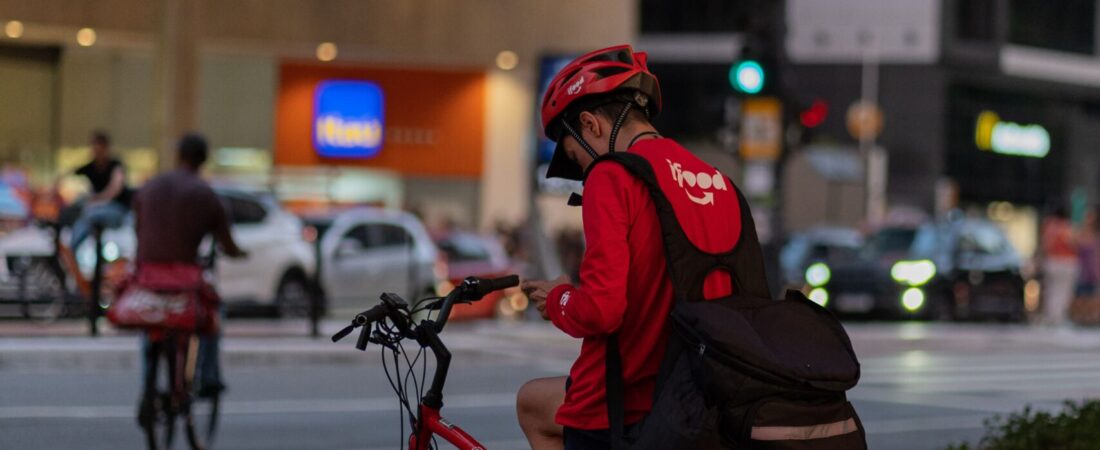

Gas is the single biggest recurring expense for every delivery driver in America. Whether you are running DoorDash in Houston, Uber Eats in Chicago, or Spark in Dallas, fuel costs can eat up 25% to 35% of your gross earnings if you are not paying attention. With the national average hovering around $3.64 per gallon in 2026 and some states like California pushing past $5.00, every penny you save at the pump goes straight to your bottom line.
I have been delivering full-time for over a year, and I have tested every gas-saving trick, app, and driving technique out there. Some work. Some are a waste of time. This guide covers the 11 strategies that actually save me money shift after shift in real US delivery markets from New York City to Los Angeles.
How Much Do Delivery Drivers Actually Spend on Gas?
The average DoorDash or Uber Eats driver drives between 100 and 200 miles per shift. If your car gets 25 miles per gallon and gas costs $3.64, you are looking at $14.56 to $29.12 per shift just in fuel. Over 20 shifts a month, that is $291 to $582 in gas alone. Over a full year of full-time delivering, you could easily spend $4,000 to $7,000 on gas.
That is money you could be putting toward savings, car maintenance, or just keeping as take-home pay. The good news? Most of it is avoidable with the right habits and tools.
1. Use Gas Cashback Apps on Every Fill-Up
This is the single easiest way to save money on gas, and it requires almost zero effort. Apps like Upside give you cash back at thousands of gas stations across the US. The typical offer is 15 to 25 cents per gallon at partnered stations. In competitive markets like Dallas and Austin, I have seen offers as high as 35 cents per gallon.
Here is how it works: Open the app before you fill up. See which nearby stations are offering cashback. Claim the offer. Pump your gas. Scan the receipt. The cashback hits your account within 48 hours, and you can cash out to PayPal or your bank when you hit $10.
Let me do the math for you. If you drive 150 miles per shift and your car gets 25 mpg, that is 6 gallons per shift. At 20 cents cashback per gallon, that is $1.20 per shift. Over 5 shifts a week, that is $6. Over a year, roughly $312. For scanning a receipt. That is real money.
You can stack Upside with a cashback credit card that gives you 3% to 5% back on gas. Suddenly you are saving 50 to 70 cents per gallon without changing anything about how you drive or where you deliver.
2. Stop Idling Between Deliveries
Every delivery driver does this: you drop off an order, park somewhere, and leave the engine running while you wait for the next offer. It seems harmless, but idling burns 0.2 to 0.5 gallons of gas per hour depending on your engine size and whether the AC or heat is running.
If you wait 10 to 15 minutes between orders and that happens 8 times per shift, you are idling for roughly 2 hours. At 0.3 gallons per hour, that is 0.6 gallons wasted. At $3.64 a gallon, that is $2.18 per shift. Over 250 working days a year, that is $545 in gas you are literally burning for nothing.
The fix is simple: turn off the engine when you park. In summer, park in the shade. In winter, wear layers. If you absolutely need climate control, run the battery for fan-only mode. It uses a fraction of the fuel.
3. Check Your Tire Pressure Every Sunday
Under-inflated tires create more rolling resistance. That means your engine has to work harder to move the car, which means you burn more gas. The US Department of Energy says properly inflated tires can improve gas mileage by up to 3%.
Three percent does not sound like much until you do the math. On a $400 monthly gas bill, 3% is $12 a month, or $144 a year. Plus your tires last longer, which is another expense most delivery drivers forget about until they need a $600 set of replacements.
Check your tire pressure every Sunday morning before your first shift. The recommended PSI is printed on a sticker inside your driver side door jamb. Most gas stations have free air pumps. It takes five minutes.
This matters even more in cities with extreme temperatures like Chicago in the winter and Phoenix in the summer. Cold air drops tire pressure, and hot pavement increases it. Weekly checks keep you in the sweet spot.
4. Drive Like You Have a Full Cup of Coffee in the Passenger Seat
Your driving style has a massive impact on fuel economy. Hard acceleration, slamming the brakes, and speeding between deliveries all destroy your MPG. The EPA estimates aggressive driving can lower your gas mileage by 15% to 30% at highway speeds and 10% to 40% in stop-and-go traffic.
For delivery drivers who spend 90% of their time in city traffic, the savings from smooth driving are huge. Accelerate gently. Coast to red lights instead of racing toward them. Leave extra space between you and the car ahead so you do not have to brake hard every time traffic slows.
I know it is tempting to rush between deliveries, especially during peak dinner rush in cities like Austin and NYC. But here is the truth: speeding from one pickup to the next saves you maybe 2 minutes per delivery while costing you significantly more in gas. It is a losing trade.
5. Use the IRS Mileage Deduction Correctly
This is not a direct gas-saving tip, but it saves you real money at tax time. The 2026 IRS mileage rate is 72.5 cents per business mile. That rate covers gas, insurance, depreciation, and maintenance. If you are not tracking your miles, you are leaving thousands of dollars in deductions on the table.
The key is tracking ALL your delivery miles. Not just the miles from restaurant to customer, but the miles between orders, the miles driving back to a busy zone, and the miles driving home after your last delivery (if your home is your main place of business).
Use an app like Gridwise, Stride, or a dedicated mileage tracker. These apps use GPS to log every mile automatically. At 72.5 cents per mile, 20,000 delivery miles equals a $14,500 deduction. That can reduce your tax bill by $3,000 to $5,000 depending on your bracket.
6. Avoid Premium Gas Unless Your Car Requires It
Many drivers think premium gas gives them better mileage or cleans their engine. Unless your owner manual specifically says premium is required, you are wasting money. Using premium fuel in an engine designed for regular provides zero benefit. Zero.
Premium gas is typically 40 to 70 cents more per gallon than regular. If you fill up 12 gallons per shift, that is $4.80 to $8.40 more per fill-up. Over 250 shifts a year, that is $1,200 to $2,100 down the drain.
Check your owner manual. Most delivery workhorses like the Toyota Corolla, Honda Civic, and Toyota Prius all run perfectly on regular unleaded.
7. Plan Your Shifts Around Traffic Patterns
Stop-and-go traffic is a major gas killer. If you are delivering during rush hour in Los Angeles, the 405 can turn a 5-mile delivery into a 40-minute gas-burning nightmare.
Plan your shifts to avoid the worst traffic. In most US cities, lunch deliveries from 11 AM to 1 PM are productive with lighter traffic. Dinner from 5 PM to 8 PM is the highest earning window but has heavier traffic. Try running shorter peak-hour shifts instead of long shifts that force you into traffic.
In cities like Houston and Dallas, the difference between delivering at 11 AM versus 5 PM can be 3 to 4 MPG due to traffic density alone. Check Google Maps traffic patterns for your area before you head out.
8. Join Gas Station Loyalty Programs
Most major gas station chains have free loyalty programs that save you 5 to 10 cents per gallon. Shell Fuel Rewards, BP Driver Rewards, Exxon Mobil Rewards+, and Speedway Speedy Rewards all offer discounts. They are free to join and take 2 minutes to set up.
Shell Fuel Rewards is particularly good for delivery drivers because they run frequent promotions. I have seen 15 cents off per gallon for the first 3 fill-ups, plus ongoing 5 cent discounts for Gold status members. Over the course of a year, these small discounts add up to hundreds of dollars.
Stack a loyalty program with Upside cashback and a cashback credit card. You can save 50 cents or more per gallon by combining all three.
9. Keep Your Car Light and Clean
Every extra 100 pounds in your car reduces fuel economy by about 1%. That sounds small, but delivery drivers tend to accumulate a lot of stuff in their cars. Old orders. Cases of water. Emergency kits. Gym bags. Random junk from the past month of driving.
Clean out your car once a week. Remove anything you do not need for your shift. That includes roof racks and cargo boxes if you have them, which create aerodynamic drag and reduce highway MPG by up to 8%.
This is especially relevant if you drive a smaller car like a Honda Fit, Toyota Yaris, or Hyundai Elantra. In those cars, an extra 50 pounds is more noticeable than in a larger SUV.
10. Change Your Air Filter and Oil on Schedule
A clogged air filter can reduce gas mileage by up to 10%. It restricts airflow to the engine, forcing it to burn more fuel to maintain power. Replacing an air filter costs $15 to $30 and takes 5 minutes. If it improves your MPG by even 5%, the filter pays for itself in one or two fill-ups.
Same with oil changes. Using the right grade of oil matters. Thicker oil increases engine resistance and reduces MPG. Check your owner manual for the recommended oil viscosity. In most modern cars, 0W-20 or 5W-30 synthetic oil provides the best fuel economy.
Stick to your car maintenance schedule. A well-tuned engine burns fuel more efficiently. If your check engine light is on, get it diagnosed immediately. A faulty oxygen sensor alone can reduce your gas mileage by 15% or more.
11. Earn More Per Mile to Offset Fuel Costs
This is the most powerful strategy on the list. Instead of trying to cut gas costs by a few cents per gallon, focus on earning more per mile in the first place. The math is simple: if you earn $1.50 per mile instead of $1.00 per mile, gas becomes a much smaller percentage of your revenue.
Multi-apping is the best way to do this. Running DoorDash, Uber Eats, and Spark at the same time lets you cherry-pick the highest-paying offers. Do not accept orders that pay less than $1.50 per mile. In busy markets like NYC, Chicago, and LA, you can hold out for $2.00 per mile or more during peak hours.
Learn your market. If you deliver in Houston, you know which neighborhoods tip well and which ones waste your time. Dallas dashers know that certain zones pay surge pricing consistently. Austin drivers know the downtown area is non-stop during events. Use this knowledge to maximize your per-mile earnings.
The Bottom Line: Small Changes Add Up to Real Savings
Gas prices are not dropping back to $2 a gallon anytime soon. The 2026 average of $3.64 is likely to stick around, and in cities like Los Angeles and Chicago, you will regularly pay $4.50 or more. But that does not mean you have to accept losing a quarter of your earnings to the pump.
Let me give you a realistic savings estimate. If you use a gas cashback app, check your tire pressure weekly, stop idling, drive smoothly, and keep your car maintained, here is what you save annually:
Cashback app: $312
Stop idling: $545
Tire pressure: $144
Smooth driving (15% MPG improvement): $600 to $900
Air filter and maintenance: $200
That is $1,800 to $2,100 per year in savings. On top of that, if you track your miles correctly for the IRS deduction, you save another $3,000 to $5,000 on taxes. Combined, we are talking about $5,000 to $7,000 that stays in your pocket.
Start with tip number 1 today. Download Upside before your next shift and find a station offering cashback. It takes 5 minutes and costs nothing. The rest of these tips you can implement one at a time over the next few weeks. Your wallet will thank you.
This article is for informational purposes only and does not constitute financial or tax advice. Consult a qualified tax professional regarding your specific situation. IRS mileage rates, gas prices, and app offers are subject to change.
Earn up to $2,575 with Uber in 2026
New delivery drivers can earn at least $2,575 after completing their first 200 trips in 30 days. Set your own schedule. Cash out up to 5 times a day. Start earning in cities across the US including Houston, Dallas, Austin, New York City, Chicago, and Los Angeles.
New drivers may qualify. Terms and conditions apply. Offer varies by city.