
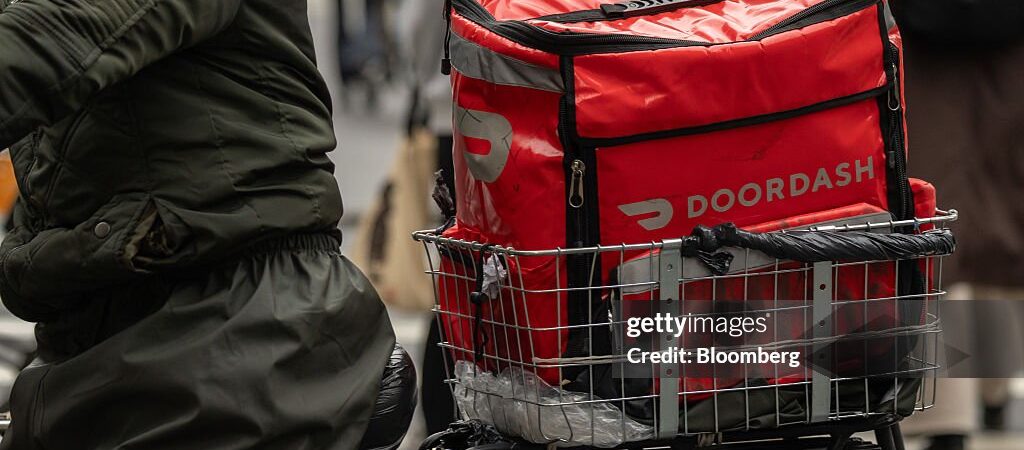

Why Gig Workers Need More Than a Basic Phone Plan in 2026
If you deliver for DoorDash, Uber Eats, Spark, or Amazon Flex, your phone is your single most important piece of equipment. It is your dispatch system, your GPS navigator, your payment terminal, and your customer communications hub all in one. A dropped call or a slow data connection during a busy lunch rush can cost you real money.
But here is the thing most gig workers get wrong: they treat their phone plan like a personal expense rather than a business investment. The difference between a $25 prepaid plan and a properly configured $50 business plan is not just $25 a month. It is the difference between missing a $15 order because your data was throttled at 5 PM and snagging three back-to-back offers because your connection stayed rock solid through the dinner rush.
In this guide, we will cover the specific phone plan features that matter for delivery drivers, the best carriers for multi-device setups, business plan options you might not know exist, and the hidden carrier features that can save you hundreds of dollars a year. Whether you drive in Houston, Dallas, Austin, New York City, Chicago, or Los Angeles, the right phone plan can directly increase your take-home pay.
What Your Phone Plan Needs for Delivery Work
Before we get into specific carriers, let us establish what a gig worker actually needs from a phone plan. Most casual users can get by with 5 GB of data and occasional throttling. But a full-time delivery driver who runs GPS navigation for 6 to 10 hours a day, streams music or podcasts between orders, and uses hotspot for a second device has very different requirements.
Data Usage Requirements for Delivery Drivers
Real-world data from the rideshare and delivery community paints a clear picture. The Uber driver app alone consumes approximately 3 GB of data per month. DoorDash and Spark are similar. Add Google Maps or Waze running constantly, and you are looking at another 2 to 3 GB. Stream music, podcasts, or YouTube during downtime, and a part-time driver will use 8 to 12 GB per month. Full-time drivers who work 40-plus hours a week can easily push 20 to 30 GB.
A plan that throttles you after 15 GB is going to leave you frustrated by the third week of the month. You need either truly unlimited data or a high premium data cap of at least 40 GB.
Priority Data vs. Deprioritized Data
This is the single most overlooked factor in choosing a phone plan for gig work. Every carrier has two tiers of data: premium data (priority) and standard data (deprioritized). When a cell tower gets crowded during peak hours which is exactly when you are delivering lunch and dinner orders deprioritized users get slower speeds while premium users keep full speed.
In dense urban areas like Manhattan, downtown Chicago, or the LA basin, deprioritized data can slow to a crawl during lunch and dinner rush. That is when the best DoorDash and Uber Eats offers are flying, and you do not want your phone struggling to load the next order. Carriers like Visible, Mint, and Boost are budget-friendly but use deprioritized data by default. T-Mobile Essentials, Verizon postpaid, and AT&T premium plans offer priority data that keeps you moving during peak hours.
Hotspot and Multi-Device Support
Multi-apping is the single best way to increase your delivery income. But running DoorDash on your main phone and Uber Eats on a second phone means both devices need reliable data. That is where hotspot allowance becomes critical. Some budget plans offer unlimited hotspot at reduced speeds. Others cap hotspot at 5 to 15 GB. If you plan to run a second device, look for plans with at least 10 GB of hotspot data, or unlimited hotspot even at reduced speeds like Visible unlimited hotspot at 5 Mbps which is plenty for navigation and gig apps.
Best Business Phone Plans for Gig Workers in 2026
Most delivery drivers do not realize they can sign up for business phone plans even as sole proprietors. A business plan is not just for companies with fifty employees. If you are an independent contractor with a 1099-NEC, you qualify. The benefits for gig workers are significant: priority customer support, better data prioritization, multi-line discounts, and tax-advantaged billing.
T-Mobile Business Unlimited: Best for Multi-Device Drivers
T-Mobile Business Unlimited plans start at $30 per line per month when you have two or more lines. That is significantly cheaper than the personal postpaid equivalent. Each line gets unlimited premium data, 50 GB of premium data per line before potential deprioritization, and 10 GB of high-speed hotspot per line. The real advantage for gig workers is the multi-line discount. If you run one phone for DoorDash and another for Spark, having both on T-Mobile Business Unlimited costs around $60 total, which is less than what a single Verizon postpaid line costs.
T-Mobile also offers Business Unlimited Tablet, which adds a tablet or mobile hotspot device for $10 a month with 5 GB of premium data. This is ideal for drivers who want a dedicated GPS screen mounted on their dashboard. You can run navigation on the tablet and keep your phone free for accepting orders. Drivers in Dallas and Houston report excellent T-Mobile coverage on major highways and suburban routes.
AT&T Business Unlimited: Best for Nationwide Coverage
AT&T Business plans start at $54.99 per line for a single line with unlimited data, but the price drops to around $40 per line with three or more lines. AT&T has the strongest rural and interstate coverage among the big three, which matters if your delivery zone includes suburban and exurban areas. In the outer suburbs of Chicago, Austin, and Los Angeles, AT&T reliably outperforms T-Mobile.
The business plan includes 50 GB of premium data per line, unlimited talk and text, and 30 GB of hotspot data. It also comes with AT&T ActiveArmor Advanced security, which includes spam call blocking and fraud protection a nice bonus when your phone number is published in delivery apps and exposed to customer calls.
Verizon Business Unlimited: Best for Reliability
Verizon Business Unlimited starts at $50 per line (single line) and drops to $30 per line with four lines. Verizon continues to have the most consistent nationwide coverage, particularly in suburban and rural areas. In markets like New York City and Philadelphia where Verizon network density is excellent, drivers experience very few dead zones even inside large buildings.
Each line gets 50 GB of premium data, 25 GB of hotspot, and access to Verizon 5G Ultra Wideband network where available. The Verizon Business portal also lets you separate personal and business expenses on a single account, making tax time significantly easier.
Multi-Device Phone Strategies for Delivery Drivers
Running multiple delivery apps at the same time is the fastest way to increase your income. But multi-apping introduces a unique challenge: you need reliable connectivity on more than one device. Here are three proven strategies that experienced delivery drivers use to stay connected on multiple devices without overspending.
Strategy 1: Two Phones, Two Budget Carriers
This is the most popular setup among full-time drivers. Get a primary line on Visible for $25/month (Verizon network) for your main DoorDash or Uber Eats phone. Get a secondary line on Mint Mobile for $15/month (T-Mobile network) for an older backup phone running your second app. Total cost: $40/month for two fully functional devices with coverage across two different networks.
The beauty of this setup is network diversity. If T-Mobile has a dead spot in the warehouse district where you do most of your Spark deliveries, your Visible line keeps working. If Verizon gets congested during a downtown lunch rush, your Mint line might be faster. Having two networks means you never have a shift-ending connectivity problem.
Strategy 2: Business Plan with Add-a-Line
If you prefer having both devices on the same carrier for simpler management, a T-Mobile Business Unlimited or Verizon Business plan with two lines is your best bet. At around $30 per line, you get priority data on both devices, integrated billing, and the ability to switch devices between lines easily. This setup works particularly well if you drive in a metro area where one carrier has dominant coverage, like T-Mobile in Dallas or Verizon in New York City.
Strategy 3: Phone Plus Hotspot Tablet
Some drivers prefer a single phone with a dedicated tablet for navigation. This keeps your phone screen free for offers while a mounted tablet runs Google Maps or Waze. Visible unlimited hotspot at 5 Mbps is perfectly adequate for navigation apps, which use very little data. Alternatively, T-Mobile Business offers a tablet line for $10/month with 5 GB of premium data, which is enough for GPS use and light browsing during downtime.
Hidden Carrier Features That Save Gig Workers Money
The major carriers offer features that most gig workers never take advantage of. Here are the ones worth knowing about.
T-Mobile: Insider Discount for Gig Workers
T-Mobile occasionally offers an Insider Discount that takes 20 percent off the base price of voice lines for the lifetime of the account. This discount is stackable with multi-line pricing. A T-Mobile Business plan that would normally cost $30 per line drops to $24 per line. Over a year, that saves you $72 per line. The Insider code is usually offered through T-Mobile employee referrals or during promotional periods.
Verizon: Auto-Pay and Paper-Free Billing Discounts
Verizon offers $10 per line per month off when you enable auto-pay and paper-free billing. On a two-line business account, that is $240 saved per year. Set it and forget it. Just make sure the bank account funding your auto-pay has sufficient funds during slow gig weeks.
AT&T Signature Program Discounts
AT&T offers the Signature Program which provides $10 to $15 off per line compared to standard consumer pricing. Many gig workers qualify through professional organizations, alumni associations, or employer partnerships. Even as a sole proprietor, signing up through AT&T Business can unlock better pricing than consumer plans.
Can You Deduct Your Phone Plan as a Business Expense?
Yes, and you should be doing it. If you use your phone for delivery work, the IRS allows you to deduct the business portion of your phone bill as a business expense. Since you use your phone for DoorDash, Uber Eats, or Spark, the percentage of use that is business-related is typically high for full-time drivers.
The IRS allows two methods for calculating this deduction. The first is the actual expense method, where you track your total phone bill and deduct the percentage used for business. If you use your phone for delivery 80 percent of the time, you deduct 80 percent of the bill. The second method is the standard mileage deduction, which the IRS mileage rate of 72.5 cents per mile for 2026 already includes an allocation for phone and data costs. However, if you have a separate business-only phone line, you can deduct 100 percent of that line cost without having to calculate a usage percentage.
This is one reason why having a separate business phone line is advantageous. A dedicated $50 business plan for your delivery work becomes a fully deductible expense. Over a year, that is $600 in deductions that reduce your self-employment tax burden.
Comparison Table: Best Phone Plans for Gig Workers at a Glance
| Carrier / Plan | Price/Month | Premium Data | Hotspot | Best For |
|---|---|---|---|---|
| Visible (Verizon) | $25 | 50 GB (deprioritized) | Unlimited (5 Mbps) | Budget single-device drivers |
| T-Mobile Business | $30/line (2+ lines) | 50 GB (priority) | 10 GB/line | Multi-phone setups |
| AT&T Business | $55/single line | 50 GB (priority) | 30 GB | Rural/suburban coverage |
| Verizon Business | $50/single line | 50 GB (priority) | 25 GB | Reliability in all markets |
| US Mobile | $25 (annual) | Unlimited (priority on Warp) | 50 GB | Customizable network choice |
| Mint Mobile | $15-30 | 40 GB (deprioritized) | 10 GB | Budget secondary line |
Final Tips for Choosing Your Phone Plan
Here is a quick checklist to help you make the right decision for your specific situation.
- Know your coverage area. Check carrier coverage maps specifically for the neighborhoods and zones where you deliver. What works in downtown Austin might not work in the suburbs of Dallas. Ask other drivers in your market what carrier they use.
- Start with a single budget line if you are new. If you are just starting delivery work, begin with Visible or US Mobile at $25/month. Upgrade to a business plan once you confirm you are driving full-time and want priority data.
- Consider a backup phone. An old unlocked phone with a secondary cheap plan is the best insurance policy against connectivity issues. You can pick up a used iPhone SE or Samsung A-series for under $150 and pair it with Mint for $15/month.
- Check for business discounts through your apps. DoorDash, Uber, and Spark occasionally partner with carriers for exclusive deals. Log into your driver portal and check the perks or benefits section. You might find a discount code for a business plan.
- Do not overpay for device financing. Carrier device payment plans tie you to expensive postpaid service. Buy an unlocked phone outright from Swappa, Back Market, or Amazon Renewed. An unlocked phone lets you switch carriers anytime a better deal appears.
Your phone plan is a fixed cost that directly impacts your earning potential. The right setup means faster offer acceptance, fewer missed orders due to slow data, and less stress about coverage during critical shift hours. Whether you spend $25 a month on a single budget line or $60 on a two-line business setup, the investment pays for itself in the first week of smoother deliveries.
Start Your Delivery Career with Uber Eats
If you are ready to start earning money with delivery driving, Uber Eats is one of the most flexible platforms to begin with. You can set your own schedule, cash out up to five times a day, and start receiving orders immediately after you are approved. New drivers in select US cities including New York, Chicago, Los Angeles, Houston, Dallas, and Austin can qualify for a generous sign-up bonus.
Once you sign up, take the time to set up your phone plan properly before your first shift. A reliable connection is the cheapest investment you can make in your earning potential.
Ready to earn more with Uber in 2026?
New drivers can earn up to $2,575 after completing their first 200 trips. Sign up today, set your own hours, and cash out up to five times per day.
Disclaimer: This article is for informational purposes only. Phone plan prices, features, and availability may change. Always check the carrier official website for current pricing and terms. Uber sign-up bonus offers vary by city and are subject to terms and conditions.