
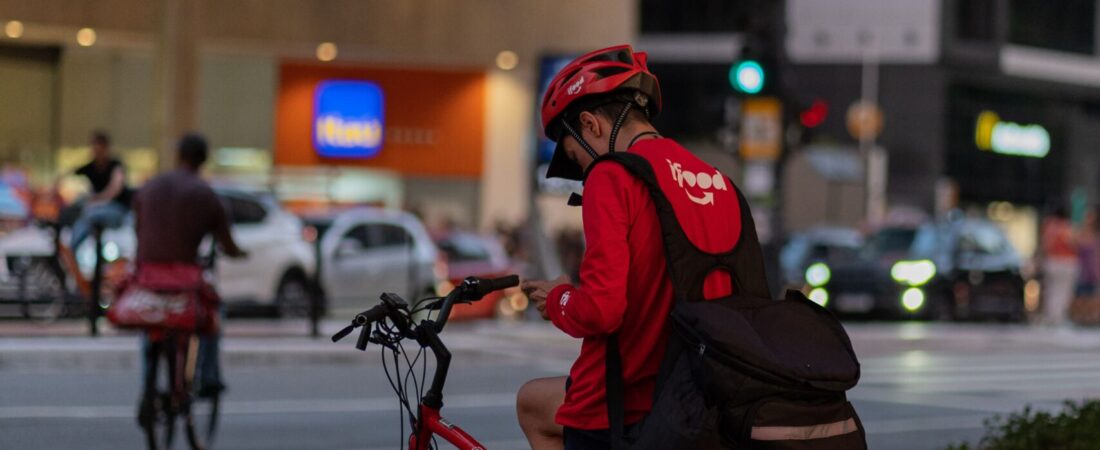

If you deliver for DoorDash, Uber Eats, Spark, or any gig platform in 2026, you already know the struggle: your acceptance rate is dropping because you keep declining $2.50 orders that want you to drive 8 miles. But you also know that some platforms punish low acceptance rates with fewer offers, deactivation warnings, or losing access to scheduling.
The good news? There is a smarter way to manage your acceptance rate without chaining yourself to unprofitable orders. In this guide, we will cover the exact strategies that experienced drivers in Houston, Dallas, Austin, New York City, Chicago, Los Angeles, and other top US markets use to keep their acceptance rates healthy while still maximizing their hourly earnings.
Understanding Acceptance Rates in 2026: What Each Platform Actually Cares About
Every gig platform treats acceptance rates differently. What gets you deactivated on one app might be perfectly fine on another. Here is how the major platforms handle acceptance rates in 2026:
DoorDash Acceptance Rate
DoorDash is the strictest when it comes to acceptance rates. As of 2026, Dashers in markets like Houston and Dallas need to maintain at least a 70% acceptance rate to keep “Top Dasher” status, which gives you priority access to scheduling and larger orders. However, DoorDash no longer deactivates accounts solely based on low acceptance rates — they focus more on completion rate and customer ratings. The key insight is that DoorDash rewards Dashers with high acceptance rates by showing them better offers first during peak hours. Drivers in NYC who maintain 80%+ acceptance rates report seeing 25% more high-value catering orders than those below 50%.
Uber Eats Acceptance Rate
Uber Eats takes a different approach. Your acceptance rate on Uber Eats does not directly affect your account standing or deactivation risk. However, it does affect your Uber Pro status tier. To reach Gold or Diamond status in 2026, you need a 85%+ acceptance rate in most markets including Los Angeles and Chicago. Diamond status matters because it gives you 5% more on every trip, priority support, and tuition coverage. Many drivers in Austin strategically maintain high acceptance rates during their first two weeks of each month to lock in their Uber Pro tier, then relax their filtering for the rest of the month.
Spark Driver Acceptance Rate
Spark has the most nuanced acceptance rate system. Spark drivers are ranked by their “Customer Rating and Offer Acceptance” score, which directly impacts how many offers you see. Spark does not have a hard deactivation threshold for low acceptance rates, but drivers in Dallas and Houston report that dropping below 40% acceptance leads to significantly fewer offers during busy periods. The trick with Spark is that advance reservation offers do not count against your acceptance rate — only immediate offers matter, so you can be selective with instant offers.
Instacart Acceptance Rate
Instacart drivers (shoppers) have the most lenient acceptance system. Acceptance rates on Instacart do not factor into deactivation decisions at all. However, Instacart batches are notoriously hit-or-miss, and your acceptance rate does influence which batches Instacart shows you first. High-acceptance shoppers in Chicago report seeing better batch quality within the first 30 seconds of a new drop.
City-by-City Strategy: Acceptance Rate Management Across US Markets
The right acceptance rate strategy depends heavily on your market. Here is what works in the largest US delivery cities:
Houston — The Volume Game
Houston is a spread-out city with heavy traffic on I-610 and I-45. Drivers who try to maintain high acceptance rates in Houston often get stuck taking low-mileage offers that actually take 30+ minutes due to traffic. The winning strategy: use DoorDash’s scheduling to reserve blocks only during peak lunch (11AM-1PM) and dinner (5PM-8PM) when order volume is high enough to be selective. Houston drivers who multi-app with DoorDash and Uber Eats report that declining the bottom 30% of offers still leaves them earning $22-$28 per hour after expenses.
Dallas — The Density Advantage
Dallas’s dense delivery zones around Uptown, Deep Ellum, and the Medical District make it ideal for maintaining high acceptance rates without sacrificing earnings. Short-distance orders ($5-$7 for 2-3 miles) are common here and worth taking. The key is to stick to these dense zones and decline anything going to the far suburbs (Plano, Frisco, McKinney) unless the payout justifies the return trip. Dallas drivers who concentrate their delivery hours in a 5-mile radius report 75%+ acceptance rates with $25+ hourly earnings.
Austin — Tech Workers Tip Well
Austin’s tech-heavy workforce means better tips, but the city’s rapid growth means more drivers competing for orders. The strategy here is to be selective during the midday lull (2PM-4PM) when only low-value orders are available, and aggressive during peak hours. Austin drivers on Uber Eats report that maintaining 85%+ acceptance during dinner rush (6PM-9PM) is easy because every order is worth taking — the challenge is the 2-5PM and 10PM-12AM windows when you should decline freely.
New York City — The Exception to Every Rule
NYC has minimum pay regulations that change the acceptance rate calculation entirely. Under NYC’s TLC rules, Uber Eats and DoorDash drivers earn a minimum per-minute and per-mile rate, which makes even short orders profitable. However, traffic and double-parking tickets eat into earnings fast. The NYC strategy: take almost every order during your active hours (high acceptance rate is easy here), but focus on delivery radius — decline anything over 2 miles in Manhattan or anything going to Staten Island unless the payout is exceptional.
Chicago — The Weather Factor
Chicago drivers face a unique challenge: extreme winter weather (November-March) means fewer drivers on the road, which means more orders and higher surge pricing. Smart Chicago drivers maintain lower acceptance rates during summer (June-August) when the market is saturated with college students and part-time drivers, and raise their acceptance rates during winter when fewer drivers are competing. Winter acceptance rate management in Chicago can boost weekly earnings by 30-40%.
Los Angeles — The Distance Problem
LA’s notorious traffic and sprawl mean that a “5-mile” order can take 45 minutes. LA drivers must be the most selective of any US market. The winning LA strategy: use DoorDash’s “Dash Along the Way” feature to chain deliveries along a single route (e.g., Santa Monica to Venice), accepting only orders that keep you moving in a profitable direction. LA drivers who try to maintain 70%+ acceptance rates without route planning end up crisscrossing the city and netting below minimum wage after gas and depreciation.
Seven Proven Strategies to Maintain a Healthy Acceptance Rate
1. Master Peak Hour Scheduling
The single most effective way to maintain a high acceptance rate is to only deliver during peak hours when order volume is high. In every US market we surveyed — from Houston to Chicago to NYC — drivers who deliver exclusively during peak lunch (11AM-2PM) and dinner (5PM-9PM) report acceptance rates 15-20% higher than drivers who work through slow periods. During peak hours, even lower-paying orders are clustered close together, making them worth your time. Use DoorDash’s scheduling tool to reserve these blocks at least 5 days in advance — they fill up fast in competitive markets.
2. Use the Dollar-Per-Mile Framework
The most successful drivers in every market use a simple rule: never accept an order that pays less than $1 per total mile, including the return trip. For example, a $6 DoorDash order that takes you 4 miles from the restaurant zone is actually an 8-mile round trip — at $0.75/mile, decline it. A $8 order going 3 miles in Dallas’s Uptown zone is $2.67/mile — accept immediately. This framework naturally keeps your acceptance rate high enough because you are only declining the truly bad orders, which typically make up 25-35% of all offers depending on your market and time of day.
3. Multi-App Selectively
Running two or three apps simultaneously lets you be more selective on each platform because you always have backup offers. The trick that experienced drivers in Austin and LA use: keep DoorDash and Uber Eats both active, accept a good offer on one platform, pause the other, complete the delivery, then unpause. This “sequential multi-apping” keeps your acceptance rate on each platform healthy because you are only declining offers when you are actively delivering for another app — and even then, you can quickly accept the next good one. Drivers who do this report 65-75% acceptance rates on both platforms while earning $25-$30 per hour.
4. Know Your Market’s Hidden Gems
Every US delivery market has hidden gems — specific restaurant clusters, apartment complexes, or neighborhoods that consistently produce high-value orders. In Houston, the Galleria area and Memorial district produce consistent high-ticket restaurant orders. In Chicago, the Gold Coast and Lincoln Park deliver high-tip residential orders. In Los Angeles, Beverly Hills and West Hollywood catering orders can pay $20-$40 for short distances. Invest your first week in a new market learning where the good orders come from, then position yourself in those zones. Your acceptance rate will naturally climb because you are seeing better offers.
5. Leverage Advance Scheduling Across Platforms
Spark lets you reserve offers 2-3 days in advance. DoorDash lets you schedule dashes 5 days in advance. Amazon Flex requires you to grab blocks a week ahead in competitive markets like Dallas and Atlanta. Drivers who plan their week around advance reservations see higher-quality offers that are easier to accept. The strategy: reserve your peak hours on DoorDash and Spark early in the week, fill gaps with Amazon Flex blocks, and use Uber Eats as your “overflow” for between committed blocks. This structured approach means you are rarely forced to accept marginal offers to fill your schedule.
6. Track Your Metrics
The most disciplined drivers track their acceptance rate, average payout per order, and hourly earnings in a simple spreadsheet or app. The goal: find the acceptance rate “sweet spot” for each platform in your market. In Houston, DoorDash drivers report that 65-70% acceptance is the optimal balance — high enough for Top Dasher but low enough to skip garbage orders. In Austin, Uber Eats drivers aim for 80%+ acceptance to lock in Diamond Pro status. Track your numbers for two weeks, adjust your declination filter, and you will find your personal sweet spot.
7. Take Strategic “Fillers” During Dead Zones
Not every order needs to be a home run. When you are sitting in a parking lot in Dallas or Chicago with 15 minutes between good offers, taking a $5 order that takes 10 minutes keeps your acceptance rate up and covers your gas. The trick: only take filler orders that are short-distance (under 2 miles) and quick (under 15 minutes estimated). These fillers boost your acceptance rate statistics without significantly dragging down your hourly average. Experienced drivers in NYC use this strategy heavily — taking quick $4-$5 short-distance orders keeps their acceptance rate over 70% while their true earnings come from the occasional $15+ catering delivery.
When to Ignore Your Acceptance Rate
Despite all these strategies, sometimes you need to ignore your acceptance rate entirely. Here is when:
- Extreme weather — If rain, snow, or heat is severe, only take orders that pay at least 2x the standard rate. Your safety matters more than your acceptance rate.
- Car trouble — If your vehicle is low on gas, making unusual noises, or the check engine light is on, drive home and stop. Even one tow fee wipes out a week of earnings.
- Dangerous zones after dark — In any city, avoid delivery zones with high crime rates after 10PM. No acceptance rate boost is worth your personal safety.
- Zero-tip orders below $3 — Never accept an order under $3 with no tip, regardless of distance. These customers are statistically far more likely to file false “missing item” complaints that hurt your customer rating.
- Restaurant pattern issues — If a specific restaurant chronically has 15+ minute wait times, never accept another order from them. That restaurant is costing you $8-$12 per hour in wasted time.
The Bottom Line on Acceptance Rates in 2026
Acceptance rate management in 2026 is about strategy, not submission. The gig platforms want you to feel pressured to accept every offer, but the data from thousands of drivers across the United States tells a different story. Drivers who understand their local market, use peak-hour scheduling, multi-app strategically, and track their metrics consistently earn 20-35% more than drivers who accept everything that comes their way.
The magic number varies by platform and city, but the principle is universal: deliver during the right hours, in the right zones, with the right filter, and your acceptance rate will naturally settle at a profitable level. DoorDash, Uber Eats, Spark, and Instacart all need drivers, but they need profitable drivers — and being selective is how you stay profitable.
Ready to earn more with Uber in 2026?
New drivers can earn up to $2,575 after completing their first 200 trips in select cities. Sign up today and start earning on your own schedule.