

# Summer Slowdown 2026: How Delivery Drivers Are Surviving the Slow Season (Real Tips)
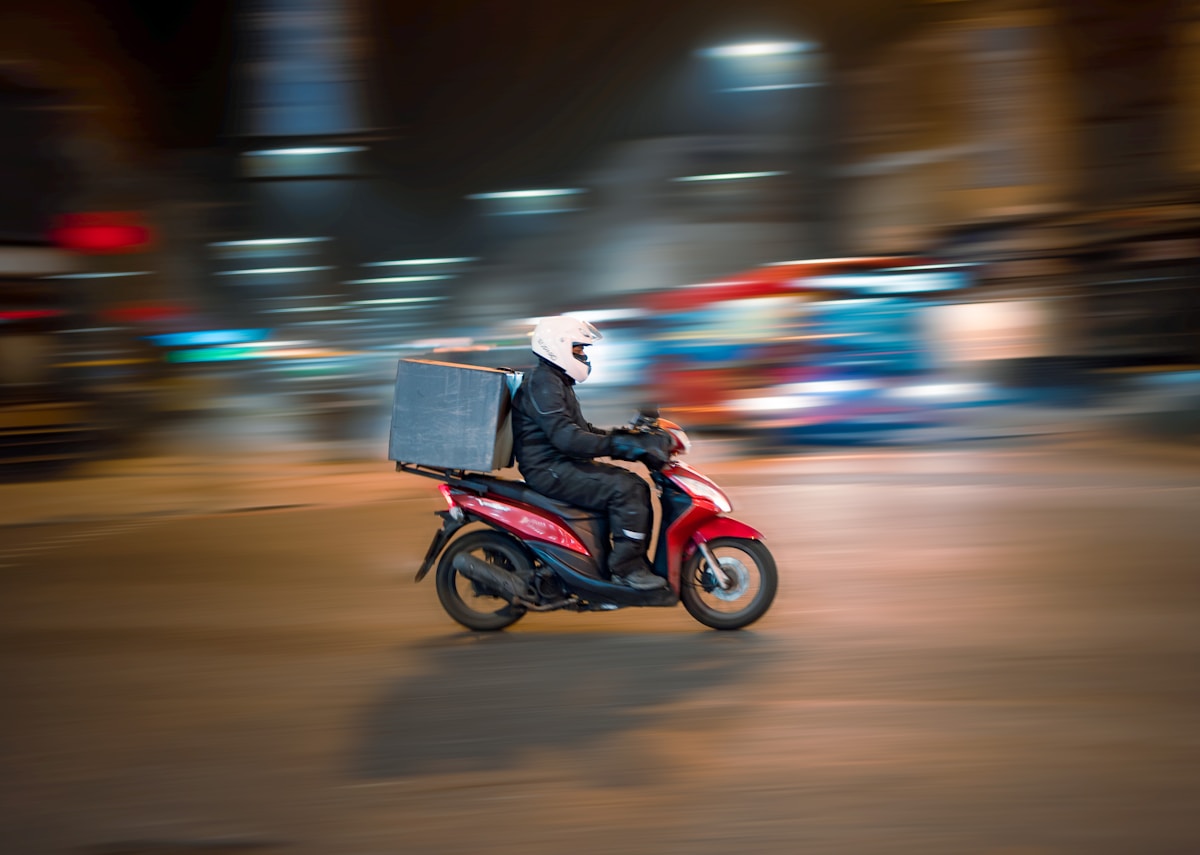
A real delivery driver heading to a pickup. Summer slowdown hits everyone differently. Photo by Iyad Al Fahl on Unsplash.
If your earnings took a nosedive in June and July, you’re not alone.
Every summer, same story. College kids flood the apps. Weather gets nice so more people cook at home or eat out. Families go on vacation and pause their grocery delivery subscriptions. And suddenly that reliable $20-an-hour grind turns into sitting in a Hot Topic parking lot for 45 minutes waiting for a $4 offer.
I’ve been doing this since 2022. Seen three summer slowdowns now. The first one caught me off guard — I thought I was doing something wrong. Turns out I just didn’t know the game yet.
This article is everything I’ve picked up about surviving the summer slowdown as a delivery driver in 2026. Real numbers, real strategies, and the stuff nobody puts in the welcome packet.
The Summer Slowdown Is Real (And It’s Getting Worse)
Gridwise’s 2026 Annual Gig Mobility Report says driver utilization — the percentage of active time spent on an active trip — drops roughly 12-18% during June through August compared to Q1. That’s not a guess, that’s millions of anonymized trips.
Why 2026 hits different:
The result? A lot of drivers are seeing $10-$14 an hour instead of the $18-$25 they were pulling in March. If you haven’t adjusted your strategy, you’re leaving cash on the table.
What Nobody Tells You About the Slow Season
The platforms won’t warn you. DoorDash sends you those “Earn $X for Y deliveries” promos when things are already slow, but they don’t tell you that summer is perpetually oversaturated.
Here’s what I’ve learned the hard way:
Your regular zone is probably dead. The area you crushed during the school year might be a ghost town in July. Families with kids are eating dinner earlier or going out. Office workers are on vacation. The lunch rush shrinks. If you’re sitting in the same parking lot you always sit in and wondering where the orders went — move.
Weekends still hit. Friday through Sunday evening are your money makers. The rest of the week can be brutal. Plan around that.
Lunch is weird. Summer lunch hours are less predictable. People eat later or skip lunch entirely. Dinner is still reliable but starts earlier — 5 PM instead of 6.
Grocery delivery holds up better. Instacart and Spark don’t slow down as much as food delivery in summer. People still need groceries. I’ll show you how to pivot.
The Summer Playbook: 6 Strategies That Actually Work
Some worked. Some didn’t. These six are the ones that consistently beat the slowdown.
1. Shift to Grocery Delivery (Instacart, Spark, Amazon Flex)
Food delivery slows in summer. Grocery delivery doesn’t.
People still need milk, eggs, and watermelon in July. Instacart and Walmart Spark both maintain relatively steady demand through the summer because you can’t cookout without groceries.
The numbers: According to ShiftTracker’s 2026 data, Instacart shoppers averaged $16-$22 per hour even in June and July — better than DoorDash and Uber Eats during the same months. The trade-off is each batch takes longer, but the pay per batch is higher.
I keep both DoorDash and Instacart running during summer. If food orders are slow, I grab a grocery batch. If the grocery store is packed, I toggle back to food.
2. Run Multiple Apps (And Actually Do It Right)
Multi-apping isn’t news to anyone reading this. But most drivers do it wrong.
The wrong way: accepting orders from two apps at the same time and trying to deliver both. That’s how you get contract violations, late deliveries, and 1-star ratings.
The right way: keep both apps open. Pause one when you accept a good offer. When you’re 5 minutes from dropping off, unpause the other app. The goal is to reduce idle time, not to stack orders on top of each other.
Real example from last week: I was on DoorDash waiting for an offer for 20 minutes. Nothing good came through. I toggled to Uber Eats and got a $12 offer for 3 miles within 2 minutes. Took it. Dropped it off. Toggled back to DoorDash and caught a $9 add-on heading the same direction.
Single-app drivers sit and wait. Multi-app drivers stay busy. The data backs it up — multi-app drivers earn 15-25% more per hour than single-platform drivers, per the Gridwise report.
3. Chase Events, Not Just Zones
Summer is full of events that create demand. Concerts, festivals, baseball games, fireworks shows, farmers markets.
On July 4th week, I worked the dinner rush near a park that had fireworks scheduled. Orders poured in from people who didn’t want to leave their spot on the blanket. Made $180 in 5 hours.
Same logic applies to any event with a crowd. Sporting events, county fairs, outdoor concerts. People at these events order delivery because they don’t want to wait in line or leave their seats.
If you’re not on Uber Eats yet, sign up through my referral link — you get a new driver bonus and I get a referral credit. Fair trade.
Check your city’s event calendar every week. Work near the venues during event hours.
4. Cash Out Every Day (It Changes Your Psychology)
This one is more about mindset than earnings, but it matters.
When summer is slow and you’re staring at a $48 day, seeing that number in your bank account feels like a gut punch. The temptation is to quit early because “it’s not worth it.”
Cash out every day. That $48 feels better as actual money in your checking account than as a number on a screen. And psychologically, hitting your daily goal — even a small one — keeps you in the game when the season wants you to quit.
Most platforms offer instant cash out for a small fee (usually $0.50-$1.99). Pay it. The morale boost is worth the dollar.
5. Adjust Your Hours (Summer Is Different)
You can’t work the same schedule in July that worked in March and expect the same results.
If you can only work a few hours, make them 5 PM to 8 PM. That window is your bread and butter until the fall rush starts.
6. Keep Your Car Summer-Ready
Summer heat destroys delivery cars faster than any other season.
What I’ve learned the hard way:
Taxes: The Summer Setup You Need to Do Now
Nobody wants to think about taxes in July. But summer is the perfect time to get your system in place before the Q4 rush.
Track your mileage. If you’re not using an app like Gridwise or Stride, start today. The IRS mileage rate for 2026 is 72.5 cents per mile. That’s roughly $0.29 per mile in tax savings if you’re in the 22-24% bracket. A daily 100-mile driving day saves you about $29 in taxes.
Save 30% of every payout. Open a separate savings account (I use Found because it auto-saves for taxes) and put 30% of every cash-out into it. When April comes, you won’t panic.
Quarterly estimated taxes. If you made more than $400 in net earnings in a quarter, you owe estimated taxes. The IRS expects quarterly payments in April, June, September, and January. Missing them means penalties. Summer is a good time to check if you’re on track.
Is Summer Worth It? My Honest Take
Summer is the hardest season for delivery drivers. I’m not going to sugarcoat it.
You will earn less per hour. You will sit in more parking lots. You will question whether this whole gig was a mistake.
But here’s the thing — the drivers who survive summer are the ones who thrive in November and December. Summer is a filter. It weeds out the people who aren’t serious.
If you multi-app strategically, pivot to grocery delivery during slow stretches, and hit the dinner rush hard, you can still clear $700-$900 a week working 40 hours. That’s not the $1,200 you were making in December. But it’s better than the $400 you’ll make if you give up and stay home.
September is when it turns around. College students go back to class. Weather cools down. Orders pick up. The drivers who stuck it out through July and August are the ones cashing in during the holiday rush.
The best time to start was March. The second best time is right now.
FAQ
How long does the summer slowdown last?
June through mid-August is the worst of it. Things start improving in late August when college students leave and regular routines resume. By mid-September, most markets are back to normal volume.
Should I quit delivering food during summer?
Not unless you have a better option. Even at $12-$15 an hour after expenses, delivery driving beats most part-time jobs for flexibility. Just adjust your expectations and strategy.
What’s the best app for summer?
Grocery delivery holds up best. Instacart and Walmart Spark are more consistent than DoorDash or Uber Eats during summer months. But multi-apping across one food app and one grocery app is the winning combo.
Is DoorDash worth it in summer?
It depends on your market. Some cities with strong tourism (beach towns, vacation spots) actually get busier in summer. Check your local DoorDash heat map before deciding.
Can I make $1,000 a week in summer?
Possible but tough. You’d need to work 50-60 hours a week, hit peak dinner hours every day, and run multiple apps. $700-$900 is more realistic for a 40-hour week.
When should I start preparing for the holiday rush?
Late September. That’s when you should clean up your vehicle, update your apps, and plan your multi-app strategy. October through December is where the real money is.