
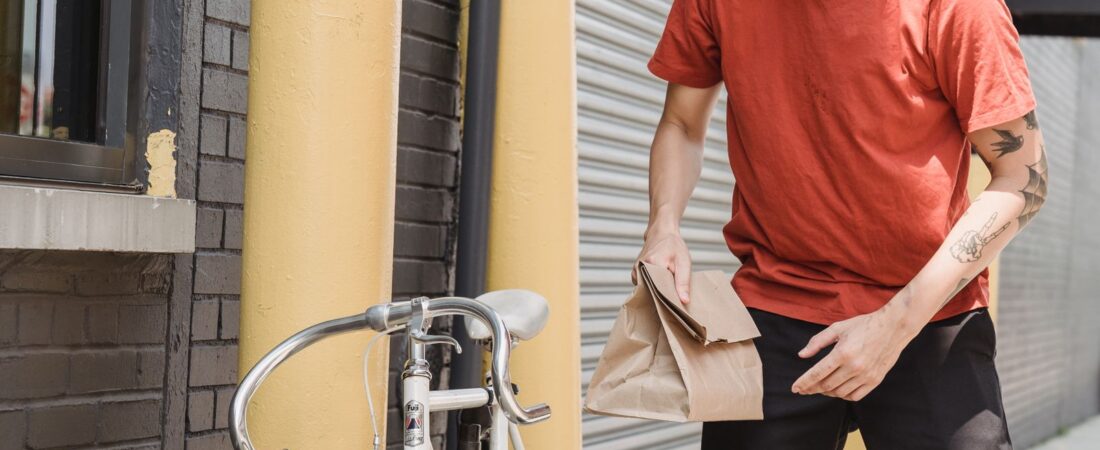

If you’re driving for DoorDash, Uber Eats, Spark, Instacart, or Amazon Flex, you already know that not all hours on the road are created equal. Some shifts feel like you’re printing money — back-to-back orders, short drives, solid tips. Other shifts feel like you’re burning gas just to break even.
The difference between those two experiences isn’t luck, and it’s not which app you use. It’s time management.
The drivers who consistently pull in $18 to $26 an hour have figured out when to work, where to position themselves, and how to ruthlessly avoid the dead zones that silently kill your real earnings. This guide is their playbook — the exact scheduling strategies you need to get the most out of every minute you’re on the road in 2026.

Why Time Management Is the Real Secret to Earning More as a Delivery Driver
Most drivers who want to earn more focus on the wrong levers. They obsess over which app pays a few cents more per mile, argue in Facebook groups about acceptance rates, or spend hours hunting promo codes. Meanwhile, the drivers at the top of the earnings chart are doing something much simpler: they’re showing up at the right place, at the right time, every single shift.
Busy Doesn’t Mean Profitable
Here’s a comparison that should change how you think about your schedule. Driver A works a random 8-hour Tuesday shift — on the road all day, logging miles, grabbing whatever orders come through. They complete 14 orders. Driver B works a focused 5-hour Saturday dinner shift with a smart app stack and a pre-planned zone. They complete 20 orders. Driver B earns more money, drives fewer miles, and is done by 9pm.
That’s the power of strategic time management. Being busy on the road is not the same as being profitable on the road. Every mile you drive is a cost — with the 2026 IRS mileage rate sitting at $0.72 per mile, full-time drivers logging 25,000+ miles a year are carrying a significant expense load. Fewer wasted miles means more money stays in your pocket.
Dead Time Is Silently Killing Your Hourly Rate
The hours between roughly 2:00pm and 4:30pm are what experienced drivers call the dead zone. Lunch has dried up. Dinner hasn’t started. If you’re sitting in a parking lot waiting for a ping that isn’t coming, you’re bleeding time with nothing to show for it. Multiply that by five or six days a week, and you’ve lost hours of potential earnings to pure dead time.
Smart delivery driver time management means knowing not just when to turn your app on — but when to turn it off, take a real break, and come back sharp for the next wave.
Understanding Peak Hours and Building Your Entire Schedule Around Them
Before you can build a high-earning schedule, you need to understand peak delivery windows at a granular level. Not just “it gets busy at dinner” but exactly when demand spikes, how long it lasts, and how it differs across platforms and cities.
For a complete breakdown of how earnings shift across every part of the day, our breakfast, lunch, and dinner rush guide for 2026 is one of the most useful resources on the site — bookmark it and use it to fine-tune your schedule by market.
The Lunch Rush: 11:00am to 2:00pm
Lunch is where part-time drivers can make serious money fast. In dense markets like NYC, Chicago, Houston, and Dallas, the 11:00am to 1:00pm window — particularly that 11:30am to 12:30pm core — is peak volume time. Office workers, remote employees, and students are all ordering at once, and the restaurants are cranking.
Your positioning matters enormously here. Don’t wait for an order to start heading toward a hotspot. Be inside the hotspot before 11:00am. Park near clusters of restaurants, university campuses, or business parks. Let the orders come to you, not the other way around.
Top lunch markets to target: Chicago’s Loop, NYC Midtown and FiDi, Houston’s Galleria and Greenway Plaza, Dallas Uptown, LA’s Century City and West Hollywood corridor.
The Dinner Rush: 4:30pm to 9:00pm
Dinner is your longest and most reliable earning window of the day. Families ordering in, couples who don’t feel like cooking, people unwinding after work — demand stays strong from about 4:30pm all the way through 9:00pm in most US markets. This is also when platform promotions, peak pay, and streak bonuses tend to stack, making it the single highest-leverage window of the week.
In cities like Miami, Atlanta, Phoenix, and Austin, dinner orders spike particularly hard between 6:30pm and 7:30pm on Thursday through Saturday. If you’re going to multi-app anywhere in your week, this is the window to do it.
Late-Night Weekends: 10:00pm to 1:00am
This window gets overlooked, but it’s worth testing in your market. Late-night Friday and Saturday orders skew toward bar food, pizza, and comfort food — and they often carry above-average tips from customers who’ve had a great evening out. In markets with strong nightlife like Austin, Miami, parts of LA, and Atlanta, you can catch a legitimate second wind after 10pm on weekends.
This won’t work in every city. Test it for two or three Saturdays before committing. But if your market supports it, adding a late-night window to your Saturday strategy can push your weekend earnings into an elite range.
A Practical Daily Schedule Built Around Maximum Earnings
Theory is useful. A real schedule is better. Here’s how to structure a full-day shift around actual earning windows — not just clock hours.
Pre-Shift Prep: 30 Minutes Before You Start
The 30 minutes before you turn on any app matter more than most drivers realize. Use this window to:
- Check active promotions and bonuses on all your apps — knowing where the incentives are helps you decide which platform to prioritize first
- Check the weather — rain and cold weather meaningfully spike order volume in cities like Chicago, NYC, and Houston
- Plan your starting zone — drive to the hotspot before you go online, not after
- Make sure your car is fueled, your phone is charged or actively charging, and your insulated bags are in the car
Drivers who skip this step spend the first 30–45 minutes of every shift just finding their footing. That’s real money lost before a single order is accepted.
Lunch Block: 11:00am to 2:00pm
Be positioned and online by 10:50am. Work your hotspot aggressively during the 11:00am to 1:00pm core. Focus on order efficiency — orders-per-hour matters more than order value during a strong rush. A $12 order that takes 14 minutes is a better time investment than a $20 order that takes 40 minutes and takes you five miles out of zone.
The Afternoon Break: 2:00pm to 4:30pm
This is the discipline moment. Resist the urge to idle on the apps hoping for something to come through. Take a real break. Eat, rest, handle errands, and log your miles from the morning session. If you’re running Instacart or Spark grocery batches, this can sometimes be a more productive window than food delivery — check your local market.
Otherwise, protect your energy for the dinner rush. Drivers who grind through dead hours arrive at the dinner rush fatigued and mentally checked out — and it shows in their order decisions.
Dinner Rush: 4:15pm to 9:00pm
Be in your zone by 4:15pm — not 5:00pm. Have your second app ready if you’re multi-apping. Be selective: in a strong dinner rush, a better order will come within minutes of passing on a low-value one. Don’t panic-accept out of fear. Stay in zone, stay patient, and let the best orders come to you.
Multi-Apping: The Time Management Strategy That Pays 15–25% More Per Hour
If you’re running a single delivery app at a time, you have a gap in your hotspot strategy — and it’s costing you real money every shift. Multi-apping, running two platforms simultaneously, is one of the highest-ROI habits a delivery driver can build. Drivers who do it consistently report earning 15 to 25 percent more per hour than single-app drivers working the same markets and hours.
Our multi-apping strategy guide for 2026 covers the mechanics, the ethics, and the exact app combinations that are producing results in the biggest US markets right now. It’s required reading if you’re serious about your hourly rate.
How to Run Two Apps Without Wrecking Your Ratings
The golden rule: one primary app, one secondary app. Your primary gets first pick every time. When you accept an order on your primary, you pause or soft-ignore your secondary until you’re within a few minutes of completing that drop-off. Only then do you re-engage the secondary for the next pickup.
The failure mode drivers fall into is accepting overlapping orders from both apps and then scrambling to fulfill both on time. That leads to late deliveries, bad ratings, and potential deactivation on one or both platforms. Don’t chase two orders simultaneously — just fill the gaps between your primary orders with secondary pickups.
App Combinations That Work Across Major US Cities
- NYC: DoorDash + Uber Eats — both have massive order density across Manhattan and the outer boroughs
- LA: DoorDash + Uber Eats, with Instacart as a strong alternative for the Westside and Valley grocery market
- Houston and Dallas: DoorDash + Spark — Walmart’s delivery volume in suburban Texas is genuinely strong and often underutilized
- Phoenix: DoorDash + Spark or DoorDash + Uber Eats — suburban sprawl makes Spark batches efficient during off-peak hours
- Chicago: DoorDash + Uber Eats — the Loop and River North are dense enough to keep both apps firing during peaks
- Miami, Atlanta, Austin: DoorDash + Uber Eats, with Instacart as a flexible third option for slow weekday afternoons
Weekend vs. Weekday Scheduling: Where the Big Earnings Really Are
If you have limited hours to drive each week and you need to make every one of them count, the data points in one direction: protect your weekends. Saturday side hustlers in strong markets are consistently clearing $25 to $32 per hour — numbers that are genuinely difficult to hit on a random Tuesday. Weekdays have value, but weekends are where scheduling discipline pays the biggest dividends.
For a complete game plan covering both days, our weekend delivery strategy guide for DoorDash, Uber Eats, and Spark goes deep on positioning, app stacking, and the specific windows that produce the highest returns on Saturday and Sunday.
Why Saturday Is Your Single Most Valuable Driving Day
Saturday checks nearly every box for high-earning conditions. People sleep in and order brunch. The lunch rush runs longer than on weekdays. The dinner rush is more intense and better tipped. Late-night demand is real in most markets. And platform promotions — streak bonuses, peak pay, referral boosts — almost always concentrate on Saturday evenings.
In Miami, Austin, and Atlanta especially, Saturday evenings between 6:00pm and 10:00pm can be the single highest-earning window of the entire week. If you can only drive one shift this week, make it Saturday dinner.
Weekday Strategy: Focused Hours, Not Long Hours
On weekdays, compress your active window instead of grinding all day. Hit the lunch rush from 11:00am to 1:30pm. Take a real break through the dead zone. Come back for the dinner rush from 4:30pm to 8:30pm. That’s roughly five to six focused hours. A disciplined weekday driver working those windows will consistently outperform a driver who works nine hours without a plan.
Route Optimization: The Time Management Tool Most Drivers Underestimate
Your schedule sets the foundation. Your routing determines how efficiently you execute it. Bad navigation habits — wrong routes, unnecessary backtracking, ignoring traffic patterns — can add 20 to 30 minutes of unproductive driving to a shift without you even noticing. Over a week, that’s hours of lost earning potential.
GPS Strategies That Save Time Every Shift
Google Maps is functional. Waze tends to outperform it for real-time traffic rerouting in dense urban markets. But the real edge isn’t the app — it’s knowing your city’s traffic patterns from memory. When the 405 in LA seizes up. When I-95 through Miami becomes a parking lot. When the Dan Ryan in Chicago turns into a crawl. That institutional knowledge lets you make routing decisions faster than any app.
For a complete breakdown of GPS tools, route optimization strategies, and how to read your delivery map more profitably, our navigation and GPS guide for delivery drivers covers everything from app settings to zone-by-zone routing habits that save real time.
Using Order Selection as a Time Management Habit
Every order you accept is a time commitment. Train yourself to quickly evaluate the time-value of each offer before you tap accept. A $14 order going 9 miles to a high-rise with no parking is a worse 35-minute investment than an $11 order going 3 miles to a house with a driveway. The second one gets you back in zone faster, ready for the next offer. Over the course of a shift, smarter order selection compounds into significantly higher hourly earnings.
Common Time Management Mistakes That Cost Delivery Drivers Money
Even drivers with years of experience fall into scheduling traps. These are the ones that show up most consistently — and the fastest ways to fix them.
Going Online Too Late for the Lunch Rush
Drivers who start logging on at 12:15pm regularly miss the 45-minute core of the lunch rush. By the time they’ve completed their first order, the wave has broken. Get online and in position before 11:00am, every time.
Staying on the App Through Dead Hours Out of Habit
There’s a psychological pull to leave the app running between 2:00pm and 4:30pm “just in case.” In most markets, what you’ll get is low-value offers spaced far apart — exactly the conditions that tank your hourly rate. Unless you’re running grocery batches that perform during this window, turn off the app and rest.
Chasing Surge Zones That Are Already Fading
Surge pricing looks irresistible on the map. But if the surge zone is 15 minutes away from where you currently are, you’ll often arrive after it’s already cleared. Surges move fast. Unless a surge is adjacent to your current zone, it’s rarely worth the chase — by the time you arrive, you’re in a cold zone with no boost.
Not Tracking Your Real Hourly Rate
You cannot make smart scheduling decisions without knowing your actual net hourly rate — total earnings minus fuel costs and per-mile expenses. If you’re not tracking this by day, time window, and platform, you’re flying blind. Use a basic spreadsheet or a tracking app like Gridwise to measure your performance. Then use that data to cut the hours that underperform and double down on the ones that don’t.
For a grounded look at what drivers actually take home after expenses across all the major platforms, our breakdown of real delivery driver earnings in 2026 gives you a realistic baseline to measure yourself against.
And if some of these habits sound familiar, it’s worth reviewing our guide to common mistakes new delivery drivers make in 2026 — because many of these patterns stick around well past the newbie stage.
Building a Weekly Rhythm That Sustains High Earnings Without Burning Out
Great time management isn’t just about optimizing one shift. It’s about building a weekly rhythm that keeps your earnings consistent, your decision-making sharp, and your body capable of doing this long-term.
Set Weekly Peak-Hour Goals, Not Dollar Goals
Dollar goals push you to work dead hours just to hit a number. Peak-hour goals are a better framework. Commit to working a set number of hours exclusively during productive windows — say, 15 peak hours per week across lunch blocks, dinner rushes, and a strong Saturday. Hit those windows consistently and your income targets will follow without requiring you to grind through slow shifts.
Schedule Recovery as Part of Your Strategy
Delivery driving is more physically demanding than it looks. Hours of sitting, constant in-and-out of the vehicle, heavy grocery lifts, mental focus on traffic and navigation — it accumulates. Drivers who ignore recovery end up reducing hours sharply after a few weeks of overwork, which tanks their monthly earnings just as much as bad scheduling would. Build real rest days into your weekly plan and treat them as non-negotiable.
Do a Weekly 10-Minute Review
Spend 10 minutes every Sunday looking back at your week. Which time windows performed best? Which zones paid off? Were there any shifts where you worked long but earned little? Use that data to make one or two adjustments to the following week’s schedule. This habit — more than any single strategy or app trick — is the compounding advantage that separates consistently high-earning drivers from drivers who stay stuck at average.
Ready to Earn More as a Delivery Driver?
Sign up for Uber Eats today and earn a $2,575 guaranteed bonus after completing your first 200 deliveries in select US cities.