


Car Detailing for Delivery Drivers in 2026: The Complete Interior Cleaning Guide
Let’s be honest: your car is your office, your storage unit, and your lunch table all rolled into one. Between the hot bags sweating condensation onto the seats, the takeout bags leaking grease onto the floor mats, and the drink that tipped over in the cup holder during a hard brake, a delivery vehicle takes a beating that a normal commuter car never sees. That mess isn’t just an eyesore. It costs you money — in ratings, in tips, and in resale value.
A clean car is a money-making car. Customers notice a filthy interior when you hand them their order, and it shows up in your DoorDash, Uber Eats, Instacart, and Spark ratings. The good news? You don’t need to spend hundreds on professional detailing every month. In this guide, we break down exactly what 2026 detailing prices look like, a daily and weekly cleaning routine that takes minutes, and how to keep your car smelling fresh even after 10 hours of delivering in Houston, Austin, Dallas, Chicago, or New York City.

Why Your Delivery Car Gets Dirty Faster Than a Normal Car
You spend more time in your car than almost anyone on the road. The average delivery driver logs 6 to 10 hours a day, which means spills, crumbs, and dirt accumulate at three times the rate of a typical commuter. But it’s not just time in the seat. Delivery work creates a specific set of messes:
Hot bag condensation. Every insulated bag you carry traps steam, and that moisture drips onto your upholstery every time you set a bag on the passenger seat. Over weeks, that constant dampness breeds odors that plain air freshener can’t touch.
Grease and food oils. A single tipped-over fries container or a leaky soup container can soak into seat fabric and leave a permanent stain — and a smell that customers pick up on instantly.
Drink spills. Cup holders are ground zero. Soda, coffee, and energy drinks are acidic and sugary, which means they stain fast and attract ants and bacteria if you let them sit.
Winter salt and road grime. If you deliver in Chicago, Minneapolis, or anywhere with snow, your floor mats take a constant salt bath. That salt eats through carpet and corrodes floor pans over time.
Bug splatter and bird droppings. Your front bumper and windshield are bug cemeteries by August. Bird droppings are acidic and can etch your paint in days if left sitting in the sun.
The takeaway: prevention beats deep cleaning every time. A 15-minute daily reset stops 90% of these problems before they set in.
2026 Detailing Prices: What You’ll Actually Pay
Before you panic about the cost of professional detailing, here’s the 2026 pricing reality. Interior detailing runs between $80 and $320, depending on the service tier and how rough your vehicle looks. A basic interior detail on an average car typically lands around $150. If you want the full package — interior plus exterior wash, wax, and engine bay — expect $150 to $500+.
Here’s the catch that matters for delivery drivers: detailers price by condition, not just by vehicle size. A car with heavy food odors, pet hair, or ground-in stains can take 3 to 4 hours to clean instead of the standard 90 minutes — and that labor gets passed straight to you, often adding 30% to 50% to the quote. In other words, a delivery car that’s been neglected for six months can cost $200 to $350 for a proper interior detail, while a car that gets wiped down weekly stays in the $80 to $150 range.
Prices also vary by city. Expect premium rates in New York City, LA, and San Francisco, while Houston, Dallas, and Austin tend to sit at or below the national average. Mobile detailers — the ones who come to your apartment parking lot — are often cheaper than brick-and-mortar shops because they don’t pay rent on a bay.
The 15-Minute Daily Reset: Stop Grime Before It Sets
You don’t need a full detail every week. You need a daily reset that takes less time than your coffee break. Here’s the routine that keeps your car presentable between deep cleans:
1. Empty the trash every shift. Keep a small grocery bag in the door pocket and toss it at the end of every shift. Receipts, napkins, straw wrappers, and empty cups are the #1 source of that “lived-in” smell.
2. Spot-clean spills immediately. The second a drink tips over, blot it with a microfiber towel. Sugar and acid set into fabric in hours, not days. Blotting now saves you an upholstery extraction later.
3. Wipe the touchpoints. Once a day, run a microfiber cloth over the steering wheel, shifter, cup holder, and door handles. These are the spots customers see when you hand over an order, and they collect grease from your hands after handling food bags.
4. Shake out the floor mats. Give the driver-side and passenger mats a quick shake at a gas station or parking lot. Three shakes a day keeps the gravel and crumbs from grinding into the carpet.
5. Keep a cleaning kit in the trunk. A small bin with microfiber towels, all-purpose cleaner, glass cleaner, and a roll of trash bags costs under $25 and pays for itself in the first week.
The Weekly Deep Clean: A Driver’s DIY Routine
Once a week — pick a slower day like Tuesday or Wednesday — run this 45-minute routine and your car will look detailed without the detail bill:
Step 1: Clear everything out. Remove hot bags, chargers, trash, and floor mats. You can’t clean what you can’t see.
Step 2: Vacuum everything. Seats, seat crevices, under the seats, the cargo area, and the trunk. Use the crevice tool on the seat tracks — that’s where fries go to die.
Step 3: Scrub the plastic and vinyl. An all-purpose cleaner and a soft brush handle the dashboard, door panels, and center console. Don’t forget the cup holders — soak them, scrub, and wipe dry.
Step 4: Clean the glass. A good automotive glass cleaner and a clean microfiber on the inside and outside of every window. Streak-free glass makes the whole car feel newer.
Step 5: Wash the floor mats. Spray them with a hose or at a self-serve wash bay, scrub with a brush, and let them dry overnight. This is the single biggest visual upgrade you can do.
Step 6: Deodorize. Finish with a fabric deodorizer or a light vacuum of baking soda left for 15 minutes before vacuuming again. This resets the baseline smell of the car.
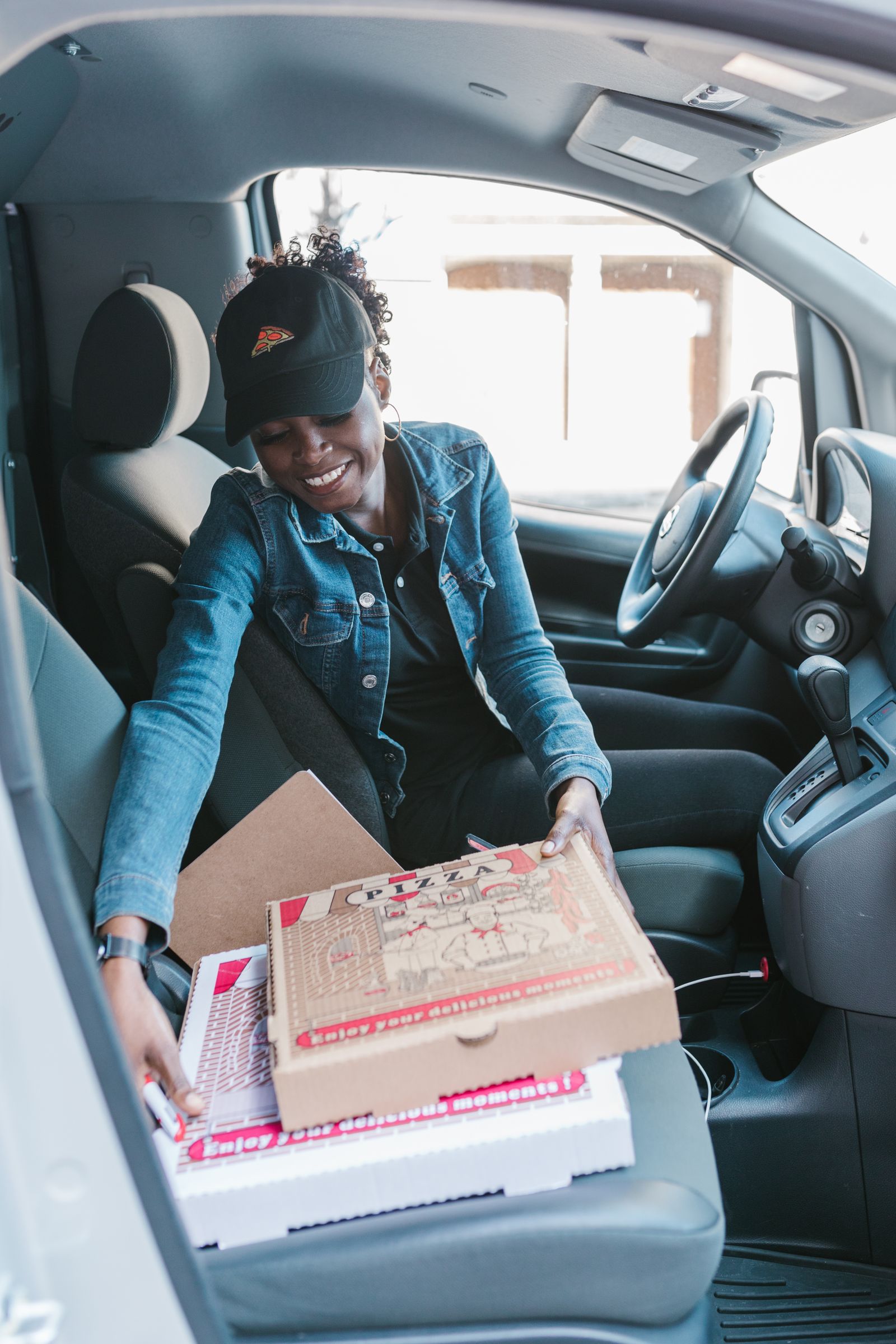
How to Kill Food Smells and Stains for Good
Air fresheners mask smells. They don’t remove them. If your car smells like last week’s garlic wings even after a wipe-down, the odor is living in your fabric — and here’s how to actually kill it.
For smells: baking soda, then enzyme cleaner. Sprinkle baking soda liberally on seats and carpet, let it sit for a few hours (overnight is better), then vacuum it up. For stubborn food and grease odors, use an enzymatic cleaner — the same stuff pet owners use — because it breaks down the organic residue that bacteria are feeding on. That’s what’s actually causing the smell.
For grease and oil stains: dish soap and warm water. Blot the stain, apply a small amount of dish soap diluted in water, work it in gently with a soft brush, then blot dry. Never rub — rubbing pushes the grease deeper into the fibers.
For coffee and soda stains: club soda or white vinegar. Both lift sugar-based stains out of fabric. Blot, apply, blot again, then dry with a clean towel.
For serious cases: rent an extractor. A rental upholstery extractor from a big-box store costs about $30 for a day and does what $200 of professional steam cleaning does. Run it over the seats and carpet with hot water and a cleaning solution, and your car will smell like a rental car showroom.
Charcoal bags are a real tool. A couple of activated charcoal odor bags under the seats absorb moisture and smell passively for months. They’re cheap, chemical-free, and genuinely work.
Exterior Care That Protects Your Resale Value
Here’s the number that should get your attention: professional detailing can increase a car’s resale or trade-in value by 5% to 20%, with 10% to 15% being the typical range. Industry resale guides put the gap between an “excellent” and “average” condition car at 10% to 20% — that’s $4,000 to $8,000 on a $40,000 vehicle. For a delivery driver who plans to sell or trade in within a few years, that difference is real money, and it’s directly tied to how the car looks on the lot.
Wash the bugs off weekly. Bug splatter is acidic and etches clear coat in summer heat. A weekly touchless wash or a quick hand wash with bug remover keeps your front bumper from turning into a permanent bug mosaic.
Never let bird droppings sit. They’re acidic enough to burn through wax and clear coat in days. Wipe them off the same day you notice them.
Salt season strategy. If you deliver through winter, run your car through a wash with an undercarriage spray every couple of weeks. Road salt corrodes brake lines, exhaust, and floor pans — rust is the fastest resale killer there is.
Protect the paint. A coat of wax or a spray sealant twice a year takes 30 minutes and keeps the clear coat alive. If you want the premium route, a ceramic coating at $300 to $900 lasts years and makes weekly washes take five minutes.
The same logic applies to the interior: a clean, unstained cabin is worth more at trade-in, and it’s the first thing a used-car buyer or dealer inspects. Pair your detailing habit with a solid delivery driver maintenance schedule and your car stays worth something when it’s time to upgrade.
When to Hire a Pro (and How to Pick One)
DIY handles the routine, but three situations justify paying a professional:
1. Before selling or trading in. A $150 to $250 detail can add thousands to your trade-in offer. This is the highest-ROI detail on the planet.
2. After a major mess. If a soup exploded or a drink soaked the seat and you’ve tried everything, a pro with steam and extraction equipment can save the upholstery.
3. Seasonally. Even diligent drivers benefit from a professional deep clean twice a year to hit the spots DIY can’t reach — headliners, vents, and deep carpet.
When picking a detailer, check reviews for the words “odor” and “stains” — that tells you whether they actually extract or just wipe. Ask if they use steam and hot-water extraction. Get a written quote before they start, and confirm whether the price includes carpets, seats, and headliner. And remember: mobile detailers are often the best deal for drivers because they come to your parking lot while you’re off shift.
Can You Write Off Detailing on Your Taxes?
Yes — with the right approach. Cleaning and detailing costs that are directly tied to your delivery business are legitimate vehicle expenses. If you use the actual expenses method on your Schedule C, interior and exterior cleaning, detailing, and car wash costs are deductible. If you use the standard mileage rate — 76 cents per mile in 2026 — you can’t also deduct individual cleaning expenses, since the mileage rate is meant to cover all vehicle costs. Keep receipts either way, and check the IRS guidance in our IRS mileage rate 2026 guide.
That means your weekly wash and your quarterly detail can literally reduce your taxable income. It’s one more reason a clean car isn’t an expense — it’s an investment that pays you twice: once in tips and ratings, and once at tax time.
The Bottom Line: A Clean Car Is a Money-Making Car
Every dollar you spend keeping your car clean comes back. Better ratings mean more offers. A fresh-smelling cabin means better tips from customers who notice. A protected interior and exterior means a higher trade-in value when you’re ready for your next vehicle. And none of it requires a monthly detailing subscription — a 15-minute daily reset, a 45-minute weekly routine, and a pro detail twice a year will keep your delivery rig in shape all year.
If your car has been neglected for months, start with the weekly routine this weekend. Your ratings, your nose, and your future resale value will thank you. And when you’re ready to maximize every hour behind the wheel, keep your whole vehicle game sharp with our complete guide to cutting car maintenance costs in 2026.
Ready to Earn More as a Delivery Driver?
Sign up for Uber Eats today and earn a $2,575 guaranteed bonus after completing your first 200 deliveries in select US cities.