
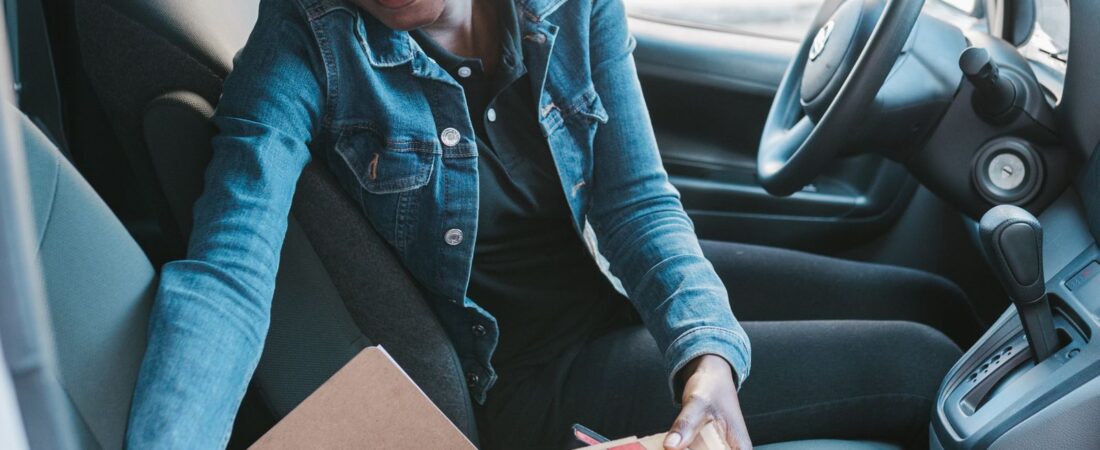

If you drive for DoorDash, Uber Eats, Instacart, Spark, or Amazon Flex, your car breathes harder than the average commuter’s. You idle at pickup lines, roll through dusty apartment complexes, hammer down rural gravel roads, and run the AC or heat for eight hours straight. All of that extra work lands on two cheap parts most drivers never think about: the engine air filter and the cabin air filter.
Here is the good news: replacing both filters is a 20-minute DIY job that costs less than a single fast-food order, and it can save you hundreds of dollars a year in fuel, repairs, and even medical bills during wildfire season. This 2026 guide breaks down what each filter does, when to swap it, exactly how much it costs, and the step-by-step replacement process you can do in a parking lot.

Why Air Filters Matter More for Delivery Drivers
The average American drives about 12,000 miles a year. Full-time delivery drivers routinely rack up 30,000 to 50,000 miles in the same span. That means your engine swallows two to four times more air, dust, pollen, and road grit than a normal car’s. Every mile you log pulls air through the engine air filter, and every minute of cabin heat or AC pulls air through the cabin filter.
Delivery driving also stacks the deck against your filters in specific ways:
- Idling. Waiting for orders at restaurants means the engine keeps pulling air while parked, and the HVAC keeps cycling cabin air.
- Dusty stops. Apartment complexes, construction zones, and unpaved driveways kick up fine dust that a clogged filter can’t trap.
- Heavy HVAC use. Running heat in Chicago winters or AC in Phoenix summers runs far more air through the cabin filter than a commuter ever does.
- Smoke and smog. Wildfire season (roughly May through November) and city smog load both filters with fine particles fast.
The result: delivery drivers should replace their air filters roughly twice as often as the owner’s manual suggests. If you change your oil every 5,000 to 7,500 miles, checking the engine air filter at every oil change and swapping it every second or third change is a solid rule of thumb. For cabin filters, once a year is the floor — not the ceiling.
Engine Air Filter 101: What It Does and When to Replace It
The engine air filter sits in a black plastic box near the top of your engine. Its job is simple: trap dirt, dust, leaves, and bugs before they get sucked into the engine’s combustion chambers. Clean air is essential for the right air-to-fuel ratio. When the filter clogs, the engine has to work harder to pull air, which costs you power and money.
Recommended interval: Most manufacturers call for an engine air filter replacement every 15,000 to 30,000 miles. For a delivery driver, that means every 6 to 9 months. If you drive a lot of rural or construction-heavy routes, shorten that window.
Signs your engine air filter needs replacing:
- Sluggish acceleration, especially merging onto highways in cities like Dallas or Atlanta
- Fuel economy that has quietly dropped (a restricted filter makes the engine burn more fuel)
- A rough idle at stoplights
- Black or dark gray smoke from the exhaust
- A musty or dirty smell coming from the engine bay
A clogged engine air filter can shave up to 10 percent off your fuel economy on older vehicles, and 2 to 5 percent is realistic even on modern fuel-injected cars. On a car doing 35,000 delivery miles a year, that 3 percent alone is the price of a few tanks of gas — money you are literally burning because of a $20 part.
Cabin Air Filter 101: Your Car’s Lungs
The cabin air filter is the one that protects you. Usually tucked behind the glovebox, it cleans the air flowing into the passenger compartment through your AC, heat, and defroster. It traps pollen, dust, mold spores, exhaust fumes, and — critically in 2026 — wildfire smoke particles (PM2.5) before they reach your lungs.
This filter matters for delivery drivers more than almost anyone else on the road, because you spend entire shifts breathing the air inside your car. When the cabin filter is clogged, your AC struggles, your windows fog up, and the air quality inside the cab drops.
Recommended interval: Replace the cabin air filter every 15,000 to 20,000 miles, or at least once a year. Many automakers alternate it with the engine filter at the same service visits. If you deliver in heavy pollen zones like Houston or Sacramento, or you drive through wildfire smoke, replace it twice a year.
Signs your cabin air filter needs replacing:
- Weak airflow from the vents even on high
- A musty, sour, or chemical smell when you turn on the AC or heat
- Dust visibly accumulating on the dashboard
- Windows that fog up and refuse to clear, even with the defroster on
- Worsening allergies or congestion during shifts

2026 Costs: Shop vs. DIY
Here is where drivers leave the most money on the table. Paying a shop to swap your filters is convenient, but the markup is brutal.
| Filter | Parts (DIY) | Shop (parts + labor) |
|---|---|---|
| Engine air filter | $15–$30 | $30–$70 |
| Cabin air filter | $10–$30 | $20–$80 |
| Both, once a year | $25–$60 | $50–$150 |
Over a year of full-time delivery, doing it yourself instead of visiting a shop saves you anywhere from $50 to $150 — and you can do both jobs in under half an hour with zero tools for most cars. Parts stores like AutoZone, O’Reilly, and Advance Auto let you look up the exact filter for your make and model online, and most will price-match. Ordering on Amazon is cheaper but always double-check the year and trim of your vehicle, because filters are not one-size-fits-all.
Filter replacement is also a legitimate business expense you can track with the IRS mileage rate method or itemized deductions — keep those receipts in a folder in your glovebox or snap a photo with your mileage app.
How to Replace Your Engine Air Filter (Step by Step)
This is the easier of the two jobs, and it takes 10 to 20 minutes. The engine air filter housing is usually a black plastic box on top of or to the side of the engine, secured with metal clips or a couple of screws.
- Park on a flat surface and let the engine cool down for at least 10 minutes.
- Locate the air box — follow the big rubber intake hose from the front of the engine; it leads straight to the filter housing.
- Release the clips or screws. Metal clips flip up with your fingers; screws may need a Phillips head driver.
- Lift the lid and pull out the old filter. Note which way it sits — the dirty side is usually obvious.
- Vacuum any debris out of the box (a shop vac works great; a wet paper towel is a fine parking-lot alternative).
- Drop in the new filter exactly the same way the old one sat, with any rubber gasket facing up.
- Re-secure the clips or screws, give the lid a firm push, and you are done.
If the old filter is dark gray or black, visibly caked with dirt, or has tears in the pleats, you waited too long. Set a reminder on your phone every 10,000 miles — most mileage-tracking apps used for delivery now include maintenance reminders too.
How to Replace Your Cabin Air Filter (Step by Step)
The cabin filter is a bit more fiddly because it hides behind the glovebox, but it is still a 5 to 15 minute job on most vehicles.
- Empty the glovebox and open it fully.
- Look for the filter door — a rectangular plastic panel behind or below the glovebox, or in the passenger footwell. Some cars have a squeeze-release tab; others need a trim tool or flathead screwdriver.
- Remove the old filter. It slides straight out. Note the airflow arrow printed on the side — that arrow must point the same direction when you install the new one.
- Wipe out the slot with a damp cloth to clear leaves and dust.
- Slide the new filter in with the airflow arrow pointing the right way. Do not force it; if it crumples, the direction is wrong.
- Snap the door back on and close the glovebox.
Pro tip: when the filter has a charcoal layer (black on one side), it is a carbon filter designed to absorb odors — it is normal for the charcoal side to look dark. If the whole filter is caked with dust and the pleats are mashed flat, replace it immediately; a collapsed cabin filter can restrict airflow enough to strain your AC blower motor, a repair that runs $300 to $600.
While you are under the dash, it is a good moment to check your car battery and electrical system, since cold-weather cities like Chicago and Denver hammer batteries hardest in winter.
Wildfire Smoke and Air Quality: The 2026 Angle
Wildfire season has become a fixture of the delivery calendar. In 2026, smoke from western fires has drifted as far east as the Midwest, and drivers in Los Angeles, Sacramento, Phoenix, Denver, and even Seattle have spent entire shifts delivering in air quality index (AQI) readings above 150. That is not just uncomfortable — it is a health risk, and your cabin filter is your first line of defense.
Here is what works, in order of importance:
- Install a fresh cabin filter before smoke season. A clean pleated filter traps a meaningful share of PM2.5 particles before they enter the cabin. A clogged one pushes smoke straight into your face through the vents.
- Run the HVAC in recirculation mode when smoke is heavy. Recirculation pulls air from inside the car instead of outside, which is the single biggest thing you can do to keep smoke out of the cabin.
- Consider a HEPA cabin filter. HEPA-style cabin filters ($25 to $50) capture far more fine particles than standard pleated filters. During wildfire season they are worth every penny.
- Check the AQI before long shifts. AirNow.gov (airnow.gov) and most weather apps show the local AQI. Above 150, limit your time outside the car and run recirculation.
- Wear an N95 mask when you are outside the vehicle in heavy smoke — at restaurant pickups and apartment drops. Cloth masks and bandanas do not block PM2.5. No cabin filter makes the car completely airtight, so the mask covers the moments your filter cannot.
Drivers with asthma, COPD, or heart conditions should take smoke days especially seriously — multiple studies link wildfire smoke exposure to emergency-room visits, and delivery drivers are among the most exposed workers because they spend entire shifts outdoors and in vehicles. A $25 filter and a 10-pack of N95 masks is the cheapest health insurance you will ever buy for your shift.
Upgrades Worth the Money (and One to Skip)
HEPA cabin filters — worth it. Standard cabin filters catch pollen and dust but let fine smoke particles slip through. HEPA-style filters catch far more, which matters in wildfire country. They cost $25 to $50 and fit most cars. Just confirm your vehicle’s HVAC can push enough air through the denser filter — in almost every car it can.
Reusable/washable engine filters — maybe. Brands like K&N sell washable engine filters ($40 to $60) that you clean every 50,000 miles instead of throwing away. They can pay for themselves over 100,000 delivery miles, and they offer slightly better airflow. The tradeoff: they filter slightly less effectively than fresh paper filters when new, and if you over-oil them after cleaning, you can foul your mass airflow sensor. If you like tinkering, they are a fine long-haul choice; if you want zero-maintenance reliability, stick with paper.
Skip the “performance” gimmicks. $10 “cold air intake” cones from internet marketplaces filter worse than the $20 OEM-style paper filter and can let grit into your engine. Your engine is your income — do not cheap out on its lungs. If your car has had any work done on it recently, keep the maintenance log handy; it also helps when you need to find a reliable mechanic for the jobs that are beyond DIY.
Your 2026 Air Filter Maintenance Plan
Here is the whole system, simplified into a plan you can actually stick to between deliveries:
- Every oil change (5,000–7,500 miles): inspect the engine air filter. If it is visibly dirty or over 15,000 miles old, replace it.
- Twice a year (spring and fall): replace the cabin air filter. This lines up with pollen season and wildfire season.
- Before smoke season (May–June): install a fresh HEPA cabin filter and buy N95 masks for the car.
- Keep receipts for every filter — they are deductible delivery expenses, and the hidden costs of vehicle depreciation and maintenance add up faster than most drivers realize.
- Track your MPG. If fuel economy drops 5 percent or more with no other explanation, check the engine air filter first. It is the cheapest fix in the book.
Combine this with the other low-cost maintenance wins that keep your car on the road — like staying ahead of your brake maintenance and windshield wiper and visibility checks — and your vehicle becomes a reliable income generator instead of a money pit.
The Bottom Line
Two filters, 20 minutes, under $60 a year. That is the entire cost of protecting your engine, your fuel economy, your AC, and your lungs. Delivery drivers put their vehicles through two to four times the normal workload, so the standard “every 15,000 to 30,000 miles” advice is not enough — check both filters at every oil change, replace the cabin filter twice a year, and upgrade to HEPA before wildfire season.
Your car is your business. Treat its air filters like you treat your phone battery and your tires: cheap, fast, and non-negotiable. Do this one thing consistently, and your engine will run smoother, your AC will blow colder, and your gas card will last longer — shift after shift, in every city from Houston to Minneapolis to Los Angeles.
Your Car Is Your Moneymaker — Put It to Work
New drivers in select cities can earn up to $2,575 after completing their first deliveries. Keep your filters fresh, your engine happy, and your earnings climbing from day one.
Start Earning with Uber Eats →
Must be 21+. Background check required. Terms apply.