
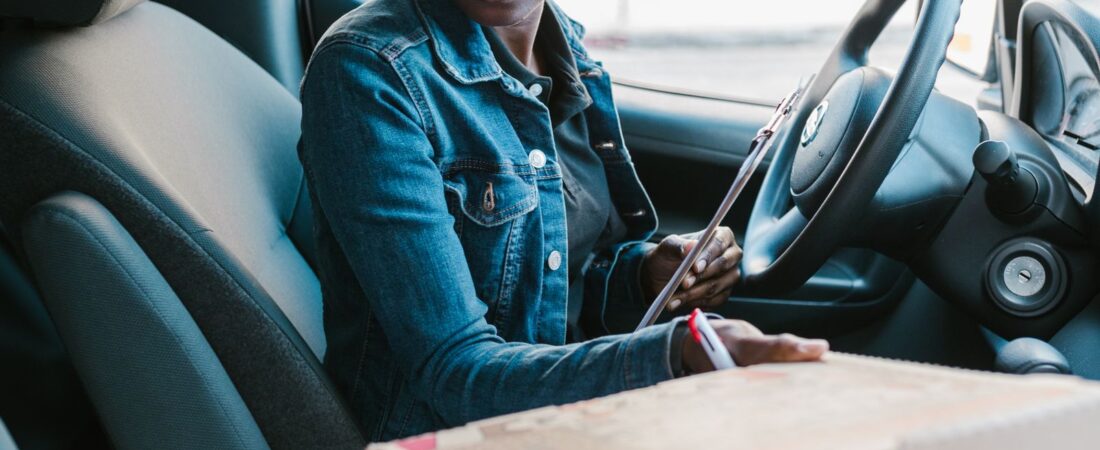

You’re twenty minutes into a dinner rush in Los Angeles or Seattle, waiting at a light, hot bag on the passenger seat, when your phone blasts a ShakeAlert: Earthquake detected. Drop, cover, hold on. You have maybe ten seconds before the ground starts rolling. What do you do with a car full of someone else’s dinner?
Most earthquake guides are written for people sitting at home or in an office. Delivery drivers live on the road, parked next to brick buildings, crossing bridges, idling under freeway overpasses. That changes the math on every piece of standard advice. This guide is written driver-to-driver: what to do before, during, and after an earthquake so you stay safe, keep your car intact, and protect the income your rig generates.
Why Earthquake Safety Matters More for Delivery Drivers Than You Think
Here is the uncomfortable truth: roughly 500,000 detectable earthquakes shake the planet every year, and about 100 of them cause real damage, according to the US Geological Survey. The United States is not exempt — about 45 states and territories sit in moderate-to-high earthquake risk zones. If you deliver in California, Oregon, Washington, Alaska, Utah, or the mid-South’s New Madrid region, the odds are not hypothetical. They are a when, not an if.
Delivery work stacks extra risk on top of that. You are usually near buildings when you park, and older brick storefronts shed facades and cornices during strong shaking. You spend hours on bridges and overpasses in cities like San Francisco and Seattle, where elevated structures are exactly what engineers worry about. You carry hot liquids and heavy bags that turn into projectiles in a hard jolt. And you are often alone, miles from home, when the ground moves. None of that is meant to scare you off the job — it is meant to convince you that a few minutes of preparation is worth real money in peace of mind.
Know Your Risk: Where Earthquakes Actually Happen in the US
Before you can prepare, you need to know what your market actually faces. The big one everyone knows is California — the San Andreas Fault system and the urban Hayward Fault underneath the East Bay can generate damaging shakes with almost no notice. But the map is much wider:
- Pacific Northwest (Cascadia Subduction Zone): a massive offshore fault running from northern California through Oregon and Washington. It produces the region’s largest quakes and is the reason Seattle and Portland drivers need a plan.
- New Madrid Seismic Zone: centered near the Missouri-Arkansas-Tennessee border, it produced some of the strongest quakes in US history in 1811-1812 and still rumbles today. Memphis, St. Louis, and Nashville drivers are squarely in range.
- Alaska: the most seismically active state in the country — Anchorage drivers should treat earthquake drills like Southern drivers treat hurricane season.
- Wasatch Front (Utah): Salt Lake City sits on a fault line with a history of major events and overdue pressure.
- Also on the map: Hawaii, Nevada, western Wyoming, and the Charleston, South Carolina area, which saw a magnitude 7+ quake in 1886.
If you are not sure whether your market is at risk, a two-minute check of the USGS hazard maps is worth doing tonight. Drivers in low-risk markets still carry emergency kits — see our complete delivery driver emergency kit guide — but their earthquake plan is simpler than the one in this article.
Before the Shake: Set Up ShakeAlert and MyShake Today
Earthquake early warning is the single biggest safety upgrade available to US drivers right now, and it is free. The USGS-managed ShakeAlert system is live in California, Oregon, and Washington, and it detects the first fast-moving waves of a quake, then pushes an alert to your phone — often seconds to tens of seconds before strong shaking reaches you. Those seconds are exactly what a driver needs to slow down, find a safe pull-off spot, and brace.
Set up all three alert channels:
- MyShake app (iOS and Android) — the official ShakeAlert-powered app, with automatic alerts plus a manual report feature.
- Google Android Earthquake Alerts — built into Android’s safety settings in supported states, no app download needed.
- Wireless Emergency Alerts (WEA) — the same channel that delivers AMBER Alerts; it carries ShakeAlert messages, so make sure your phone has emergency alerts enabled under settings.
Keep your phone charged and your mount solid — a phone bouncing around the cabin mid-quake is no help. That dovetails with the rest of your pre-shift routine: the hydration and nutrition habits that keep you sharp also keep you calm when alerts fire.
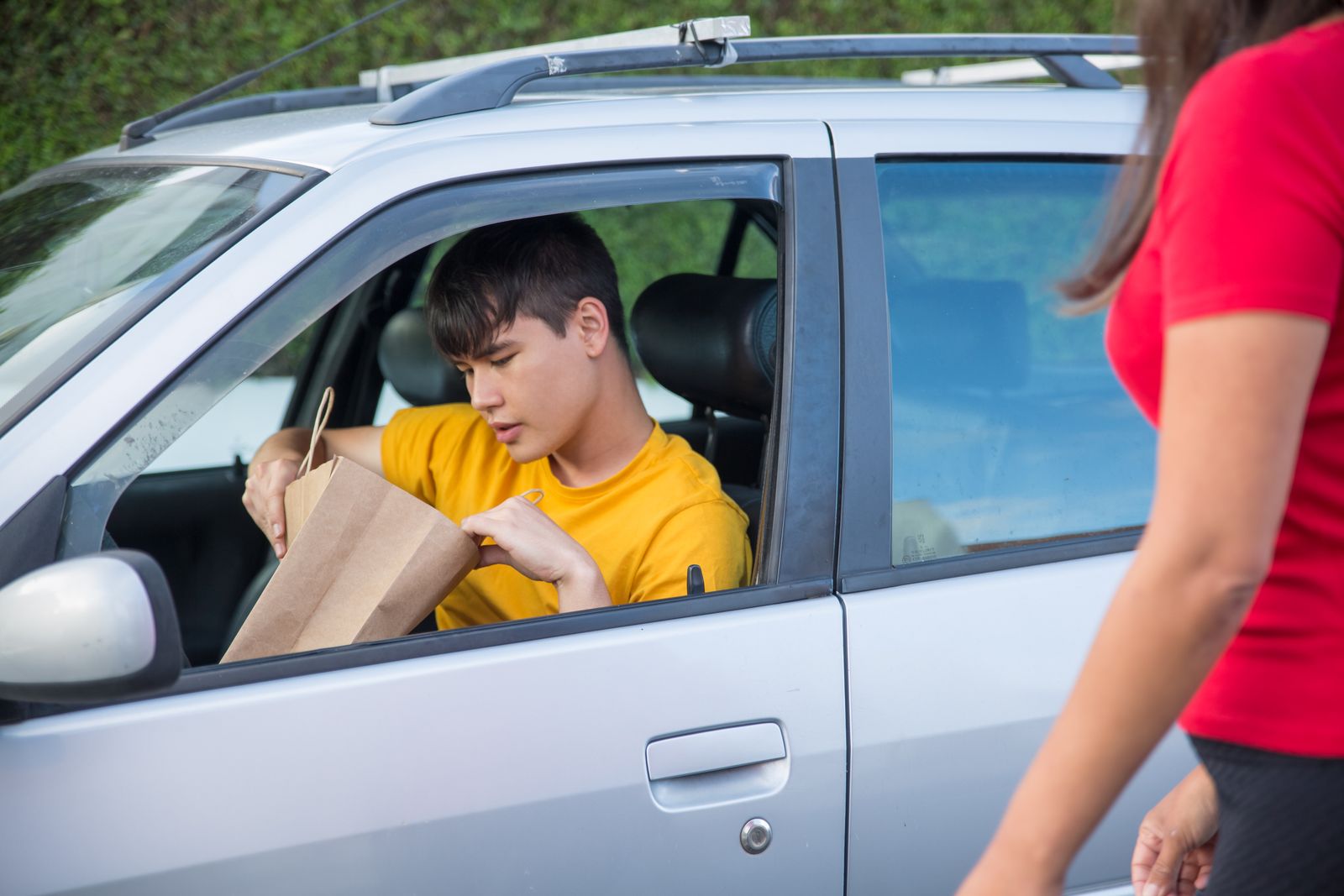
Driving When the Ground Starts Shaking: Your Step-by-Step Plan
You get the alert (or you feel the shaking — they often arrive together). Here is the driver’s sequence, in order:
- Slow down smoothly. No hard braking — the car behind you may not have gotten the alert. Signal, check mirrors, and ease off the accelerator.
- Pull over to a clear spot. Get away from overpasses, bridges, power lines, streetlights, trees, and building overhangs. A wide open parking lot or the shoulder of a road away from structures is ideal. Do not stop on or under a bridge or overpass — that is the single most dangerous place to sit.
- Set the parking brake and stay in the car. Your vehicle is the best shelter you have: it absorbs falling debris better than open ground, and you can drive away if the situation changes. Keep your seatbelt on.
- If you are already on a bridge or overpass, keep moving. Slowly and carefully drive to the nearest exit or clear area rather than stopping on the structure itself.
- Cover your head and neck with your arms or a jacket until the shaking stops. If a power line falls on your car, stay put and wait for emergency crews — do not step out.
If you are in a tunnel, continue driving out of it if you can do so safely, then follow the steps above. If a delivery is in progress, the order is simple: the food waits. Restaurants, customers, and your app’s support line will all understand.
Parked, Delivering, or at a Customer’s Door: What to Do
Earthquakes rarely announce themselves when you are comfortably driving an open road. More often you are double-parked outside a row of storefronts, or walking a bag up a flight of stairs. The rules change slightly:
- Parked near buildings: if you can move the car quickly, pull it away from glass storefronts, brick facades, awnings, and signs. If there is no time, stay inside the car with the seatbelt on — the car’s frame is the shelter.
- Walking to a door: Drop, Cover, and Hold On. Get under a sturdy doorway or table if one is nearby; otherwise drop to the ground, cover your head and neck, and hold on until the shaking stops. Stay clear of windows and anything that can topple.
- In an elevator: get off at the nearest floor if possible; if the shaking starts while you are inside, press buttons for all floors and get out at the first stop.
- Carrying a hot order: put it down. Serious burns happen when drivers try to save a $30 order during a quake. No order is worth an ER visit.
After the shaking stops, do not run outside immediately — that is when falling glass and cornices claim victims. Give it a minute, then move away from buildings to open ground if you are in a downtown canyon.
The First Hour After the Quake: Aftershocks and Hazards
The shaking stops, but the danger does not. Aftershocks are a fact of life after a significant quake — sometimes dozens in the first hours, and some strong enough to knock down things the main shock loosened. Treat every aftershock like the real thing and repeat the same steps.
Before you restart your engine, scan the area:
- Downed power lines: stay at least 30 feet away and never drive over one. Assume any wire on the ground is live.
- Road damage: watch for cracks, buckled pavement, sinkholes, and debris fields. What looks like a pothole may be a road that shifted a foot sideways. The roadside assistance and breakdown survival guide covers the general version of this drill.
- Gas leaks and fire: if you smell gas near a building or your car, do not start the engine — move away and call 911.
- Bridges and overpasses: authorities inspect after significant quakes; expect closures and reroute. Your routing apps update faster than radio, but official alerts win when they conflict.
- Your car: check for damage underneath and around — cracked glass, leaking fluids, tires off the rims from debris, or a bumper shoved into a wheel well.
Then make the business decision. If your area is in the emergency-response phase, most platforms pause or mark regions as unsafe automatically — do not fight it. If roads are clear and deliveries resume, take it slow, skip the bridge-heavy shortcuts, and give yourself an extra ten minutes per stop. If you are in a zone that just took a big quake, the smart play is ending the shift early. The best used cars for delivery drivers guide can help you pick a replacement if your current rig takes serious damage — but a well-prepared car usually walks away with cosmetic scrapes.
Protect Your Ride and Your Income: Insurance and Kit Checklist
Here is the insurance fact most drivers get wrong: collision coverage does not pay for earthquake damage — comprehensive coverage does. If a quake topples a sign onto your hood, crushes your car under a parking structure, or cracks your windshield in a rockslide, that claim lands on your comprehensive policy, subject to its deductible. Drivers who carry only liability and collision learn this the expensive way. If you deliver in a risk zone, read your policy tonight and confirm comprehensive is on it — it typically costs a few dollars a month more.
Rental and financing companies usually require comprehensive anyway, but check your actual coverage limits: a $2,000 deductible on a $4,000 car means you are effectively self-insuring. Raise or lower it to match what you could realistically absorb.
Your vehicle kit is the other half of the equation. A proper delivery emergency kit — water, non-perishable food, first aid, flashlight, phone power bank, cash, a physical map — is the same kit that saves you in an earthquake, a breakdown, or a wildfire evacuation. The full emergency kit checklist walks through exactly what to pack and where to store it so it does not slide around under your seat. Add two earthquake-specific extras: a pair of work gloves (broken glass is everywhere after a quake) and sturdy shoes you can walk in, in case you have to abandon the car and hike out.
Finally, think about your route plan the way tornado-country drivers and storm-season drivers already do: know which bridges, tunnels, and canyon roads you depend on, and have a surface-street backup in your head for the main ones. Drivers in quake country should also know where the open ground is in their usual zones — a parking lot or park that is clear of structures, where you can ride out shaking and aftershocks.
None of this takes more than an evening to set up, and most of it costs nothing. An earthquake can hit any shift, in any market on that risk map. When it does, the drivers who practiced, packed, and set up their alerts will be the ones still earning the next day — and the ones their customers remember for staying calm when the ground did not.
Ready to Start Delivering and Earn More?
Delivering with Uber Eats means flexible hours, weekly pay, and the freedom to work your own schedule — wherever you drive.
New drivers: Sign up through our partner link and get a $2,575 guaranteed bonus after completing your first 200 deliveries in select US cities!
Sign Up for Uber Eats and Start Delivering →
Must be 21+. Background check required. Terms apply.