
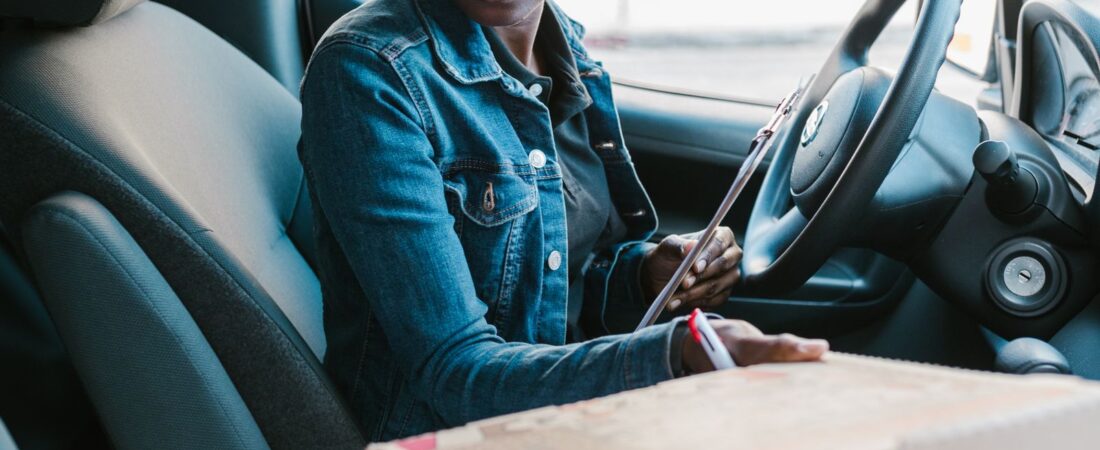

Grocery delivery just quietly became a much bigger piece of the gig economy than most drivers realize. According to the 2026 Gridwise Annual Gig Mobility Report, DoorDash grew its grocery and retail order share from 16% to 22% over the past year. Uber Eats hit 20%. Meanwhile, experienced Instacart full-service shoppers in high-income suburban markets are clearing $25 to $30 per hour on busy weekends — compared to the national food delivery average of $14.66 per hour reported by Gridwise for Q4 2025.
So what’s actually going on? Is grocery delivery the higher-earning lane that’s been sitting in front of drivers all along? Or does it come with enough hidden friction that standard food delivery still wins out in the end? The answer depends on your market, your hours, and how efficiently you can push a cart through a Kroger. Here is the full 2026 breakdown with real numbers so you can make an informed call for your own situation.
Why Grocery Delivery Is Exploding in 2026
The grocery delivery surge did not happen overnight. Consumer habits shifted hard during the pandemic and never fully reverted. In 2026, ordering groceries through an app is not a luxury for most US households — it is a weekly routine. That consistency means grocery order volume now flows throughout the day, not just during the lunch and dinner rush windows that dominate food delivery earnings.
Platforms are aggressively pushing into grocery because the unit economics work in their favor. Grocery orders carry higher average cart values, which typically drives larger customer tips. A household ordering $160 worth of groceries from Kroger is far more likely to tip $15 than someone who ordered a $14 burrito. DoorDash has responded to this shift by expanding grocery delivery partnerships with Kroger, Albertsons, Aldi, and a long list of regional chains, making shop-and-deliver a primary vertical rather than an afterthought.
For drivers, this creates a real strategic choice. Standard food delivery and grocery delivery are not just different order types — they involve different skills, different time commitments, and different earning ceilings. With the national average tip per food delivery sitting at just $4.19 in Q4 2025 — near a record low and down 0.7 percent year-over-year — some drivers are finding grocery’s tip structure meaningfully more attractive. Understanding both models is the first step to knowing which one belongs in your weekly schedule.
What Grocery Delivery Actually Pays in 2026
The three main grocery delivery options available to US drivers right now each have distinct pay structures. Here is what the numbers look like on the ground.
Instacart Full-Service Shoppers
Instacart is the most established dedicated grocery platform and offers the highest earning ceiling for experienced shoppers. Full-service shoppers handle the entire process — navigating the store, selecting items, managing substitutions, and delivering to the door. In 2026, full-service shoppers are reporting:
- Base batch pay: $7–$15 per order, based on item count, distance, and order complexity
- Average tips: $7–$12 per batch, with experienced shoppers in wealthier suburban markets regularly seeing $15–$25 on large orders
- Heavy order bonuses: $5–$10 extra for carts that exceed the platform’s weight threshold
- Net hourly earnings: $18–$26 per hour for most full-service shoppers; experienced shoppers in high-income suburban zones report $25–$30 per hour during weekend peak windows
One structural advantage that separates Instacart from food delivery: Instacart shows tips upfront before you accept a batch. You know exactly what the customer pre-tipped before you commit to the order. This makes batch selection far more strategic than the tip-guessing game that comes with food delivery platforms. You are not gambling on whether a customer will leave $2 or $15 after the fact. For a full look at Instacart’s pay tiers, shopper requirements, and batch selection strategy, see the complete Instacart shopper guide for 2026.
DoorDash Shop & Deliver
DoorDash’s Shop & Deliver feature lets standard Dashers pick up grocery orders from partner stores — Kroger, Safeway, Aldi, Sprouts, and others — without signing up for a separate platform. You use the same DoorDash app you already have, and grocery orders appear alongside regular food delivery requests. Pay per order is typically higher than standard food delivery to account for the additional shopping time.
In practice, DoorDash Shop & Deliver orders average $10–$18 per order including tip across most US markets, though this varies significantly by cart size and location. Tip transparency is less clean than Instacart — you see an estimated tip range rather than a confirmed pre-tip amount. Still, it is an excellent entry point for drivers who want to experiment with grocery delivery without the friction of onboarding onto a new platform from scratch.
Spark Driver (Walmart Grocery)
Walmart’s Spark Driver program handles grocery delivery from Walmart stores, Sam’s Club locations, and Walmart Neighborhood Markets. The model resembles Instacart — you either shop or pick up pre-staged orders and deliver them to customers. Earnings typically run $10–$18 per hour for newer Spark drivers, rising as you build order history and gain access to higher-paying delivery blocks. Spark tends to have consistent, predictable volume, particularly in suburban and mid-sized city markets where Walmart is the dominant grocery retailer in the area.
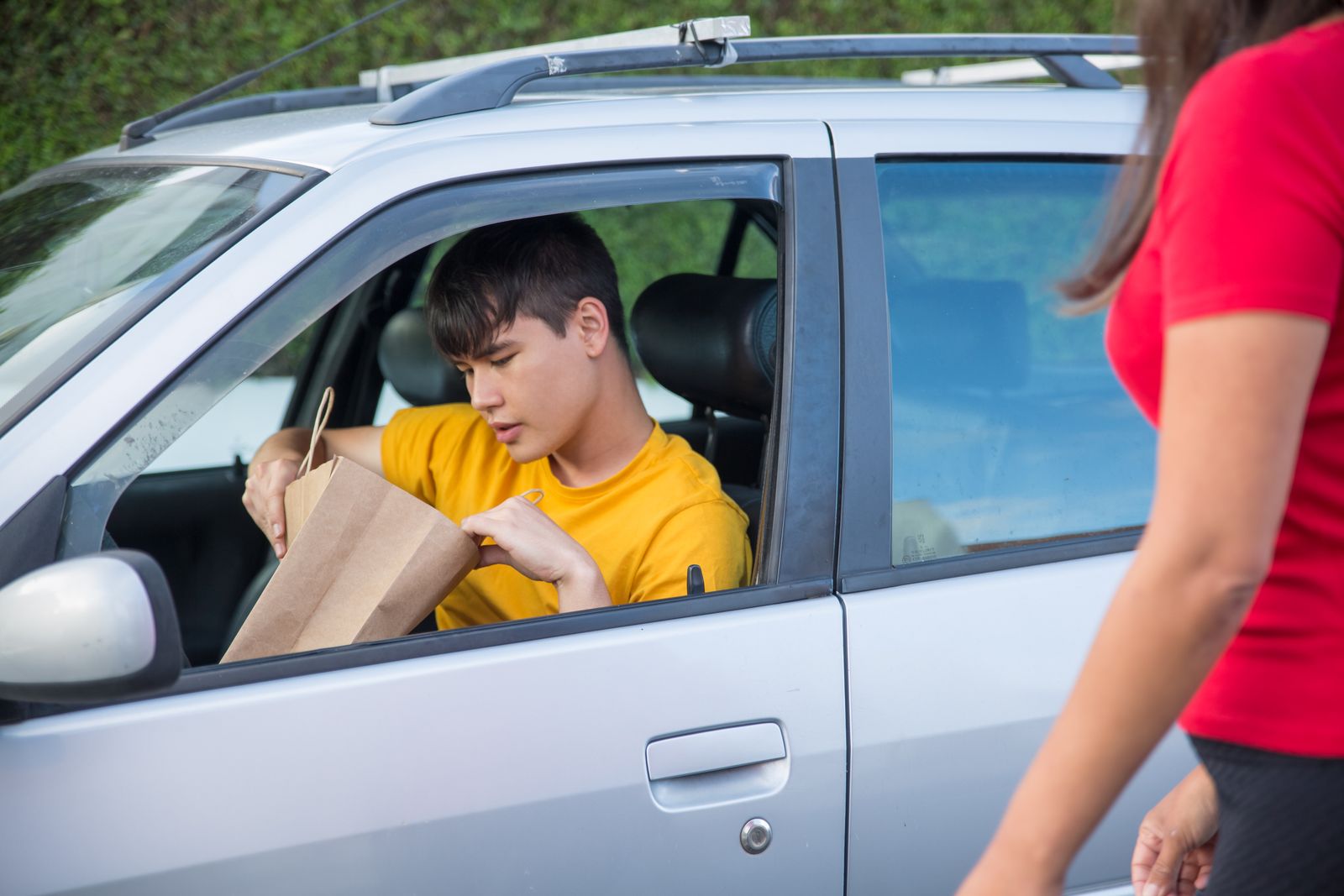
The Food Delivery Earnings Reality in 2026
Standard food delivery through DoorDash, Uber Eats, or Grubhub runs on a completely different rhythm. It is a faster-cycle, higher-frequency model — more orders per hour, but lower per-order value. The 2026 Gridwise Annual Gig Mobility Report puts the national numbers in sharp focus:
- Average pay per delivery: $9.39 in Q4 2025 (up just 1.3% year-over-year)
- Average hourly earnings: $14.66 (up 3.2% from Q4 2024, but still below the 2022 pandemic peak of approximately $16 per hour)
- Average tip per food order: $4.19 (down 0.7% year-over-year, near record lows)
- Tips as share of total per-delivery income: approximately 50 percent
- Active delivery utilization: 58.69% of time on shift in Q4 2025, versus 68% during the 2019–2020 boom
The story here is volume. Food delivery is a high-frequency, thinner-margin game. A skilled dasher in a dense market during a peak window might complete three to four deliveries per hour, which pushes gross earnings well above the $14.66 national average. The problem in 2026 is that tip fatigue is real — customers are tipping less across the board, and that trend has been declining since the 2021–2022 tip peak with no sign of reversal. If food delivery is your primary income source, understanding what actually moves the needle on tips for DoorDash and Uber Eats becomes even more critical when the baseline is this low.
The strongest case for food delivery is not its per-order pay — it is the surge window concentration. Between 11am and 1pm for lunch and 5pm and 9pm for dinner, food order frequency spikes hard. Peak pay bonuses stack. Zone demand maps light up. These two daily windows are where food delivery earns its keep, and missing them in favor of a long grocery batch is a real cost to your bottom line.
The Hidden Time Tax on Grocery Orders
Before you pivot entirely to grocery, here is what average hourly earnings figures do not fully capture: every grocery order carries a time commitment that standard food delivery simply does not have.
A typical food delivery run looks like this: arrive at the restaurant, grab the bag (already made), drive to the customer, hand it off. Total active time: 15 to 30 minutes per order depending on distance. You can stack multiple orders and move efficiently through a zone.
A typical Instacart batch looks like this: drive to the grocery store (adding your own gas cost and time), find parking, navigate 25 to 45 items through the aisles using the app, make substitution decisions when items are out of stock, wait in the checkout line, bag everything, drive to the customer, carry bags to the door. Total active time per batch: 45 to 90 minutes, often longer when you are new to a store.
This means your hourly rate on grocery delivery is almost entirely determined by shopping efficiency. A first-week Instacart shopper who takes 80 minutes on a $22 batch is netting about $16.50 per hour — fine, but not the $25 ceiling that experienced shoppers report. An experienced shopper who knows a specific Kroger’s layout, shops two batches simultaneously (Instacart supports this), and completes the same work in 50 minutes nets over $26 per hour.
That learning curve is the primary reason drivers who “tried Instacart once and quit” did so in the first two weeks. The first few runs are slower by design. If you push through that initial friction, the numbers improve substantially and consistently. Minimizing the time between drop-off and your next batch — essentially cutting dead mileage between stores and delivery addresses — matters even more in grocery than it does in food delivery, because the per-run commitment is so much larger.
When the Math Favors Grocery — And When It Does Not
Rather than thinking of this as a permanent either-or choice, think of it as a time-of-day allocation problem. Here is a practical framework based on 2026 market conditions:
Grocery delivery wins when:
- You are working morning or early afternoon (9am–3pm), outside peak food delivery windows when restaurant orders are slow
- You are in a suburban or exurban market where grocery stores anchor neighborhoods and customer incomes are higher — bigger carts, bigger tips
- You have built familiarity with a specific store and can shop it efficiently
- An Instacart batch is showing a confirmed pre-tip of $10 or more — a clear signal that the order is worth accepting
- Your food delivery app is showing low zone demand with few active orders and no peak pay active
Food delivery wins when:
- It is lunch or dinner rush — 11am to 1pm and 5pm to 9pm are where food delivery stacks peak pay and order volume simultaneously
- You are in a dense urban core where restaurant proximity and building concentration means 15 to 20-minute delivery cycles
- Peak pay or surge pricing is active on your platform and adding $2 or more per order
- You need the flexibility to quickly switch zones or stack back-to-back orders without a 60-minute commitment per run
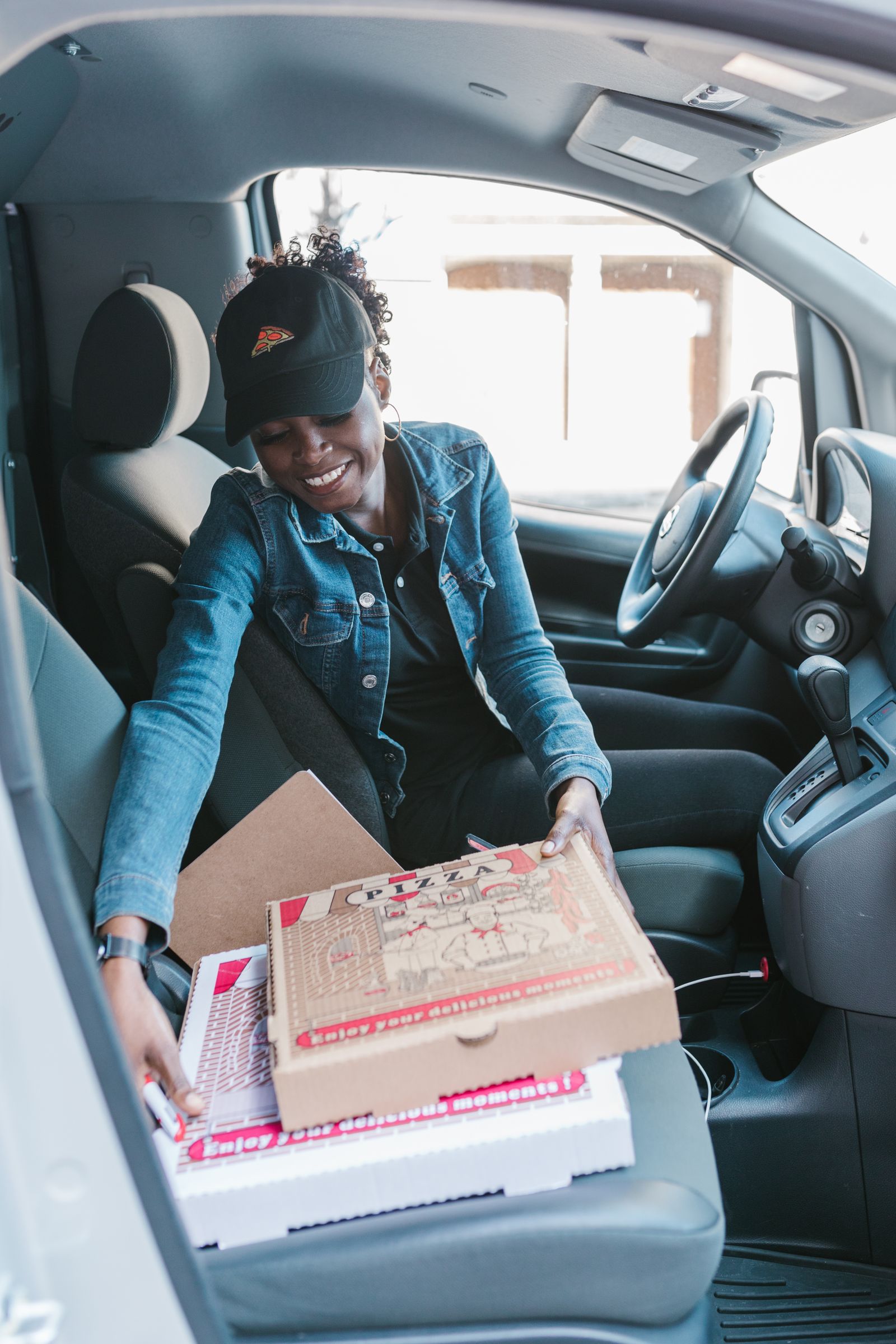
Building a Hybrid Schedule That Captures Both
The highest-earning drivers in 2026 are not picking one model and committing to it exclusively. They are building a structured weekly schedule that uses grocery delivery during the windows where food volume is thin, and pivots back to food delivery when the lunch and dinner surges hit. A practical version of that schedule looks like this:
- Weekday mornings, 9am–noon: Log into Instacart or Spark. Grocery order volume is solid during this window as households restock or order for the week. Competition from other drivers is lower because most food-focused dashers are not active yet. This is your window to cherry-pick the highest-rated batches with the best pre-tips.
- Lunch rush, 11am–2pm: Switch to DoorDash or Uber Eats when peak pay activates. If you are already mid-batch on Instacart, finish it efficiently and then flip. Missing the lunch window entirely for a slow grocery batch is a real earnings trade-off.
- Mid-afternoon, 2pm–5pm: Return to Instacart or Spark. This is another solid grocery window — demand from households doing evening prep orders is consistent, and food delivery is at its daily low point for order frequency.
- Dinner rush, 5pm–9pm: Back to food delivery. This is your highest-earning food window of the day. Do not sacrifice it for grocery batches unless an exceptional pre-tipped order comes through that mathematically justifies it.
Structuring your shifts this intentionally requires some upfront planning, but the difference in weekly take-home can be significant. If you are building out your delivery schedule week by week, the framework in our time management and scheduling guide for delivery drivers maps directly onto this kind of hybrid approach.
Which Platform Should You Start With in 2026?
If you have never done grocery delivery and want to test whether it belongs in your weekly rotation, here is a practical path forward that does not require betting your whole shift on an unfamiliar platform.
Start with DoorDash Shop & Deliver. You already have the app. Opt into grocery orders in your settings and let a few come through organically. This is lower-stakes than committing to Instacart because you are not navigating a new platform, a new app interface, or a new ratings system. Your first grocery experience will teach you what the scanning workflow, substitution process, and checkout flow actually look like before you stake a full Instacart shift on it.
Then sign up for Instacart. Once the grocery delivery model feels familiar, Instacart is where the real earning ceiling opens up. The upfront tip visibility, the ability to accept double batches, and the platform’s grocery-only focus all work in a serious shopper’s favor. Our complete Instacart shopper guide walks through the signup process, earning tiers, and batch selection strategy in detail.
Add Spark if Walmart is the dominant grocer in your market. In most suburban and mid-sized US cities, Walmart captures a large share of weekly grocery spend — which translates to consistent Spark order volume. For drivers who also want to run Target store orders, our Shipt shopper guide covers that platform’s pay structure and requirements if it is available in your area.
The drivers consistently clearing $20 to $26 per hour in 2026 are not the ones who locked in on a single platform and worked harder. They are the ones who understood where each model earns its keep, when to use it, and how to move between them without wasting the day’s best earning windows. Grocery delivery has a real and growing place in that toolkit — but it pays best when you treat it as a precision instrument, not a default fallback when food orders are slow.
Ready to Start Delivering and Cash In?
Join thousands of drivers already earning — and get a $2,575 guaranteed bonus after completing your first 200 deliveries in select US cities.
New drivers: Sign up through our partner link and start earning today!
Sign Up for Uber Eats and Start Delivering →
Must be 18+. Background check required. Terms apply.