
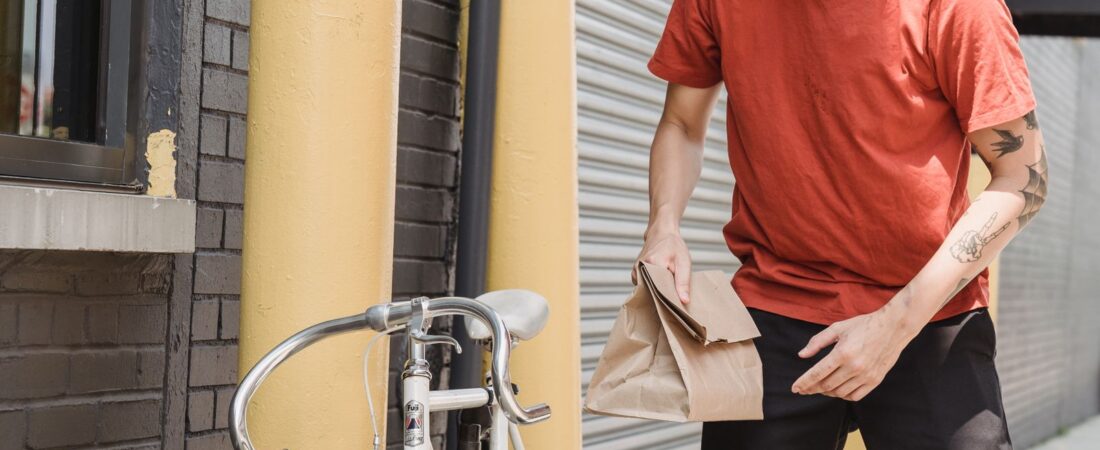

If your entire delivery income depends on DoorDash, Uber Eats, Instacart, Spark, or Amazon Flex, you are already at a disadvantage. Those five platforms control most of the market — which means they also control your schedule, your order flow, and ultimately your paycheck. When one of them trims base pay, shifts its algorithm, or floods your zone with new drivers, you feel it immediately.
The answer is not to work harder on the same apps. It is to diversify. A growing tier of second-tier and regional delivery platforms — Veho, Roadie, Favor, Point Pickup, and DeliverThat — are actively recruiting drivers in 2026, paying competitive rates, and running in markets with far less saturation than the big four. This guide breaks each one down: what it pays, where it operates, what vehicle you need, and how to get approved fast.

Why Second-Tier Platforms Are Worth Your Time in 2026
Driver saturation on DoorDash and Uber Eats has been climbing in most major US metro areas since late 2024. More drivers competing for the same orders means longer queue waits, more declined offers to protect your dollar-per-mile ratio, and more dead mileage between pickups. Platforms like Veho and DeliverThat, by contrast, are actively expanding their driver networks — which means sign-up incentives, priority routing for newly approved drivers, and far less competition for available work.
There is also an income-stability argument. Running multiple apps simultaneously is the standard playbook for experienced drivers, but most multi-apping advice focuses on the same big-four roster. Adding a fundamentally different platform — a route-based player like Veho, an on-your-way gig like Roadie, a regional operator like Favor — creates income diversity that survives algorithm changes on any single app. Better still, most second-tier platforms are daytime-heavy, which fills the mid-afternoon dead zone that every food delivery driver dreads.
Veho — Route-Based Pay With No Per-Delivery Anxiety
Veho is a last-mile delivery company that contracts with e-commerce brands — think online retail shipments, not food. The model is fundamentally different from app-based food delivery: you accept a full route before you start, scan packages at a Veho distribution hub, and deliver 30–80 stops along a preset path. The route’s total pay is displayed upfront, so there is no “low offer, should I skip it?” calculus mid-shift.
What Veho Pays
Veho advertises $20–$26 per hour on its driver recruitment page. Third-party tracking from Gridwise places the real effective hourly between $16 and $25 depending on market and route efficiency. In denser markets like Chicago, Austin, and Atlanta, experienced Veho drivers routinely clear $150–$180 for a 6–7 hour route — roughly $22–$26/hr effective once you account for time scanning packages at the hub. Routes typically pay $60–$180 in total, disclosed before you accept. There is no tip component: the route rate is the route rate. No tip upside, but also no tip baiting and no unpleasant surprises at the end of a long shift.
Veho Requirements and Sign-Up
- Age: 25+ in most markets (some markets allow 21+)
- Vehicle: Mid-size sedan or larger; every package on your route must fit inside
- License and insurance: Valid US driver’s license and personal auto insurance
- Background check: Required, including an MVR check
Veho operates in Denver, Dallas, Austin, Nashville, Atlanta, Chicago, Phoenix, Seattle, Charlotte, and roughly 15 additional expanding US markets as of September 2026. Apply at shipveho.com/drive. The application takes 10–20 minutes online, and background checks typically clear within 3–5 business days.
Roadie — Earn While You Drive Somewhere Anyway
Roadie — acquired by UPS in 2021 and expanded aggressively through 2025 — operates on a crowdsourced model unlike any other platform on this list. You enter your origin and destination in the app, and Roadie matches you with “gigs” — items that a shipper needs moved in roughly the same direction you are already going. You are essentially getting paid to carry something you were driving past anyway.
How Roadie Works and What It Pays
Local Roadie gigs (same-city pickups and drops) typically pay $8–$50. Long-haul gigs — moving an oversized item from one city to another — can reach $650. Gridwise data from 6,725 tracked Roadie drivers puts the median at $12.70/hr, but that figure skews down with casual users. Drivers who actively plan routes around Roadie hauls and prioritize long-distance gigs report $18–$25/hr effective hourly. The real money is in oversized items — furniture, sports equipment, home goods — that standard couriers will not touch.
Roadie is especially valuable for drivers with trucks, SUVs, cargo vans, or minivans. If you already run large-item platforms like Dolly or GoShare, Roadie adds a second income stream on the same vehicle type with almost no incremental setup. Requirements: 18+, valid DL, and a vehicle appropriate to the item sizes you want to carry. Sign up at driver.roadie.com.
Favor — The Texas Driver’s Underrated Edge
If you drive in Texas, Favor is the single most underutilized platform in the state. Owned by H-E-B — the dominant Texas grocery chain — Favor operates in 100+ Texas cities including Austin, Dallas, Houston, San Antonio, Corpus Christi, Lubbock, Waco, and Laredo. It is effectively DoorDash for Texas, but with less driver saturation and a customer base that has been loyal to the app since 2013.
Favor Pay Model and Requirements
Favor “Runners” earn a per-delivery base rate plus 100% of all tips — Favor takes no tip cut. Effective hourly earnings in most Texas markets run $12–$18/hr, with Austin and Dallas drivers reporting $15–$20/hr during peak windows (Friday and Saturday evenings, weekday lunch near business districts). Favor also runs periodic incentive challenges — complete X deliveries in a week for a bonus — that can add $30–$75 to a productive week.
Requirements: 18+, smartphone, reliable vehicle, background check. No minimum weekly hours required. Apply at favordelivery.com/become-a-runner. Approval takes 3–7 business days. For Texas drivers already running DoorDash or Uber Eats, Favor is a natural same-shift stack — run both apps and accept whichever order arrives first.
Point Pickup — Retail’s Same-Day Delivery Network
Point Pickup partners with major retail chains to handle same-day and next-day local delivery. It operates primarily in New England, the Mid-Atlantic, Southeast, and Midwest, making it a strong regional play for drivers in markets where restaurant-delivery density is lower. Pay runs $15–$22/hr on average, with per-delivery rates varying by distance and order size.
Because Point Pickup focuses on retail — not restaurant — delivery, order volumes stay steady throughout the day. Retail customers shop at 11 AM, 2 PM, and 4 PM, not just at mealtimes. This makes Point Pickup a natural daytime anchor for drivers who hit slow patches mid-afternoon on food delivery apps. Requirements: 21+, valid DL, background check, smartphone. Apply at pointpickup.com. Point Pickup calls its drivers “Associates” and runs a brief video orientation; plan for a 5–10 day approval window.
Point Pickup pairs cleanly with your existing lineup. If you are already working to cut dead mileage between food orders, a Point Pickup retail run on the way back to your zone is effectively free income. Build it into your daily schedule as a midday block before pivoting to food delivery for the evening peak.
DeliverThat — Catering Orders Nobody Else Will Take
DeliverThat connects restaurants and caterers with drivers for large-order and catering deliveries — corporate lunches, event catering, office meetings, and sports-team meals. These are orders that standard food apps cannot handle: too large, requiring setup at the destination, or needing a precise timed arrival window.
The Money Math on Catering Runs
DeliverThat drivers earn $15–$30+ per delivery, and catering tips from office managers and event coordinators spending company budgets tend to run generous. A single corporate catering run might pay $22 base plus a $15–$25 tip for a 45-minute round trip — $37–$47 for under an hour, with zero restaurant wait-time stress because catering orders are pre-scheduled well in advance. Most DeliverThat volume hits Monday–Friday, 10 AM–2 PM — exactly the dead zone for food delivery drivers on DoorDash or Uber Eats. If your weekday mornings are open, this is one of the most productive ways to fill them.
DeliverThat Requirements
- Age: 21+
- Vehicle: Clean, enclosed vehicle — sedan, SUV, or van preferred
- Insurance: Valid personal auto insurance
- Background check: Required
DeliverThat operates in 50+ US markets. Apply at deliverthat.com/drivers. Unlike drop-and-go food delivery, DeliverThat drivers are expected to set up food at the client site when requested. High-value corporate clients can request specific drivers by reputation — a repeat-business dynamic that is rare in gig delivery and very valuable once you build it.

How to Stack These Platforms With Your Existing App Lineup
The goal is not to replace DoorDash or Uber Eats — it is to plug the gaps in your day. Here is what a smart multi-platform week looks like in practice:
- Monday–Friday, 10 AM–2 PM: DeliverThat for catering runs plus Point Pickup for retail same-day orders. Both are daytime-heavy and restaurant-delivery-light.
- Weekday evenings and weekends: DoorDash or Uber Eats as your primary, with Favor (Texas drivers) or Roadie hauls layered in during slow stretches.
- Weekend mornings (Saturday and Sunday): Veho route blocks. Pick up your route assignment by 8 AM, finish by early afternoon, then pivot to food delivery for the evening rush.
For drivers already running the full multi-app strategy across the big four, adding even one second-tier platform can add $150–$400 per week in incremental income without meaningfully increasing total hours — because you are filling time that was previously idle or low-value. Before you diversify, use the complete 2026 delivery app pay comparison to benchmark what the big four actually pay in your specific market.
Quick Pay Snapshot: Second-Tier vs. Big Four in September 2026
Here is a realistic net-hourly snapshot for active drivers after typical vehicle expenses but before income tax:
- DoorDash / Uber Eats (peak hours): $15–$24/hr
- Instacart / Spark (grocery): $16–$26/hr
- Veho (route model): $16–$25/hr
- DeliverThat (catering-active days): $18–$30/hr
- Favor (Texas peak hours): $14–$20/hr
- Point Pickup (retail): $14–$22/hr
- Roadie (long-haul gig days): $16–$28/hr
Second-tier platforms are not dramatically higher-paying than the big four on paper. The opportunity is in their off-peak availability, lower driver competition, and complementary timing windows. You are not trading DoorDash for Veho — you are adding Veho to your weekend mornings and DeliverThat to your weekday afternoons. For a head-to-head look at the big-four numbers, the DoorDash vs. Uber Eats vs. Instacart 2026 pay breakdown is the right reference point.
A 30-Day Ramp-Up Plan: Getting Active on All Five
You do not need to join everything at once. Here is a realistic onboarding sequence that avoids approval-wait overload:
- Week 1: Apply to Veho and Roadie. Both have streamlined online applications; background checks typically clear within 3–5 business days. Roadie goes live faster and you can start picking up gigs almost immediately on your existing routes.
- Week 2: Apply to DeliverThat and Favor (Texas drivers). Start accepting Roadie gigs along your current driving patterns. Log your first Veho route once your approval clears.
- Week 3: Apply to Point Pickup (allow 5–10 days for the orientation and approval process). Begin tracking per-platform net hourly in a spreadsheet so you can see which app earns best in your specific market and time slot.
- Week 4: All five platforms active. Double down on your top earner; keep the rest as gap-fillers. Log every mile — all platform driving is deductible at the 2026 IRS standard mileage rate of 76 cents per mile.
The most resilient gig delivery income in 2026 does not come from grinding harder on a single app. It comes from building a platform stack that pays you through morning routes, afternoon retail runs, midday catering gigs, and evening restaurant rushes — with no single algorithm holding your entire paycheck hostage.
Ready to Start Delivering and Cash In?
Join thousands of drivers already earning — and get a $2,575 guaranteed bonus after completing your first 200 deliveries in select US cities.
New drivers: Sign up through our partner link and start earning today!
Sign Up for Uber Eats and Start Delivering →
Must be 18+. Background check required. Terms apply.