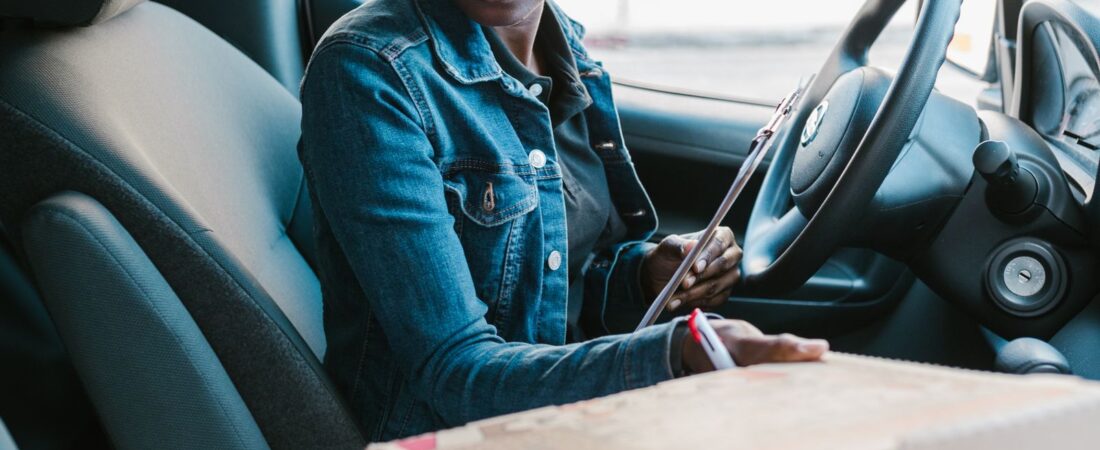

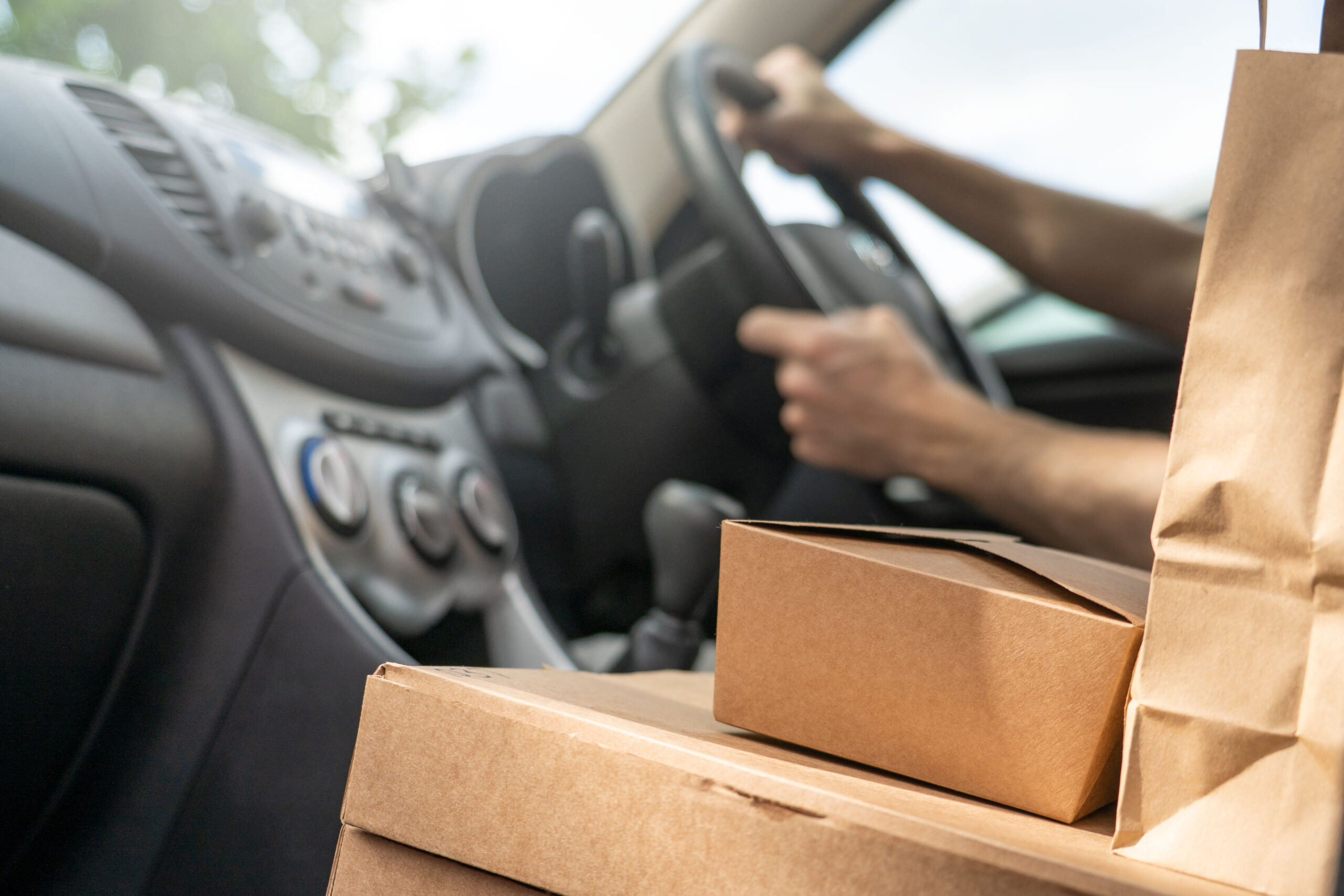
If you have ever pulled into a gas station at 5:40 a.m. and watched a guy in a polo shirt stack four cases of soda, two racks of bread, and a wire basket of snacks onto a hand truck while the store clerk signs his handheld, you have seen a DSD route in action. Direct store delivery is the part of the supply chain that most delivery drivers never hear about — and it is quietly one of the most stable paychecks in the business, because it does not depend on tips, promos, or a Friday night surge.
Driver Opportunity
Want to Earn While You Read?
Join as a new driver and get up to a $2,575 guaranteed bonus after completing your first 200 deliveries in select US cities.
Start Earning Now →New drivers only · Terms apply · Available in select cities
What a DSD Route Driver Actually Does All Day
DSD stands for direct store delivery. Instead of a warehouse shipping pallets to a grocery distribution center, the manufacturer sends its own truck straight to the store. Bread, snack cakes, chips, soda, energy drinks, beer, dairy, and greeting cards all move this way. The driver is the last mile and the merchandiser: you unload, you stock the shelf, you rotate the old product to the front, you pull stales and damages, and you settle paperwork with the store receiver before you leave.
That combination is why DSD pay is different from app-based delivery. You are not just moving a box from A to B — you are responsible for how the shelf looks and, on commission routes, for how much product moves off it. Stores expect you to face labels forward, fill from the back, and keep the planogram honest. The handheld scanner (XTEL, VIP, or a company tablet) tracks every case in and every stale out.
What DSD Route Drivers Earn in 2026
Posted pay ranges on company career pages and route-for-sale listings cluster into three tiers. These are gross numbers before taxes and before vehicle costs on owner-operator routes.
| Route type | Typical structure | Realistic 2026 gross |
|---|---|---|
| Snack & chip route sales (W2) | Base + commission + overtime | $55,000–$75,000/yr |
| Bread route, independent operator | Commission on sales, you own the route | $70,000–$120,000/yr gross, before route note and truck |
| Beverage delivery, non-CDL | Hourly $22–$29 + OT | $52,000–$68,000/yr |
| Beverage delivery, CDL B/A | Hourly $26–$34 + OT | $62,000–$85,000/yr |
| Part-time weekend merchandiser | Hourly $17–$22 | $200–$450/wk |
The hourly numbers look modest until you count the overtime. A 50-hour beverage route at $27/hour with time-and-a-half after 40 is roughly $1,485 in a week — and that is a W2 job with benefits, not a 1099 grind where you eat the fuel. Bread commission routes can beat it, but the ceiling comes with real risk: you are buying inventory movement, not just hours.
Commission, Salary, or 1099: How DSD Pay Structures Work
Three structures dominate, and they behave very differently when volume dips.
- Hourly W2 — most beverage and some snack routes. You get paid for hours worked, overtime after 40 in most states, and the company owns the truck and the risk. Predictable, but the ceiling is capped.
- Base plus commission W2 — common on snack routes. A salary floor plus a percentage of route sales, often with a quarterly bonus tied to stale percentage and new-item placement. This is the best risk-adjusted structure for a new driver.
- Independent operator / 1099 — standard on bread and some DSD snack routes. You buy or lease the route, pay for the truck, fuel, insurance, and helpers, and keep the commission. Great years are very good; a bad store reset or a lost account hits your income directly.
Before you sign anything, ask two questions: what percentage of route sales do I keep, and who eats the stales. On many independent bread routes the operator absorbs stale and damage costs, which is why a route that looks like $1,300 a week gross can net closer to $800 after the note, fuel, and returns.
The Truck, the License, and the DOT Card
Most bread and snack routes run box trucks or step vans under 10,001 pounds GVWR, which means no CDL — but you still need a valid license, a clean motor vehicle record, and usually a DOT medical examiner’s certificate once the vehicle crosses that weight threshold. Beverage routes are split: bulk and geobox trucks often need a Class B, tractor-trailer delivery needs a Class A.
What actually gets people rejected is not the license. It is the MVR. Two moving violations in three years will end most DSD applications, and a DUI is a hard stop for insurance reasons. Companies also run background checks, drug screens (including cannabis in states where it is legal, because DOT rules do not care), and a physical capability test — typically lifting 50 pounds repeatedly and pushing a loaded hand truck up a ramp.
Who Is Actually Hiring Routes in 2026
The employer list is shorter than the job boards suggest, because most routes sit inside a handful of large distributors and their independent operator networks:
- Snacks and chips: Frito-Lay, Utz, Herr’s, Snyder’s-Lance, and regional independents.
- Bread and baked goods: Bimbo Bakeries (Arnold, Sara Lee, Thomas’), Flowers Foods, McKee Foods (Little Debbie), Hostess, and local bakeries that still run their own trucks.
- Beverage: Coca-Cola Consolidated, PepsiCo, Keurig Dr Pepper, and independent beer wholesalers — many of which are Teamsters shops with pension contributions.
- Other DSD: dairy, greeting cards, salty snacks in convenience channels, and pharmacy-adjacent consumer goods.
Two channels matter. Company career pages list W2 route sales and merchandiser roles, and they update weekly. Route-for-sale listings — often on broker sites or through the distributor’s own operator recruitment page — are where the independent bread and snack opportunities live. If you want a comparison point for how other specialty routes pay, our breakdown of auto parts delivery jobs at NAPA, AutoZone, and dealerships uses the same math.
A Real Day on a Bread Route, Hour by Hour
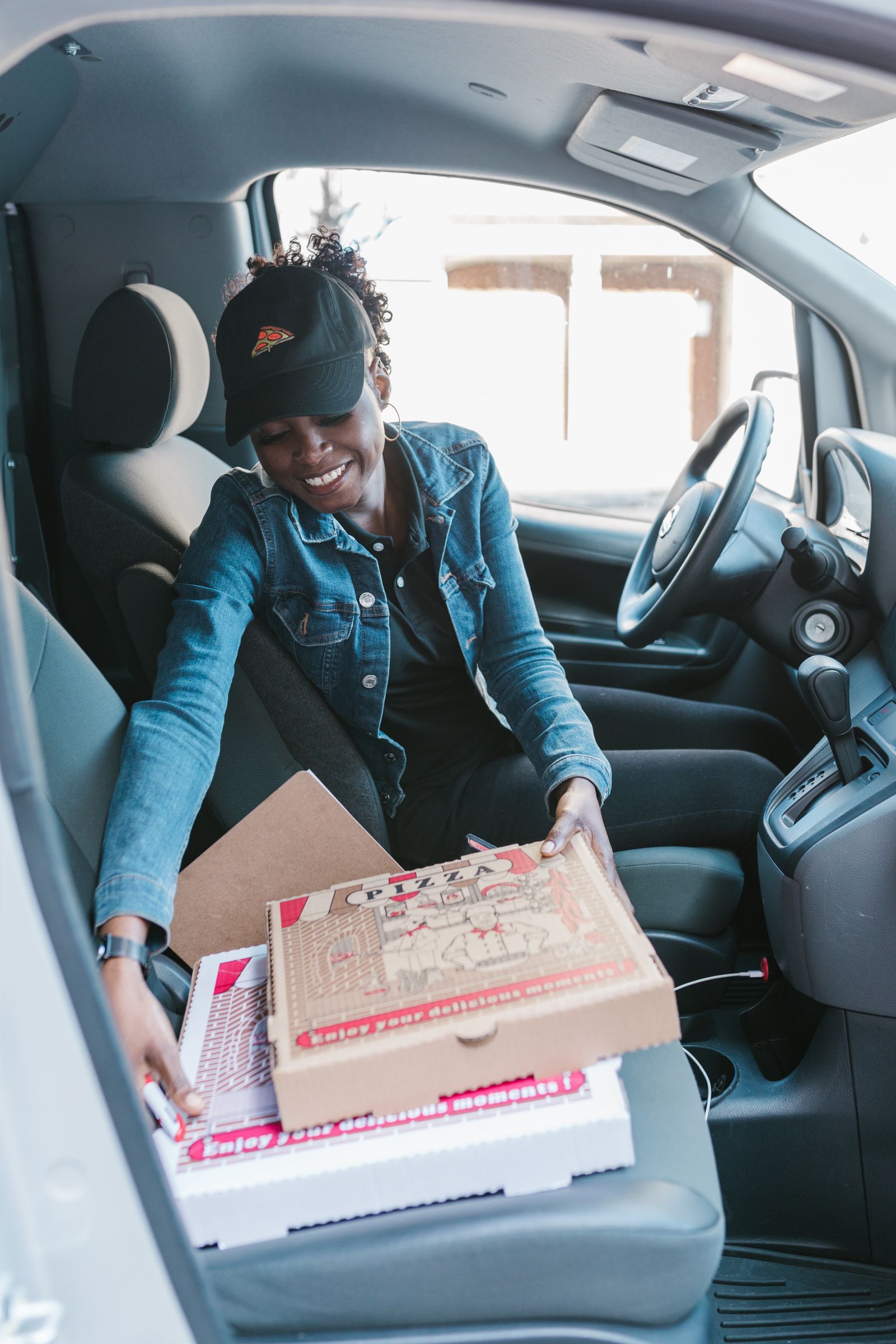
Here is the shape of a typical independent bread route in a mid-size metro, based on how operators describe the work:
- 3:45 a.m. — Arrive at the depot. Pull your order, check the load sheet against the truck, and load trays. Bread is bulky and light; a full truck looks dramatic and weighs less than it seems.
- 4:30 a.m. — First stop, usually a 24-hour grocery or a convenience chain that wants to be full before the morning rush. Check in with the receiver, scan in, stock, rotate, pull stales.
- 6:00–10:00 a.m. — The bulk of the route: 8 to 14 more stops, mostly convenience stores and small grocers. This is where speed matters — a well-run stop takes 8 minutes, a bad one takes 25.
- 11:00 a.m. — Second-tier stops and any customer with a delivery window. Handle special orders, endcap builds, and new-item placement.
- 1:00–2:30 p.m. — Return to the depot, unload stales, reconcile the handheld, settle paperwork, and pre-order for tomorrow.
Expect 9 to 11 hours, 12,000 to 18,000 steps, and 15 to 25 stops. The physical load is real but manageable once you learn to stack a hand truck properly; the mental load is the schedule, because every stop you run late cascades into the next one.
The Hard Parts Nobody Warns You About
DSD is a good living, but it is not a passive one. Four things surprise new drivers:
- Stales and chargebacks. Product that does not sell comes back out of your pocket on commission routes. A store that over-orders or a rep who pushes too much inventory can erase a good week.
- Store-level politics. You answer to a receiver, a store manager, and a category manager who may all want different things from your shelf space. Relationship skills matter as much as driving.
- The early clock. Most routes start between 3 and 5 a.m. If you cannot sustain that for years, the money will not fix it.
- Route value risk. Buying a route is buying a small business. Accounts can move, chains can reset planograms, and the resale value of your route depends on the sales history you maintain.
How to Land a DSD Route With No Experience
The fastest entry is not the route itself — it is the merchandiser or “reset” role that supports it. Merchandisers stock shelves and build displays for $17–$22 an hour, work alongside route drivers, and learn the stores, the receivers, and the product flow. Six to twelve months of that gets you internal consideration for a route sales opening, and distributors strongly prefer internal hires because they already know you can handle the physical work and the 4 a.m. start.
If you want to go straight at a route, do these five things in order:
- Pull your MVR and your DOT medical card before you apply. Walking in with both removes the two biggest reasons applications stall.
- Apply directly on distributor career pages for “route sales,” “delivery driver,” and “merchandiser” — not through aggregators that repost the same listing weeks late.
- Ask the store receiver at your local grocery who services the bread and snack aisle, and whether their company is short a driver. Route managers hire on referrals constantly.
- For independent routes, request the last 12 months of route sales, the stale percentage, and the terms of the note before you make an offer.
- Emphasize reliability and customer relationships over driving speed. Every route manager has had a fast driver who lost accounts.
DSD vs. Gig Apps: Which Pays Better for Your Time
App delivery wins on flexibility and loses on predictability. A DoorDash or Uber Eats hour in 2026 grosses roughly $18–$25 in most markets before fuel, and the good hours are contested. A DSD route hour grosses more like $25–$35 equivalent on W2 beverage routes, or $30–$45 on a well-run commission route — but you commit to a start time and a customer list.
The honest comparison is not hourly rate, it is variance. Gig work lets you scale up on a Saturday and take Monday off. DSD gives you the same stops, the same stores, and the same paycheck rhythm every week, which is worth a lot if you are financing a car or covering rent. Plenty of drivers run a hybrid: a weekday DSD or merchandiser schedule plus weekend app blocks, which is the combination that tends to produce the steadiest monthly number. Whichever you choose, the fixed costs are similar — see our guide to B2B restaurant supply distribution routes for how the warehouse-to-store side of this work compares.
Taxes, Deductions, and Record-Keeping on a Route
If you are a W2 route driver, your tax life is simple: withhold, file, done. If you are an independent operator or 1099 merchandiser, you are running a business and the paperwork decides your real take-home.
Track every mile from the depot to the last stop and back — on a 60-mile daily route that is 15,000 deductible miles a year, and the per-mile deduction is usually the largest single write-off available to you. Our walkthrough of the standard mileage versus actual expense deduction covers which method wins in year one. Beyond mileage: route note interest, insurance, fuel, tires, hand trucks, uniforms, phone and data, and the self-employment tax hit of roughly 15.3% that W2 drivers never see.
Use a mileage app that logs automatically rather than a notebook, and reconcile it weekly. Drivers who wait until April almost always lose deductions they actually earned. A route optimization app doubles as a mileage log and shaves real minutes off a 20-stop day.
Is a DSD Route Worth It in 2026?
If you want maximum flexibility and low commitment, no. If you want a predictable $55,000–$85,000 W2 income with benefits and overtime, or you are prepared to run a route like the small business it is, DSD is one of the few delivery jobs left where the pay actually rises with skill. The work is early, physical, and repetitive — and that is exactly why it pays more than the apps. Most people will not do it, which is also why route managers are always hiring.
Start with a merchandiser role if you are unsure. You will know within a month whether the 4 a.m. alarm and the shelf work suit you, and you will be earning while you find out. Then run the numbers on your own market, keep your MVR clean, and treat the route like the asset it is — because on DSD, the driver who understands the business side is the one who stays.
Driver Opportunity
Ready to Start?
Turn This Guide Into Real Income. Join as a new driver and get up to a $2,575 guaranteed bonus after completing your first 200 deliveries in select US cities.
Sign Up & Start Delivering →New drivers only · Terms apply · Available in select cities
Before your first full year closes, run through the year-end money checklist for delivery drivers so your deductions, estimated payments, and equipment receipts are already in order.