
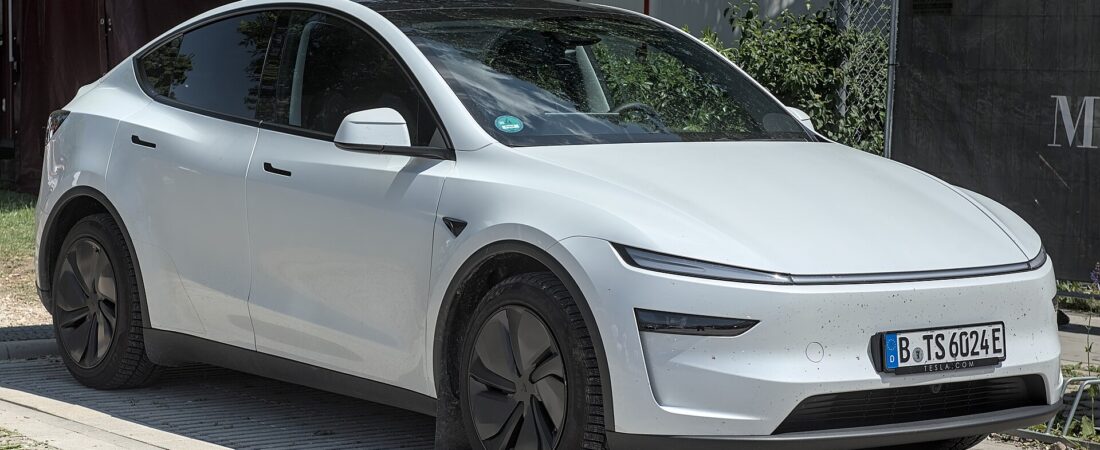

On February 14, 2026, Tesla quietly closed the door on buying Full Self-Driving outright. The $8,000 one-time purchase — itself a reduction from the $15,000 price it carried for years — is gone. If you want FSD (Supervised) today, you pay $99 a month, every month, for as long as you use it. For gig drivers weighing a Tesla purchase, this changes the core financial question: it is no longer ‘subscribe or buy,’ it is simply ‘is a recurring $99 a month worth it to me, given how I actually drive?’
Disclosure: This post contains a referral link. If you order a Tesla using it, the author may receive referral benefits at no extra cost to you.
Tesla Referral Offer
Get One Month of Full Self-Driving Free
Order a new Tesla through this referral link and get one month of FSD (Supervised) at no cost. Referral code: willy327274
Claim Free FSD Month →New orders only · Terms apply · Offer availability varies by region
What Changed on February 14, 2026
Tesla’s support page at tesla.com/support/fsd now states plainly: “FSD (Supervised) is currently not available for outright purchase and is only available as a subscription.” That sentence ends a years-long debate about whether buying made financial sense over subscribing.
The price history is worth knowing. Tesla once sold FSD as a software package for $15,000. It dropped to $12,000, then to $10,000, then settled at $8,000 before the outright purchase option was eliminated entirely. The monthly subscription at $99 USD (or $99 CAD for Canadian buyers) is now the only path in. There is no grandfathering for new buyers; if you did not purchase FSD before February 14, 2026, you are on the subscription track.
The feature itself has not changed in legal classification. FSD (Supervised) is an SAE Level 2 driver assistance system. That means it requires an attentive driver with hands on or near the wheel and eyes on the road at all times. The name ‘Full Self-Driving’ is a marketing label, not a technical description. You are still driving. You are still responsible. Keep that in mind as you evaluate whether $99 a month adds real value to your workday.
One hardware note: FSD subscriptions require Hardware 3.0 or newer. Owners of older Teslas who want to subscribe must pay for a hardware upgrade, which has historically run around $1,000 USD. If you are buying a new Tesla in 2026, this is not an issue — new vehicles ship with compatible hardware. If you are buying used, verify the hardware version before you budget for FSD.
The Retired Break-Even, Run Properly
Even though the $8,000 buyout no longer exists, it is worth doing the math honestly — because a lot of people searching right now still have the old number in their heads and deserve a straight answer about what it meant.
The break-even calculation was simple: $8,000 divided by $99 per month equals approximately 80.8 months. That is just under 6 years and 9 months of continuous subscription. If you subscribed every single month without pausing, the buy-once price would have paid for itself only after almost seven years.
| Months of Subscription | Cumulative Cost (USD) | Cumulative Cost (CAD) | vs. Retired $8,000 Buyout |
|---|---|---|---|
| 12 (1 year) | $1,188 | $1,188 CAD | $6,812 cheaper than buyout |
| 24 (2 years) | $2,376 | $2,376 CAD | $5,624 cheaper than buyout |
| 36 (3 years) | $3,564 | $3,564 CAD | $4,436 cheaper than buyout |
| 60 (5 years) | $5,940 | $5,940 CAD | $2,060 cheaper than buyout |
| 81 (break-even) | $8,019 | $8,019 CAD | Roughly equal to retired buyout |
| 96 (8 years) | $9,504 | $9,504 CAD | $1,504 more than retired buyout |
Why Almost Nobody Hit That Number
The average American keeps a new car for about 8 years according to industry surveys — but that is the average across all owners. Active gig and rideshare drivers put on mileage faster, which means earlier trade-ins, more wear, and a shorter vehicle lifecycle. Many drivers cycling through a Tesla on a 3-to-5-year horizon would never have reached the 80-month break-even under the old math. The buyout was rarely the rational choice for someone in this line of work, and the subscription model — frustrating as a permanent cost — was always closer to the gig-driver financial reality. That does not make $99 a month feel less like a toll booth, but it does explain why Tesla’s shift to subscriptions was not as dramatic a change as the headlines made it sound.
What $99 a Month Actually Costs Over Time
Now that there is only one option, the math is clean but cumulative. Here is what FSD (Supervised) costs at different ownership durations, in both USD and CAD:
| Duration | Total Cost USD | Total Cost CAD | Annualized USD |
|---|---|---|---|
| 1 year (12 months) | $1,188 | $1,188 CAD | $1,188/yr |
| 3 years (36 months) | $3,564 | $3,564 CAD | $1,188/yr |
| 5 years (60 months) | $5,940 | $5,940 CAD | $1,188/yr |
| 8 years (96 months) | $9,504 | $9,504 CAD | $1,188/yr |
The annualized cost is the same regardless of how long you subscribe — because the monthly rate never changes (absent a future price increase). At $1,188 a year, FSD is a meaningful line item. It is more than most gig drivers spend on their phone bill. It is roughly what a mid-range auto insurance add-on costs. Frame it that way when deciding whether to activate: not ‘can I afford $99 this month,’ but ‘can I justify $1,188 every year this car is in my driveway.’
Canadian buyers: the $99 CAD price is a better deal in US-dollar terms, since CAD trades at a discount to USD. At current exchange rates, $99 CAD is roughly $70-72 USD, making the Canadian subscription meaningfully cheaper in real purchasing-power terms. That said, Canadian buyers should verify any provincial EV rebates (Quebec and BC have historically had active programs) independently — federal rebate programs have changed status and you should not rely on stated amounts from any article, including this one.
The Cost Per Driving Hour Test
$99 a month looks very different depending on how much you actually use FSD. Here is the honest version of that math. Assume FSD is genuinely useful on highways and in slow highway traffic — say it saves you cognitive load for 60% of your highway miles.
- Heavy user (10 hours of FSD-eligible driving per week): 40 hours per month, $99 divided by 40 = $2.48 per hour. That is a reasonable price for a driver-assistance tool if it meaningfully reduces fatigue on long DoorDash runs or Lyft highway legs.
- Light user (1-2 hours of FSD-eligible driving per week): 6 hours per month, $99 divided by 6 = $16.50 per hour. At that rate, you are paying more per hour for the feature than many gig workers earn driving. The math does not hold up.
- Mostly urban driving (stop-and-go, dense intersections): FSD (Supervised) is weakest in exactly these conditions. If your routes are mostly city grids, your effective cost-per-useful-hour is higher still.
This is the calculation most reviews skip. See our breakdown of FSD vs. Autopilot vs. Traffic-Aware Cruise Control to understand which features you are actually paying $99 for versus what comes standard on every Tesla at no extra cost.
The Free Referral Month in the Math
Tesla’s referral program currently offers one free month of FSD (Supervised) to buyers who order a new Tesla through a qualifying referral link. Using referral code willy327274 — or ordering via this referral link — applies the free month to your first subscription period.
In pure dollar terms, one free month saves you $99. Against a multi-year subscription, that is not a dramatic discount — it shifts your 36-month total from $3,564 to $3,465, for example. But framing the free month as a discount misses the more valuable point: it is a no-risk trial. You get a full month to run FSD on your actual routes, in your actual city, during your actual work shifts, before you have committed a dollar. That is worth more than the $99 in monetary savings.
Important caveat: Tesla has run promotional periods of 3 months free (and other variations) at different points in 2026, and terms vary by region and change without notice. The verified current offer at time of writing is one month. Always confirm the actual terms shown at checkout before assuming a longer trial applies to your order.
How to Actually Claim It
- Open the referral link (tesla.com/get-app/referral?code=willy327274) before configuring your vehicle. The referral code must be attached to the order, not added after delivery.
- Complete your vehicle order through the Tesla website or app while the referral session is active.
- After delivery, activate FSD (Supervised) through the Tesla app. The free month should apply automatically to your first billing cycle.
- Set a calendar reminder for 25-28 days after activation. If you decide FSD is not worth $99/month on your routes, cancel before the free period ends. The app cancellation takes effect at the end of the billing period — you will not be charged for a partial month.

Where FSD Still Earns Its $99
Being honest about FSD means being specific about where it works. It is not useful everywhere. But it is genuinely capable in certain conditions that gig and rideshare drivers encounter regularly.
Highway driving at speed: FSD handles on-ramps, lane changes, following distance, and speed adjustments well on clear, well-marked highways. For a Lyft driver running airport pickups on a freeway corridor, the feature can meaningfully reduce the mental effort of driving for several consecutive hours.
Slow highway traffic and commute corridors: Stop-and-go traffic on a freeway is where FSD (Supervised) is probably at its most capable relative to the attention it requires. The car handles acceleration, braking, and lane keeping in predictable bumper-to-bumper conditions while you stay alert and ready to intervene.
Long delivery runs between suburbs: DoorDash and Uber Eats drivers who pick up orders in one suburb and drop them in another, with 20-30 minutes of highway driving between, can get genuine value from FSD on those legs. The in-city pickup and dropoff portions are a different story.
Tesla reported approximately 1.74 million active FSD subscriptions in Q3 2026. That is a real number of drivers finding enough value to keep paying. The question is whether your specific use case matches theirs.
Where It Does Not Earn Its $99
FSD (Supervised) has consistent failure modes. If your driving looks like any of the following, the subscription math tilts against you.
Snow and winter conditions: FSD relies on visible lane markings. When snow covers painted lines, the system degrades — sometimes to the point of refusing to engage or requiring frequent intervention. For Canadian drivers and northern US states, this is a significant limitation for a $99-a-month tool. If you are spending three to four months of the year in winter conditions, your effective cost-per-useful-month jumps considerably. Our winter EV guide for delivery drivers covers cold-weather limitations in more detail.
Construction zones: Lane shifts, temporary markings, cones, and workers create unpredictable geometry that FSD handles poorly. It will often slow abruptly or require manual override in active construction. Urban and suburban gig routes frequently pass through these areas.
Dense urban environments: Unprotected left turns, jaywalkers, cyclists in bike lanes, and complex intersections are where FSD generates the most disengagements. If you are running DoorDash in a dense city core, you will spend more time supervising and correcting than benefiting from automation.
The attention tax: This is underreported. FSD requires constant active supervision. Some drivers report finding it more tiring to monitor the car making decisions than to simply drive themselves — particularly on routes with many potential hazards. If supervising the system takes more mental energy than the driving it replaces, you are paying $99 for a stress source, not a stress reducer.
Is It Worth It for Gig Drivers?
The honest answer is: it depends on your routes, and it probably depends on how many hours a week you drive. For a full-time Lyft driver spending six hours a day on highway corridors and airport runs, the value proposition is real. For a part-time DoorDash driver covering a dense city neighborhood for a few hours on evenings and weekends, it is likely not worth $99 a month.
There is also a platform and insurance question that most reviews do not cover clearly enough. FSD does not reduce your commercial or rideshare insurance premiums — no major insurer currently prices ADAS capability into rates for TNC (transportation network company) drivers. And if you are driving commercially, you must verify that your insurer and your platform (Uber, Lyft, DoorDash) permit the use of driver-assistance systems while operating under their coverage. This is not a hypothetical concern; some commercial policies have language about driver attention requirements that could be relevant to ADAS use.
On taxes: FSD subscription fees are generally not deductible as a standard vehicle operating expense in the way that fuel, maintenance, and mileage are. FSD is software, not a vehicle component. If you are deducting vehicle expenses as a gig worker, ask a tax professional whether and how FSD fits into your deductions before assuming it is a business cost you can write off. For context on what actually qualifies for EV-related tax treatment, see our EV tax credits guide for delivery drivers — and note that the US federal $7,500 EV purchase credit (IRC 30D) expired for vehicles acquired after September 30, 2025 under the 2025 budget law, so new Tesla buyers in late 2026 should not plan around it.
The 3-Question Decision Rule
Before activating your paid subscription (or during your free trial month), answer these three questions honestly:
- Do I drive at least 8 to 10 hours of highway or freeway miles per week? If not, your cost per useful hour is probably too high to justify the subscription.
- Are at least half my driving hours in conditions where FSD works well — clear lanes, dry pavement, well-marked roads? If winter, construction, or dense urban driving dominates your workday, the tool will underperform on your actual routes.
- Can I commit to actively evaluating it monthly and cancelling if it stops delivering value? Month-to-month flexibility is the subscription’s main financial advantage, but only if you use it. Many drivers activate FSD and forget to evaluate whether it is still earning its cost.
If you answered yes to all three, the trial month is worth running. If you answered no to two or three, save the $99 and use standard Autopilot and Traffic-Aware Cruise Control, which come included on every Tesla. The difference in feature set may matter less than you think for typical gig work. For a detailed comparison of what each tier actually does, see our FSD vs. Autopilot vs. TACC breakdown.
How to Cancel, Pause, and Not Get Trapped
The month-to-month structure is the best financial argument for the subscription model, but it only helps you if you manage it actively. Here is how the mechanics work:
- Cancellation: Open the Tesla app, go to your vehicle, navigate to Upgrades, and cancel FSD from there. The cancellation takes effect at the end of your current billing period. You keep access through the period you have paid for.
- Reactivation: You can re-subscribe at any time through the same menu. There is no reactivation fee and no waiting period.
- Pausing: There is no formal ‘pause’ feature — the practical equivalent is cancelling and reactivating. Because there is no fee or penalty, this functions as a de facto pause.
- The autopay trap: The risk with any subscription is forgetting it exists. Set a quarterly reminder to ask whether FSD is still earning its $99. If your routes have changed, if winter has made it less useful, or if you have simply not been using it, cancel for a few months. You can always restart.
Charging costs are a separate but related budget item for any Tesla owner doing gig work. If you are calculating total operating costs, include both the FSD subscription and your charging strategy together — our EV charging guide for delivery drivers covers how to minimize that side of the equation. And if you are still weighing whether a Tesla makes sense at all for rideshare versus food delivery, the per-hour earnings comparison matters for how you model any added cost: see rideshare vs. food delivery pay in 2026.
Bottom Line
Try It Yourself
Ready to Try Full Self-Driving?
See what FSD (Supervised) actually feels like on your own commute. New Tesla orders through this referral get one free month of FSD.
Claim Your Free Month →New orders only · Terms apply · Offer availability varies by region
Tesla FSD (Supervised) is now a $99-a-month subscription, full stop. The $8,000 buyout that anchored years of break-even analysis is gone. For gig drivers, that removes one complexity and replaces it with another: instead of a single large capital decision, you are now making a small monthly decision that can quietly become a permanent $1,188-a-year bill if you stop paying attention. The free trial month available through referral code willy327274 — via this referral link — is the right way to evaluate it: use it on your real routes, in your real conditions, and cancel before you are charged if the math does not work. FSD is a capable tool in specific circumstances, and an expensive underperformer in others. The monthly flexibility means you do not have to decide forever — but you do have to decide every month, even if the decision is just to not cancel.
Driver Opportunity
Ready to Start?
Turn This Guide Into Real Income. Join as a new driver and get up to a $2,575 guaranteed bonus after completing your first 200 deliveries in select US cities.
Sign Up & Start Delivering →New drivers only · Terms apply · Available in select cities