
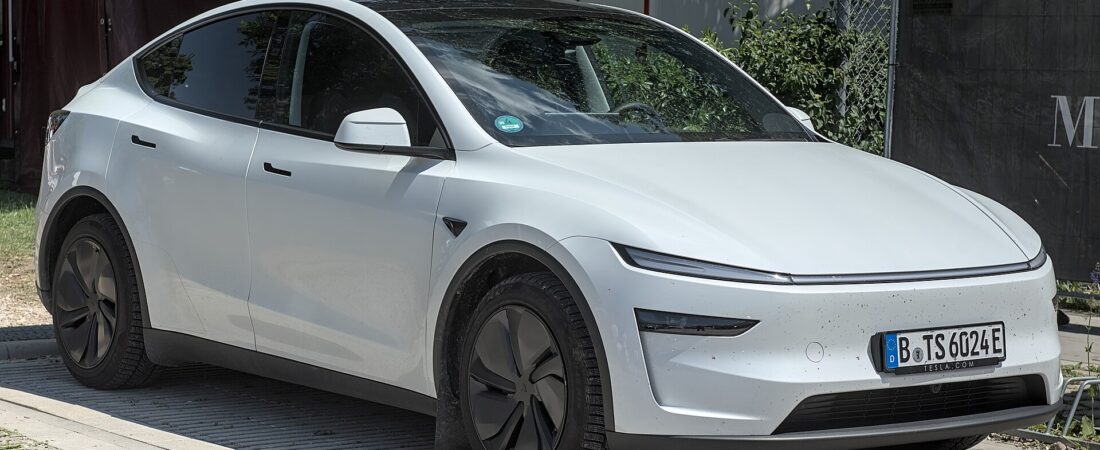

Tesla’s Full Self-Driving (Supervised) system is one of the most talked-about driver-assistance technologies on the road today — and for Canadian owners, it comes with a unique set of questions that American reviews simply don’t answer. Can FSD handle a Montreal February? Does it know what to do when the lane lines on the 401 are buried under three centimetres of packed snow? Which provinces even allow it? And with the subscription now priced at CAD$99 per month, is a free trial month via a referral link actually worth activating?
Disclosure: This post contains a referral link. If you order a Tesla using it, the author may receive referral benefits at no extra cost to you.
Tesla Referral Offer
Get One Month of Full Self-Driving Free
Order a new Tesla through this referral link and get one month of FSD (Supervised) at no cost. Referral code: willy327274
Claim Free FSD Month →New orders only · Terms apply · Offer availability varies by region
This guide covers every angle a Canadian buyer needs before making a decision in late 2026 — provincial regulatory status, real-world winter behaviour, city-by-city performance, Supercharger network coverage for cross-country trips, the latest v14.x software generation, and an honest breakdown of the referral-month deal versus simply paying for a month yourself.
Important before we begin: Tesla describes FSD (Supervised) as a driver-assistance feature, not autonomous driving. The driver must remain attentive, keep hands on the wheel, and be ready to take control immediately at any time. It is not a self-driving system in the legal or functional sense.
Provincial Regulations: Where Is Tesla FSD (Supervised) Allowed in Canada?
The short answer is: everywhere in Canada, as a Level 2 driver-assistance feature. Transport Canada sets national vehicle safety standards, and each province regulates how those vehicles may be operated on public roads. The critical distinction is between Level 2 (driver assistance that requires constant human supervision, which is what FSD Supervised is) and Level 3 and above (conditional or higher automation where the driver may disengage attention).
FSD (Supervised) is a Level 2 system. The driver is legally the operator at all times. That classification means provincial restrictions on autonomous or semi-autonomous vehicles — which target Level 3, 4, and 5 systems — do not restrict FSD (Supervised) from operating on any Canadian public road.
Province-by-Province Summary
- Ontario: FSD (Supervised) is fully permitted. Ontario’s pilot program under O. Reg. 306/15 governs Level 3 and higher automated vehicles, not Level 2 systems. You can use FSD on the 400-series highways, the DVP, and city streets without any special permit.
- British Columbia: Legal as a Level 2 system. The BC Motor Vehicle Act holds the licensed driver accountable as the operator — meaning the system’s errors are legally your errors. Fully autonomous vehicles (Level 4+) are not permitted on BC roads outside of approved pilot programs.
- Quebec: Permitted as a driver-assistance feature. Quebec roads present some of the most challenging FSD conditions in Canada (more on that below), but there is no provincial prohibition on using Level 2 driver assistance.
- Alberta: No provincial prohibition on Level 2 driver assistance. Calgary and Edmonton owners use FSD on city streets and the QEII corridor without regulatory barriers.
- Saskatchewan and Manitoba: Legal as a Level 2 system. Infrastructure is less dense, but there are no specific restrictions on FSD (Supervised).
- Atlantic Provinces: FSD (Supervised) is legal as a Level 2 system in Nova Scotia, New Brunswick, PEI, and Newfoundland. Supercharger coverage in Newfoundland is limited (see network section below), which affects how useful FSD on long drives is in practice.
The core principle is consistent nationwide: you are always the driver. The name “Supervised” is not marketing softening — it is a functional description of the legal relationship between you and the system.
Winter Performance: What FSD (Supervised) Actually Does at −20°C
This is where Canadian owners have the most to learn from Canadian owners, rather than US reviewers writing from Phoenix or Dallas. Winter performance breaks into three distinct problem categories: sensor and camera degradation, road surface ambiguity, and plowing and lane behaviour.
Camera and Sensor Behaviour in Cold and Wet Conditions
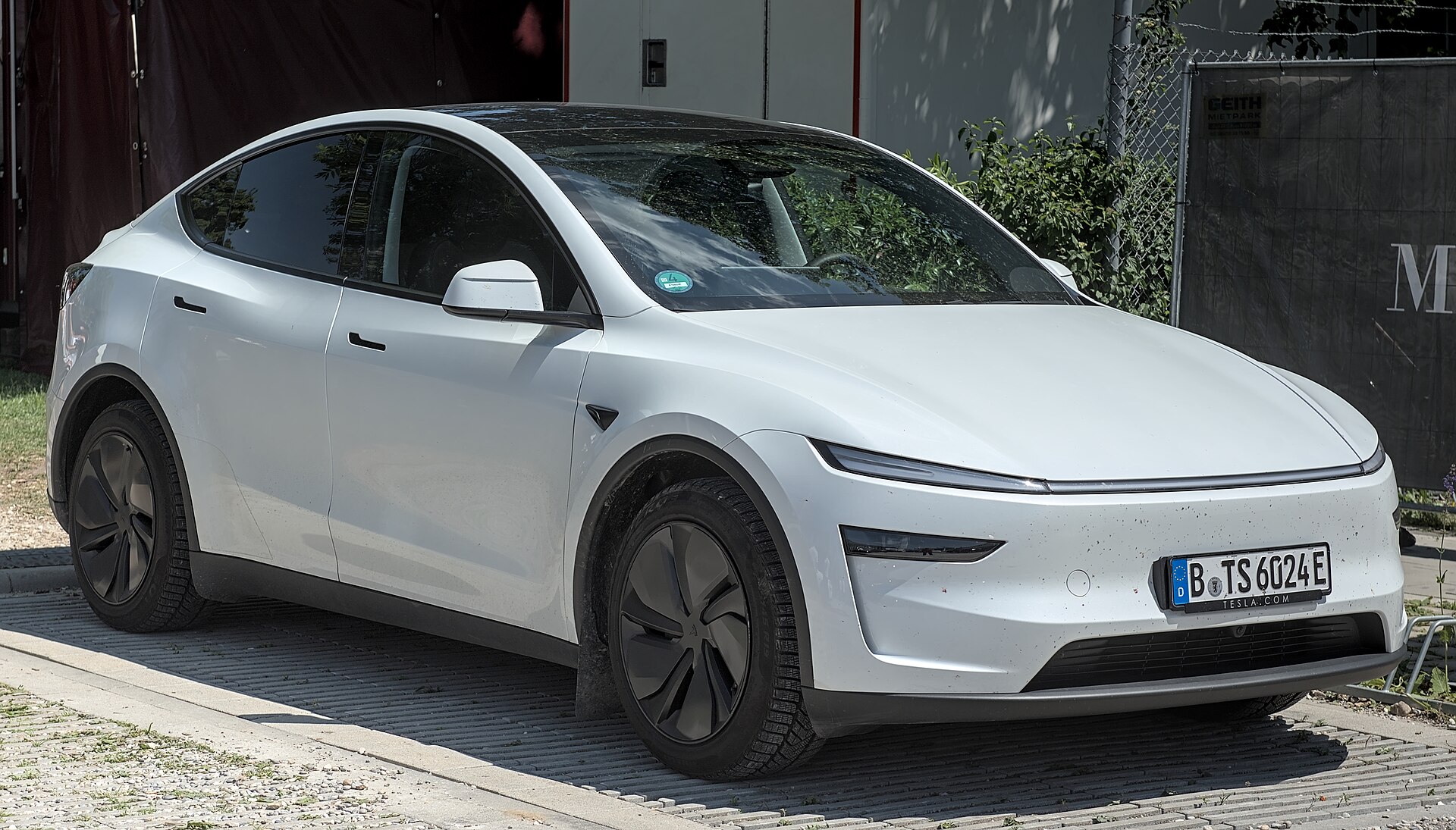
Tesla’s FSD (Supervised) system is vision-based, relying on eight external cameras rather than a lidar array. At −20°C, the cameras themselves function, but the environment degrades their inputs rapidly. Road-salt spray — a constant reality from roughly November through April across Ontario, Quebec, and the Prairie provinces — coats camera lenses with a mineral film that reduces effective range and can cause the system to request a driver takeover. Ice crystals forming at the edges of camera housings in extreme cold narrow the effective field of view.
Owners in northern climates consistently report higher intervention rates between December and March compared to summer months. The system will alert you to take over more frequently, and it will do so correctly — it is better to be asked to intervene than to have the system attempt to navigate a situation it cannot reliably read.
Heated camera housings on newer hardware (AI4/HW4) vehicles handle lens icing better than the older HW3 platform. If you are buying used and intend to use FSD heavily in winter, verifying the hardware generation matters. See our breakdown of FSD (Supervised) vs Autopilot vs TACC for a full explanation of what each hardware tier can and cannot do.
Snow-Covered Lane Lines and Road Surface Ambiguity
Painted lane lines under compacted snow are invisible to cameras. FSD (Supervised) handles this better than it did in earlier software generations — v14.x introduced improved road-edge inference that allows the system to use curbs, guardrails, and surrounding vehicle behaviour to maintain lane position when markings are absent. Early December 2025 owner videos of v14.2.1 running in heavy snow conditions showed smoother navigation than prior software generations, though at least one public test still resulted in a curb contact event.
The honest assessment: FSD (Supervised) is significantly more capable in light snow and cleared roads than it was two years ago, but heavy snowfall, blowing snow reducing forward visibility, and deep slush covering all road-edge cues remain conditions where intervention frequency rises sharply. Plan to drive yourself during active storms.
Plowed Slush Lanes and Lane-Change Behaviour
One behaviour that surprises Canadian owners: FSD (Supervised) may propose or initiate lane changes into the right-hand lane on multi-lane roads — a lane that, in Canadian winter conditions, often holds the worst accumulation of plowed slush, salt brine, and debris pushed from the driving lane. The system is optimising for traffic flow and route efficiency, not road surface quality. Drivers need to remain engaged and ready to cancel or override lane-change suggestions when conditions make the destination lane worse than the current one. This is not a defect — it is exactly the scenario the “Supervised” designation addresses. The driver’s judgment about road surface quality is information the system does not have.
For EV owners who also do delivery or rideshare driving in winter, our guide to cold weather range for winter EV delivery drivers covers the broader picture of range, charging, and vehicle management in Canadian winter conditions.
FSD (Supervised) in Canada’s Major Cities
Performance varies meaningfully by city, primarily because of road infrastructure quality, mapping density, traffic pattern complexity, and winter maintenance standards.
Toronto
Toronto presents the full range of FSD challenges: aggressive downtown grid intersections, heavy pedestrian and cyclist activity, aging road markings, and construction diversion signage that overrides painted lanes. The 400-series highways and the Gardiner Expressway work well under FSD in clear conditions. City streets in areas like Liberty Village, King West, or the downtown core require attentive supervision, particularly at complex intersections. Winter conditions on Toronto surface streets drop intervention frequency significantly compared to summer.
Montreal
Montreal is the most demanding Canadian city for FSD (Supervised). Quebec roads suffer the most aggressive freeze-thaw cycle in the country, producing pothole fields that cause abrupt steering corrections. Montreal’s street grid includes many unmarked or partially marked intersections, irregular lane widths, and heavy winter road damage. Owner reports from the first half of 2026 show Montreal as the city with the highest intervention rates among Canada’s major metros — roughly 41% incident-free first activation experiences compared to 78% in Calgary. FSD is usable in Montreal, but attentive supervision is especially important.
Vancouver
Vancouver is among the best Canadian cities for FSD (Supervised). Mild winters mean lane markings are rarely snow-covered, roads are well-maintained, and camera inputs remain clean through most of the year. City and provincial authorities have been relatively receptive to advanced driver-assistance testing. The Sea-to-Sky corridor and Highway 1 through the Fraser Valley work well under FSD, though the Coquihalla in winter requires full driver attention. Vancouver Island routes are also well-suited to FSD use.
Calgary
Calgary offers a split picture. The city’s Chinook climate means roads can clear rapidly after snowfall, and Calgary’s road infrastructure is generally well-maintained with clear markings. Highway driving on the QEII between Calgary and Edmonton performs well under FSD. However, the same Chinook cycles that clear roads also create rapid temperature swings between −25°C overnight and +5°C by afternoon, producing icy patches that can appear without warning. Owner data from early 2026 placed Calgary among the best-performing Canadian cities for FSD, with approximately 78% of activations reporting incident-free experiences.
Tesla Supercharger Network in Canada: Road-Trip Realities
FSD (Supervised) is most useful on longer drives — the system handles highway cruising, lane changes, and navigation transitions in a way that reduces fatigue on multi-hour trips. Whether those trips are practical in Canada depends on Supercharger coverage, and coverage varies significantly by province.
As of late 2026, Tesla operates approximately 230 Supercharger stations across Canada. Ontario and British Columbia account for roughly 62% of locations combined. Coverage along the Trans-Canada from Victoria through to Nova Scotia is effectively complete — the route is Supercharger-accessible end to end, with one gap in Newfoundland where owners rely on a CCS adapter and the provincial charging network.
The gap in the network is the Prairies. Saskatchewan and Manitoba have sparse Supercharger coverage, with Petro-Canada’s EV network serving as the primary highway spine through those provinces. For a cross-country trip using FSD on the Trans-Canada, trip planning through A Better Routeplanner (ABRP) is strongly recommended, with charging stops confirmed before departure.
Atlantic Canada — Nova Scotia, New Brunswick, and PEI — now has sufficient Supercharger coverage for intra-regional travel and connections to Quebec. Tesla opened its largest Canadian Supercharger location in early 2026, adding meaningful capacity to a network that had been showing congestion at peak summer travel periods.
One practical note for FSD users: the system integrates Supercharger stops into navigation automatically when a destination requires a charge stop. The handoff from FSD navigation to arrival at a Supercharger stall works smoothly in v14.x software, with the system reducing speed appropriately on approach.
Tesla FSD Pricing in Canada: CAD vs US, Subscription-Only, and the End of the Lump Sum
Tesla FSD (Supervised) pricing in Canada and the United States changed significantly in early 2026. Here is the current state as of November 2026:

- Subscription price (Canada): CAD$99 per month
- Subscription price (United States): US$99 per month
- Outright purchase: No longer available. Tesla discontinued standalone FSD purchases in both Canada and the United States on February 14, 2026.
- Previous Canadian lump-sum price: Approximately CAD$8,000 (the exact figure varied during Tesla’s pricing changes between 2022 and 2025). This option is gone.
The subscription-only model means every new Canadian Tesla owner faces the same decision: subscribe monthly, or use Autopilot and Traffic-Aware Cruise Control without FSD. There is no longer a path to permanent FSD ownership on a new vehicle purchase through the standard order process.
For owners who purchased FSD outright before February 14, 2026, that license remains tied to their vehicle’s VIN. However, the FSD transfer program — which previously allowed purchased FSD to move to a new owner on private sale — ended on March 31, 2026. As of April 2026, purchased FSD does not transfer to a new private buyer. The only FSD that carries over to a new owner is a VIN-tied license purchased before February 14, 2026 — and even then, the transfer program window has closed. For new buyers purchasing a used Tesla today, FSD (Supervised) means subscribing at CAD$99/month. When trading in to Tesla directly, any residual FSD value is factored into the trade-in estimate rather than transferring to your next vehicle.
For a detailed look at whether the monthly subscription cost makes financial sense over different usage periods, see our analysis of Tesla FSD subscription cost and break-even in 2026.
EAP Owner Pricing Note
Owners who previously purchased Enhanced Autopilot (EAP) qualify for a reduced FSD subscription rate of CAD$49/month as a loyalty discount. If you bought EAP before the transition to subscription-only pricing, verify your eligibility through the Tesla app.
Canadian EV Rebates in 2026: What to Know Before You Order
Federal and provincial EV incentives have changed substantially, and buyers should verify current program status directly with the relevant government body before factoring any rebate into a purchase decision. Here is what was confirmed as of late 2025 and early 2026:
- Federal iZEV program: Paused in January 2025 after program funds were fully committed. The federal government has not announced a resumption of the $5,000 rebate as of this writing. Do not assume the federal rebate is available — verify at the Transport Canada or Natural Resources Canada website before ordering.
- Quebec (Roulez Vert): Quebec’s provincial rebate program was suspended in early 2025, briefly reopened, and is being phased out by 2027. The program status changes frequently. Verify current availability and rebate amounts at the provincial government’s Roulez Vert website before making a purchase decision.
- British Columbia (CleanBC Go Electric): The BC provincial rebate was paused as of May 2025. Verify current status with the BC government before assuming availability.
- Other provinces: Provincial programs vary in availability, eligibility, and rebate amounts. Ontario does not have a provincial EV rebate. Alberta, Saskatchewan, Manitoba, and Atlantic provinces have varying incentive structures. Confirm directly with the relevant provincial authority.
The core message: do not build a purchase budget around federal or provincial rebates without first confirming they are currently accepting applications. The incentive landscape in Canada shifted rapidly in 2025 and has not fully stabilised.
The Free Referral Month: Is It Worth Activating, and How Does It Compare?
Tesla’s referral program, updated in October 2026, now centres on FSD (Supervised) rather than car purchase credits. The mechanics are straightforward: a new buyer who orders using an existing owner’s referral link receives one free month of FSD (Supervised). The referring owner receives a free month of FSD or a CAD$99 Tesla credit when the referred buyer begins paying. Referrer rewards are capped at 12 per calendar year.
You can access the referral program when ordering a new Tesla at tesla.com/get-app/referral?code=willy327274.
Referral Month vs. Simply Subscribing for a Month
The comparison is direct: the referral program gives you the same one month of FSD (Supervised) that you would get by subscribing — but at no cost. If you were planning to subscribe for a month anyway to evaluate the system before committing, using a referral link at order time means you get that trial month included. There is no functional difference in what you receive; the only difference is whether you pay CAD$99 for it.
The practical consideration is timing. The free month activates at delivery. If you receive your vehicle in November and are in Toronto or Montreal, you will be evaluating FSD primarily in winter conditions — which, as covered above, is when the system asks for the most interventions and shows its limitations most clearly. A winter trial month gives you a realistic picture of what FSD can and cannot do in Canadian conditions, which is arguably more informative than a summer trial, even if the experience is less impressive. If you want to evaluate FSD in better conditions, note that the subscription can be cancelled and re-activated monthly — you are not locked in.
Referral Month vs. the Discontinued CAD$8,000 Purchase
For anyone who researched Tesla FSD before February 2026, this comparison comes up frequently. The old outright purchase — once available for approximately CAD$8,000 — made financial sense only for owners who planned to keep their vehicle long-term and use FSD consistently. At CAD$99/month, the break-even on an $8,000 purchase was roughly six to seven years of continuous subscription. That option no longer exists.
Today, the question is simpler: subscribe for the months you use it, cancel for the months you do not. The referral free month reduces the cost of evaluation to zero, which is a meaningful improvement over the previous situation where evaluating FSD required either a test drive or committing to a first month’s payment.
To use the referral program when placing a new Tesla order, visit tesla.com/get-app/referral?code=willy327274 and ensure the referral code is applied before completing your order.
FSD v14.x in Late 2026: What the Current Software Generation Delivers
Canadian Tesla owners receive the same FSD (Supervised) software builds as US owners, typically rolling out within days to a few weeks of the US release. As of November 2026, the current generation is the v14.x series, with v14.3.x being the latest stable release for AI4/HW4 vehicles and v14 Lite rolling out to HW3 vehicles.
Key improvements in v14.x that matter for Canadian drivers:
- Faster reaction time: Tesla reports approximately 20% faster reaction time through an AI compiler and runtime rebuilt with MLIR. In urban intersections — a consistent challenge in Canadian cities — this translates to more natural-feeling responses to unexpected pedestrian movements or cross-traffic.
- Improved snow navigation: v14’s stronger reinforcement learning and upgraded visual encoder handle snow-covered roads and obscured lane markings better than the v12.x generation. The system is not reliable in heavy snowfall, but it performs meaningfully better in light snow and cleared winter roads than earlier software.
- Smart parking and unparking: Both HW4 and HW3 Lite builds include automated parking. In tight urban parkades common to Toronto and Vancouver, this feature is independently useful regardless of the highway FSD experience.
- Speed Profiles including Sloth mode: The new Sloth speed profile allows the system to run below the speed limit — useful for cautious highway merging in winter conditions or in school zones.
- Miles-without-intervention counter: A transparency feature showing how long the current FSD session has run without a takeover request. Useful for building personal data on how the system performs across your specific routes and conditions.
HW3 vehicles receive v14 Lite, a distilled version of the v14 stack. It includes core city and highway driving features but excludes some of the more computationally intensive capabilities available on AI4 hardware. If you are on HW3 and want to maximise FSD performance, the Hardware 4 upgrade path is available through Tesla Service, though at additional cost.
Bottom Line for Canadian Buyers
Tesla FSD (Supervised) is legal, available, and functional across all Canadian provinces as a Level 2 driver-assistance system. It is not autonomous driving — the driver is always legally and practically responsible. In ideal conditions, v14.x is a genuinely useful tool for reducing fatigue on long highway drives and navigating familiar urban routes. In Canadian winter conditions, it requires more supervision, more interventions, and more driver awareness than summer use, particularly in Montreal and other high-maintenance-demand environments.
The subscription-only pricing at CAD$99/month makes financial sense on a flexible basis: subscribe for the months and seasons you will actually use it, and cancel during periods — say, a Montreal February where you will be driving manually through storm conditions anyway. The referral free month is a straightforward way to evaluate the system at zero cost, using the same one month of access you would otherwise pay CAD$99 for. The old debate about the CAD$8,000 lump sum versus subscription is settled — the lump sum no longer exists, and the subscription is the only path forward for new buyers.
Supercharger coverage supports coast-to-coast travel on the Trans-Canada with the exception of Newfoundland, and the network continues to expand. For cross-province road trips from Calgary to Toronto or Vancouver to Montreal, the Supercharger infrastructure is in place to make FSD-assisted highway travel genuinely viable.
Try It Yourself
Ready to Try Full Self-Driving?
See what FSD (Supervised) actually feels like on your own commute. New Tesla orders through this referral get one free month of FSD.
Claim Your Free Month →New orders only · Terms apply · Offer availability varies by region
The honest summary: FSD (Supervised) is a capable and improving driver-assistance system with real limitations in Canadian conditions. Those limitations are most visible in exactly the conditions that define Canadian driving. Buy it with accurate expectations, supervise it attentively, and use the referral month to form your own informed view before committing to a recurring subscription.
Driver Opportunity
Ready to Start?
Turn This Guide Into Real Income. Join as a new driver and get up to a $2,575 guaranteed bonus after completing your first 200 deliveries in select US cities.
Sign Up & Start Delivering →New drivers only · Terms apply · Available in select cities