


DashPass, Uber One, Instacart+, Walmart+ — these are the memberships your customers are paying for, and they shape the orders landing in your queue every single shift. Most drivers have a vague sense that membership orders are “different,” but few have worked through exactly how the subscription economics trickle down to the driver side. This article does that work: what each plan is, what the customer pays, what it means for your base pay and tips, which perks are genuinely worth your own money, and when to skip the whole thing.
Driver Opportunity
Want to Earn While You Read?
Join as a new driver and get up to a $2,575 guaranteed bonus after completing your first 200 deliveries in select US cities.
Start Earning Now →New drivers only · Terms apply · Available in select cities
What Each Membership Actually Is (From the Customer’s Seat)
These four plans are all variations on the same deal: pay a monthly or annual fee, get the delivery fee waived on most orders, and collect a few bonus perks on top. The customer is essentially pre-buying their convenience for the year.
DashPass
DoorDash’s subscription runs around $9.99 a month or $96 a year. Members get $0 delivery fees on eligible restaurants and grocery orders above a low order minimum, reduced service fees, and 5% back in DoorDash credits on eligible pickup orders. DashPass is bundled into some Chase credit cards, so a chunk of your DashPass customers are getting it effectively free through their bank.

Uber One
Uber’s membership is also around $9.99 a month or $96 a year and covers both Uber Eats and Uber rides. Members get $0 delivery fees on eligible orders, 5% off eligible orders, and priority customer support. Uber One is sometimes bundled with other subscription services, so again, some members are not paying out of pocket at all.
Instacart+
Instacart+ (formerly Instacart Express) runs around $9.99 a month or $99 a year. Members get free delivery on grocery orders over a set minimum, reduced service fees, and credits back on select orders. Instacart+ is also available via Peacock, certain credit cards, and other bundle offers, which matters because bundled members order differently — more casually, often at off-peak times.
Walmart+
Walmart+ is the outlier at around $12.95 a month or $98 a year. It covers free delivery from Walmart stores (minimum order applies), Paramount+ streaming, fuel savings at Walmart and Murphy stations, free Paramount+ streaming, and Walmart’s Scan & Go in-store feature. Walmart+ delivery is fulfilled through Spark Driver, not DoorDash or Uber, so this one has a direct line to Spark drivers specifically.
The Myth That Membership Orders Mean More Work for You
Here is a belief worth killing quickly: membership customers are high-volume power users who tip big because they order constantly. The reality is more mixed. Subscription customers do order more frequently — that is literally what the platform is betting on when it sells the membership. But ordering more frequently and tipping generously are two different behaviors, and they do not always travel together.
Membership customers are habit-ordering, not celebration-ordering
When someone pays $9.99 a month for free delivery, they start treating delivery like a utility. Tuesday night dinner when they’re tired. Groceries because they skipped the store. That is a different mental state than someone who downloads the app for the first time for a birthday dinner and tips 25% because they’re in a good mood. Routine orders tend to produce routine tips. That is not a universal rule — plenty of DashPass regulars are great tippers — but the average behavior shifts toward transactional when delivery feels like something already paid for.
No, the platform does not send you more membership orders as a reward
Some drivers assume that accepting a DashPass order unlocks preference in the algorithm. It does not. Order dispatch is based on your location, the restaurant’s location, your acceptance rate (in markets where that matters for Dasher rewards), and the offer itself. The customer’s membership status is invisible to the dispatch logic from your side. Understanding how base pay is actually calculated makes this clearer — membership is a customer-side pricing tool, not a driver-side routing preference.
How Membership Orders Look Different in the Queue
Even if the algorithm treats membership orders the same, the orders themselves look different in a few meaningful ways.
Bigger basket sizes
Free delivery encourages customers to add more items to hit the order minimum and then some. A grocery Instacart+ order that might have been a quick five-item run turns into a 22-item haul because the customer is already “saving” on delivery. Bigger baskets mean longer in-store shop times for batch orders. On restaurant orders, bigger baskets can mean heavier bags, more drink carriers, and slower handoffs at the counter. The base pay on these orders does not automatically reflect that added complexity — which is why experienced drivers learn to scan the item count before accepting, not just the payout.
Lower delivery fees showing in the offer
When a customer has a membership, they paid $0 delivery fee. That does not mean the platform pays you $0 — the platform absorbs the waived fee and pays drivers from its own margin. But it does mean the offer math is built differently. Some drivers report that the customer-paid fee component, which sometimes flows into the offer total, is lower on membership orders. The app still shows you a dollar offer, but knowing where that number comes from matters. Driver loyalty tier comparisons go deeper on how offer structure varies by platform if you want the full picture.
Tip behavior: the $0 delivery fee trap
This is the one that bites drivers the most. When a customer pays nothing for delivery, some of them mentally pocket that savings and do not replace it with a tip. The delivery fee and the tip are separate line items, but in a customer’s head they can blur together. A customer who would have tipped $4 on a $4.99 delivery fee might tip $2 when the delivery is “free” — because they feel like the platform is handling it. This is not universal, but it is a documented behavioral pattern. The practical move: on membership-platform orders, look at the guaranteed payout in the offer, not what you hope the tip will be after delivery.
Base Pay: What Changes and What Doesn’t
Short answer: the customer’s membership does not directly change your base pay. Base pay is set by the platform based on distance, time, desirability of the order, and local market conditions. A DashPass order at the same restaurant for the same distance pays the same base as a non-DashPass order.
What can change is the volume and character of orders on the platform in your market. Memberships drive up overall order volume, which is good for driver opportunity — more orders in the queue, more chances to cherry-pick. In markets with strong DashPass or Uber One penetration, peak windows can be longer and more consistent because members order more impulsively. That is a real, if indirect, benefit.
Spark Driver and Walmart+: a slightly different story
For Spark drivers, Walmart+ has a more direct connection. Walmart+ members are the primary demand engine for Spark orders. As the membership grows, Spark order volume in your area grows. Walmart has pushed Walmart+ hard and the membership base has expanded. If you drive for Spark, understanding the retail and warehouse pricing angle matters too — wholesale club delivery economics covers the overlap between warehouse store pricing and what your customers are actually spending.
Which Membership Perks Are Worth Your Own Money as a Driver
This is where the article gets personal. You are not just a delivery driver — you are also a consumer who eats, buys gas, and sometimes needs roadside help. Some of these memberships have perks that make financial sense for a driver’s own wallet, independent of the work angle.
Walmart+ for fuel savings
Walmart+ includes a fuel discount at Walmart gas stations and Murphy USA stations. The per-gallon savings can add up meaningfully if there is a qualifying station on or near your regular route. Say you fill up twice a week at around 15 gallons each time — even a modest per-gallon discount pays back a noticeable chunk of the monthly membership fee in fuel alone. Whether it covers the full $12.95 depends on your market and how close a qualifying station is. If there is a Murphy USA right next to a Walmart you already pass, this one is worth running the numbers on. For a broader look at fuel savings stacking, fuel cards and gas cashback apps shows what you can layer on top.
DashPass for your own shift meal
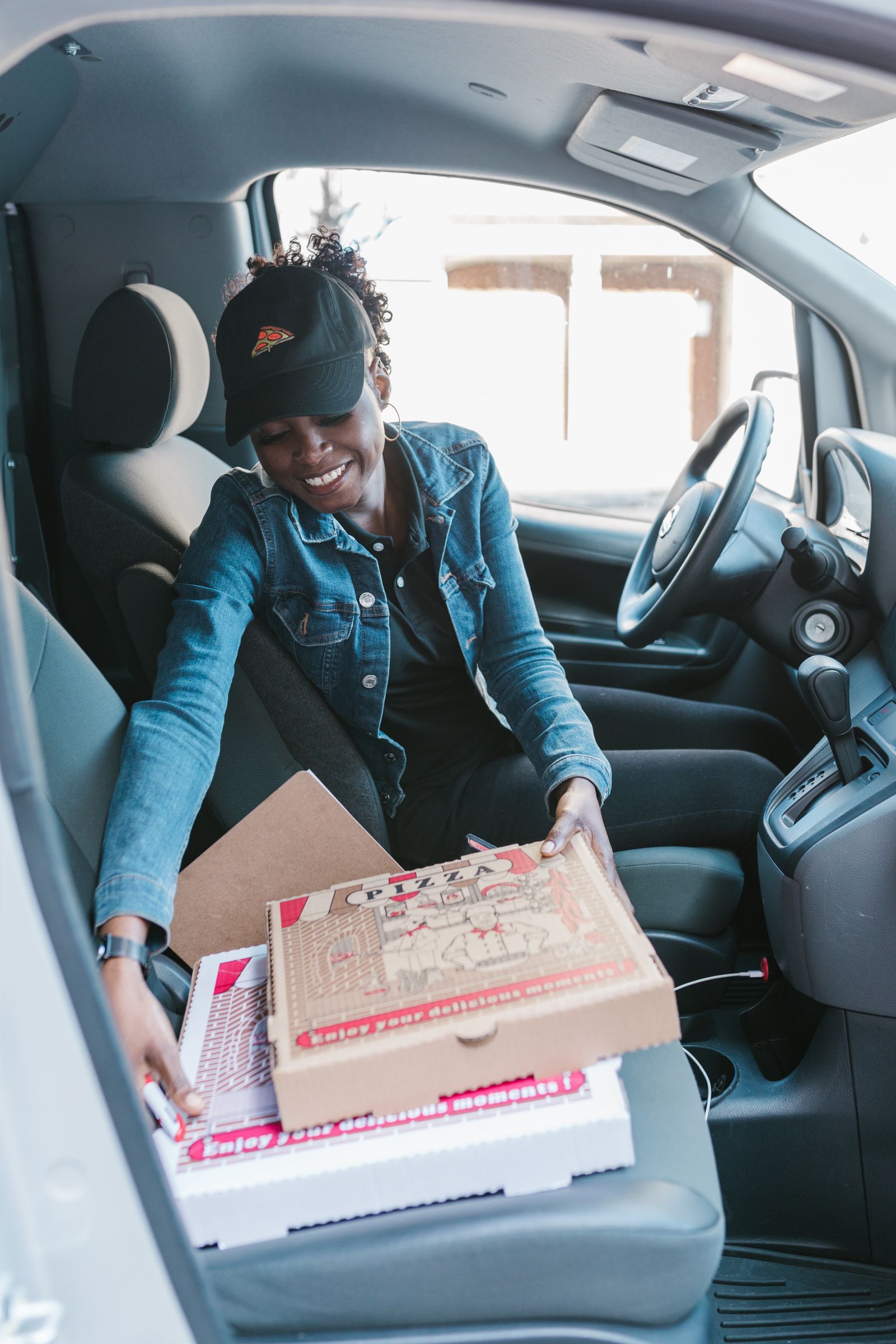
If you order food for yourself during a shift — which a lot of drivers do — having DashPass on your personal account means your own delivery fee is waived. At $9.99 a month, you need to order delivery for yourself roughly twice or three times a month to come out even on delivery fees alone. If you order more often than that, the math works in your favor. This is a small but real perk that drivers often overlook because they think of DashPass as something customers have, not something they should have.
Uber One for the rides side
Uber One covers both Uber Eats and Uber rides. If you ever need a ride yourself — airport parking, your car is in the shop, a night out — the membership discount on ride prices can be real value. For most drivers, this is minor, but if you are in a situation where you use Uber rides a few times a month, the combined ride and delivery discount can stack the value.
Instacart+ for grocery delivery
Instacart+ makes the most sense if you would genuinely use grocery delivery for your own household. At $9.99 a month, two or three grocery deliveries where you save $3–$5 in delivery fees each time and get reduced service fees covers the subscription. The honest check: do you actually order groceries delivered to yourself, or are you just browsing? If you pick up your own groceries every week, Instacart+ probably does not pay back for you personally.
Credit card bundles change the math entirely
Some Chase cards include DashPass, some American Express cards have included Uber One credits, and various co-branded cards offer Instacart+ benefits. If you are holding a card that bundles one of these memberships, your effective cost is $0 — which means every perk is free. This makes the driver-perk question simpler: use it. The best credit cards for delivery drivers breaks down which cards actually pay off for the gig driving life, including which bundled membership perks are attached.
Break-Even Math: Running the Numbers Honestly
Let’s work through a simple example with Walmart+, since it has the most moving parts for a driver.
Walmart+ break-even example
Say you pay $12.95 a month. Your nearest Murphy USA is two miles from a regular Spark pickup zone. You fill up around 30 gallons a week. If the fuel discount saves you, say, around $0.05 per gallon (the actual discount varies by location and promotion — check current terms before assuming), that is $1.50 a week in fuel savings, or around $6 a month. Add two or three online grocery orders for yourself where you save $3 in delivery fees each, and you are at around $12 in monthly value. At that pace, Walmart+ roughly breaks even or slightly beats its cost — and that is before any Paramount+ streaming value you would have paid for anyway.
If the fuel discount near you is higher, or you order groceries more frequently, the number tips positive faster. If there is no convenient Murphy USA and you do not use grocery delivery for yourself, the math probably does not work, and you are better off skipping it.
DashPass break-even example
At $9.99 a month, you need to save $10 in delivery fees on your own personal orders. DashPass delivery fees on restaurant orders typically run around $2–$5 depending on the restaurant and distance. Order from a DashPass-eligible restaurant twice a month for yourself and you have covered most of the membership cost. Order three times and you are ahead. The question is not whether the math can work — it is whether your actual ordering behavior will get you there.
What to Do When the Membership Doesn’t Pay Back
Not every driver is in a market or lifestyle situation where any of these memberships makes financial sense to hold personally. That is fine. The right answer is not to force it.
- Skip memberships you won’t use personally. There is no driver-side algorithmic benefit to holding a customer membership, so there is no reason to pay for one you are not using as a consumer.
- Watch for free trials. All four of these memberships offer free trials at various points, often 30 days. If you want to test whether the perks fit your life, use the trial, track what you actually use, and cancel before the charge hits if the value is not there.
- Stack what you already have. If you already hold a Chase Sapphire or a qualifying Amex, check whether DashPass or Uber One credits are sitting unused on your card. Drivers often leave these on the table.
- Treat the membership order queue neutrally. Do not over-accept or over-decline based on whether an order looks like it came from a subscription customer. The offer is what it is. Evaluate on distance, payout, and restaurant, not on guessing the customer’s membership status.
Customer memberships are a platform growth lever, not a driver compensation tool. The platforms use them to drive order volume and customer retention — and higher volume does flow down to drivers as more opportunity. But the direct connection between a customer’s $9.99 and your nightly take-home is thin. The real driver angle is narrower and more personal: does one of these memberships pay off for your own gas, your own groceries, or your own shift meals? Run the actual numbers for your market, not the marketing pitch.
Driver Opportunity
Ready to Start?
Turn This Guide Into Real Income. Join as a new driver and get up to a $2,575 guaranteed bonus after completing your first 200 deliveries in select US cities.
Sign Up & Start Delivering →New drivers only · Terms apply · Available in select cities
If you are still building your overall earnings strategy, compare all the tools together — memberships are one piece of a larger picture that includes base pay structure, driver rewards tiers, fuel savings, and the right card in your wallet. Know all the levers, not just one.