
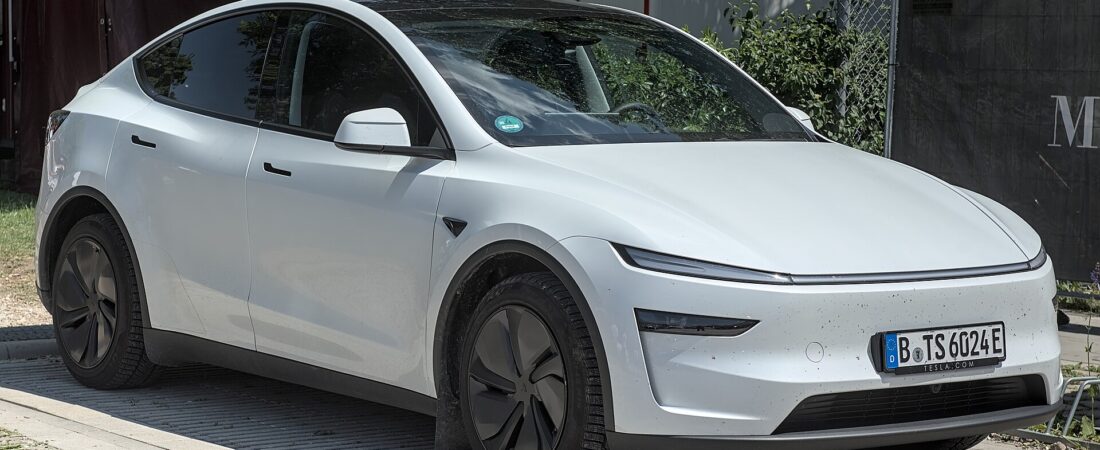

Tesla’s referral program hands new buyers a full month of Full Self-Driving (Supervised) at no cost — which means the real decision arrives on day 30, when the subscription becomes a recurring $99 charge. This guide skips the hype and the buy-versus-subscribe debate to answer one narrower question: for a normal private owner in the US or Canada, does $99/month buy enough real driving value? The answer depends almost entirely on how many miles you cover and what kind of roads they are.
Disclosure: This post contains a referral link. If you order a Tesla using it, the author may receive referral benefits at no extra cost to you.
Tesla Referral Offer
Get One Month of Full Self-Driving Free
Order a new Tesla through this referral link and get one month of FSD (Supervised) at no cost. Referral code: willy327274
Claim Free FSD Month →New orders only · Terms apply · Offer availability varies by region
Driver Opportunity
Want to Earn While You Read?
Join as a new driver and get up to a $2,575 guaranteed bonus after completing your first 200 deliveries in select US cities.
Start Earning Now →New drivers only · Terms apply · Available in select cities
The Question Nobody Asks the Right Way
Most articles about Tesla Full Self-Driving (Supervised) ask the wrong question. They frame it as a buy-versus-subscribe break-even calculation, or they pitch FSD as a tool to earn extra income through rideshare. This article is about something more practical: does the $99/month subscription make financial sense for an ordinary private owner, based on how many miles they actually drive?
That free month you got by using a Tesla referral link is ending soon. Before you either click “subscribe” or “cancel,” it is worth doing a few minutes of honest math. The answer is not the same for everyone — and the driving tier you fall into makes all the difference.
Quick note on the product itself: FSD (Supervised) is not autonomous driving. You must keep your hands available to take over and remain attentive at all times. It handles steering, acceleration, and braking on most roads, but it is not a robotaxi system and Tesla makes no claim that it is.
What $99 a Month Actually Buys You in 2026
As of early 2026, Tesla ended the one-time purchase option for FSD. The lump-sum $8,000 buyout that used to be on the table is no longer available for new subscribers — it was discontinued in February 2026, leaving the $99/month subscription as the only way to access FSD (Supervised) on a new basis. Owners who previously purchased Enhanced Autopilot can subscribe at a reduced rate of $49/month. If you are an ordinary owner starting fresh, you are looking at $99/month in the US, or roughly the CAD equivalent in Canada (check the Tesla Canada website for the current CAD figure, as it is set separately and fluctuates with the exchange rate).
That $99 buys you access to:
- Navigate on Autopilot with automatic lane changes on highways
- Auto Lane Change on command
- Autosteer on city streets and roads
- Traffic Light and Stop Sign Control
- Smart Summon and Autopark
It does not buy you unsupervised autonomy, a hands-free experience, or guaranteed feature continuity — Elon Musk has stated publicly that the $99 price is temporary and expected to rise as the technology improves.
For a full breakdown of what FSD includes versus standard Autopilot and Traffic-Aware Cruise Control, see FSD vs Autopilot vs TACC.
The Cost-Per-Mile Framework: Three Driver Tiers
The cleanest way to evaluate $99/month is to convert it into a cost per mile. If you drive more, that fixed monthly cost spreads over more miles and the value proposition improves. If you drive less, you are paying a premium for software that rarely runs.
Divide your monthly miles into $99 to get your FSD cost per mile:
Tier 1: The Low-Mileage Owner (Under 500 Miles/Month)
At 300 miles per month — a realistic number for someone who works from home, lives in a walkable area, or uses transit for most trips — FSD costs you $0.33 per mile. That is more expensive per mile than the total operating cost of most gas cars. You are spending a premium software fee on a vehicle feature you rarely use. Unless those 300 miles are predominantly highway or complex urban driving where FSD adds real comfort or safety value, the math does not hold up.
At 500 miles/month: $0.20/mile. Still high for a software add-on. For context, the IRS standard mileage rate for 2026 — which is meant to capture all vehicle costs — hovers around $0.67/mile. Spending $0.20 of that on one software feature is a significant slice of your total driving budget.
Verdict for Tier 1: Cancel after the free month. Use the trial to understand what FSD can do, then come back when your driving patterns change. The 30-Day Referral Trial Evaluation Plan gives you a structured way to get maximum learning value out of that free month before making the call.
Tier 2: The Average Commuter (500–1,200 Miles/Month)
This is where most US and Canadian private owners fall. The average American drives roughly 1,100–1,200 miles per month. At 1,000 miles/month, FSD costs you $0.099 per mile — just under ten cents a mile. At 1,200 miles/month, you are at $0.083/mile.
Whether that number is worth it depends on what kind of miles those are:
- Highway-heavy commuters get the most out of FSD. Navigate on Autopilot genuinely reduces driver fatigue on long, predictable highway segments. If 600 of your 1,000 monthly miles are on a 45-minute highway commute, the value-per-dollar is real and tangible.
- Stop-and-go city drivers get a more mixed experience. FSD on city streets has improved significantly, but urban driving still generates more interventions and moments where you need to stay highly engaged. The fatigue-reduction benefit is lower.
- Suburban mixed-driving owners sit in the middle. The system handles suburban arterials well and delivers genuine convenience, but you will disengage it regularly in tight situations.
Verdict for Tier 2: This is the genuine judgment call tier. If your commute is highway-heavy and you drive close to the US average, $99/month is defensible. If your miles are dense-city or errand-heavy suburban, consider whether you would actually engage FSD on more than half your trips. If the honest answer is no, cancel and revisit.
Tier 3: The High-Mileage Private Owner (1,200+ Miles/Month)
At 1,500 miles/month, FSD drops to $0.066/mile. At 2,000 miles/month, you are at $0.050/mile. At this volume, the subscription starts to look like reasonable insurance against driver fatigue and a genuine quality-of-life upgrade for people who spend significant time behind the wheel for personal reasons.
Road-trippers, long-distance commuters, and people in sprawling metro areas like Houston, Phoenix, or the Greater Toronto Area who drive 90+ minutes daily are in this tier. For them, the highway navigation features and reduced attention load on long stretches have a concrete comfort value that is hard to dismiss.
Verdict for Tier 3: The economics work in your favor. At this mileage, $99/month is a relatively small add-on per mile, and the fatigue reduction on long drives has real quality-of-life value. Subscribe, but stay honest about whether you are actually engaging it regularly. If you find yourself in traffic so stop-and-go that FSD rarely activates cleanly, your effective miles may be lower than your odometer suggests.

The Hidden Variable: Your Drive Mix, Not Just Your Mileage
Raw mileage is not the only input. Two owners can drive identical monthly miles and get dramatically different value from FSD because of their drive mix — the proportion of highway versus city versus suburban miles.
FSD (Supervised) performs most reliably on well-marked roads with clear lane lines. It handles:
- Interstate and divided highway driving: consistently well
- Multi-lane arterials with traffic lights: generally well, with occasional interventions
- Dense urban grids (think downtown Chicago, San Francisco, or Toronto): improved in recent software updates but still generates more driver interventions per mile than highway use
- Rural roads with poor lane markings: variable; FSD still requires attentive oversight here
A useful self-assessment: think about your last 10 drives. On how many of them would you have been comfortable letting FSD manage the steering and speed for most of the trip? If the honest answer is four or fewer, your effective FSD miles are well below your total mileage, and your real cost-per-useful-mile is significantly higher than the headline number.
Canadian Owners: Additional Factors to Weigh
For Canadian Tesla owners, the $99 reference price is in USD — Tesla Canada prices the subscription separately in CAD. Check the Tesla Canada website or your app for the current CAD figure rather than assuming a one-to-one conversion; the actual price in CAD reflects currency exchange and local pricing decisions.
Beyond price, Canadian drivers face a few FSD-specific considerations:
- Seasonal drive mix: Winter months in Ontario, Quebec, Alberta, and BC often mean degraded lane markings, snow-covered roads, and conditions where FSD engages less reliably or less usefully. If you are evaluating your monthly mileage, consider that your effective FSD miles may drop significantly from November through March.
- Urban density: Metro Vancouver and Greater Toronto are among the denser urban environments in North America. City-heavy driving reduces the highway advantage that makes FSD most cost-effective.
- Provincial context: FSD (Supervised) operates legally as a driver-assist system across Canadian provinces, but the driver is always responsible. For the full Canadian context, see the FSD in Canada Guide.

When $99/Month Stops Making Sense: The Honest Thresholds
Here is a plain-language summary of where the value breaks down:
- You drive fewer than 500 miles/month: Stop. The per-mile cost is too high for a driver-assist feature. Use the free month, cancel, and revisit if your situation changes.
- Your drives are mostly short trips under 5 miles: FSD rarely has time to stabilize and deliver value on very short trips. The overhead of engaging it, confirming the route, and monitoring it may not be worth it for a 2-mile grocery run.
- You regularly drive in conditions where FSD disengages frequently: Heavy snow, construction zones without clear markings, or complex urban intersections. If you are overriding the system constantly, you are paying for software you are not trusting.
- You find it stressful, not relaxing: Some drivers find that monitoring FSD actively requires more mental effort than just driving. If that is you, the experience is not delivering its core value proposition.
- You are budget-constrained and driving close to average mileage: At 1,000 miles/month, $99 is real money. If the subscription represents a meaningful strain on your monthly budget, the marginal comfort benefit does not justify it over a longer horizon.
For the billing mechanics of cancellation — including what happens on day 30 of your free trial and how to avoid an unintended charge — the Day 30: When the Free Month Ends guide covers it step by step.
Getting the Most From the Free Month Before Deciding
If you ordered your Tesla using a referral link and received a free month of FSD (Supervised), you are in a good position to make this decision empirically rather than theoretically. The free month is a genuine test window — use it to track your actual engagement with the system.
Track Your FSD Activation Rate
For the first two weeks of your free month, make a note after each drive: did you use FSD, and for how much of the trip? You do not need to be precise. A rough percentage — “used it for about 70% of the drive” or “barely used it, too much stop-and-go” — is enough. After 14 drives, you will have a clear picture of your real usage pattern.
Calculate Your Personal Cost-Per-Engaged-Mile
Take your monthly mileage, multiply by your estimated FSD activation rate (the fraction of miles where you actually let it run), and divide that number into $99. That is your true cost per engaged mile. If that number exceeds $0.15, the value is thin unless you place a high personal premium on the fatigue-reduction benefit.
Use the Referral Trial Intentionally
The free month exists to let you experience FSD on the routes and conditions that matter to you. If you got your trial through a Tesla referral, prioritize testing it on your actual commute, your longest regular drive, and your most complex urban routes. Do not spend the free month only on road trips that are unrepresentative of your daily driving.
The Bottom Line: A Simple Decision Rule
If you want a single decision rule to apply without running the full numbers: subscribe if you drive more than 1,000 highway-weighted miles per month and find the system reliably useful on more than half your drives. Cancel if you drive mostly in the city, drive fewer than 700 miles per month, or find yourself overriding the system constantly.
The $99/month price is real money on a 12-month horizon ($1,188/year). It is not an enormous sum relative to the cost of Tesla ownership, but it is not trivial either. The honest math says that FSD earns its keep for high-mileage drivers with highway-heavy commutes and fails to deliver clear value for low-mileage urban drivers.
For the full long-run cost picture — including what FSD costs over multiple years compared to other ownership scenarios — see Tesla FSD at $99 a Month Forever: The Real Cost Math. And if you are a rideshare or delivery driver evaluating FSD as a professional tool rather than a personal convenience, the analysis is different — that case is covered in depth at FSD for Rideshare & Delivery Drivers.
Try It Yourself
Ready to Try Full Self-Driving?
See what FSD (Supervised) actually feels like on your own commute. New Tesla orders through this referral get one free month of FSD.
Claim Your Free Month →New orders only · Terms apply · Offer availability varies by region
Driver Opportunity
Ready to Start?
Turn This Guide Into Real Income
Sign Up & Start Delivering →New drivers only · Terms apply · Available in select cities
The free month is a gift. Use it to find out which tier you actually belong to — before the bill arrives.