
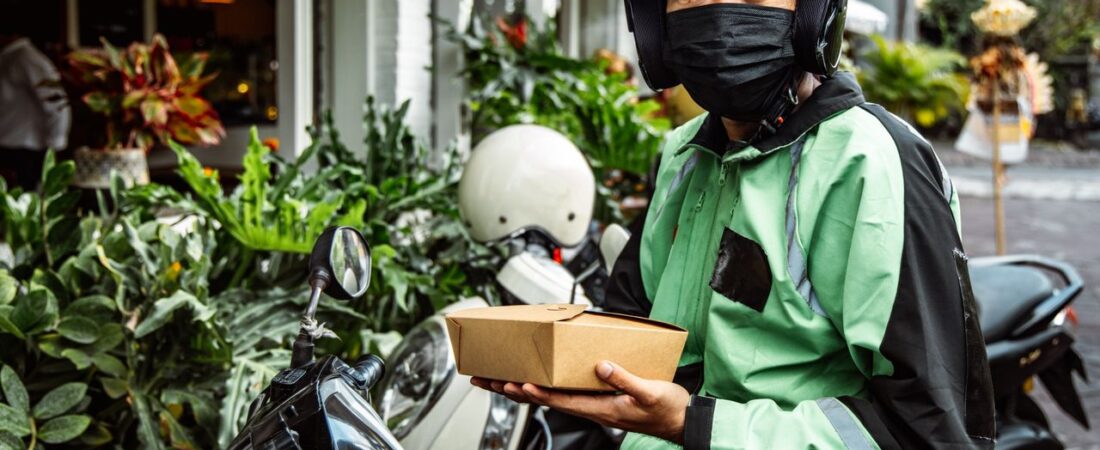

You just signed up for DoorDash, Uber Eats, or Spark. You got the bag, downloaded the app, and hit “Start Delivering.”
Then the reality hits. Sitting in a parking lot waiting for an order that pays $3 for 8 miles. Wondering if anyone actually makes decent money doing this.
They do. But nobody tells you how — not the onboarding videos, not the welcome emails. So here’s the stuff I wish someone had told me when I started.
1. The $2-Per-Mile Rule Is Not Optional
Every new driver accepts everything, thinking more orders = more money. It doesn’t work that way.
The rule is simple: don’t take any order paying less than $2 per mile. Period. Every mile you drive costs you about $0.70 in gas, maintenance, and depreciation combined. If you’re driving 8 miles for $5, you’re basically paying the customer to let you deliver their food.
DoorDash shows the tip upfront now in most markets. Use that. Uber Eats is trickier since tips sometimes hide. If you’re unsure, stick to shorter distances and watch the base pay.
Top drivers who follow the $2/mile rule consistently clear $22-$28/hour. Drivers who take everything average $13-$17/hour. One rule, big gap.
2. Peak Hours Are Worth More Than Twice as Much Per Hour
If you can only drive 15 hours a week, make them these:
- Friday dinner (5-9 PM) — Highest order volume of the week
- Saturday dinner (5-10 PM) — Families ordering, big tips
- Sunday late morning (10 AM-1 PM) — Brunch + grocery runs
- Late night Thursday-Saturday (10 PM-1 AM) — Bar rush, drunk food, serious surge pay
Driving Monday 2-4 PM earns you maybe $12/hour if you’re lucky. Driving Saturday 6-9 PM? $25-$30 is normal. The hours matter more than the app you’re on.
3. Multi-App, But Do It Smart
Running DoorDash, Uber Eats, and Spark at the same time is the single fastest way to boost income. But new drivers make a classic mistake: accepting orders on two apps going in opposite directions.
The right way: keep both apps on, pause the second one when you accept a good order, and turn it back on when you’re within a mile of dropoff. That way you get a new offer right as you finish, instead of driving 15 minutes with nothing queued up.
Tools like ShiftTracker or Gridwise help track which app is earning more in your specific area. The data might surprise you — Spark pays $21.74/hr median, Uber Eats $17.72/hr gross, and DoorDash is lower on per-order but makes up for it in volume.
4. Your Car Is a Business Now — Treat It Like One
The IRS mileage rate for 2026 is $0.725 per mile. That means every mile you drive for deliveries is a tax deduction worth 72.5 cents. If you drive 20,000 delivery miles this year, that’s $14,500 in deductions wiping out a big chunk of your taxable income.
Track every mile. Use an app like Stride, Everlance, or Gridwise. Don’t rely on memory — the IRS will want records if you’re audited.
And for the love of your transmission, change your oil every 5,000 miles, not 10,000. Delivery driving is harder on a car than commuting. Your car is your income. Skip maintenance and you’re skipping future paychecks.
5. Learn Your Market Before You Learn the App
Every city is different. What works in Dallas might flop in Denver.
Spend your first week just learning: which restaurants are busy, which neighborhoods tip well, which Walmart is worth waiting at for Spark orders, and which zones DoorDash puts its Peak Pay bonuses in.
Avoid the downtown core for food delivery — parking tickets and traffic will eat your profit. The neighborhoods just outside downtown, where families live and parking is free, are where the real money is.
6. Never Take No-Tip Orders. Ever.
Some people argue that taking a no-tip order increases your acceptance rate and keeps you in the system’s good graces. That’s DoorDash propaganda.
Every no-tip order you take is a net loss after expenses. Worse, it confirms to the algorithm that you’re willing to work for free. Drivers who consistently decline low-ball offers report seeing better offers over time. The algorithm learns.
Let the new drivers take the $2.50 orders. You’ve got better things to do.
7. The First 2 Weeks Are the Hardest
Every gig app throttles new drivers. Your first two weeks might feel slow — you’re low on the priority list and still figuring out hotspots. That’s normal. Stick with it.
By week three, most drivers see a noticeable improvement in order quality. By week four you should have a rhythm: which hours, which zones, which orders to decline.
Don’t quit during the onboarding phase. That’s when the system is testing you, not the other way around.
8. Cash Out Fees Add Up
DoorDash charges $1.99 for same-day cash out. Uber Eats charges $0.85. If you’re cashing out daily, that’s $30-$60 a month gone to nothing.
Better approach: cash out once a week on Sunday night, or better yet, link your direct deposit and wait the 2-3 business days. For Uber Eats, the Uber Pro Card gives you free same-day cash out. DoorDash’s DasherDirect card lets you cash out for free too.
$60/month is $720/year. That’s a set of tires.
9. Drive for Uber Eats and Spark Together
This combo works better than DoorDash + Uber Eats in most markets because Spark and Uber Eats have different peak times. Spark is busiest 10 AM-2 PM (grocery deliveries). Uber Eats peaks 5-9 PM (dinner).
Run Spark in the morning/early afternoon, swap to Uber Eats for dinner, and you’ve got a full day of high-earning hours with almost no dead time.
If you don’t have a Uber Eats account yet, sign up here and you’ll get a sign-up bonus. It takes about a week to get approved, so start the process now even if you’re not planning to drive for them right away.
10. Track Everything From Day One
Miles. Gas receipts. Car washes (yes, deductible). Phone bill — if you use your phone for deliveries, you can deduct a percentage. Tolls. Parking fees. The insulated bag you bought.
All of it is deductible. But only if you have records. Take photos of receipts, log your miles automatically, and set aside 30% of every payout for taxes.
Half the drivers I know didn’t track anything their first year and owed thousands at tax time. Don’t be that person.
Bottom Line
Delivery driving can pay $18-$30/hour if you treat it like a business. The drivers who make real money aren’t the ones who drive the most — they’re the ones who drive smart. Pick your hours, cherry-pick your orders, multi-app with purpose, and track your expenses from day one.
The first month will feel like drinking from a firehose. Push through it. By month two you’ll wonder why everyone isn’t doing this.
🔥 Start Driving with Uber & Earn Big!
✅ Earn at least $2,575 for 188 passenger trips in 30 days
✅ Earn at least $1,100 for 100 deliveries in 30 days
New drivers may qualify. Terms apply.