
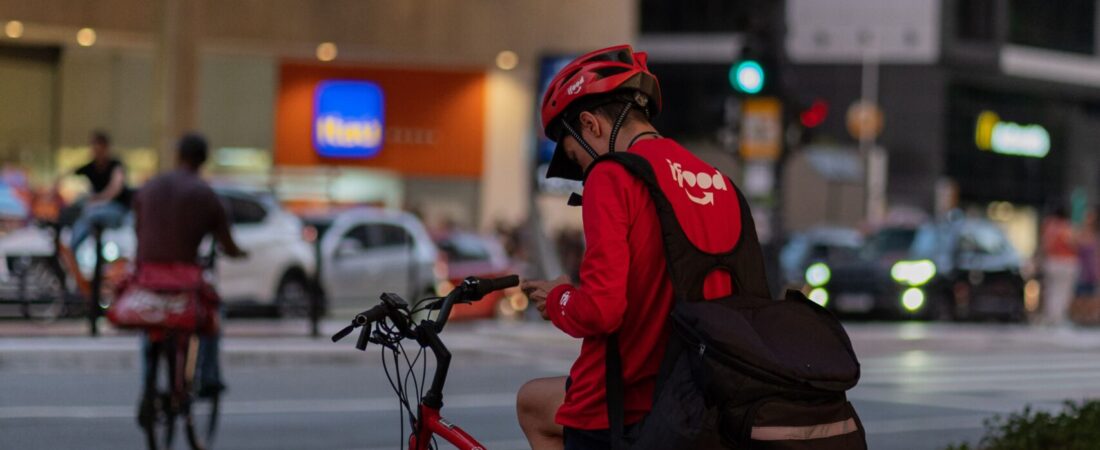

Let’s be real for a second. If you’re looking into gig delivery work in 2026, you probably have one main question: How much does a delivery driver actually make?
Not the “up to $30/hour” numbers the apps flash in their ads. The real numbers. The ones you can count on after gas, maintenance, taxes, and downtime.
We pulled earnings data from Gridwise’s 2026 Annual Gig Mobility Report, real driver surveys, and firsthand accounts across Uber Eats, Instacart, Walmart Spark Driver, and Amazon Flex to give you the straight truth about delivery driver pay in 2026. No fluff, no hype, just the numbers that matter.
What’s the Real Delivery Driver Pay in 2026?
The short answer: median earnings across the major platforms fall between $15 and $22 per hour before expenses. After vehicle costs, most drivers net somewhere in the $12–$17 per hour range.
But that range hides a lot of variation. Which platform you drive for, when you work, and what market you’re in can swing that number by $10/hour in either direction.
Here’s how the big four stack up based on 2025–2026 data:
Uber Eats / Uber Direct
Uber’s delivery arm covers restaurant food, groceries, alcohol, and even retail packages through Uber Direct. Base pay is typically $2–$4 per order with tips making up the bulk of earnings. In busy markets, drivers report averaging $17–$21 per hour active time (meaning when you actually have an order).
What drivers say: The unpredictability is the hardest part. One lunch shift can crush it; the next Tuesday is dead air. Multi-apping is almost mandatory to keep utilization above 60%.
Instacart
Instacart shoppers earned a median hourly rate of $16.40 per hour in markets with 10+ partner stores, according to a 2025 Gridwise survey of 8,400 grocery delivery drivers. But here’s the catch — Instacart batches vary wildly. A $50 Costco double-batch might take 90 minutes start to finish, while a single-bag Walgreens order might pay $8 and take 25 minutes.
What drivers say: Cherry-picking is everything. Know your stores, know the item counts, and don’t accept anything under $1 per item for full-service orders. New drivers often accept everything and burn out fast.
Walmart Spark Driver
Spark drivers reported a median of $21.74 per hour in total trip pay in 2025 — the highest of any delivery platform — based on Gridwise data from over 14,600 tracked drivers. With tips, incentives, and bonuses included, the median gross pay hits $22.57 per hour.
That makes Spark the earnings leader for now, but it comes with trade-offs. Orders are heavier (groceries + water + soda), and wait times at busy Walmarts can eat 10–20 minutes per trip.
What drivers say: Great for drivers who don’t mind physical work. The earn-by-offer model means you can see the total before accepting. Decline anything under $2/mile and you’ll do fine.
Amazon Flex
Amazon Flex pays a flat block rate — typically $19–$26 per hour for a 3-to-5-hour block depending on your market. You pick up packages from a delivery station and run a route. No tips, no haggling, just a guaranteed rate for 3-5 hours of work.
Sounds good, but here’s the reality check: Flex routes often include 40+ stops across a wide area, and the algorithm routes you tight. A 4-hour block might be 3 hours of work plus a 45-minute drive to the station and 15 minutes organizing packages. Your actual hourly can dip to $16–$18 once you factor in total time invested.
What drivers say: No tip dependency is huge. But the block-grabbing game (snatching up high-paying blocks before they disappear) can be stressful. Surging blocks over $30/hour are real but rare.
Why 2026 Is a Pivotal Year for Delivery Drivers
The gig delivery landscape is shifting in ways that directly affect your bottom line. Here’s what changed:
Platform Fees Keep Rising — but Driver Pay Isn’t Keeping Up
According to the 2026 Gridwise report, customer prices for rideshare and delivery rose nearly 10% in the past year. But driver earnings haven’t kept pace — the gap between what customers pay and what drivers take home is widening. Platforms are absorbing more margin to fund growth and investor returns.
What this means for you: You can’t control what the platform pays per order. But you can control which orders you accept. This is the year to get ruthless about your acceptance criteria.
Grocery Delivery Is Growing Fast
Retail and grocery delivery is the fastest-growing segment in gig work. Instacart, Spark, and Uber Direct are all competing for grocery trips, which means more offers for drivers. The trade-off is heavier orders and more in-store wait time.
Tips Are Down Slightly
The Gridwise report flagged a modest decline in tip rates across delivery platforms. Inflation fatigue is real — customers are tipping less frequently even as service fees rise. This makes base pay and incentives more important than ever.
7 Proven Ways to Maximize Your Delivery Driver Pay in 2026
Knowing the numbers is one thing. Actually increasing your earnings is another. Here are seven strategies that experienced drivers use to push their pay above the averages.
1. Multi-App Strategically (Don’t Just Toggle Everything On)
Running Uber Eats, DoorDash, and Grubhub at the same time seems smart, but accepting orders on two apps at once leads to late deliveries, contract violations, and deactivation. Instead:
- Primary app: Keep one app front and center. Accept offers there.
- Secondary apps: Pause them when you’re on an active delivery. Only unpause when you’re 5 minutes from drop-off.
- Amazon Flex: Run Flex blocks during off-peak hours for your primary app (midday, late night) so they don’t compete.
Drivers who master this rhythm report 20–30% higher daily earnings than single-app drivers.
2. Know Your True Hourly Rate
Don’t track “active time” — track total engaged time from the moment you leave your house to the moment you return. Include:
- Drive to the first pickup zone
- Wait time at restaurants or stores
- Drive time between orders
- Time spent on drop-offs
- Drive home at the end of your shift
If your true hourly is below $15 after gas, you’re better off with a different platform, shift, or market.
3. Work the Right Hours
The single biggest earnings lever is when you work. These windows consistently produce the highest pay:
Drivers who work 4-hour dinner shifts Friday through Sunday often earn as much as drivers working 20 scattered hours across the week.
4. Track Everything for Tax Time
As an independent contractor, you’re responsible for your own taxes. The standard mileage deduction for 2026 is projected around $0.70 per mile (adjusted annually by the IRS). If you drove 20,000 delivery miles, that’s roughly $14,000 in deductions — which could eliminate your tax bill on thousands of dollars of earnings.
Use a mileage tracker (Gridwise, Stride, or Everlance) that runs automatically in the background. Manually logging miles is a sure way to leave money on the table.
5. Understand Each Platform’s Tip Culture
- Uber Eats: Tips are shown before acceptance on most orders. $0 tip offers are common — decline unless the base pay covers it.
- Instacart: Tips are shown before acceptance but can be reduced after delivery. Heavy item orders (water, soda, pet food) often tip better proportionally.
- Spark: Tips are shown before acceptance but may be partially deducted if items are out of stock. The “estimated” tip is often, but not always, the final tip.
- Amazon Flex: Zero tips — but also zero tip anxiety. Your block rate is guaranteed.
6. Keep Your Vehicle Costs in Check
Your car is your most expensive tool. Every mile costs roughly $0.50–$0.65 in gas, maintenance, tires, insurance, and depreciation. A car getting 25 MPG will cost about $0.12/mile in gas alone at current prices.
Three ways to cut costs:
- Use a fuel rewards app (Upside, GetUpside) for cashback on gas.
- Change oil and rotate tires on schedule — skipping maintenance costs more in breakdowns.
- Consider a dedicated delivery vehicle. Many experienced drivers run a used hybrid (Prius, Corolla Hybrid) that gets 50+ MPG and has low maintenance costs.
7. Know When to Say No
The hardest skill to learn in gig delivery is declining bad offers. New drivers accept everything because they’re afraid of low acceptance rates. Here’s the truth: Deactivation for low acceptance is extremely rare on most platforms. Only completion rate and customer ratings really matter.
Set your personal minimums and stick to them:
- Food delivery: $1.50–$2.00 per mile minimum, $6.50 minimum per order
- Grocery delivery: $1.50–$2.00 per mile, $10 minimum per batch
- Amazon Flex: Only accept surged blocks ($24+/hour in most markets)
Which Platform Should You Start With?
If you’re new to delivery gigs, here’s a simple decision guide:
Pick Uber Eats if: You want the fastest onboarding and the highest order volume. Uber’s platform is the most mature, with the most restaurants and the most customers. You can be delivering in 24–48 hours.
Pick Instacart if: You prefer shopping over driving, and you’re comfortable in grocery stores. Instacart works best in dense suburban areas with multiple grocery chains per zone.
Pick Spark if: You want the highest reported hourly earnings and you don’t mind heavy grocery loads. Spark is best in metro areas with many Walmart locations.
Pick Amazon Flex if: You want guaranteed pay without tip anxiety, and you prefer driving a set route over chasing individual orders. Flex works well for drivers who want a schedule-like structure.
Ready to Start Delivering?
If you’re ready to hit the road and start earning, Uber Eats has one of the fastest signup processes in the industry. Most drivers get approved within 24 to 48 hours. You can deliver by car, bike, scooter, or even on foot in certain cities.
Final Takeaway on Delivery Driver Pay 2026
The golden age of gig delivery — when you could make $25–$30/hour consistently on any app — has settled into something more realistic. In 2026, delivery driver pay is still good for what it is: flexible, on-demand income with no boss, no schedule, and no uniform.
But the top earners aren’t lucky. They’re strategic. They multi-app without overlap. They work peak hours. They track their real costs. And they never forget that every declined bad offer is space for a good one.
If you treat delivery like a real business — optimizing for hourly earnings, not just total pay — you can still clear $800–$1,200 per week working 30–40 hours. That’s real money, even after expenses.
The drivers who treat this as just “a side thing” make side-thing money. The ones who treat it like a business? They’re the ones buying houses, paying off debt, and building real financial momentum.
Which one will you be?
Disclosure: Some links in this article are referral links. If you sign up through them, the author may earn a bonus at no additional cost to you. Data sources include Gridwise Analytics 2026 Annual Gig Mobility Report, Gridwise driver surveys, and publicly reported driver earnings. Actual earnings vary by market, hours worked, and vehicle efficiency.
🔥 Start Driving with Uber & Earn Big!
✅ Earn up to $2,575 for 188 passenger trips in 30 days
✅ Earn up to $1,100 for 100 deliveries in 30 days
New drivers may qualify. Terms apply.