

Amazon Flex Driver Earnings in 2026: Real Pay, Block Strategies & Brutal Truths Nobody Warns You About

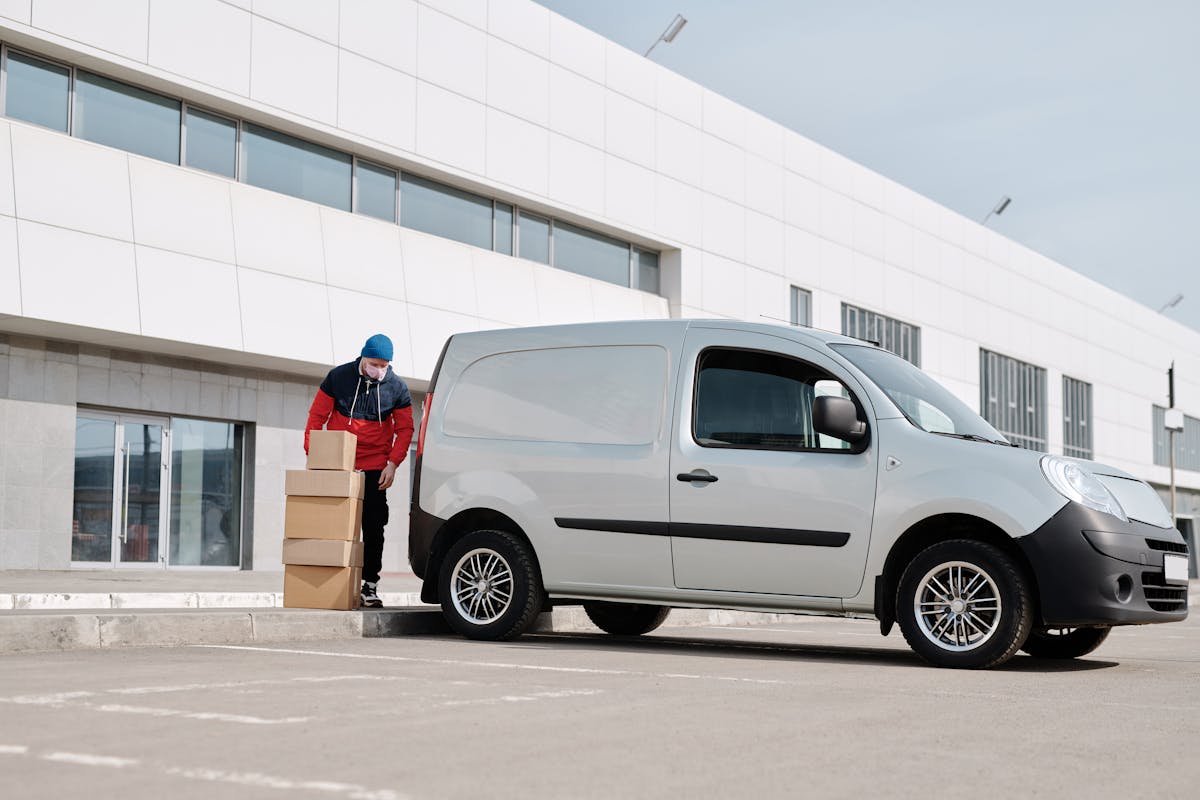
You open the Amazon Flex app at 6:15 AM. A 3-hour block pops up for $64.50. Do you grab it?
That’s the question every Amazon Flex driver faces daily. And the answer is never as simple as the dollar amount on the screen.
I’ve been driving for Amazon Flex since 2022. I’ve done logistics blocks out of delivery stations, Whole Foods instant offers, and Sub Same-Day routes out of the new mega-hubs. I’ve also run DoorDash, Uber Eats, Instacart, and Spark. I’m telling you this upfront because when it comes to Amazon Flex driver earnings in 2026, the headline number and the take-home number are two completely different animals.
Most articles will tell you Amazon Flex pays $18 to $25 an hour. And sure, that’s what the official Amazon Flex website says. But here’s what they don’t put in bold: your net pay after gas, depreciation, taxes, and the occasional 20-mile deadhead back to the station can drop that number to $12 an hour — or worse.
This guide breaks down what Amazon Flex actually pays in 2026, how to read blocks like a pro, and whether it’s worth your time compared to the other gig apps.
What Amazon Flex Pays in 2026: The Real Numbers
Amazon Flex earnings come from blocks — scheduled delivery shifts that range from 2 to 5 hours. You’re paid a flat rate for the block, regardless of how long it actually takes. Finish in 2 hours on a 3-hour block? You still get paid for 3.
Here’s what drivers are seeing in 2026 across the major market types:
| Typical Block Pay (2026) | Effective Hourly |
| $48 – $72 | $18 – $26/hr |
| $80 – $120 | $16 – $24/hr |
| $36 – $56 + tips | $18 – $28/hr |
| $60 – $96 | $18 – $25/hr |
| $15 – $35 + tips | $20 – $30/hr |
Those numbers look decent. But they’re gross. Not net.
After the 72.5 cents per mile IRS deduction (2026 rate), the 15.3% self-employment tax, gas at $3.20–$3.80 a gallon depending where you are, and the $1,200–$2,400 a year in extra maintenance that delivery driving puts on your car, your real hourly usually shakes out to:
- Logistics blocks: $13 – $18/hr net
- Whole Foods with good tips: $17 – $23/hr net
- Instant Offers in peak zones: $18 – $25/hr net
The path to real profit on Amazon Flex isn’t about grinding more hours. It’s about choosing the right blocks and knowing which ones to skip.

The Block Game: How Amazon Flex Drivers Maximize Earnings
If you’re new to Amazon Flex, you might think every $18-an-hour block is worth taking. After four years, I can tell you flat out: some $18 blocks pay better than $26 blocks. It all comes down to mileage and route density.
Go hard on Whole Foods and Fresh blocks
Grocery blocks are the hidden gem of Amazon Flex in 2026. A 2-hour Whole Foods block pays $36 to $56 base, but the tips push it to $50 to $80. Most routes are 3 to 8 stops within a 5-mile radius of the store. You’ll drive 10 to 25 miles total. That’s the sweet spot.
Compare that to a 3-hour logistics block where you drive 45 miles with 30+ stops and zero tips. The gross pay might be $63. But after 45 miles at 72.5 cents? That’s $32.62 in mileage costs alone. Your gross after mileage: about $30 for 3 hours. Still before taxes.
Avoid surge pricing traps
Amazon Flex uses surge pricing on blocks nobody wants. You’ll see a 3-hour logistics block base at $54 surge to $72, maybe $81. That looks tempting. But check the station. If it’s a station known for 60-mile routes, $81 for 3 hours is actually worse than $54 for a tight 20-mile route.
I track my routes. After two years of data, my best station averages 0.8 miles per stop. My worst station averages 2.4 miles per stop. Same base pay. Very different net earnings.
Instant offers are gold — if you’re positioned right
Amazon Flex instant offers let you accept individual delivery requests without scheduling a block. You see the pickup, drop-off, and pay before you accept.
In 2026, good instant offers pay $18–$35 for 30–60 minutes of work. The catch: you need to be near a Whole Foods or a busy Sub Same-Day station. Park near one during lunch rush or dinner time and you can string together 3–4 offers in 3 hours and clear $80–$100.
But if you accept an instant offer from 15 miles away? You just turned a 30-minute delivery into a 75-minute ordeal with 30 deadhead miles. Pass.

Amazon Flex vs DoorDash vs Uber Eats vs Instacart vs Spark: Which Pays Best in 2026?
I run all five apps. Here’s my honest ranking for driver earning potential in mid-2026:
| Gross Hourly | Net After Expenses |
| $18 – $26 | $13 – $20 |
| $18 – $25 | $12 – $17 |
| $17 – $24 | $11 – $16 |
| $16 – $22 | $11 – $16 |
| $17 – $24 | $12 – $17 |
| $22 – $30 | $15 – $21 |
The key insight most drivers miss: Amazon Flex does not pay tips on logistics blocks. Only grocery blocks (Whole Foods, Amazon Fresh) and some Sub Same-Day routes include tips. If you’re doing 3 logistics blocks a day, you’re earning base pay only — no tip upside. That’s fine when base pay is high, but it means you can’t rely on tips to salvage a slow block the way you can on DoorDash or Instacart.
The Waitlist Reality Nobody Talks About
Here’s the part that drives people crazy. Amazon Flex has waitlists in most major markets. You sign up, and you wait. Weeks. Months. Or forever.
In 2026, the waitlist situation varies by city:
- Open markets (Phoenix, Dallas, Atlanta, Miami): 1–4 weeks
- Saturated markets (LA, NYC, Chicago, Seattle, Bay Area): 3–12 months
- Closed markets (some smaller metros): not accepting new drivers at all
If you’re stuck on the waitlist, don’t sit around. Run DoorDash, Uber Eats, or Spark in the meantime. They all have shorter or no waitlists. By the time Flex opens up, you’ll already know your delivery zone and which neighborhoods tip best.
One trick that works: check https://flex.amazon.com/ from a desktop browser on a Tuesday or Wednesday. Amazon sometimes opens registration windows mid-week without announcing them.
The Hidden Costs of Amazon Flex in 2026
Amazon Flex is a 1099 gig. That means every dollar of cost comes out of your pocket first. Here’s what that looks like for a driver pulling 25 hours a week:
The IRS mileage rate is 72.5 cents per mile in 2026. Track every mile. That deduction will save you thousands at tax time. But understand that your real cost per mile is also in that ballpark when you factor in depreciation and long-term wear.
5 Strategies That Actually Boost Amazon Flex Driver Earnings
I’ve been doing this long enough to know what separates drivers who earn $900 a week from drivers who quit after a month. Here are the five things that matter most.
1. Learn your station’s route patterns
Every delivery station has a personality. One station near me sends all routes to dense suburban neighborhoods with driveways. The other station sends drivers 20 miles out to rural routes with long dirt driveways and no cell service. Base pay is the same at both stations.
Ask other drivers. Join your local Amazon Flex Facebook group or subreddit. Figure out which stations have the best routes and only accept blocks from those stations.
2. Stack Amazon Flex with one food delivery app
Multi-apping isn’t just for DoorDash drivers. Here’s a practical strategy: book a morning logistics block (6–9 AM) on Flex, then run Uber Eats or DoorDash for lunch rush (11 AM–2 PM), then grab an afternoon Whole Foods block (3–5 PM).
This combo — Flex for reliable base income, food delivery for tip-heavy peak hours — beats any single platform hands-down. Drivers who do this consistently report $900–$1,200 a week in 2026, working 45–50 hours.
3. Never chase base pay alone
If a block pays $18 an hour but takes you 30 miles from your home, you’re effectively losing $21.75 in mileage costs (30 miles x $0.725) before you start. Then you drive 30 miles back unpaid.
A good rule of thumb: only accept blocks where the total round-trip mileage is under 1.5x the block’s hourly rate. If a block pays $60 and you’ll drive 35 miles total, that’s roughly $25 in costs. You’re keeping $35 for the block. That’s solid.
If a block pays $60 and you’ll drive 60 miles total, you’re keeping maybe $16. Skip it.
4. Cash out daily, track everything
Amazon Flex pays weekly via direct deposit. But you can cash out daily through the app for a small fee (usually $0.85). Do it. The psychological boost of seeing your earnings land in your bank account every day keeps you motivated.
More importantly: track every mile. Use Stride, Everlance, or Gridwise. Gridwise in particular is popular with Flex drivers because it auto-detects trips. At tax time, those mileage logs are worth thousands.
5. Understand the 2026 tax rules for Flex drivers
This is the part nobody hypes on YouTube. Flex drivers are 1099-independent contractors. You owe:
- 15.3% self-employment tax — Social Security + Medicare, both halves
- Income tax at your marginal rate (usually 12%–22% for most drivers)
- Quarterly estimated taxes — if you owe more than $1,000, the IRS expects payments every 3 months
Set aside 30% of every block payment. Put it in a separate account. Do not touch it.
The good news: the standard mileage deduction (72.5 cents/mile in 2026) wipes out a huge chunk of your taxable income. A driver earning $40,000 gross with 20,000 delivery miles deducts $14,500. That brings taxable income down to $25,500. The QBI deduction knocks off another 20%. You’re looking at roughly $20,400 of taxable income on $40,000 earned.
Save those receipts.
Verdict: Is Amazon Flex Worth It in 2026?
Amazon Flex is worth it — but not as your only app.
The pros: predictable blocks, decent base pay, no tip volatility on logistics routes, and Whole Foods tips can be excellent. The routes are straightforward: deliver packages, no food-warming bags, no restaurant wait times.
The cons: zero tips on most blocks, waitlists in oversaturated markets, inconsistent block availability, and the mileage can eat your profit if you’re not selective.
If you’re comparing it to a W-2 job, Flex will never win. No paid time off, no health insurance, no 401(k) match. But if you’re comparing it to DoorDash or Uber Eats, Flex often wins on stability per hour — as long as you pick the right blocks.
My honest take: run Flex for the base income, run a food delivery app for the tip upside, and run Instacart or Spark for the slow hours between rushes. No single app is enough in 2026.
FAQ
How much do Amazon Flex drivers really make in 2026?
Real net earnings range from $13 to $20 an hour after gas, maintenance, and taxes. Gross pay is $18 to $26 an hour. Most full-time drivers (35–40 hours/week) net $500 to $750 a week.
Is Amazon Flex better than DoorDash?
It depends. Flex pays better per hour on logistics blocks but has no tips. DoorDash has lower base pay but tips can push it higher during peak hours. Most experienced drivers run both.
Do Amazon Flex drivers get tips?
Only on grocery blocks (Whole Foods, Amazon Fresh) and some Sub Same-Day routes. Standard logistics blocks do not include tips.
How long is the Amazon Flex waitlist in 2026?
It varies wildly. Some markets accept new drivers in 1–2 weeks. Others — LA, NYC, Chicago, Seattle — have waitlists of 3 months or more. Check the Amazon Flex website for your city’s current status.
Can I make $1,000 a week with Amazon Flex?
Yes, but it takes 50–60 hours and strategic multi-apping. Pure Flex at $22 gross/hour x 50 hours = $1,100 gross. After expenses and taxes, you’re looking at $700–$850 net. Adding a food delivery app for tips helps push you past $1,000 net.
What car do I need for Amazon Flex?
Any 4-door vehicle in good condition. Sedans, hatchbacks, SUVs, and minivans all work. You need enough cargo space for about 30–50 packages depending on the route. Compact cars won’t qualify for some logistics stations.
Do I need commercial insurance for Amazon Flex?
Amazon provides liability coverage during active deliveries, but your personal insurance may not cover commercial use. Many drivers add a rideshare/delivery endorsement ($15–$30/month) or carry a commercial policy ($150–$250/month). Check with your insurer.
Ready to Start Delivering?
Amazon Flex isn’t a get-rich-quick scheme. But if you go in with your eyes open, choose your blocks carefully, and stack it with other apps, it’s one of the better-paying gigs in the delivery space.
If Flex has a waitlist in your area — and it probably does — don’t wait around. Get approved on Uber Eats in the meantime. The signup process takes 2–3 days in most markets, and you can start delivering immediately.
Sign Up for Uber Eats Delivery →
The best time to start was last week. The second best time is right now.