

On November 5, 2026, Amazon quietly flipped a switch that sent 180 million Prime members straight into the Uber Eats ecosystem. Free delivery on orders over $25, plus $40 in launch-week credits — and all of it flowing through the same driver app you already have on your phone. If you drive for Uber Eats, this is the biggest demand injection the platform has seen since COVID lockdowns, and it landed right before the busiest delivery weeks of the year. Here is what it actually means for your paycheck and how to position yourself to capture it.
Driver Opportunity
Want to Earn While You Read?
Join as a new driver and get up to a $2,575 guaranteed bonus after completing your first 200 deliveries in select US cities.
Start Earning Now →New drivers only · Terms apply · Available in select cities
What the Amazon–Uber Eats Deal Actually Is
Amazon ended its four-year partnership with Grubhub on November 5, 2026, the same day it launched the new Uber Eats benefit for Prime members. The deal gives every Prime subscriber — including half-price Young Adults and Prime Access tiers — $0 delivery fees on restaurant orders of $25 or more, reaching nearly 10,000 cities and towns across the U.S.
The launch-week promo that flooded the app
For the first 14 days after launch — a window that runs through November 19, 2026 — Prime members get $20 off each of their first two eligible orders, for up to $40 in total savings. That is an enormous pull-forward of demand. Drivers who were already on the Uber Eats app during that window reported noticeably shorter waits between offers in metro markets. The promo window closes on November 19, but the structural change — 180 million members with a free-delivery perk they will use constantly — is permanent.
How orders flow to you
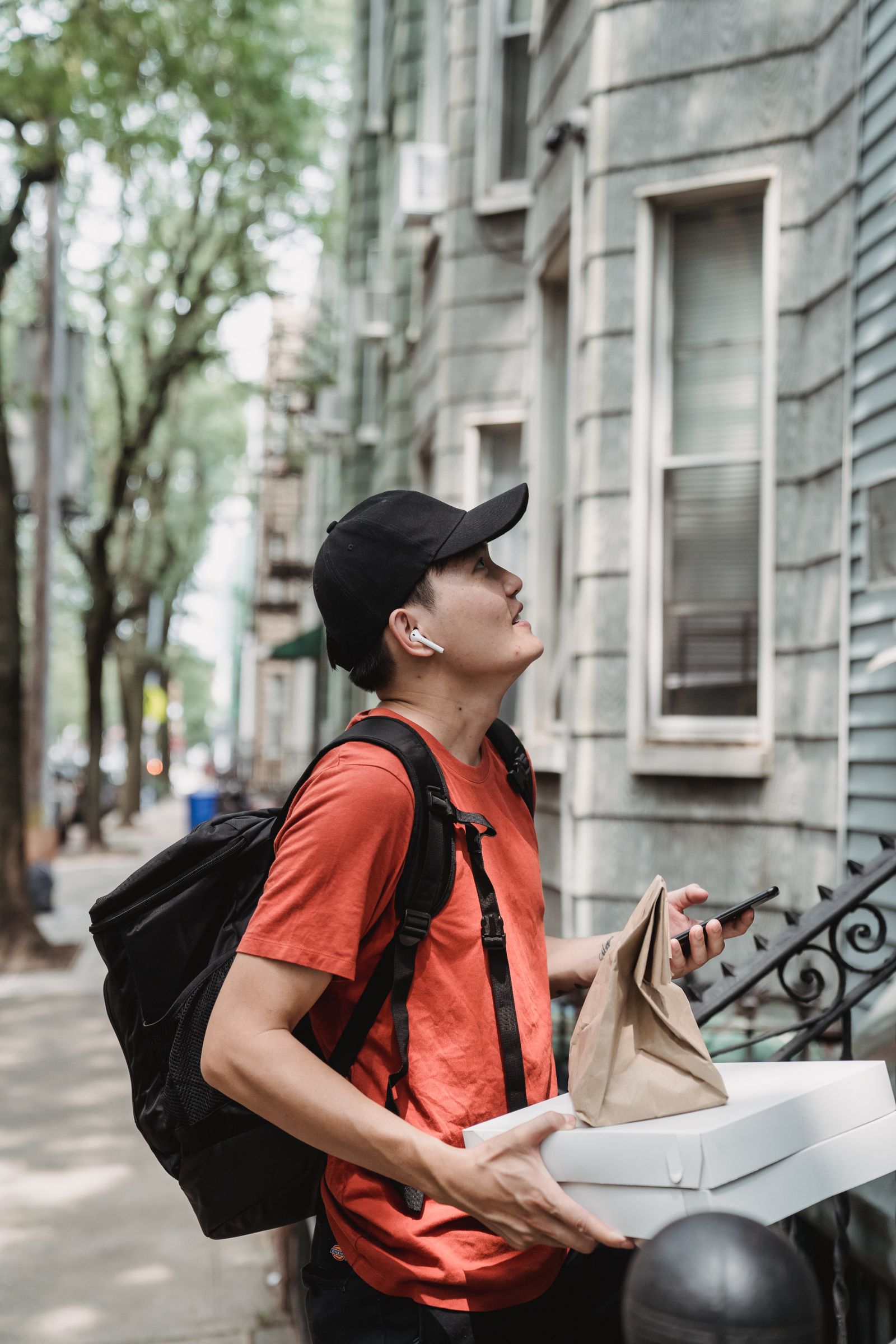
Prime members place orders on Amazon.com or the Amazon Shopping app, but the fulfillment runs entirely through Uber Eats infrastructure. You do not need a new app, a separate login, or any extra onboarding step. Offers show up in your existing Uber Eats driver app exactly like any other restaurant order. The only difference is that the customer side is subsidized by Amazon, which means higher average order values and customers who are already conditioned to expect free delivery — which historically correlates with better tips.
Why Higher Order Values Matter More Than You Think
Uber Eats base pay is partly tied to order size. A $40 restaurant order typically generates more base pay than two $15 orders, even if the drive time is similar. The free-delivery threshold of $25 pushes customers to add more items to hit or exceed that number, which lifts average cart values across the board — not just for Prime-eligible orders.
Tip behavior on larger orders
Data from previous platform subscription launches (DashPass, Uber One) consistently shows that customers using a free-delivery perk tip at roughly the same percentage rate as non-subscribers, but because their cart is bigger, the absolute dollar tip is higher. If the typical non-Prime customer was ordering $22 of food and tipping $3, a Prime customer building a $30+ cart to hit the threshold and tipping the same 15% leaves you $4.50. Small difference per order; meaningful over a full shift.
Stacking this with peak pay
Uber Eats surge pricing activates when demand outpaces available drivers. More orders from Prime members means surge zones fire more frequently and stay active longer, especially during lunch (11 AM–2 PM) and dinner (5–9 PM) windows. If you are already tuned into how surge pricing and boost zones work on Uber Eats, this demand spike is directly in your wheelhouse.
The Grubhub Driver Question
Grubhub lost the Amazon Prime benefit on the same day Uber Eats gained it. That is a substantial chunk of order volume moving platforms overnight. If you were also running Grubhub as part of a multi-app stack, you need to rethink that combination right now.
Should you drop Grubhub from your rotation?
Not necessarily — Grubhub still has markets where it performs, and some drivers will find thinner competition there since frustrated Grubhub drivers may jump ship. But the honest math has shifted. Uber Eats is now the stronger primary app in most markets for the foreseeable future. If you are optimizing a two-app stack, the core question is whether Grubhub’s volume in your specific zip code justifies keeping the app open alongside Uber Eats. Run both for two weeks, track your hourly net on each, and let the numbers decide. The multi-apping fundamentals guide walks through exactly how to benchmark apps against each other.
DoorDash is still king in most markets
The Amazon deal does not change DoorDash’s overall market share — it is still the largest food delivery platform in the U.S. by order volume. What it does is narrow the gap between DoorDash and Uber Eats and potentially make Uber Eats a more reliable co-primary app than it was six months ago. Running DoorDash + Uber Eats simultaneously is now a sharper stack than it has been since the Uber One subscription launched.
What This Means for the Holiday Season Specifically
Thanksgiving week, the stretch from Black Friday through December 20, and New Year’s Eve are three of the highest-earning windows of the year for most food delivery drivers. This holiday season is the first with the Amazon Prime–Uber Eats pipeline fully open. That matters for a few specific reasons.
New Prime members activating the perk
Amazon typically sees a surge in Prime sign-ups in November and December around holiday shopping. Many of those new members will discover the Uber Eats benefit for the first time and use it heavily in the first weeks. That creates a secondary demand wave on top of the already-high holiday order volume. Plan to be on the app during the dinner window on the nights of November 26 (Thanksgiving), November 27 (Black Friday), and December 24–26 — those will be particularly high-demand windows on Uber Eats this year.
Restaurant partnerships and exclusives
Uber Eats has been adding restaurant chain partnerships specifically tied to the Prime benefit. When a customer sees a sponsored offer for a chain they already know, conversion rates are higher — meaning more completed orders, fewer abandoned carts mid-flow, and fewer no-tip “just browsing” situations that waste your time. Holiday delivery strategy on Uber Eats and DoorDash goes deeper into timing and restaurant selection for the peak weeks.
Expect more new customers in suburban and secondary markets
Amazon Prime penetration is highest in suburban households, not just dense urban cores. The free-delivery perk may pull first-time Uber Eats users in secondary cities and suburban zones that previously had thin order volume. If you have written off the suburbs as slow, it is worth re-testing your zone coverage after Thanksgiving. Some drivers in mid-sized metro areas are already reporting a noticeable uptick in offers in zip codes that were marginal before November 5.
Practical Moves to Capitalize Right Now
Update your Uber Eats app immediately
Uber Eats pushed several app updates around the Prime launch, including improvements to the offer screen and earnings breakdown. If you are running an app version from before October 2026, you may be missing UI refinements that speed up accept/decline decisions. Check the App Store or Google Play and update if prompted.
Watch your acceptance rate threshold
Uber Eats uses acceptance rate to gate access to priority offers and scheduled blocks in some markets. With more total orders on the platform, the absolute number of low-value orders will also increase — Prime customers sometimes order cheap add-on items that generate borderline offers. Knowing your personal minimum acceptable dollar-per-mile threshold before the offer clock starts is more important than ever. Most experienced drivers set a floor of $1.25–$1.50 per mile on Uber Eats as a starting point, then adjust based on local conditions. For a full framework on how to accept and decline orders without tanking your standing, that guide covers the platform-specific rules in detail.
Log your miles from day one of the surge
More orders means more miles, and miles are your single largest tax deduction as a gig driver. The IRS mileage rate for the second half of 2026 is 76 cents per mile (it was 72.5 cents per mile from January 1 through June 30). Every mile you fail to log is money left on the table in April. If you are not already running automatic mileage tracking, start this week — the holiday surge is exactly when high-mileage weeks compound fastest.
Position in restaurant-dense corridors
Prime members ordering on Amazon tend to gravitate toward national chain restaurants because those brands appear prominently in the Amazon shopping interface. Positioning near a corridor with Chili’s, Applebee’s, Cheesecake Factory, or similar chains that have Uber Eats integrations puts you first in line for those offers. This is a slight shift from the independent-restaurant-heavy positioning strategy that works best on DoorDash.
How to Tell If the Surge Is Hitting Your Market
National headlines do not pay your rent. A Prime-driven demand bump can be obvious in one market and almost invisible in the next, depending on how many Prime households sit inside your delivery zone and how many other drivers react to the same news. Before you rebuild your whole week around the Amazon deal, spend five shifts measuring what actually changed where you drive.
Start with offer frequency. Count how many offers you receive per hour during the dinner window, then compare that to a normal week in October. If you were seeing six offers between 5 and 9 PM and you are now seeing ten, the demand is real and you should protect those hours. If the count has not moved, your market may be absorbing the extra volume with new drivers, or your zone may simply have low Prime penetration.
Next, look at average offer value rather than order count. The $25 free-delivery threshold was designed to push carts upward, so the tell is whether your typical Uber Eats offer is worth more than it was a month ago. A shift from $8 average offers to $10 average offers on the same drive distances is a bigger deal than ten extra low-value pings, because it means the threshold effect is working in your favor.
Finally, re-test zones you wrote off. Suburban and secondary-market coverage is where Prime membership density is highest, and where the free-delivery perk is most likely to convert a household that never used a delivery app before. Run one dinner shift a week in your nearest suburban corridor for three weeks and compare hourly net against your usual urban route. If the suburb wins twice out of three, move the shift permanently. If it loses both times, you have a clean answer and you stop second-guessing it.
What Uber Eats Drivers Should Watch For in December
The Amazon deal is live, but it is also still new. Expect some friction in the first weeks — a new ordering surface plugged into an existing fulfillment layer usually produces handoff errors, customers who are not sure where to track their order, and the occasional address mismatch on a Prime-originated order. If you receive an order that feels off (unusual address, customer not responding to texts), reach out through the in-app support before driving to the location. These edge cases will get smoothed out over the next few months, but November and December will have more of them than a mature integration would.
Also keep an eye on your Uber Eats earnings summary by order source. Some drivers in test markets have noted that Prime-originated orders are tagged separately in the earnings breakdown, which makes it easier to see which orders came through the Amazon pipeline versus direct Uber Eats customers. This is not universal yet, but it is a useful data point for evaluating whether the demand bump is translating into real earnings for your specific market.
The Bottom Line for This Holiday Season
Driver Opportunity
Ready to Start?
Turn This Guide Into Real Income. Join as a new driver and get up to a $2,575 guaranteed bonus after completing your first 200 deliveries in select US cities.
Sign Up & Start Delivering →New drivers only · Terms apply · Available in select cities
The Amazon Prime–Uber Eats partnership is the most significant structural demand change for Uber Eats drivers in years. It does not automatically mean higher hourly earnings — you still need to be in the right place at the right time, running the right app stack. But it does mean that Uber Eats is a stronger primary or co-primary app heading into the holidays than it was six months ago, the average order value pulling through the platform is trending up, and drivers who position well in suburban and chain-restaurant corridors will likely see the strongest benefit. The drivers who sit on the sidelines waiting to see how it plays out will miss the highest-volume weeks of the launch period. The time to adjust your strategy is right now, before Thanksgiving week kicks off the most lucrative delivery stretch of 2026.