


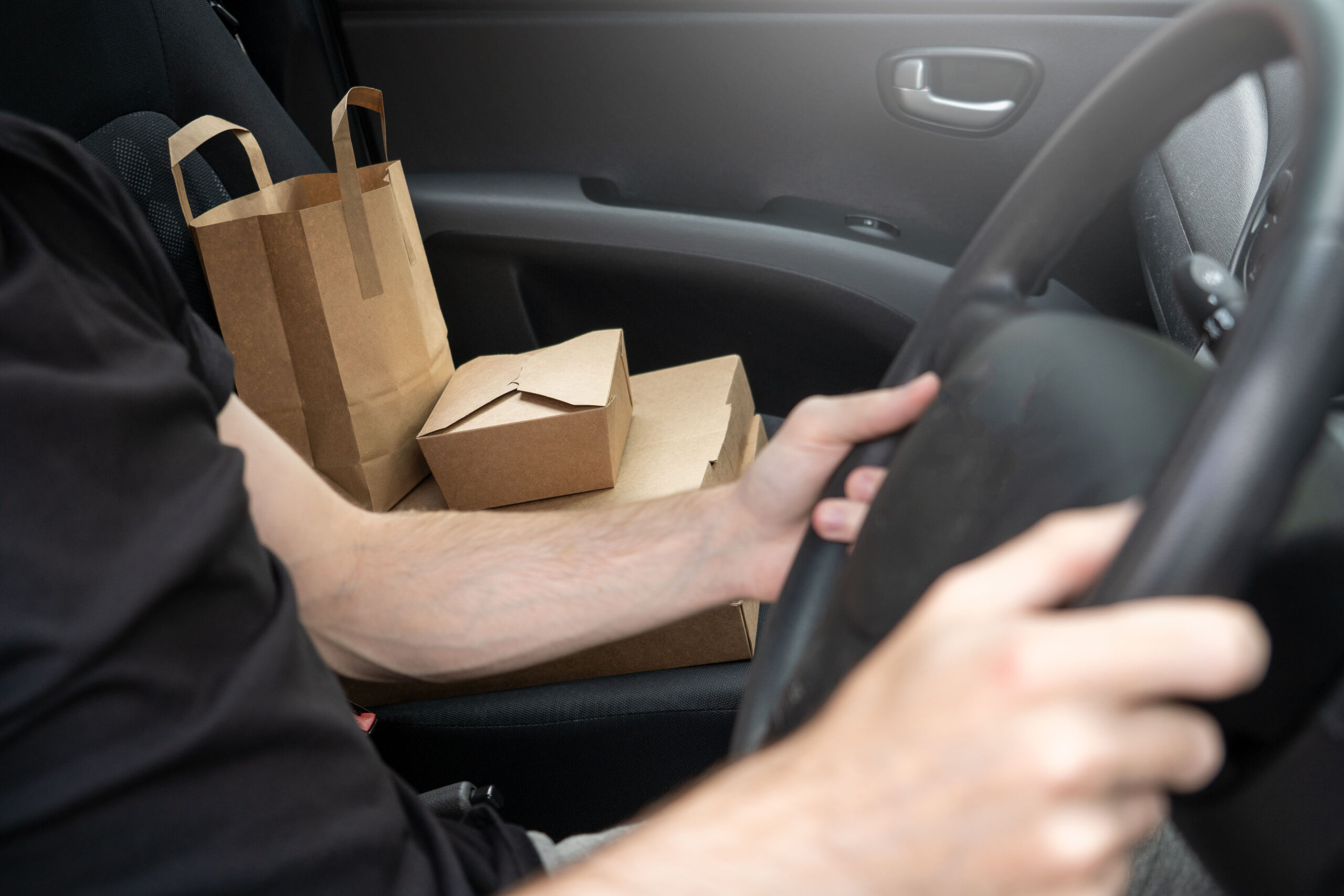
It happens to every delivery driver eventually. You’re rolling down a residential street with two orders in the hot bag, the app dinging for the next pickup, and then you see it: the little orange engine-shaped light glowing on your dash like a warning siren. Your stomach drops. Is the car about to die? Is this a $200 fix or a $2,000 one? Do you finish the shift or head home right now?
Take a breath. As someone who has stared at that light during a DoorDash rush more times than I care to count, I can tell you the check engine light is rarely the emergency it feels like. But it’s also never something to ignore — especially when your car is your office and a breakdown means a lost paycheck. This guide covers exactly what that light means in 2026, which codes are cheap and which are dangerous, how to read it yourself without paying a shop $150, and the smart math on when to keep driving and when to call it quits.
Why Delivery Drivers Panic When the Check Engine Light Comes On
Here’s the thing about being a gig driver: your car isn’t a luxury, it’s a revenue-generating asset. A regular commuter puts 12,000 to 15,000 miles a year on their car. A full-time delivery driver? We’re talking 30,000 to 50,000 miles — sometimes more. That means our cars hit the age and mileage where sensors fail, gaskets leak, and converters wear out about three times faster than everyone else’s.
And the stakes are different for us. When a 9-to-5 commuter’s car needs a repair, they lose a day of work. When our car needs a repair, we lose the only way we make money — plus the shift we’re currently on. One surprise repair can wipe out a week of earnings. That’s why the check engine light hits different for drivers, and why knowing what you’re looking at is worth real money. The average gig driver grosses somewhere in the range of $15 to $25 an hour after expenses, so every hour you spend panicking instead of delivering is an hour you’re not earning. Knowledge here is literally cash.
Steady vs. Flashing: The Two-Minute Decision That Saves You Thousands
Before you do anything else, look at the light again. Is it steady or flashing? This one distinction tells you almost everything about how urgent the problem is.
Steady Check Engine Light: Annoying, Usually Not an Emergency
A steady, solid check engine light means the engine computer (the ECU) has detected an emissions or performance fault that isn’t actively destroying anything. The car will usually drive fine — maybe with slightly worse gas mileage or a rough idle. Common causes include a loose gas cap, a failing oxygen sensor, a thermostat stuck open, or an EVAP system leak. These are exactly the kind of issues you can finish a shift with, then diagnose calmly. The light is your car’s way of saying book an appointment, not pull over right now.
Flashing Check Engine Light: Stop Driving. Like, Now.
A flashing check engine light is a completely different animal. It means the engine is actively misfiring — fuel is igniting at the wrong time or not at all in one or more cylinders. Driving with a flashing light is gambling with your catalytic converter. Unburned fuel pours into the exhaust, overheats the converter, and can destroy it in a matter of minutes. A simple spark plug or ignition coil repair that would have cost $150 to $400 becomes a $1,500 to $2,500 catalytic converter replacement if you keep driving.
The rule is simple: if the light is flashing and the car is shaking or running rough, pull over somewhere safe, end the shift, and get the car looked at. That’s not being dramatic — that’s protecting thousands of dollars. If you’re stranded, this is exactly the moment your roadside assistance plan earns its keep.
The Most Common Check Engine Codes Delivery Drivers See (and What They Cost in 2026)
When a mechanic or a parts store reads your codes, you’ll get a letter-and-number code like P0420 or P0301. Here are the ones gig drivers run into most, with realistic 2026 repair costs so you know what you’re dealing with.
P0420: Catalytic Converter Efficiency Below Threshold
This is one of the most common codes on high-mileage delivery cars, and unfortunately one of the most expensive. The converter is aging and not cleaning emissions like it should. Repair cost: $900 to $2,500 depending on your vehicle — sometimes more on newer cars. Sometimes the real culprit is a failing oxygen sensor making the converter look bad, so a good mechanic will verify before quoting you a converter. If you get this code, get a second opinion before approving big work.
P0300, P0301, P0302, P0303, P0304: Engine Misfire Codes
The P0300 family means one or more cylinders are misfiring. On high-mileage cars this is usually spark plugs, ignition coils, or both. Repair cost: $150 to $400 for plugs and coils, more if it’s a fuel injector or compression issue. A misfire is also the code that triggers a flashing light, so take it seriously. And since delivery miles are brutal on ignition parts, this code is practically a rite of passage for drivers past 100,000 miles.
P0171 and P0174: System Too Lean
These codes mean the engine is getting too much air or not enough fuel. Common causes on delivery cars: a dirty mass airflow sensor, a vacuum leak, or a failing fuel pump. Repair cost: $200 to $600 depending on the cause. A clogged air filter can contribute here too — worth checking before you pay for diagnostics, since air filter issues are cheap to fix.
P0455 or P0456: EVAP System Leak (Often the Gas Cap)
This is the free one. The EVAP system captures fuel vapors, and a big leak code often just means your gas cap isn’t sealed. Tighten it, drive for a day or two, and the light frequently clears itself. If it comes back, a smoke test will find the leak — typically $100 to $300. Always try the gas cap before paying anyone anything.
P0128: Coolant Thermostat Stuck
Your engine isn’t warming up to operating temperature fast enough. It’s a $200 to $400 fix and usually not urgent, but it hurts fuel economy — and for drivers, fuel economy is profit. If you’re already getting poor gas mileage, this code is a likely reason.
Free Code Reads and OBD2 Scanners: Decode It Yourself
Here’s a money-saving secret too few drivers know: you don’t need to pay a shop to read your codes. In 2026, chain auto parts stores like AutoZone, Advance Auto Parts, and O’Reilly will read your codes for free and print out the trouble code — no purchase required. That alone saves you the $75 to $150 diagnostic fee most shops charge, which in 2026 runs $75 to $150 on average at independent shops and $122 to $233 at dealers.

Even better: buy your own OBD2 scanner. A basic Bluetooth OBD2 adapter costs $15 to $40, pairs with a free app on your phone, and reads and clears codes instantly. Mid-range options like the ANCEL BD200 run about $60, and serious tools like BlueDriver are around $100. For a delivery driver, this is one of the best investments you can make — it turns a scary moment into a 30-second check, right in the parking lot between orders. You’ll know before you even start the car whether you can safely finish your shift.
Just remember: clearing a code with a scanner doesn’t fix the underlying problem. It’s a diagnostic tool, not a repair. And if your state does emissions testing, cleared codes will come back once the light’s underlying fault is still present.
Should You Finish Your Shift? The Real Math for Drivers
When a steady check engine light appears mid-shift, drivers face a genuine financial decision. Here’s how to think about it:
First, assess drivability. If the car accelerates normally, isn’t overheating, and the light is steady, you can almost always finish your current shift. Missing a Friday dinner rush costs you $80 to $150 in real earnings — money you can’t get back. Second, consider what the code is. If you have a scanner (or a free parts-store read), a code like P0455 (gas cap) or P0128 (thermostat) means zero risk to keep driving short-term. Third, watch your gauges. If the temperature gauge climbs or the car starts running rough, end the shift immediately. Your safety and the car’s survival beat any single shift’s earnings.
The one exception is a flashing light — that’s a hard stop no matter how good the surge pricing is. A $2,500 converter bill to finish a $90 shift is the worst trade in the gig economy.
Check Engine Lights, Smog Checks, and Registration
If you drive in a state with emissions testing — California, New York, Texas metros, and about 30 others — a check engine light is an automatic smog check failure. In California, the OBD-II plug-in test reads your car’s computer, and an active check engine light or a not-ready monitor status means you won’t get your smog certificate, which means no registration renewal. That’s a nasty surprise if you find out at the testing station with a line of cars behind you.
The fix is simple: resolve the code before you go for a smog check, and drive the car for a few days after clearing codes so the ECU’s monitors run and mark themselves ready. If you need help finding a shop that won’t upsell you, check out our guide to finding a reliable mechanic — it’ll save you from the we recommend a full engine flush conversation.
The Tax Angle: What You Can and Can’t Write Off in 2026
Here’s where the check engine light actually meets your wallet in a good way. If you use the standard mileage deduction — 76 cents per mile for 2026 — that rate already includes maintenance and repairs. You can’t also deduct a separate repair bill on top of the standard rate. That’s the trade-off of the standard mileage method: it’s simple, but repairs are baked in.
If you use the actual expenses method instead, then yes — repairs, parts, and labor are deductible business expenses, apportioned by your business-use percentage. That means a $400 catalytic converter repair on a car used 80% for delivery is an $320 deduction. Worth tracking either way. For the full breakdown of what you can write off, read our delivery driver tax deductions guide, and check the latest 2026 IRS mileage rate details before you file.
And here’s a driver-specific tax tip: keep every repair receipt, even if you use the standard mileage method. If you ever switch methods or get audited, receipts are your evidence. A folder in your glove box or a photo in your phone costs nothing and can save you thousands.
How to Keep the Light Off: Maintenance Is Income
The cheapest check engine light is the one that never comes on. Delivery driving is brutal on cars, but a little preventive maintenance goes a long way. Follow a regular maintenance schedule — oil changes on time, fresh spark plugs around 100,000 miles, clean air filters, and a healthy car battery (a dying battery causes all kinds of weird electrical codes). Watch your maintenance costs so surprises don’t wreck your weekly budget.
Also, don’t ignore a light just because the car feels fine. Small problems become big problems at 40,000 miles a year. That P0420 you ignored in March is a dead converter by August. Your car is the machine that prints your paycheck — treat it like it.
Final Word: Don’t Let a Little Orange Light Steal Your Income
The check engine light is information, not a verdict. With a free parts-store read or a $20 Bluetooth scanner, you can know within minutes whether it’s a gas cap, a sensor, or something serious. A steady light usually means finish your shift and book a repair. A flashing light means stop, period. And with 2026 diagnostic costs running $75 to $150 just to look at the car, owning a scanner is the easiest money you’ll save all year.
Keep up with maintenance, track your receipts, and know your numbers — that’s how delivery drivers stay profitable year after year. And if you’re looking to boost your income while you’re at it, remember that every new driver helps the whole market stay busy. The average gig driver earns more when more customers get their orders fast, so if you know someone thinking about trying delivery, send them our way — there’s plenty of work to go around in 2026.
Get Paid More with Uber Eats
New drivers in select cities can earn up to $2,575 after completing their first deliveries.
Start Earning $2,575 with Uber Eats →
Must be 21+. Background check required. Terms apply.