
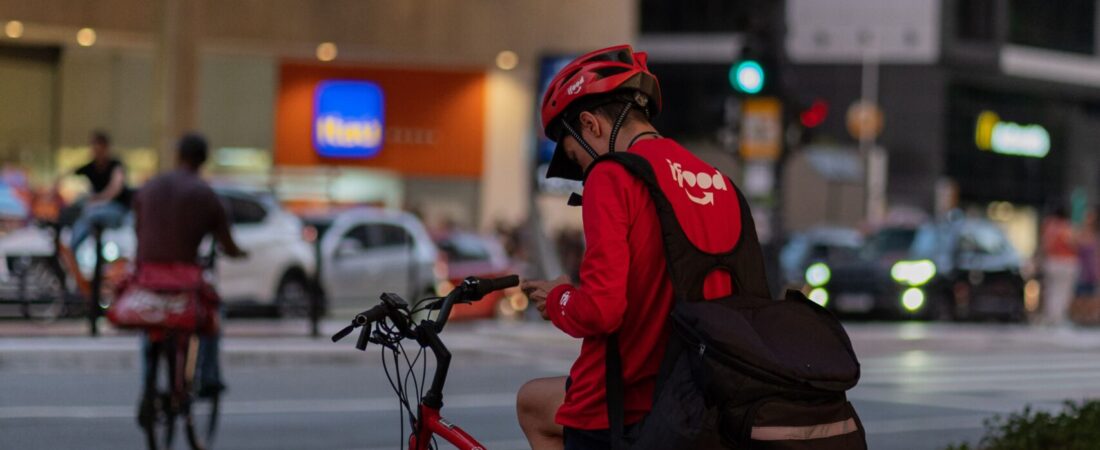

So you’re thinking about signing up for DoorDash, Uber Eats, or Walmart Spark — or maybe you already did one and wondering if the others pay better. I get it. I spent my first three months driving for one app only, thinking I was maximizing my time. Turns out, I was leaving money on the table every single shift.
Let me save you the trial and error. Here’s what actually works in 2026.
How Much Each Platform Actually Pays (Real Numbers)
Every platform has a flashy number on their signup page. None of them tell you what hits your bank account after gas, maintenance, and that 15.3% self-employment tax nobody warned you about. Here’s what drivers are actually reporting in 2026.
DoorDash
DoorDash markets $25+/hour, but real driver data from Ridester and CalcFalcon puts actual earnings around $15-25/hour before expenses. The big variable? Tips. Average DoorDash tip in 2026 hovers around $4-5 per delivery, which adds up fast on shorter runs. The real trick with DoorDash is knowing when to decline low-ball orders — the acceptance rate penalty is mostly a myth at this point, and cherry-picking $2.50 offers for 8-mile drives is how you lose money.
Real take-home after expenses: $12-17/hour
Uber Eats
Uber Eats pays slightly less on base fare but often makes up for it with volume in dense markets. Gridwise’s April 2026 data from 500,000+ drivers shows median tip earnings of $3.73 per delivery, or about $6.26/hour in tips alone. Combine that with base pay and you’re looking at $13-19/hour gross.
The big advantage with Uber is the flexibility. You can toggle between rides and deliveries whenever you want, chase whichever demand is hotter. Plus their referral program this year is genuinely good — I’ll get to that in a sec.
Real take-home after expenses: $11-16/hour
🚗 Ready to Start Driving with Uber?
Sign up today and start earning on your own schedule. Flexible hours, weekly pay, and no boss. New drivers may qualify for a sign-up bonus in their market.
New drivers may qualify for a sign-up bonus. Terms apply.
Walmart Spark
Spark is the dark horse of 2026. Walmart has pushed delivery to 90% of US households, and Spark drivers are the ones making it happen. The Shifttracker App data (May 2026) reports $15-22/hour net for most Spark drivers, with top earners in high-volume markets clearing $25-30/hour during peak windows.
What makes Spark different: you’re delivering orders that are almost always pre-shopped by Walmart employees. No waiting at restaurants, no checking if the order is ready. You pull up, they load, you deliver. The downside is that Spark batches can be massive — three or four stops for one offer — so the per-hour math matters more than the per-offer number.
Real take-home after expenses: $12-18/hour
Grubhub
Grubhub has fallen behind the top three in most markets. Base pay dropped in 2025-2026, and order volume is lower in all but a few cities (Chicago, NYC, Boston). Most multi-app drivers I know only run Grubhub as a filler when DoorDash or Uber Eats is slow. Average gross: $16-22/hour in strong markets, but inconsistent.
Real take-home after expenses: $11-15/hour
Why Multi-App Is the Only Strategy That Works
If you’re only running one app, you’re spending 20-30% of your shift sitting in parking lots waiting for orders. That’s time your car is running, your insurance is ticking, and you’re earning zero.
Multi-apping — running two or three apps at the same time — is how experienced drivers make 15-25% more per hour than single-app drivers. If you’re not doing it, you’re basically subsidizing the drivers who are. Here’s how to do it right:
**Start with two apps.** DoorDash + Uber Eats is the most common combo. Turn both on, accept the best offer from whichever pings first.
**Pause the other app when you accept an order.** Don’t be that driver who’s 15 minutes late because you accepted a second order on a different app mid-delivery. Customers notice, tips drop, and deactivation happens.
**Learn your market’s peak hours.** Breakfast (7-9 AM coffee runs), lunch (11 AM-1 PM), dinner (5-8 PM). Spark has its own afternoon waves when Walmart restocks.
**Track your per-mile earnings.** If an offer pays $8 but is 10 miles round trip, that’s $0.80/mile — below the IRS rate (72.5¢/mile for 2026). You’re literally losing money on that trip when you factor in depreciation.
Taxes: The Part Nobody Talks About
Here’s the reality check: as a gig worker, you’re self-employed. That means:
- 15.3% self-employment tax on top of income tax. Uncle Sam takes a cut of every dollar.
- Quarterly estimated taxes — not optional. If you owe more than $1,000 at filing time, there’s a penalty.
- You need to track mileage. The 2026 IRS rate is 72.5 cents per business mile. For a driver doing 40 hours/week, that’s roughly $12,000-15,000 in deductions per year. Do not skip this.
Best tools for mileage tracking: Stride (free), Everlance, or Gridwise. All three auto-track trips and categorize business vs personal miles.
Quarterly tax dates for 2026: April 15, June 15, September 15, January 15 2027. Mark them on your calendar right now.
Vehicle Choice: What Makes Sense
You don’t need a brand new car. In fact, a used Toyota Prius or Honda Civic is probably the smartest vehicle you can drive for deliveries. Here’s why:
- Toyota Prius: 50+ MPG. At current gas prices ($3.20-3.80/gal nationwide), you’re spending roughly $0.07/mile on fuel vs $0.15-0.18/mile for a typical sedan. Over 30,000 delivery miles a year, that’s about $2,400 in savings.
- Honda Civic: Reliable, cheap parts, 35+ MPG. Not as good as a Prius on fuel, but lower upfront cost.
- Used EVs (Chevy Bolt, Nissan Leaf): If you can charge at home, electric is a no-brainer. The Bolt hits the used market under $15K now and costs about $0.03/mile in electricity.
What to avoid: anything with a V6 or V8, luxury cars (depreciation kills you), and cars with expensive maintenance schedules (German cars, I’m looking at you).
How to Actually Start
The barrier to entry for gig work is basically zero. You need:
A valid driver’s license
Insurance (liability minimum)
A smartphone (any recent model works)
Clean-ish driving record (each platform has different thresholds, but a couple minor violations won’t disqualify you)
Sign-up takes about 15 minutes per app. Background checks take 2-7 days depending on the platform. DoorDash is usually fastest, sometimes clearing same day.
I’d recommend starting with two apps. Uber Eats + DoorDash gives you the broadest coverage in most US markets. Once you’re comfortable, add Spark for the afternoon grocery delivery shift.
🚗 Sign Up for Uber& Earn a Bonus!
Use my referral link to start earning with Uber. New drivers get a bonus on their first trips.
*Terms apply.
Common Mistakes New Drivers Make
I made all of these so you don’t have to.
Mistake #1: Taking every order. Your acceptance rate doesn’t matter nearly as much as DoorDash wants you to believe. If an offer is $3 for 8 miles, decline it. That’s below minimum wage before expenses.
Mistake #2: Not tracking mileage from day one. You cannot retroactively log miles. If you start day one with a mileage tracker, you’ll save thousands at tax time. If you start six months in, you’ll be guessing.
Mistake #3: Driving during dead hours. Tuesday 2-4 PM is garbage in most markets. Learn when orders drop off and go home. Running errands or resting is more profitable than chasing $4 offers.
Mistake #4: Ignoring maintenance. Oil changes every 5,000 miles, tire rotations, brake pads. A $60 oil change is cheap. A $3,000 transmission because you skipped maintenance is not.
Mistake #5: Not separating business and personal expenses. Get a dedicated bank account for your gig income. Found, Novo, and Lili all offer free business checking for sole props with no minimum balance. It makes tax prep 10x easier.
The Bottom Line
Gig delivery driving in 2026 can still pay well — $15-25/hour gross — but only if you run it like a business, not a side gig. Multi-app. Cherry-pick. Track miles. Take care of your car. The days of rolling out of bed and making $30/hour on one app are mostly done. But if you put in the strategy, the money’s still there and the flexibility beats any W-2 job I’ve had.
If you’re just getting started, sign up for Uber Eats and DoorDash today. Background checks take a few days, so get them running now while you figure out your plan. Then add Spark once you’ve got the rhythm down.
Disclaimer: Earnings vary by market, hours worked, and driver strategy. Tax information is for educational purposes — consult a CPA for your specific situation. Referral bonuses subject to platform terms which may change.
best mileage tracking apps for gig drivers]** |
🔥 Start Driving with Uber & Earn Big!
✅ Earn at least $2,575 for your first 188 passenger trips in 30 days.
✅ Earn at least $1,100 for your first 100 deliveries in 30 days.
🚀 Returning to Uber? Sign in to check your eligibility for a referral offer.
Terms apply. New drivers only. Bonus varies by city.