
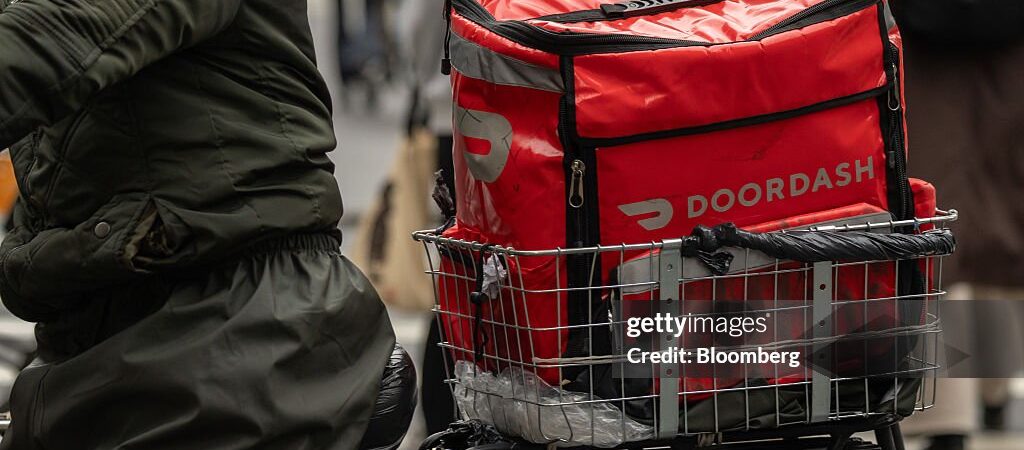

If you deliver food or packages for a living, you have probably found yourself wondering about insurance. Do you need a separate policy for your delivery work? Will your regular auto insurance cover you when you are hauling DoorDash orders at 10 PM on a Tuesday?
The short answer is: probably not. Most standard personal auto insurance policies have a clause that excludes business use. And in the eyes of insurance companies, delivering food for money counts as business use.
This guide walks through everything you need to know about delivery driver insurance in 2026. What the platforms cover, where the gaps are, how much commercial insurance costs, and the exact steps to make sure you are not driving around uninsured.
What Insurance Do the Delivery Apps Provide?
DoorDash, Uber Eats, Spark, and Instacart all offer some level of insurance while you are actively working. But the coverage is limited and has gaps you need to know about.
DoorDash Insurance
DoorDash provides a $1 million commercial auto liability policy. This kicks in while you are actively delivering an order. It covers bodily injury and property damage to other people if you cause an accident.
But here is the gotcha: DoorDash’s coverage is contingent liability. That means it only pays out after your personal insurance has paid its limit. And it only covers you during the delivery window when you have picked up the food and are heading to the customer.
If you are logged into the app waiting for orders, DoorDash considers that Zone 1. During this time, DoorDash provides only liability coverage if your personal insurance denies the claim. No collision. No comprehensive. No coverage for your vehicle’s damage.
Uber Eats Insurance
Uber Eats follows a similar three-tier model:
- Period 1: App on, waiting for an order. Uber provides third-party liability only. Your vehicle damage is on you.
- Period 2: Heading to pickup the order. Contingent liability coverage applies.
- Period 3: Delivering the order. Uber’s $1 million commercial liability policy is active.
The gap in Period 1 catches a lot of drivers off guard. You are using your car for work purposes, but the platform’s coverage is minimal. If you hit a parked car while waiting in a restaurant lot, your personal insurance might deny the claim, and Uber’s policy only covers liability to the other party.
Amazon Flex and Spark Insurance
Amazon Flex provides liability coverage similar to the other platforms while you are actively delivering packages. Spark Driver (Walmart) also carries liability coverage during active deliveries. Both follow the same contingent liability model.
None of these platforms cover damage to your own vehicle. Not a single one.
The Big Gap: Your Personal Insurance Probably Excludes Delivery Work
This is where most delivery drivers get into trouble. Pull out your auto insurance policy and look for the exclusions section. It will probably say something like:
“We do not cover bodily injury or property damage arising out of the ownership or operation of a vehicle while the vehicle is being used to carry persons or property for compensation or a fee.”
That is insurance language for: we do not cover delivery driving.
If you get into an accident while you have a DoorDash order in the car and file a claim, the insurance company will investigate. They will ask about what you were doing. If they find out you were delivering food — and they will — they can legally deny your claim. They can also cancel your policy retroactively and report you to the state insurance database.
I have talked to drivers who found this out the hard way. One guy in Houston had his car totaled by a red-light runner while doing Uber Eats. His insurance denied the claim because he was on a delivery. He was stuck with a $12,000 repair bill and a lapsed policy that made it almost impossible to get new insurance for two years.
Do not be that person.
Your Options for Delivery Driver Insurance
You have three main options to get properly covered. The right one depends on how much you deliver.
Option 1: TNC Endorsement (Rideshare Coverage)
Most major insurance companies now offer a rideshare endorsement. This is an add-on to your personal auto policy. It typically costs between $15 and $40 extra per month.
The endorsement covers the gap during Period 1 and Period 2 when the platform’s coverage is minimal or absent. It provides comprehensive and collision coverage for your own vehicle during all phases of delivery work.
Here is which companies offer it:
- State Farm: Offers a rideshare endorsement in most states. Covers all three periods.
- Geico: Limited rideshare coverage. Depends on state. Call and ask specifically about delivery driving.
- Allstate: Has a ride-for-hire endorsement. Availability varies by state.
- Farmers: Offers rideshare coverage through its Signature Series policy.
- Progressive: Offers coverage specifically for food delivery drivers in some states.
- USAA: Has a rideshare add-on for qualified members.
When you call, use the exact phrase “rideshare endorsement” or “food delivery coverage.” If the agent does not know what that is, ask to speak with someone who handles commercial or business-use policies.
Option 2: Commercial Auto Insurance
If you deliver full-time or put more than 20,000 miles per year on your car for delivery work, you should seriously consider a commercial auto policy.
Commercial auto insurance covers you for ALL business use of your vehicle. It is a standalone policy that replaces your personal coverage, not an add-on. It covers liability, collision, and comprehensive while you are delivering.
The tradeoff is cost. Commercial auto insurance typically runs $200 to $600 per month for delivery drivers. You can deduct the full premium as a business expense on your taxes, which helps offset the cost.
Check with: Progressive Commercial, The Hartford, Travelers, Nationwide, and local independent agents who can shop multiple carriers.
Option 3: Personal Policy with a Business-Use Endorsement
A few carriers let you add a “business use” or “delivery driver” endorsement to your existing personal policy. This is different from a rideshare endorsement. It specifically covers using your car for delivery work.
Availability is limited. Erie Insurance offers this in some states. So does Auto-Owners Insurance. You may need to call several agents to find one who offers it.
Cost: around $40 to $80 per month extra. In between a TNC endorsement and full commercial insurance.
How Much Does Delivery Driver Insurance Cost in 2026?
Real numbers from various driver reports and insurance quotes:
- Personal auto without delivery coverage: $80–$180/month (you are likely uninsured while delivering)
- Personal auto + TNC/delivery endorsement: $100–$220/month
- Commercial auto policy: $200–$600/month
The price depends on your driving record, age, location, vehicle, and how many miles you drive. A clean record and a sedan in a suburb will cost much less than a speeding ticket collection and a truck in downtown Chicago.
Can You Deduct Insurance on Your Taxes?
Yes, and this is a big one. If you use a portion of your auto insurance for delivery work, you can deduct that portion as a business expense.
If you use your car 60% for delivery and 40% for personal driving, you can deduct 60% of your insurance premium on Schedule C of your tax return. This applies to:
- Your personal auto insurance premium (the business-use percentage)
- Any TNC endorsement or delivery add-on
- Full commercial insurance premium (if exclusively used for delivery)
Keep a mileage log. Track every mile, not just the ones you think matter. When you deduct insurance, the IRS may ask for proof of business-use percentage. Your mileage log is that proof.
Steps to Get Covered Right Now
Here is exactly what to do this week if you are driving for DoorDash, Uber Eats, Spark, or any delivery platform:
- Read your current auto policy. Look for the business-use exclusion. It is usually on page 2 or 3 under “Exclusions” or “What We Do Not Cover.”
- Call your insurance company. Say: “I do food delivery driving with my car. What coverage options do you have for that?” Do not lie. Lying to your insurance company is grounds for claim denial and policy cancellation.
- Ask about a rideshare or TNC endorsement. If they do not have one, ask if they offer a business-use endorsement for delivery drivers. Write down the name of the person you spoke to and the date.
- Get quotes from 3 companies. Progressive, State Farm, and a local independent agent. Independent agents can quote from 10+ carriers at once.
- Choose the option that covers you during all delivery periods. At minimum, get a TNC endorsement. If you drive full-time, consider commercial insurance. Do not just go with the cheapest option — the cheapest option probably does not cover you during deliveries.
- Deduct the cost on your taxes. Save your receipts. Track your delivery miles.
What about Non-Owner Policies?
If you deliver on a bike, scooter, or on foot (Uber Eats walker mode, DoorDash bicycle), you do not need auto insurance. But you should check your renters or homeowners policy for liability coverage in case you damage property or someone gets injured while you are delivering.
If you ride a motorcycle or moped for deliveries, the same logic applies as a car: your personal motorcycle policy probably excludes business use. Ask about a delivery endorsement.
Bottom Line
Most delivery drivers in the US are driving around without proper insurance and do not even know it. The platforms give you bare-minimum liability coverage during active deliveries, but your personal policy will likely deny your claim the second they find out you were delivering food.
That gap is real. It only takes one accident to leave you with a totaled car, a denied claim, and a canceled policy that follows you around for years.
The fix is not expensive. A TNC endorsement costs $15–$40 a month. That is less than a couple of Chipotle bowls. And you can deduct it on your taxes.
Take 30 minutes this week. Read your policy. Make the phone call. Get covered. It is one of the smartest things you can do for your delivery business in 2026.
Start Delivering with Uber Eats
Sign up to deliver with Uber Eats and earn money on your own schedule. New drivers in select markets can earn up to $2,575 after completing their first deliveries.
Terms apply. Available in select US markets. New drivers only.