
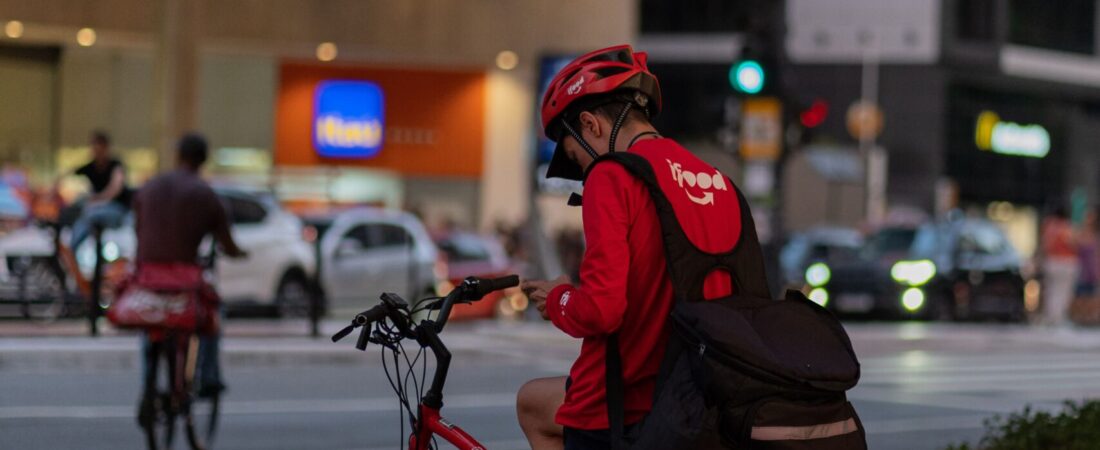

As a gig delivery driver in 2026, you have a lot to worry about — traffic in downtown Houston, apartment gate codes in Dallas, tips disappearing after a rough Chicago drop-off, and the ever-present pressure to complete more orders per hour. But one of the most frustrating problems that drivers across every platform face is delivery theft — when a customer reports that their food or package never arrived, even though you left it right at their door.
Delivery theft and porch piracy cost gig drivers real money. When a DoorDash order is reported as missing, your completion rate drops. On Uber Eats, you might lose your tip. On Amazon Flex, a stolen package can trigger a contract violation that puts your entire account at risk. For Spark drivers, missing deliveries can lead directly to deactivation after just a few reports.
In this complete 2026 guide, we’ll cover everything you need to know about protecting yourself from delivery theft claims, preventing porch piracy on your routes, and what to do when a customer falsely reports a missing order. Whether you drive in New York City, Los Angeles, Austin, or Miami, these strategies will save you money and keep your accounts in good standing.
Why Delivery Theft Is Surging in 2026
Porch piracy isn’t new, but it’s getting worse for several reasons. First, e-commerce and food delivery volumes continue to climb — more packages and meals are sitting unattended on doorsteps than ever before. Second, organized theft rings have started targeting neighborhoods known for frequent deliveries, following Amazon Flex and UPS trucks through residential streets.
According to a 2025 security report, nearly 1 in 5 Americans reported having a package stolen in the past year. For delivery drivers, that translates into more customer complaints, disputed tips, and potential deactivation hearings.
In cities like San Francisco, Chicago, and Houston, porch piracy hotspots are well-known to experienced drivers. Apartment buildings without secure lobbies, houses with street-facing front doors, and neighborhoods near public transit stops are particularly vulnerable. Understanding where theft is most likely helps you make smarter decisions about photo documentation and drop-off positioning.
Platform-Specific Theft Policies (DoorDash, Uber Eats, Spark, Amazon Flex)
Each gig platform handles delivery theft differently. Knowing their specific policies helps you protect your account before a problem arises.
DoorDash
DoorDash requires drivers to take a photo of every “Leave at Door” order. This photo is your primary evidence if a customer claims the food never arrived. If a customer reports a missing order, DoorDash checks the photo against the order timestamp and GPS location. If your photo shows the food at the correct address at the right time, you’re generally protected from contract violations.
However, DoorDash’s automated system can still issue a violation if a customer reports too many missing orders from different drivers at the same address. In that case, the system flags the address, not your account. You can appeal any violation by contacting support and providing your photo evidence.
In markets like New York City and Los Angeles, DoorDash has started testing “hand it to me” default settings in high-theft zip codes. If you see this on your app, the customer must physically receive the order or you must mark it as “Customer not available” after the timer expires.
Uber Eats
Uber Eats has a similar photo requirement for contactless deliveries. What makes Uber Eats different is that customer tips are adjustable for up to one hour after delivery. If a customer reports that their food was stolen, Uber Eats may reduce or reverse your tip — even with photo evidence.
Drivers in cities like Austin and Miami report that Uber Eats is the most aggressive about tip adjustments tied to theft claims. Your best defense is to always include the house number or apartment number in your delivery photo, making it impossible for the customer to claim the food was left at the wrong building.
Amazon Flex
Amazon Flex has the strictest theft policy of any gig delivery platform. Each undelivered package generates a “Dings” or “Contract Violation” on your account. Accumulate three violations in a rolling 500-delivery window, and Amazon deactivates your account with no appeal process.
Amazon requires geo-tagged photos for every delivery. The Flex app automatically records your GPS location when you mark a package as delivered. If a customer reports a missing package, Amazon reviews your GPS coordinates, delivery photo, and the customer’s delivery instructions against their own records.
For apartment deliveries in Chicago, Los Angeles, and Seattle, Amazon Flex drivers should always deliver directly to the customer’s door — not the lobby or mail room — unless the customer explicitly instructs otherwise. Delivery to a lobby is the #1 cause of disputed Amazon Flex deliveries.
Spark Driver (Walmart)
Spark Driver handles theft claims differently because Walmart stores control the fulfillment process. When a Spark driver delivers a grocery order, the customer can report missing or damaged items directly to Walmart, not to the driver’s account. However, if a full order never arrives (the customer claims you never delivered), Spark investigates your delivery photo and GPS data.
Spark drivers in Houston and Dallas emphasize the importance of the “Arrived at Location” step — if you don’t properly mark arrival before marking delivery, your GPS pin won’t match the delivery address, and that gap creates ambiguity in a theft dispute.
8 Proven Strategies to Prevent Delivery Theft Claims
1. Take Better Delivery Photos
Your delivery photo is your single best defense against theft claims. A good photo includes three elements: the package or food clearly visible, the house number or apartment number in the frame, and enough context to show the location matches the customer’s delivery instructions. Avoid photos that only show the ground or a close-up of the bag with no landmark.
When delivering in apartment buildings in New York City or Los Angeles, take the photo at the door with the unit number visible. If the number is on the door itself, frame it so both the food and the number appear in the same shot. This eliminates the “wrong apartment” defense.
2. Use the “Hand It to Me” Option Strategically
All major platforms give customers a delivery preference — “Leave at Door” vs “Hand It to Me.” While most customers prefer contactless delivery for convenience, you can override this in certain situations. If you’re delivering to a high-theft area, an apartment building with street access, or a house where the previous delivery disappeared, call the customer and ask if they’d prefer to receive the order directly.
The major platforms allow you to switch delivery methods in the app. When you hand an order to the customer, get a verbal acknowledgment. Some drivers in Chicago and Atlanta record a brief voice memo on their phone just in case a dispute arises later, though this should only be done in states with one-party consent recording laws.
3. Time-Stamp and GPS Documentation Apps
The photo your delivery app takes is date and time-stamped on the platform’s servers. But you can add another layer of protection by using a GPS camera app that overlays the exact address, date, time, and GPS coordinates onto your photo. Apps like Timestamp Camera (free on Android and iOS) let you capture additional proof before you walk away from a delivery.
Keep these backup photos in a folder sorted by date. If a customer disputes a delivery two weeks later, you’ll have independent evidence that doesn’t rely on the platform’s records. Many drivers in Los Angeles and San Francisco use this as their standard practice for high-value deliveries or orders placed late at night.
4. Know Your High-Theft Zip Codes
Experienced drivers in every major US city know which neighborhoods have the highest theft rates. In Houston, deliveries near the University of Houston and areas with dense apartment complexes see more disputes. In Austin, downtown and near the University of Texas campus generate more porch piracy claims. Chicago’s Loop and South Side have notorious theft patterns.
When you accept an order in a high-theft zip code, take extra precautions: confirm the delivery instructions before leaving the restaurant or store, take a wider photo that shows the entire entryway, and text the customer a confirmation that the order has arrived. Some drivers in New York City even place the food behind a planter or under a mat — anything that keeps it out of street-level sight.
5. Use the In-App Timer for “Customer Not Available”
When a customer selects “Hand It to Me” but doesn’t answer the door, every platform has a timer you must complete before you can leave the order. Never skip this step. The timer protects you: once it expires, the platform’s system records that you attempted delivery and the customer was unavailable. You can then leave the order in a safe location and complete the delivery.
If you mark a “Hand It to Me” order as delivered without using the timer, and the food later disappears, the platform may treat it as a policy violation rather than a theft dispute. This is a common mistake among new drivers in markets like Dallas and Miami where fast deliveries are prioritized.
6. Communicate Before You Arrive
A simple text message before you arrive can prevent a huge percentage of theft claims. “I’ll be at your door in 2 minutes with your DoorDash order — are you available to receive it?” This serves two purposes: it reminds the customer that their food is coming, and it gives them a chance to respond if they want you to leave it at the door.
When a customer responds, take a screenshot. If a dispute arises later, that message chain is evidence that the customer confirmed they wanted the order left at the door. Drivers in Atlanta and Houston report that this single habit reduced their theft dispute rate by over 60 percent.
7. Install a Dashboard Camera
A front-and-rear dashcam isn’t just for accidents — it’s also evidence in delivery disputes. If a customer claims you never stopped at their address, your dashcam’s GPS log proves you were there. If someone steals the delivery seconds after you walk away, the rear camera might capture the incident.
Dashcams with cloud storage are particularly valuable because they preserve footage even if the camera is damaged or removed. Drivers making high-value Amazon Flex or Spark deliveries in major cities like Chicago and Los Angeles should consider a dashcam as essential equipment, not optional.
8. Build Relationships with Regular Customers
In markets like Austin and Dallas, many drivers develop regular routes and customer relationships. When you deliver to the same address multiple times, that customer knows and trusts you. They’re far less likely to file a theft claim because they recognize your name and photo in the app.
If you primarily work a specific zone — downtown Austin, West Houston, or North Dallas — focus on building a reputation for reliable, careful deliveries. Repeat customers are your best protection against theft claims because they value the relationship.
What to Do When a Customer Reports a Missing Delivery
Even with all the precautions in the world, theft claims can still happen. Here’s exactly what to do if you receive a notification that a customer reported a missing order.
Step 1: Don’t Panic
A single theft report won’t deactivate your account on any platform. DoorDash allows some missing deliveries before triggering a review. Uber Eats adjusts the tip but doesn’t immediately issue violations. Amazon Flex tracks everything in rolling windows. One report is not a crisis.
Step 2: Gather Your Evidence Immediately
Open your camera roll and find the delivery photo you took. If you used a GPS timestamp app, have that photo ready too. Note the exact time and address from your Google Maps timeline or dashcam GPS log. Write down the customer’s delivery instructions as they appeared in the app.
Step 3: Contact Support Proactively
Don’t wait for the platform to contact you. Call or chat with support first and explain that you have photo evidence of the delivery. On DoorDash, you can upload the photo directly in the dispute form. On Uber Eats, send the photo through the help section. On Amazon Flex, submit your evidence through the “Appeals” process in the app.
Drivers in Houston and Los Angeles report that proactive support contact resolves 80 percent of theft disputes in the driver’s favor. The key is being the first to present evidence — if the platform’s automated system rules against you first, it’s harder to reverse.
Step 4: Check the Address History
If you’ve delivered to the same address before, check your history. Some customers have a pattern of reporting missing orders — it’s a scam where they get free food and claim it never arrived. If you see a pattern, report it to the platform. Most gig companies track address-level fraud, and your report adds to that data.
In cities like New York City, Chicago, and Los Angeles, organized food theft rings operate by ordering from multiple accounts and reporting every delivery as missing. When enough drivers report the same address, the platform eventually blacklists it.
Step 5: Watch Your Metrics
After a theft dispute, monitor your metrics for the next 30 days. On DoorDash, check your completion rate. On Uber Eats, check your satisfaction rate. On Amazon Flex, watch for additional Dings. If another dispute happens soon after, consider switching to a different platform or working a different zone for a few weeks.
Legal Protections for Delivery Drivers
In most states, delivery drivers are considered independent contractors, not employees, which means your legal protections against theft claims are limited. However, there are some legal strategies worth knowing.
First, false claims of non-delivery can constitute fraud in some jurisdictions. If a customer repeatedly files false theft reports, they could face criminal charges for defrauding the delivery platform. This is rare but it happens — particularly when platforms pursue legal action against organized theft rings.
Second, your delivery photos are your legal evidence. They establish that you fulfilled your contractual obligation. If a platform deactivates you based on a theft claim that contradicts your photo evidence, you may have grounds to appeal through arbitration, which is required by most platform terms of service.
Third, consider documenting your delivery process for tax purposes. A detailed mileage log with delivery notes not only saves you money at tax time but also creates a paper trail that proves you were at the delivery location at the time of the drop-off.
When to Avoid a Delivery Altogether
Not every order is worth the risk. Experienced drivers in Houston, Dallas, Austin, and Los Angeles know that certain deliveries are statistically more likely to result in theft claims. Here’s when to reconsider accepting an order:
- Late-night deliveries to unfamiliar neighborhoods: Between 11 PM and 3 AM, theft rates spike because fewer witnesses are around and the darkness hides porch pirates.
- High-value orders in high-theft zip codes: A $200 sushi order going to a downtown Chicago apartment with no doorman is a theft magnet.
- Deliveries to addresses with “leave at door” instructions that are clearly commercial: If the address is a storefront or office that closes at 6 PM, the package will sit unattended on the street all night.
- Orders from customers who have already disputed with other drivers: Some apps don’t show you this directly, but driver Facebook groups and Reddit communities share problem addresses in real-time.
Final Thoughts: Protecting Your Gig Income from Theft Claims
Delivery theft and porch piracy are real risks for every gig driver in 2026, but they don’t have to cost you your income or your accounts. The single most effective strategy is consistent photo documentation — every order, every time, with the house or apartment number visible in the frame. Layer in good communication with customers, smart dashcam setup, and knowledge of your platform’s specific dispute process, and you’ll resolve 9 out of 10 theft claims in your favor.
Remember that platforms are aware of porch piracy as a systemic problem. They want to keep good drivers active, and a single theft dispute — when properly documented — won’t end your gig career. Stay organized, stay communicative, and keep those photos rolling.
Earn up to $2,575 with Uber Eats in Select US Cities
New delivery drivers can earn a $2,575 bonus after completing their first trips. Sign up today and start earning immediately.
Start Earning $2,575 with Uber Eats →
Terms apply. Offer available in select US markets. New drivers only.