
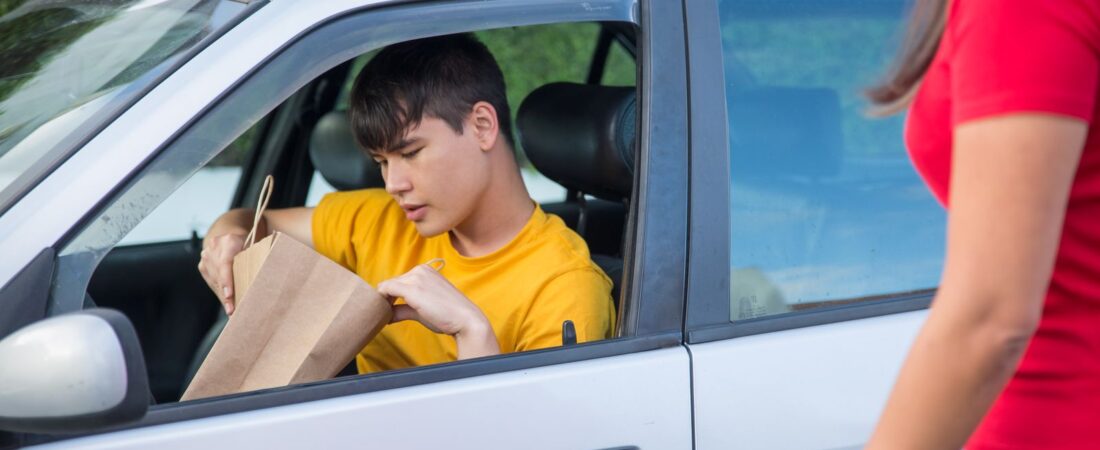

Dental lab courier is one of those courier niches that most food delivery drivers have never heard of — until they stumble across it and realize it pays better per hour, runs on predictable schedules, and doesn’t involve a single cold bag or a customer who wants to know why their burrito is six minutes late. The job is straightforward: you move unfinished dental work from dental offices to a lab, and you bring finished prosthetics — crowns, bridges, dentures, implant components, aligners — back to the offices before the patient walks in. No clinical license required, no handling of blood or tissue, no hospital access badge. Just reliable wheels, a clean interior, and the ability to follow a chain-of-custody process without cutting corners.
Driver Opportunity
Want to Earn While You Read?
Join as a new driver and get up to a $2,575 guaranteed bonus after completing your first 200 deliveries in select US cities.
Start Earning Now →New drivers only · Terms apply · Available in select cities
What a Dental Lab Courier Actually Does
Every time a dentist takes a physical impression or a digital scan file that needs a physical model poured, something has to get that raw work to the dental lab. And every time a lab finishes a crown, a bridge, a partial denture, or a set of clear aligners, something has to deliver it back to the dental office before the patient’s appointment. That round trip is your job.
The route has two distinct legs. The morning run typically involves stopping at dental offices to pick up impression trays, stone models, bite registrations, implant-level impressions in transfer trays, and sometimes digital prescription forms. Each stop hands you a case or a bag. You log it, you sign for it, and you get it to the lab intact. The afternoon run goes the other direction — the lab hands you a rack of finished cases, each labeled with the destination office, and you deliver them before those offices close, usually by 4:30 or 5 p.m.
Some couriers run both legs the same day. Others work for a lab that handles its own morning pickup and only needs afternoon delivery drivers. It depends on how the lab has structured its logistics. Either way, the route shape is a loop — you start near the lab, fan out to dental offices, and return to the lab or proceed directly to delivery stops.
What Is Actually in the Case — and Why It Matters
This is where dental lab courier differs from almost every other route type. The items you are carrying are custom-fabricated, often irreplaceable, and timed to a specific patient appointment.
The Pickup Side: Raw Work
On a pickup stop you might receive a vinyl polysiloxane (VPS) impression in a plastic tray inside a sealed bag, a stone or plaster model that has already been poured from an impression, a bite registration in a small sealed pouch, or an implant-level impression with analog components still seated. Any of these can be destroyed by impact. A stone model that cracks in transit means the lab cannot fabricate the crown. The dentist has to bring the patient back in, take a new impression, and start the process over. That is a rescheduled patient, a frustrated dentist, and a fired courier. Handle the bag as if the contents are made of chalk — because some of them essentially are.
The Delivery Side: Finished Prosthetics
On the delivery side the stakes are different but equally high. A finished porcelain-fused-to-metal crown can chip if the case gets tossed around. A complete denture in its flask can warp if left in a hot car. An implant case often contains multiple small components — the abutment, the screw, the crown — and losing one piece means the same-day implant seat is cancelled. Some labs pack these in foam-lined cases. Others use rigid plastic boxes with locking lids. Your job is to keep them upright, keep them out of direct sun, and get them to the right office. Many of these deliveries are for same-day appointments: the patient is already in the chair when you arrive, or will be within the hour.
Aligners and Repair Cases
Aligner batches — think clear retainer sets for a full course of treatment — often come in numbered pouches bundled together for a single patient. These are lighter and less fragile than stone models but still need to be delivered intact and in full. A denture repair case is a different animal: the patient dropped their denture, the dentist sent it to the lab for a same-day crack repair, and now you are racing to get it back before the patient expects to leave with a fixed appliance. These repair runs are often urgent add-ons to your regular route.
Route Timing and the Same-Day Crown Pressure
The dental office schedule drives everything. Most offices open between 8 and 9 a.m. and close between 5 and 6 p.m. Labs typically want morning pickups completed and cases logged in by 10 or 11 a.m. so fabrication can be completed by early afternoon. Finished work needs to reach offices by 4 p.m. at the latest for a 4:30 patient seat. That two-way window — roughly three to four hours in each direction — is what keeps this job from bleeding into evenings the way food delivery does.
Same-day crown pressure is real and growing. Many dental offices now use in-office milling (CEREC or similar), but plenty still send out for single-unit crowns that can be turned in four to six hours by an express lab. When a dentist calls the lab at 8:30 a.m. for a same-day case, the courier for that run becomes the most important person in the chain. You will get a text, a timed pickup window, and a delivery that has to land before 3 p.m. That urgency is worth extra pay at some labs — ask about it when you negotiate.
Unlike optical lab loops — which follow a similar office-to-lab-and-back structure as covered in our optical and lens-lab courier guide — dental routes tend to be shorter geographically because dental labs usually serve a tight metro cluster rather than a regional network. That means more stops per mile, which is good for efficiency.
Packaging, Labeling, and Chain of Custody
Labs and dental offices that use couriers regularly will have a process in place. Your job is to follow it exactly, every time.
What Good Chain of Custody Looks Like
At a minimum you should expect: a prescription form or digital manifest that travels with each case, a bag or case seal you do not break, a sign-in log at the lab (you sign the case in, the lab tech signs it received), and a delivery confirmation at the office (the front desk or assistant signs your log or app). Some labs use a courier app with barcode scanning at each stop. Others use paper manifests in duplicate. Either way, the rule is simple: nothing moves without documentation, and you keep your copy.
Never open a sealed case to check contents. If a bag looks damaged when it is handed to you, note it on the manifest before you accept it. If a case arrives at the lab damaged, you want that notation. Chain of custody protects the lab, the dentist, and you.
Vehicle Setup
You do not need a van or a cargo vehicle. A clean sedan works fine. What you do need is a flat, non-slip surface for carrying cases — a small foam mat or non-slip pad in the footwell or back seat works. A temperature-aware mindset matters: do not leave stone models or finished prosthetics in a car that gets above 85 degrees for extended periods. In summer, park in shade or run the AC for a few minutes before loading. A cooler is rarely needed, but a thermal bag that keeps the interior of your car from turning into an oven during a 20-minute stop matters in peak summer. Keep your car interior clean — dental offices and lab staff notice a disheveled vehicle, and it affects whether you get renewed.
What Dental Lab Courier Pays — Honest Numbers
Pay structures vary by lab size, route length, and whether you are W-2 or 1099. Here are the three common models.
Per-Stop Pay
Many lab-owned routes pay per stop, with a stop defined as a confirmed pickup or delivery at a dental office or the lab itself. Say the route pays $6 per stop and you run 14 stops in a day. That is $84 for the route. If the route takes you four hours including drive time, that works out to roughly $21 per hour before expenses. Add a fuel surcharge if the lab offers one — some do, some don’t. At the 2026 IRS mileage rate, every business mile you log is a tax deduction; run your numbers using the 2026 IRS mileage rate guide before you decide whether a per-stop rate covers your costs.
Per-Mile or Hourly Pay
Some courier companies that contract with labs pay per mile for the full route, or offer an hourly rate with a minimum guaranteed hours. Hourly arrangements tend to range based on market, route complexity, and whether you supply your own vehicle. The hourly model is more common for W-2 positions with courier companies; 1099 lab routes lean toward per-stop or flat daily rates.
Flat Daily Rate
Smaller independent labs sometimes offer a flat daily rate for a fixed route — say, a consistent set of eight to twelve offices within a defined zone. This model works well if you can stack a second part-time route in the same time window. Some couriers pair a dental lab morning route with an afternoon document or legal courier route. The structure is similar to what document couriers run, as we cover in the document shredding courier route guide — predictable windows, known stops, professional office environments.
Honest Comparison to Food Delivery
Food delivery through DoorDash or Uber Eats can earn more per hour during peak evening hours in dense markets, especially with promotions. But dental lab courier has no peak-or-bust variability: the route exists five days a week, 50 weeks a year, rain or shine. No rating system, no customer reviews, no waiting 25 minutes at a busy restaurant. You also drive significantly fewer miles for the same number of stops compared to food delivery, because dental offices cluster in professional park strips and strip malls rather than being spread across a whole metro. The gap between this work and food delivery is a different comparison than the gap between medical specimen work and food delivery — for the full contrast on the medical side, see the medical courier driver guide. Dental lab work sits between the two in terms of urgency and handling requirements, but closer to medical in terms of professionalism expected.
How to Actually Get Hired
This is where most guides go vague. Here is what actually works.
Contact Dental Labs Directly
Search for dental labs in your metro — not dental offices, but dental labs. These are the fabrication facilities: names often include words like “dental laboratory,” “dental studio,” “crown and bridge lab,” or “prosthetic lab.” Call the front desk and ask if they use independent couriers or if their route driver position is open. Many smaller labs have a single courier who covers their route, and when that person moves on, the lab posts nothing publicly — they just hire the next caller who sounds professional. This is the fastest path to a first dental lab contract.
Dental Supply Distributors
Companies that distribute dental supplies to offices — materials, instruments, equipment — often also offer pickup and delivery logistics for lab cases as an add-on service. If you are already doing dental supply distribution runs, ask about lab case handling. The route infrastructure is similar and the customer base overlaps.
Courier Companies with Medical-Adjacent Accounts
Regional courier companies that hold contracts with healthcare accounts sometimes include dental lab routes in their portfolio. Apply to these companies and specify that you are interested in dental or medical-adjacent routes. Having a clean driving record and a professional-looking vehicle matters more here than it does for food delivery gigs.
1099 vs. W-2
Lab-direct routes are usually 1099 independent contractor arrangements. Courier company routes are more often W-2 with set hours and mileage reimbursement. The 1099 model gives you flexibility to stack routes; the W-2 model gives you stability and sometimes benefits. Neither is universally better — it depends on whether you want to build a multi-route independent operation or a steady single employer.
Five Mistakes That Get a Dental Lab Courier Fired
Labs and dentists have zero tolerance for certain failures. Know these before your first day.
- Missing a delivery window. If a crown needs to be at the office by 3:30 and you show up at 4:15 after the dentist has already rescheduled the patient, that is likely your last run. Same-day timing is not approximate.
- Delivering to the wrong office. Every case has a labeled destination. Delivering a finished crown to the wrong practice means two dentists have a problem instead of zero. Double-check the label against your manifest at every stop.
- Opening or tampering with sealed cases. Even with good intentions — checking if a model looks cracked, for instance — opening a sealed lab case breaks chain of custody and can void the lab’s quality guarantee.
- Leaving cases in a hot vehicle. Stone models, wax try-ins, and finished restorations are sensitive to heat. A car parked in full sun in summer can reach temperatures that warp materials. If you have to park and run a quick errand, take the cases with you or leave the AC running.
- Skipping the sign-in log. Documentation is the job. Couriers who skip signatures “just this once” create liability for everyone when a case goes missing. Sign every pickup in, sign every delivery out, every single time.
Is Dental Lab Courier Worth Pursuing in 2026?
If you are a driver who values predictability over surge-chasing, this niche is worth serious attention. The routes are consistent, the offices are professional environments, the cargo does not smell, and the work does not disappear when a promotion ends. The barrier to entry is low — a clean car, a clean record, and the ability to follow a documented process — but the bar for reliability is high. Dental labs and dentists who find a good courier tend to keep them for years.
Driver Opportunity
Ready to Start?
Turn This Guide Into Real Income. Join as a new driver and get up to a $2,575 guaranteed bonus after completing your first 200 deliveries in select US cities.
Sign Up & Start Delivering →New drivers only · Terms apply · Available in select cities
The flip side is that it takes more effort to find the work than signing up for a food delivery app. You have to make calls, show up in person, and sometimes wait for a route to open. But once you are in, you are in. If you are ready to move beyond algorithm-dependent gig work and into a route that runs like a small business, start calling dental labs in your area this week.