
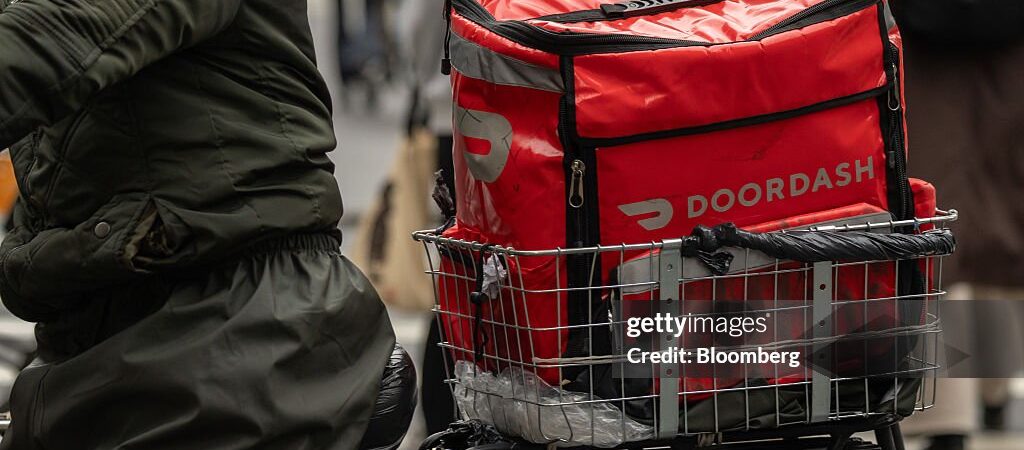

If you deliver for DoorDash, Uber Eats, Spark, Instacart, or Amazon Flex, you already know the numbers: every mile you drive costs you roughly 18 to 22 cents in gas alone. In a typical eight-hour shift covering 120 to 150 miles, that is $22 to $33 out of your pocket every single day. Over a five-day week, it adds up to $110 to $165. Over a year? Between $5,700 and $8,600 just to keep your tank full.
With gas prices still hovering between $3.20 and $4.50 per gallon across major US markets in 2026, fuel is the single biggest expense most delivery drivers face. But here is the good news: you do not need to buy a hybrid or an EV to cut your fuel bill in half. The delivery drivers earning the most in cities like Houston, Dallas, Austin, Chicago, Los Angeles, New York City, and Atlanta are not driving fancy electric cars. They are using smart driving habits, simple vehicle maintenance tricks, and strategic decisions that shave 15 to 40 percent off their gas costs.
This guide covers 17 proven gas-saving strategies that actually work for real delivery drivers. These are not theoretical tips from fuel-economy websites. They are battle-tested by drivers who spend 40 to 60 hours a week on the road.
1. Master the Art of Gentle Acceleration
The single biggest fuel-waster in delivery driving is aggressive acceleration. When you stomp the gas pedal from a dead stop, your engine dumps extra fuel into the combustion chamber because the throttle plate opens wide and the engine computer enriches the air-fuel mixture. The Department of Energy says aggressive driving — speeding, rapid acceleration, and hard braking — can lower your gas mileage by 15 to 30 percent at highway speeds and 10 to 40 percent in stop-and-go traffic.
Here is the practical tip: pretend there is an egg between your foot and the gas pedal. Take five full seconds to reach 20 miles per hour from a stop. That might feel slow, but you will be amazed how much gas that soft touch saves over a full shift. Drivers in New York City and Chicago who switched to gentle acceleration report saving 2 to 3 gallons per week — roughly $7 to $12 in weekly savings.
2. Coast to Red Lights and Stop Signs
Most delivery drivers accelerate right up to a red light and then brake hard at the last second. Every time you do that, you wasted the fuel you burned accelerating toward the light. Instead, get in the habit of lifting your foot off the gas 200 to 300 feet before a red light and letting the car coast.
Coasting uses zero fuel because modern fuel-injected engines cut fuel flow completely when the wheels are turning and your foot is off the gas. This is called deceleration fuel cutoff (DFCO), and it is active in virtually every car built after 2000. Using DFCO for just 10 stoplights per shift saves about half a gallon of gas per week — $80 per year.
3. Maintain Proper Tire Pressure (Check Weekly)
Underinflated tires are a silent gas thief. For every 1 PSI drop in tire pressure below the recommended level, your gas mileage drops by about 0.2 percent. Most delivery drivers check their tire pressure once every few months. But your tires naturally lose 1 to 2 PSI per month, and hot summer roads in Texas or Arizona can cause pressure to fluctuate even more.
Buy a digital tire gauge from AutoZone for $10 and keep it in your glove box. Check your tire pressure every Sunday morning before your shift week starts. Inflate to the pressure listed on the sticker inside your driver’s door jamb — not the number molded into the tire sidewall. Drivers who maintain proper tire pressure report 3 to 5 percent better fuel economy. On a $6,000 annual fuel budget, that is $180 to $300 in free savings.
4. Reduce Idling Time at Restaurants
This is a big one. Delivery drivers spend an average of 8 to 12 minutes per shift waiting at restaurants. If you leave your engine running while you wait — especially during summer with the AC on — you are burning 0.2 to 0.3 gallons of gas per hour of idling. Multiply that by 20 shifts per month and it adds up to 1.5 to 2 gallons of gas burned for nothing.
The fix is simple: turn off your engine if you expect to wait more than 60 seconds. Yes, restarting uses a tiny burst of fuel, but the amount is equivalent to about seven seconds of idling. So anything longer than 10 seconds is a net win. Drivers in Dallas and Austin who committed to engine-off waiting saved between $150 and $250 per year on gas alone.
5. Use the Right Octane Fuel (Probably the Cheap Stuff)
Unless your car’s owner’s manual explicitly says “premium fuel required” (not just “recommended”), you are wasting money on premium gasoline. Most delivery workhorses like the Toyota Camry, Honda Civic, Honda Accord, and Toyota Corolla run perfectly fine on regular 87-octane gas. The difference between regular and premium is typically 40 to 60 cents per gallon. If you burn 600 gallons per year for delivery, that is a $240 to $360 annual upcharge for zero performance benefit.
One exception: if your car has a turbocharger (like the Hyundai Elantra N-Line or Honda Civic Si), check the manual. Some turbo engines do need premium to prevent knocking under load.
6. Lighten Your Load
Every extra 100 pounds in your car reduces fuel economy by about 1 to 2 percent. That sounds small until you realize many delivery drivers carry around 50 to 100 pounds of unnecessary stuff in their trunk: emergency kits they never open, old delivery bags, gym bags, extra water cases, and random supplies.
Go through your car this weekend. Pull out everything you do not use on every single shift. A full-size spare tire alone weighs 30 to 40 pounds. If you can swap to a compact spare, that saves weight. A delivery bag weighs 5 to 8 pounds — carry only as many as you need for your current shift.
Drivers in Los Angeles who trimmed their trunk weight by 60 pounds reported a 1 to 2 MPG improvement on city routes. Over 15,000 delivery miles per year, that saves roughly 30 to 60 gallons of gas — up to $250 per year.
7. Plan Your Routes to Avoid Left Turns
UPS famously saves millions of gallons of fuel each year by routing drivers to avoid left turns. The reason: left turns require you to sit idle waiting for a gap in traffic, then accelerate across multiple lanes. Right turns can usually be made quickly after a brief stop. UPS saves about 10 million gallons of fuel annually from this single strategy.
You can do the same thing. When accepting a DoorDash or Uber Eats order, glance at the map and choose routes that favor right turns. On Spark and Instacart orders where you pick the store and route, be deliberate about turn decisions. Drivers in congested cities like Los Angeles, New York, and Chicago who route for right turns save 1 to 2 MPG compared to taking the shortest-distance route.
8. Use Cruise Control on Highways
When you drive between delivery zones — say, heading from a cluster in north Austin to a busy area in south Austin — use cruise control on the highway. Maintaining a steady speed uses significantly less fuel than varying your speed by 5 to 10 MPH. Cruise control can improve highway fuel economy by 7 to 14 percent.
But be smart about it: do not use cruise control on hilly terrain. Let the car slow down naturally going uphill and coast downhill. Cruise control will floor it up every hill, burning extra fuel.
9. Track Your MPG Weekly
You cannot improve what you do not measure. Start tracking your miles per gallon every time you fill up. Write down the odometer reading, the gallons pumped, and do the math: miles driven divided by gallons = MPG.
There are also excellent apps for this. Fuelly and Drivvo are free and let you track your fuel economy over time. If you notice your MPG dropping by more than 5 percent from one fill-up to the next, something is wrong — possibly a tire pressure issue, a dirty air filter, or even a failing oxygen sensor.
Drivers in Houston who started tracking MPG weekly caught a failing oxygen sensor early and saved a $600 catalytic converter replacement down the road. The sensor was costing them 3 MPG for two months before they caught it.
10. Change Your Air Filter on Schedule
A clogged air filter restricts airflow to your engine, forcing it to run richer (more fuel, less air). This can reduce fuel economy by up to 10 percent. Most delivery drivers check their air filter once a year. But if you drive on dusty roads, dirt roads in rural delivery zones, or construction-heavy areas, you should check it every 15,000 to 20,000 miles.
An air filter costs $15 to $25 at AutoZone and takes five minutes to replace with no tools. If you have 60,000 miles on your current filter, replacing it could improve your MPG by 3 to 5 percent instantly. That is $180 to $300 per year in savings for a $20 part and five minutes of work.
11. Combine Short Trips into Single Routes
Your engine uses more fuel in the first five minutes of driving than any other time because it runs in “cold start” enrichment mode, burning extra gas to warm up the catalytic converter. Every time you start your car for a short 5-minute trip to pick up one order, you are burning disproportionately more fuel.
When possible, batch your trips. Accept stacked orders on DoorDash and Uber Eats. On Spark and Instacart, try to accept batches with multiple deliveries going in the same direction. Not only does stacking spread your fuel cost across more deliveries, it also reduces cold starts. Drivers who actively stack orders report 10 to 18 percent lower fuel costs per delivery.
12. Drive the Speed Limit (70 MPH Is the Sweet Spot)
Gas mileage drops sharply above 50 miles per hour. According to the Department of Energy, each 5 MPH you drive over 50 MPH costs you an extra $0.30 to $0.40 per gallon in fuel. At 70 MPH, your car is about 17 percent less efficient than at 55 MPH. At 80 MPH, you lose about 28 percent of your highway MPG.
If you are driving between cities on Amazon Flex routes or long-distance Spark orders, set your cruise control at 65 to 68 MPH instead of 75 to 80. You will arrive only 5 to 8 minutes later but save 1.5 to 2.5 gallons over a 400-mile marathon day. That is $6 to $10 per long shift.
13. Use the Right Motor Oil
Using the manufacturer-recommended viscosity of motor oil can improve fuel economy by 1 to 2 percent. For example, if your car requires 5W-30 oil and you use 10W-40 instead (because it was on sale), your engine has to work harder to push the thicker oil through narrow passages. That extra friction burns more gas.
Check the oil cap or your owner’s manual for the correct viscosity. Modern cars increasingly use 0W-20 or even 0W-16 synthetic oil, which reduces friction and improves mileage by 2 to 3 percent compared to conventional 5W-30. Yes, synthetic oil costs more per quart, but the fuel savings more than make up for it over 5,000-mile oil change intervals.
14. Avoid Roof Racks and Cargo Boxes
If you use a roof rack for extra storage or a cargo box for delivery supplies, remove them when not in use. A roof rack creates aerodynamic drag that reduces fuel economy by 5 to 15 percent at highway speeds. A large cargo box can cost you 20 to 25 percent of your highway mileage.
Delivery drivers do not typically need roof boxes, but some use roof racks for catering bags or oversize items. If you do, take them off between shifts. Simply removing an empty roof rack can improve your fuel economy by 5 percent. On a $6,000 annual fuel budget, that is $300 in savings.
15. Fill Up at the Right Time of Day
Gasoline expands as it gets warmer. Since gas pumps measure by volume (not mass), filling your tank in the cool morning or late evening means you get slightly more fuel molecules per gallon than filling in the hot afternoon sun. The difference is small — about 1 percent between a 60-degree morning and a 100-degree Texas afternoon — but over a year of fill-ups it adds up to about three free gallons.
More importantly, avoid filling up on major highway exits in cities like Los Angeles and Chicago. Stations near highway interchanges often charge 20 to 30 cents more per gallon than stations just one mile off the highway. Use GasBuddy to find the cheapest gas on your route. Drivers in Atlanta who use GasBuddy religiously save $200 to $300 per year on gas.
16. Consider a Fuel Rewards Program
Several gas station chains offer rewards programs that give you 3 to 10 cents off per gallon. Shell Fuel Rewards, Exxon Mobil Rewards+, and BPme Rewards are free to join and stack with credit card rewards. If you buy gas at the same chain most of the time, the discount adds up.
Doordash drivers: DasherDirect card holders get 2 percent cash back on gas purchases. Uber Pro card holders get 3 to 6 percent cash back on gas depending on your status tier. Between the direct savings and the rewards points, drivers on these programs effectively reduce their gas cost by 5 to 12 cents per gallon — roughly $60 to $140 per year.
17. Know When to Upgrade Your Vehicle
Sometimes the biggest gas savings come from switching vehicles. That old Ford Explorer or Chevy Tahoe you bought for $3,000 might be costing you $4,000 per year in gas. A 2015 to 2018 Toyota Corolla, Honda Civic, or Hyundai Elantra can be found for $12,000 to $16,000 and gets 30 to 38 MPG on city routes — more than double what a full-size SUV gets.
Do the math: if you drive 40,000 delivery miles per year, a car that gets 18 MPG at $3.50/gallon costs $7,777 in gas. A car that gets 35 MPG costs $4,000. That is a $3,777 annual difference. Even if you finance a used Corolla for $250 per month, the gas savings alone nearly cover the car payment. Drivers in markets like Los Angeles and New York City who switched from SUVs to compact cars for delivery report breaking even on the new vehicle within 12 to 15 months purely from fuel savings.
Weekly Gas Saving Action Plan
You do not need to implement all 17 strategies at once. Here is a simple weekly plan to get started:
Week 1: Check tire pressure every Sunday. Start coasting to red lights. Turn off engine at restaurant waits over 60 seconds.
Week 2: Track your MPG at every fill-up. Remove unnecessary weight from your trunk. Start using gentle acceleration.
Week 3: Check and replace your air filter if needed. Use GasBuddy to find cheaper stations. Start stacking orders more aggressively.
Week 4: Evaluate your vehicle choice. If you drive an SUV or truck, calculate what you would save with a compact car. Practice right-turn routing.
Following this plan, most delivery drivers see their fuel costs drop by 20 to 33 percent within the first month. On a $200 weekly gas bill, that is $40 to $66 per week — $160 to $264 per month, or $2,000 to $3,200 per year straight back into your pocket.
Put Your Gas Savings to Work with Uber Eats
New drivers in select US cities can earn up to $2,575 after completing their first deliveries. With the money you save on gas, every trip becomes more profitable.
Start Earning $2,575 with Uber Eats →
Terms apply. Offer available in select US markets. New drivers only. Must meet minimum delivery requirements.