
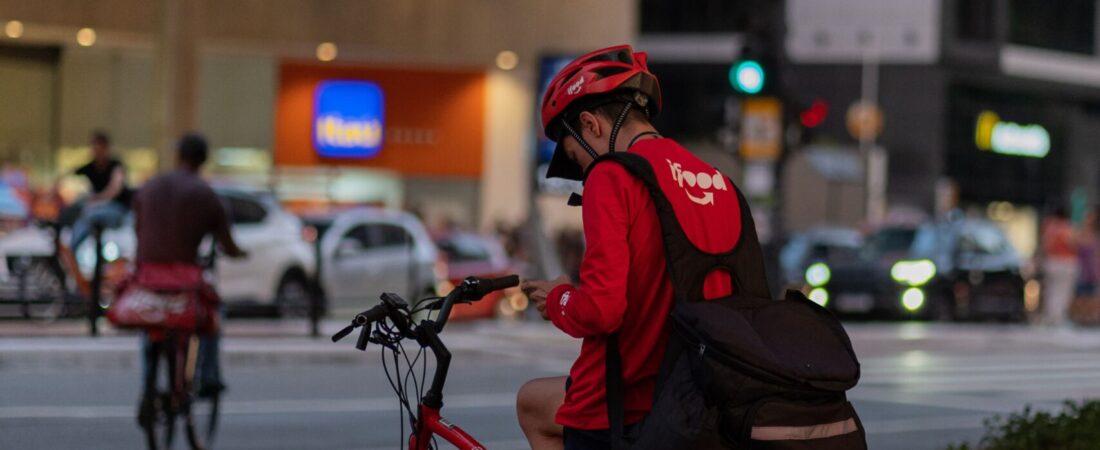

Why Gas Costs Are Crushing Delivery Drivers in 2026
If you’re a delivery driver in 2026, you already know the drill: you wake up, fire up DoorDash, Uber Eats, or Spark, and start burning through gas before you’ve made a single dollar. Gas prices across the US remain stubbornly high — hovering between $3.40 and $4.20 per gallon depending on your market. For drivers hustling in Houston, Dallas, Austin, Los Angeles, Chicago, New York City, or Atlanta, fuel is eating up 20–30% of gross earnings.
That $100 day you just worked? Between $20 and $30 went straight into your gas tank. Over a month, that’s $600–$900 just in fuel costs. For a full-time delivery driver logging 150–200 miles per shift, finding ways to save money on gas isn’t just a nice-to-have — it’s the difference between making a profit and working for free.
In this guide, I’m sharing 15 proven strategies that real US delivery drivers use to slash their gas bills. These aren’t theoretical tips from someone who’s never stacked orders — this is street-level advice from Dashers, Uber drivers, Instacart shoppers, Spark Delivery partners, and Amazon Flex drivers who actually make a living on the road.
1. Master the Art of Strategic Multi-Apping
The single biggest gas waster for delivery drivers is deadhead miles — driving back to a hotspot after a delivery with no order in the car. The solution? Multi-apping intelligently.
Running DoorDash and Uber Eats simultaneously means you rarely deadhead. While you’re dropping off a DoorDash order, you can accept an Uber Eats pickup right in the same area. Spark and Amazon Flex blocks can be stacked around lunch and dinner rush hours when restaurant delivery demand peaks.
“I used to drive 15 miles back to the hot zone empty-handed after every delivery,” says Marcus, a Dasher in Dallas. “Once I started running Uber Eats and DoorDash side by side, I cut my daily mileage from 180 to about 110. That’s roughly 70 fewer miles per day — at the IRS rate of 72.5 cents per mile, that’s over $50 a day in savings.”
The key is knowing your market. In Houston, the Galleria area and Uptown are goldmines for stacked orders. In Chicago, downtown and Lincoln Park keep you busy without long deadheads. In LA, the Westside and Valley flow together naturally for multi-app drivers.
2. Use Gas Rewards Programs Religiously
Every major gas station chain has a rewards program, and if you’re not using all of them, you’re leaving money on the pump.
Shell Fuel Rewards: Save 5–10 cents per gallon on every fill-up. If you drive 1,000 miles a week and fill up 3 times, that’s $1.50–$3.00 per fill-up — $18–$36 a month.
Gas Buddy: The app shows you the cheapest gas near you in real time. Premium members (about $10/month) save up to 40 cents per gallon at partner stations. For a delivery driver filling up 12–15 times a month, that’s $72–$90 in savings — way more than the membership fee.
Kroger Fuel Points: If you shop at Kroger (or any of their affiliates like Ralph’s, Fry’s, or Smith’s), every $100 in groceries gets you 10 cents off per gallon up to 35 gallons. Delivery drivers in Houston, Dallas, and Phoenix who shop at Kroger can stack points and save $1.00+ per gallon on fill-ups.
Circle K Easy Rewards: Get 3 cents off every gallon plus occasional bonus offers.
Upside App: This app gives cash back on gas purchases at thousands of stations nationwide. Drivers report getting 10–25 cents per gallon back as cash. In Austin, drivers using Upside combined with station rewards are saving an average of $45/month.
3. Drive During Peak Pay Hours Only
This is counterintuitive, but it works: drive fewer hours, but drive during the hours that pay the most per mile. Instead of grinding 10 hours a day, focus on the 4–5 peak hours that generate 70% of your income.
In most US markets, the money windows are:
- Breakfast: 7:00 AM – 9:00 AM (Uber Eats and DoorDash, coffee and pastries)
- Lunch: 11:00 AM – 1:30 PM (highest order volume across all platforms)
- Afternoon snack: 2:30 PM – 4:00 PM (Spark and Amazon Flex grocery orders)
- Dinner: 5:00 PM – 8:30 PM (highest pay per mile, surge pricing active)
- Late night: 10:00 PM – 12:00 AM (fewer drivers, higher base pay)
By driving only during peak hours, you earn more per mile. Your gas-to-earnings ratio improves dramatically because you’re not cruising around waiting for pings. Drivers who switch from 10-hour scattered shifts to strategic 6-hour peak shifts report saving 30–40% on gas while earning the same or more.
4. Keep Your Tires Properly Inflated
This sounds basic because it is — but it’s also one of the most overlooked gas-saving strategies. Under-inflated tires create more rolling resistance, which means your engine has to work harder and burn more fuel.
According to the U.S. Department of Energy, properly inflated tires can improve gas mileage by up to 3%. For a delivery driver spending $800/month on gas, that’s $24/month or nearly $300/year in savings from literally just checking your tire pressure.
Check your tire pressure weekly. The correct PSI is printed on a sticker inside your driver’s side door jamb — not the number on the tire itself (that’s the maximum, not the recommended). Invest $15 in a good digital tire gauge. For delivery drivers in cold climates like Chicago or New York, tire pressure drops about 1 PSI for every 10°F temperature drop, so check more frequently in winter.
5. Use the Right Fuel — and Stop Paying for Premium
Unless your owner’s manual specifically requires premium fuel (most cars used for delivery — Toyota Camry, Honda Civic, Prius, Corolla — do not), stop buying it. Premium fuel does not clean your engine better or give you more power. It simply has a higher octane rating, which is only needed for high-compression engines.
Using regular (87 octane) in a car designed for it saves you 30–50 cents per gallon. Over 50 gallons a month, that’s $15–$25 in savings.
Additionally, use Top Tier certified gas stations. These have detergent additives that actually keep your engine clean. Top Tier gas doesn’t cost more, but it prevents carbon buildup that can reduce fuel efficiency by 2–4% over time. Shell, Chevron, Exxon, and Costco all carry Top Tier gas.
6. Lighten Your Load
Delivery drivers accumulate clutter fast. Extra bags, old drink carriers, emergency kits, charging cables, personal items — they all add weight. Every 100 pounds of extra weight reduces fuel economy by about 1%.
Clean out your trunk weekly. Keep only what you need: your insulated delivery bags, phone mount, charger, a small emergency kit, and water. A Dasher in LA told me he was carrying around 85 pounds of extra gear — two full catering bags he never used, a case of water bottles, and a heavy tool kit. After clearing it out, his gas mileage went from 24 MPG to 26 MPG on his Camry.
7. Avoid Idling — It’s a Silent Gas Killer
Delivery drivers idle a lot. You pull up to a restaurant, the order isn’t ready, so you sit there with the AC running, scrolling your phone. Twenty minutes later, you’ve burned half a gallon of gas for nothing.
A car idling for 10 minutes burns about 0.1–0.2 gallons of gas. If you idle for 40 minutes a shift (conservative for most drivers), that’s 0.4–0.8 gallons per day — roughly $1.50–$3.00 per shift in wasted fuel. That adds up to $45–$90 a month. Turn off your engine when you’re parked for more than 60 seconds. If it’s hot, crack the windows or invest in a $30 rechargeable fan.
8. Follow the Speed Limit
Speeding is terrible for gas mileage. Most vehicles achieve optimal fuel economy at 50–60 mph. For every 5 mph above 60 mph, you effectively pay an extra $0.30–$0.40 per gallon of gas.
On highways and freeways common in cities like Atlanta, Houston, and Dallas, delivery drivers often push 70–80 mph between zones. Dropping from 75 mph to 65 mph improves highway fuel economy by 10–15%. If you drive 100 highway miles per shift, that’s about 0.3–0.5 gallons saved per day — another $1.00–$2.00 per shift.
Use cruise control on highways to maintain a steady speed. Aggressive acceleration and braking in stop-and-go city traffic (common in NYC and Chicago) can reduce fuel economy by 10–40%.
9. Choose Your Vehicle Wisely
If you’re in the market for a delivery vehicle, fuel economy should be your #1 priority. The best delivery cars for gas savings in 2026 are:
- Toyota Prius (2024+): 57 MPG combined. The undisputed king of delivery vehicles. The hatchback has enough room for most grocery and food orders.
- Honda Civic Hybrid: 50 MPG combined. Reliable, comfortable, spacious trunk.
- Hyundai Elantra Hybrid: 54 MPG combined. Great warranty, excellent fuel economy.
- Toyota Corolla Hybrid: 48 MPG combined. Bulletproof reliability, low maintenance.
- Kia Niro: 53 MPG combined. SUV-like cargo space with hybrid efficiency.
A Prius driver spending $600/month on gas would spend about $300 driving a similar distance — a $3,600 annual savings that makes the higher upfront cost worth it. For drivers in California where gas is $4.50+, the savings are even more dramatic.
10. Plan Your Routes by Clusters, Not Pings
Don’t just accept the first order that pings. Be strategic about where you position yourself and which orders you take.
Accept orders that keep you in a high-density restaurant zone. In Houston, the Montrose and Heights area has dozens of restaurants packed into a few square miles. In Chicago, Wicker Park and Logan Square offer order density. In New York, the East Village and Midtown are non-stop.
Use your app’s heat maps. DoorDash and Uber Eats both show where order volume is highest. Park yourself at the intersection of multiple hot zones. When you finish a delivery, look at the next pickup location before driving back. If it’s near your drop-off, you just saved a deadhead mile.
11. Park Smart — Don’t Burn Gas Circling
In dense cities like New York, Chicago, and Los Angeles, parking tickets are a massive hidden cost for delivery drivers. But they’re also a gas waster. Drivers circling the block looking for free parking burn through fuel fast.
Know which blocks in your market have loading zones. In NYC, commercial loading zones are active during specific hours — learn them. In Chicago, many neighborhoods have free 15-minute parking spots near restaurants. Some drivers in downtown Los Angeles actually prefer paid lots near clusters of restaurants — $3 for 30 minutes is cheaper than the gas and time wasted hunting for free parking.
12. Use Cashback Apps for Everything
Beyond gas rewards, cashback apps stack savings on your biggest delivery expense:
- Rakuten: Get 1–3% cashback at gas stations when you link your credit card.
- Ibotta: Offers cashback on gas purchases at specific chains, often 5–10 cents per gallon.
- Fetch Rewards: Scan gas receipts to earn points for gift cards.
- Dosh: Auto-cashback when you link a card. Works at Shell, Exxon, and other chains.
13. Track Your Mileage Religiously for Tax Time
The standard mileage deduction for 2026 is 72.5 cents per mile. If you drive 40,000 miles for delivery in 2026, that’s a $29,000 deduction. At a 15% effective tax rate, that saves you $4,350.
But here’s the gas angle: the mileage deduction includes gas costs. By meticulously tracking every mile you drive for delivery, you’re effectively deducting your gas expenses at a rate that’s typically higher than what you actually spend. Most drivers spend 20–30 cents per mile on gas, but the IRS lets you deduct 72.5 cents.
Use apps like Stride, Everlance, or Solo to track mileage automatically. They use GPS to tag trips as business or personal. At tax time, you get a detailed log with dates, mileage, and trip purposes — exactly what the IRS requires.
14. Drive an EV or Plug-In Hybrid If Possible
If your delivery area supports it, an electric vehicle eliminates gas costs entirely. Charging an EV costs the equivalent of $1.20–$1.50 per gallon. Even better, many cities offer free public charging stations.
The Chevy Bolt EV (now discontinued but cheap used), Hyundai Ioniq 6, and Tesla Model 3 are all popular with delivery drivers. A used Chevy Bolt can be found for $18,000 and goes 259 miles per charge — enough for most full-day shifts.
Plug-in hybrids like the Prius Prime or Honda Clarity give you 25–40 miles of electric range — enough for a full delivery shift if you drive in a dense urban area — with a gas engine as backup. Charge at home (about $2 for a full charge) and you’re running on pennies per mile.
15. Consider Scooter Delivery Where Feasible
In dense cities like New York, San Francisco, Chicago, and Austin, switching to a scooter or motorcycle for delivery can cut your fuel costs by 60–70%. A 150cc scooter gets 80–100 MPG. A Honda Grom or similar small motorcycle gets over 100 MPG.
Parking is free or much cheaper. Lane splitting (legal in California) gets you to deliveries faster. Insurance costs less. The trade-off is limited cargo space — you’ll need a top box or delivery backpack — and weather exposure. But for drivers in warm-weather markets like Austin, LA, and Houston, a scooter pays for itself in gas savings within months.
How Much Can You Really Save?
Let’s run the math for a full-time delivery driver in 2026:
Baseline (no optimization): 200 miles/day, 22 days/month, 24 MPG, $3.80/gallon = $696/month on gas
Optimized: 150 miles/day (via multi-apping), 28 MPG (better driving + maintenance + tire pressure), $3.40/gallon (rewards + GasBuddy) = $408/month on gas
Total savings: $288/month — that’s $3,456 per year.
That’s not a small number. That’s a vacation. That’s a car payment. That’s a fully funded emergency fund. For drivers in California where gas hits $4.50+, the savings exceed $400/month.
Final Word: Every Mile Counts
Saving money on gas as a delivery driver isn’t about one magic hack — it’s about stacking multiple small optimizations until they add up to real money. Multi-app to reduce deadhead miles. Track your gas spending like you track your earnings. Check your tire pressure. Use every rewards program available. And never, ever accept an order that takes you 10 miles for $3 — those orders are costing you money.
The drivers who succeed in this business understand that delivery is a math game. Earnings per mile is the only metric that matters, and gas is your single biggest variable cost. Master these 15 strategies and you’ll be keeping more of every dollar you earn — mile after mile, shift after shift.
Ready to Maximize Your Delivery Earnings?
GigEarn helps delivery drivers track earnings, optimize routes, and find the highest-paying gigs in your area. Start earning smarter today.