

Multi-App Delivery Strategy 2026: How to Maximize Earnings Across Uber Eats, Instacart, Spark, and Amazon Flex

If you’re still running one delivery app at a time, you’re leaving money on the table.
The gig economy in 2026 is more competitive than ever. With over 1.1 billion gig workers worldwide and more Americans signing up to deliver every quarter, the days of logging into DoorDash and calling it a day are long gone. The drivers who clear $25, $30, even $35 an hour aren’t lucky — they’re strategic. And the single biggest strategy that separates top earners from everyone else is multi-apping.
This guide breaks down exactly how to run multiple delivery platforms simultaneously, which apps pay the most in 2025–2026, and how to build a system that keeps you busy — and profitable — every hour you’re on the road.

Why Multi-Apping Is Essential in 2026
Let’s start with cold, hard numbers.
According to Gridwise’s 2026 Gig Mobility Report, which analyzed nearly $11 billion in driver earnings across over 1 billion gig tasks, the average quarterly delivery earnings hit $1,506 in Q4 2025 — up 8.7% year-over-year. That sounds great, but earnings per delivery rose only 1.3% to $9.39. Meanwhile, the fee platforms take from customers has increased by more than 33%.
Translation: you need more deliveries, smarter routing, and less downtime to make the same money.
| Median Hourly Pay (2025) |
| $21.74 |
| $22.00 / $14.07 |
| $18–$25 |
| $12.21 |
| $11.26 |
Source: Gridwise Analytics, Business Insider, Investopedia — 2025–2026 data.
The takeaway is clear. No single app guarantees a full shift of high-paying offers. But when you stack two or three strategically, you can cherry-pick only the best-paying jobs from each.
The 6-Step Multi-App Delivery Strategy That Works
Here is the exact system experienced drivers use to consistently earn $25–$35/hour in 2026.
H2: 1. Start With the Heavy Hitter: Spark or Amazon Flex
Begin your shift by snagging a Spark grocery batch (which pays $21.74/hour on average) or an Amazon Flex block ($18–$25/hour). These give you a guaranteed hourly floor before you start stacking.
Spark is especially strong because Walmart orders tend to include heavy tips and high item counts. A single Spark batch paying $35–$50 for 90 minutes of work is a solid anchor for your day.
Pro Tip: Accept a Spark batch first, then turn on Uber Eats and DoorDash for the smaller food orders that pop up along your delivery route. The food apps fill the gaps between grocery drop-offs.

H2: 2. Run Uber Eats on the Side for Tip Bumps
Uber Eats drivers earned a median $6.26/hour in tips alone in 2025, according to Gridwise. That’s significant because tips on Uber Eats are often higher per delivery than on DoorDash — especially in affluent suburban zones.
Here’s the play: while you’re driving to your Spark or Instacart drop-off, keep the Uber Eats app paused but ready. When you’re within five minutes of completing a delivery, unpause Uber Eats. If a high-tip offer ($8+) comes through that’s on your return route, accept it. If not, keep driving.
This “milk run” strategy turns what would be deadhead miles back to a hotspot into paid miles.
H2: 3. Know When to Pause Instacart
Instacart pays $12.21/hour on average, which puts it near the bottom of the pay rankings. But don’t write it off entirely. Instacart shines in two specific scenarios:
- High-income suburbs — Some drivers report $20–$25/hour in wealthy neighborhoods where customers tip 20–25%.
- Slow mid-afternoons (2–4 PM) — When lunch rush is over and dinner hasn’t started, Instacart grocery orders fill a gap that food delivery apps leave empty.
Use Instacart as your 2 PM–4 PM filler, not your primary app.
H2: 4. Master the Decline Button
This is the hardest lesson for new multi-appers. Declining bad offers is a skill.
Platforms like Uber Eats, Spark, and Instacart show you the guaranteed payout and estimated mileage before you accept. If an offer pays less than $1.50 per mile, skip it. Multi-apping only works when you have the discipline to wait for good offers because you know another app might send one.
Some drivers track their acceptance rate (AR). Here’s the truth: AR does not matter on Spark, Instacart, or Uber Eats. DoorDash does penalize low AR in some markets with less access to high-paying orders, but even then, maintaining 50–70% is enough. Don’t take $3.50 orders for 8 miles just to protect a number.
H2: 5. Use Hotspot Logic, Not App Logic
Each app has its own “hotspot” map. Don’t follow them blindly. Instead, identify real hotspots — places where multiple apps tend to send orders:
- Shopping plazas with a Walmart + grocery stores + restaurants = Spark, Instacart, and Uber Eats all active
- Suburban retail corridors — Amazon Flex warehouses are often near these, and food delivery is dense here
- College towns — Late-night Uber Eats and DoorDash demand is massive, and you can often stay in a 2-mile radius for hours
Park your car in the overlap zone of two or three platforms’ busy areas and wait. You’ll rarely sit for more than 10 minutes without a good offer.
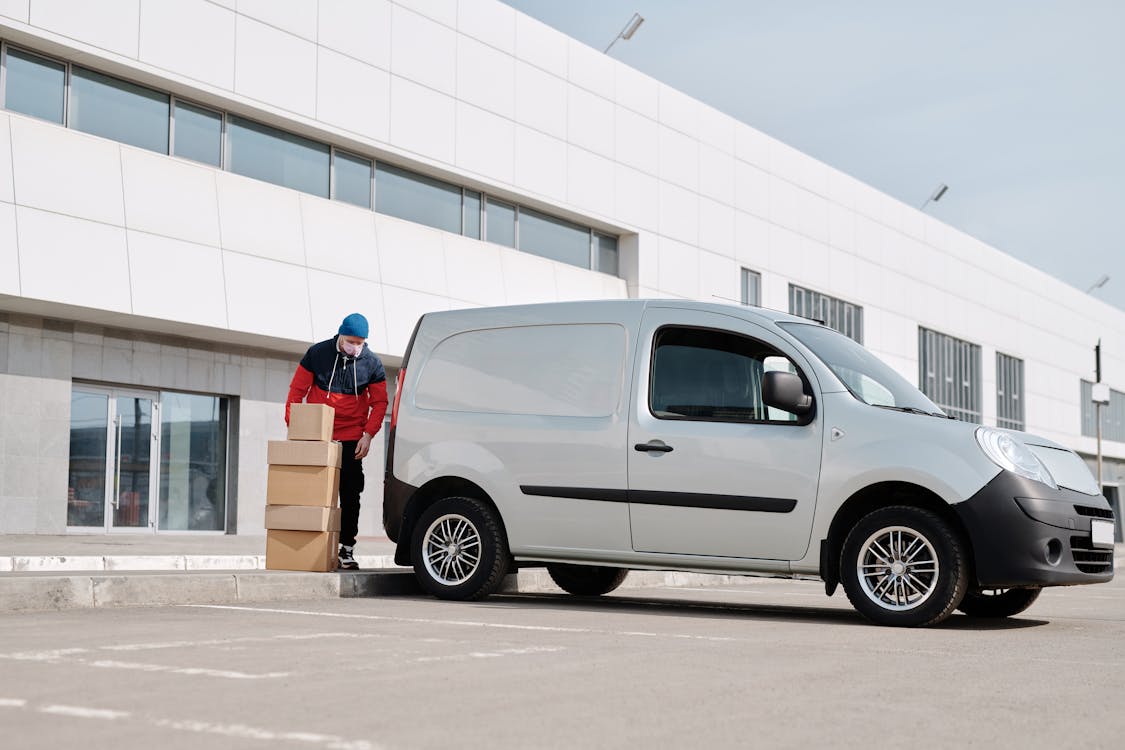
H2: 6. Track Everything with a Driver Dashboard App
The top 10% of earners don’t guess — they measure. Apps like Gridwise, Stride, and Solo help you:
- Track mileage and earnings across every platform in one place
- See which app pays the best per mile in your specific market
- Log vehicle expenses for tax deductions ($0.70/mile in 2026)
When you have real data about your own driving, you stop wondering and start optimizing. Drivers who use earnings trackers typically boost their net income by 15–25% in the first few months.
Real Earnings Scenario: A Multi-App Day in 2026
Here’s what a real 8-hour shift looks like when you stack apps properly:
| App | Miles |
| Amazon Flex block | 28 miles |
| Spark batch (2 deliveries) | 18 miles |
| Uber Eats (4 short deliveries) | 22 miles |
| Break / gas / organize | — |
| Instacart (1 batch, 3 stops) | 15 miles |
| Uber Eats dinner pre-rush (3 deliveries) | 17 miles |
Total: 100 miles driven | $214 earned | ~$26.75/hour
Compare that to running only DoorDash for 8 hours, which would average about $90–$120 for the same time.
H2: Common Multi-Apping Mistakes (and How to Avoid Them)
Mistake #1: Accepting orders on two apps at once
You’re in the middle of a Spark drop-off and an Uber Eats pings for $12. You accept it. Now you’re racing. Your Spark customer gets cold groceries, the Uber Eats customer waits 20 extra minutes, and your ratings drop on both platforms.
Fix: When you accept an offer on one app, immediately pause the others until you’re within 5 minutes of completing the delivery.
Mistake #2: Not accounting for mileage
$25/hour sounds great until you realize you drove 220 miles to earn it. At the IRS mileage rate of $0.70/mile, that’s $154 in vehicle costs. Your net? $46 for 8 hours.
Fix: Never accept an order that pays under $1.50/mile. Know your real per-mile cost.
Mistake #3: Forgetting to stack by zone
Drivers who try to cover too large a zone waste gas and time. Stick to a 5–8 mile radius you know well. Learn which restaurants tip, which Walmarts have their act together, and which neighborhoods consistently add post-delivery tips.
H2: Which Platforms Should You Stack? (By Market)
Not every app works in every city. Here’s a rough guide based on typical market characteristics:
Big City (NYC, Chicago, LA, SF)
- Best stack: Uber Eats + DoorDash + Amazon Flex
- Why: High density, short mileage, strong tips. Skip Instacart — too much traffic for grocery hauling.
Suburban (Dallas, Atlanta, Phoenix, Orlando)
- Best stack: Spark + Uber Eats + Instacart
- Why: Long grocery batches pay well, and short food deliveries fill the gaps. Amazon Flex is also strong here.
Small City / Rural (Toledo, Knoxville, Boise)
- Best stack: Spark + DoorDash (or Uber Eats if it has market share)
- Why: Less driver competition on Spark, and DoorDash dominates smaller markets. Stick to two apps.
H2: The Tax Side of Multi-Apping
When you earn across multiple platforms, each one sends you a 1099-NEC or 1099-K if you cross the threshold ($600 for most, $2,500+ for payment processors depending on your state).
You need to:
- Track mileage separately for each platform — use Stride or Gridwise to log every trip
- Deduct the standard mileage rate ($0.70/mile in 2026) — this alone often wipes out the tax bill for part-time drivers
- Make quarterly estimated tax payments if you earn more than $1,000 in net profit per quarter
- Deduct phone, data plan, car repairs, insurance, and even a portion of your car payment if you’re using the actual-expense method
A driver earning $45,000 across four apps can typically deduct $15,000–$20,000 in legitimate expenses. Talk to a CPA who understands gig work.
H2: Final Thoughts — Your 2026 Multi-App Action Plan
The gig economy isn’t slowing down. Quarterly delivery earnings are approaching pandemic-era highs, and platforms are fighting for drivers. But the game has changed. You can’t do this passively anymore and expect a great paycheck.
Here’s your three-step action plan:
- Onboard 2–3 platforms this week. If you’re only on one app, sign up for Spark or Amazon Flex (longer waitlist) immediately and Uber Eats (instant approval in most markets).
- Set your minimums. $1.50/mile. $8 minimum per order. No exceptions for your first month. Track your real net pay.
- Learn your zone. Spend week one just watching offers. Don’t accept everything. Learn which areas pay and which ones waste your time.
The drivers earning $30+/hour in 2026 aren’t working harder. They’re working smarter. Multi-apping is the single fastest way to boost your take-home pay without driving more miles. Start stacking, start tracking, and start earning what you’re worth.
Ready to start? The easiest platform to get on today is Uber Eats — signup takes 24–48 hours and you can be delivering by the weekend.
Article by GigWorkerMoney.com — real data, real drivers, real earnings. Figures sourced from Gridwise 2026 Gig Mobility Report, Business Insider (March 2026), and Investopedia (March 2026).