


Here’s a number that should stop you mid-shift: Uber, Lyft, and DoorDash now top the list of employers whose workers rely on SNAP food stamps — surpassing Walmart and McDonald’s. That data came out of a Fortune analysis in August 2026, and while the platforms dispute the framing, the implication is hard to ignore. A lot of delivery drivers are grinding out orders without a safety net, and the data is starting to prove it.
That’s the backdrop for one of the most important policy shifts in gig work right now: portable benefits. More than 14 states have passed or advanced legislation creating benefit accounts that follow you from job to job, app to app — real money for health insurance, retirement savings, and emergency funds. Not tied to any one employer. Not vaporized when you switch platforms or take a week off.
If you’re delivering for DoorDash, Uber Eats, Spark, Instacart, or Amazon Flex, this guide breaks down what programs exist in 2026, how much you can realistically collect, and the exact steps to sign up — whether or not your state has passed a law yet.
What Portable Benefits Are — and Why They’re Different From Regular Employee Benefits
Traditional employee benefits are locked to your job. You leave, you lose them. That model was built for people who worked one 9-to-5 for 30 years. It has never worked for gig workers who might log hours on three apps in a single week, take a month off when life gets complicated, and then come back at 50% capacity.
Portable benefits flip that structure. Instead of being tied to an employer, they’re attached to you. The idea: platforms and sometimes state governments make contributions into a personal benefit account you control. You decide how those funds are allocated — toward health coverage, dental, vision, retirement, or paid time off — based on what you actually need. The same account follows you whether you’re dashing, delivering Instacart orders, or switching to Amazon Flex for a month.
Advocates call it the “benefits backpack.” You carry it everywhere you work.
One in six U.S. workers now earns some income through gig platforms. Over 70 million Americans freelance full- or part-time, yet fewer than 15% have employer-sponsored health insurance. As those numbers have grown, so has political pressure to build a benefits system that actually fits how these workers live. In 2026, that pressure is producing real programs across multiple states — not just pilot press releases, but actual money depositing into actual driver accounts.
State-by-State: Where Portable Benefits Are Live for Delivery Drivers in 2026
The coverage map is uneven, but growing fast. Here’s where things stand by state, and what drivers in each can access right now.
California — Prop 22’s Healthcare Stipend
California’s Proposition 22, passed by voters in 2020 and upheld through multiple legal challenges, created the first large-scale portable benefit for gig workers in the U.S. The key component for delivery drivers: a healthcare stipend of approximately $579 per month in 2026 for drivers working at least 25 “engaged” hours per week on qualifying platforms including Uber Eats and DoorDash.
The catch is how “engaged” hours are counted. Wait time doesn’t count — only active delivery time does. Drivers averaging 15 to 24 engaged hours weekly get roughly half the stipend, around $289 per month. Drivers already on Medi-Cal or Medicare are excluded from the program entirely. Under the newer AB 212 framework, all platforms with $100k or more in annual platform revenue per worker must offer pro-rated health insurance, paid leave, and disability protection.
Implementation has been slow. Only about 10% of eligible California drivers have actually claimed the stipend, largely because most don’t know they qualify or can’t find the enrollment option in the app. If you’re a California driver, go to your Uber Eats or DoorDash driver app right now, navigate to the benefits or perks section, and check your eligibility. This is money you may already be owed.
Utah — First State With a Contributions Framework
Utah passed S.B. 233 in 2023, creating the first state legislative framework allowing companies to voluntarily make portable benefits contributions for independent contractors. Governor Cox called it “inventive” and said Utah would be the first state in the nation to implement this approach.
Stride, the leading portable benefits platform, launched its contributions program in Utah in April 2024, covering over 80,000 state gig workers. If you’re delivering in Utah and your platform participates in the Stride program, you can allocate funds between health coverage, paid time off, and long-term savings based on what you actually need that month.
Connecticut, Illinois, Colorado, Oregon, and More
Connecticut’s CT Portable Benefits Act — passed in 2025 and active in 2026 — mirrors Washington State’s model and adds voluntary retirement plan contributions. Illinois’s HB 5506 established the Illinois Freelancer Benefits Fund for workers earning over $600 per year from digital platforms, covering health and paid leave. Colorado, Maine, Oregon, and New Jersey all passed portable benefits frameworks between 2024 and 2026, bringing the total to 14-plus states with some form of active legislation.
One significant 2026 development affects four key states directly: workers in California, New York, Connecticut, and Illinois are now automatically contributing 3% of platform earnings to a federally-backed retirement account unless they actively opt out. New York’s S10203A additionally requires platforms to collect a 2.5% fee on transactions above $500 and direct those funds toward worker health premiums, retirement matching, and paid time off. If you’re delivering in any of these states and haven’t reviewed your retirement settings in your delivery apps, you may already be enrolled. Check now — it affects both your take-home pay and your tax picture.
Washington State — The Pioneer Model
Washington was first. State law requires gig platforms to contribute $0.75 per active working day per driver into a state-managed benefits fund, covering health insurance, paid leave, and disability protection. If you’ve been delivering in Washington for any significant period, your platforms have been making these contributions on your behalf. You can check your balance and allocate funds through Washington’s Labor and Industries app-based worker benefits portal.
The DoorDash Pennsylvania Pilot: What Real Numbers Look Like
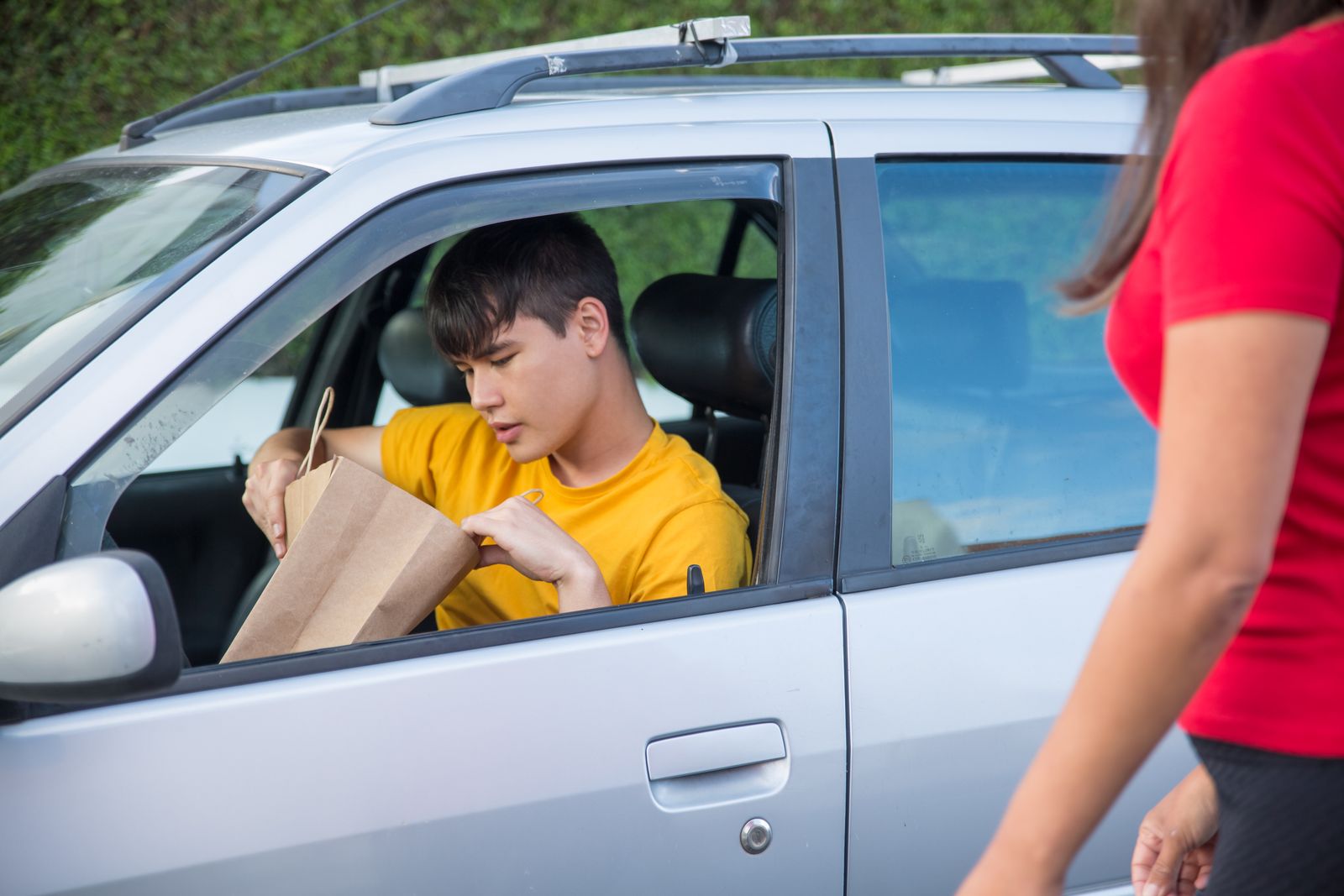
The most detailed real-world data on how portable benefits actually work for delivery drivers comes from DoorDash’s Pennsylvania pilot, which ran from April through September 2024. The numbers are worth knowing because they’re the closest thing we have to a live experiment — and they directly shaped what’s being proposed in Congress.
Here’s how the program worked: DoorDash contributed an additional 4% of each participating Dasher’s earnings into a Stride Save account. To qualify, drivers needed to earn at least $1,000 in DoorDash pay over three months and complete at least 100 deliveries from Pennsylvania merchants. No minimum hours, no complex eligibility rubric — just documented earning activity.
The final numbers from the pilot:
- 4,400 Dashers enrolled — 23% of those who were eligible
- $1.3 million total deposited into Dasher accounts over the six months
- Average payout: $296 per participating driver
- Top categories: retirement savings and paid time off, chosen by over 50% of respondents
- 91% of surveyed participants said the program benefited Dashers; 90% supported portable benefits legislation
Driver reactions were direct. A Dasher from Warren, PA sent DoorDash a note that read: “You seriously saved our asses. What a blessing.” Another driver, Jim from Natrona Heights, said he was saving his benefit funds to take his grandson to Disney World — a trip he described as something he’d never been able to afford on gig income alone.
For most active drivers, a 4% platform contribution translates to roughly $40 to $120 per month in additional benefit funds, depending on your volume. On its own, that’s not a financial transformation. But it’s real money you had zero access to as a 1099 contractor — and it compounds. Most drivers also significantly underestimate what their actual net earnings are after expenses, which makes understanding total compensation — including benefit contributions — even more important. This breakdown of real 2026 delivery driver earnings gives you the full picture across all major platforms.
Federal Legislation: What’s Stalled and Why It Matters
Two federal bills introduced in the 119th Congress could extend portable benefits to every driver in every state. H.R. 1320, the “Modern Worker Security Act” (sponsored by Rep. Kevin Kiley), and S. 2210, the “Unlocking Benefits for Independent Workers Act” (sponsored by Sen. Bill Cassidy of Louisiana), both propose requiring platform companies to make contributions to portable benefit accounts nationwide.
A Democratic alternative — the Warner-Young pilot legislation — takes a different approach, emphasizing worker voice in how benefits are designed rather than leaving the terms entirely to the platforms.
As of August 2026, all three bills are stalled in committee. Coalition-building is ongoing but passage this session looks unlikely. Wisconsin’s governor vetoed a similar state-level bill in 2025, citing concerns that it would lock drivers into independent contractor status without actually guaranteeing benefits in return — a legitimate critique that advocates are still working to address in the federal versions.
What federal passage would actually mean: every platform operating in the U.S. would be required to contribute for every driver, regardless of state. For drivers in Texas, Georgia, Arizona, Florida, and other states without their own portable benefits laws, federal legislation is effectively the only path to platform-funded benefits in the near term. That’s why the congressional stall matters — millions of drivers are still waiting on a patchwork of state laws to eventually reach them.
A Madison, Wisconsin-based DoorDash driver named Joe DeRose traveled to Washington D.C. in May 2026 to lobby Congress directly for the Cassidy bill. After 30 years as a Wisconsin state employee, DeRose started delivering in 2021 and quickly learned what it cost to have no safety net. His vehicle was totaled during a delivery, forcing unexpected rental car expenses with zero backup fund.
“Portable benefits will be a pot of money that DoorDash will contribute to, and I can add to, and then I can access this whenever or however I wish,” he told lawmakers. That’s the vision. Federal legislation is how it reaches every driver, not just those in the states that have moved first.
What You Can Do Right Now — In Any State
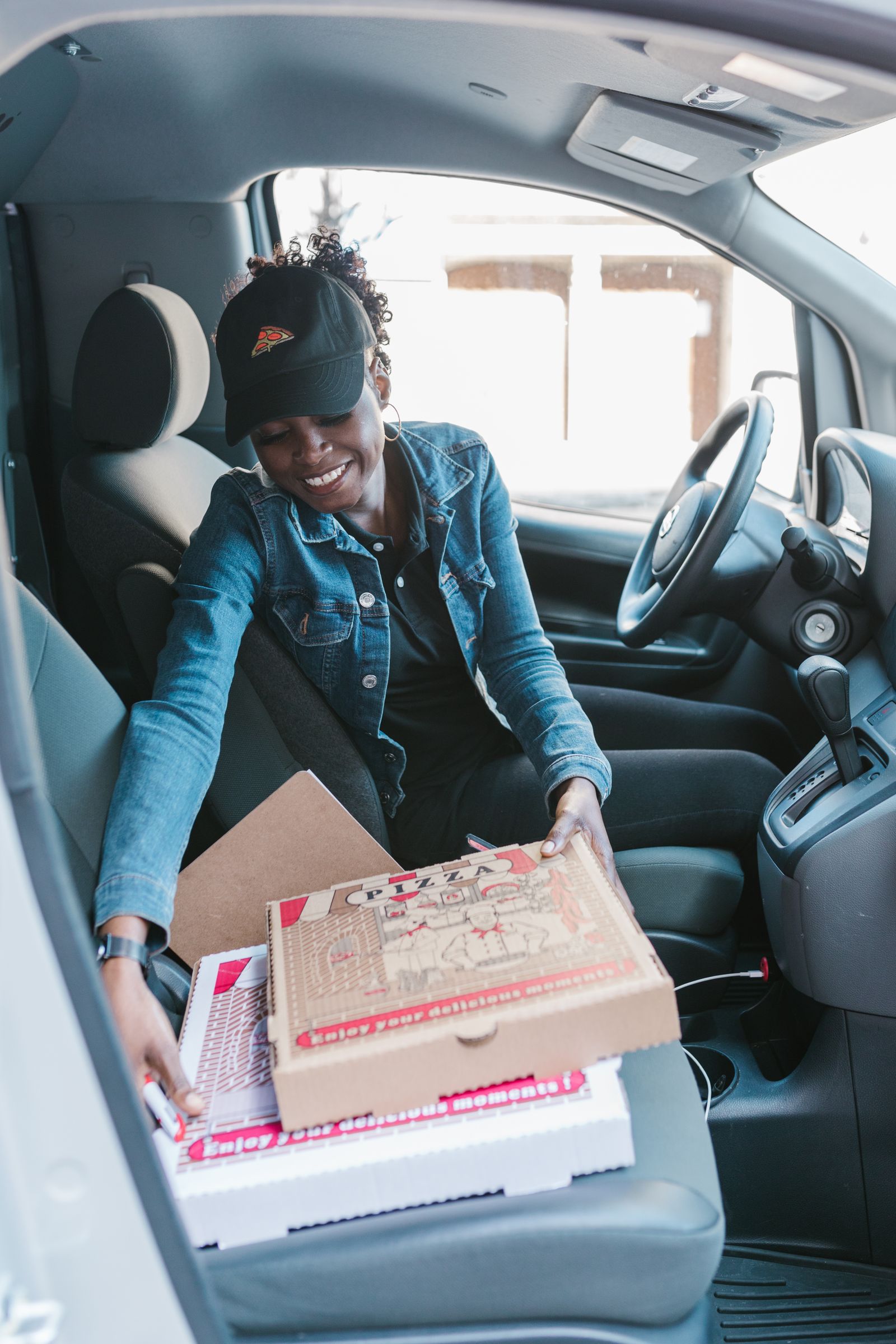
Even without a state law mandating coverage, there are concrete steps you can take today to start closing the benefits gap on your own terms. None of these require waiting on Congress.
Step 1: Check your app’s benefits section. DoorDash, Uber Eats, and Instacart all have benefit portals in their driver dashboards. DoorDash links directly to Stride for health insurance access. Uber Eats has state-specific benefit programs baked into the partner app. Log into your driver app, navigate to the benefits or perks section, and spend 10 minutes clicking through it. Most drivers have never opened this screen. The program you’re eligible for may already be active.
Step 2: Create a free Stride account. Stride is the portable benefits platform powering programs for DoorDash, Lyft, and others. Even if your platform isn’t running an active contributions program in your state right now, Stride lets you enroll in health insurance, dental, and vision plans at group rates — significantly cheaper than buying at full individual-market prices on the open ACA exchange. Go to stridehealth.com and sign up free. It takes about 10 minutes and could save you hundreds per month on coverage.
Step 3: Build your emergency fund first. No benefits program, however well-designed, covers a tire blow at 11 p.m. or the week your account gets deactivated incorrectly and you’re fighting to get reinstated. The average out-of-pocket cost for a delivery-related injury is $4,200 — nearly triple what most drivers expect. The backstop every driver needs before anything else is a dedicated emergency fund. Here’s a step-by-step guide to building one on variable delivery income.
Step 4: Open a retirement account and start contributing now. If you’re in California, New York, Connecticut, or Illinois, check your auto-enrollment status — you may already have 3% of earnings going into a retirement account. For everyone else, a Roth IRA or solo 401(k) is the gig worker’s closest equivalent to an employer-sponsored plan. The gig worker tax savings formula walks through exactly how to structure contributions without wrecking your quarterly cash flow or your tax bill.
Step 5: Know your annual income estimate before you apply for anything. Benefit eligibility — for platform programs, ACA marketplace coverage, and state benefit funds — depends on your projected annual income. Gig income is variable, which makes this tricky. Overestimate and you miss subsidies you’re entitled to. Underestimate and you get hit with repayment at tax time. This guide to budgeting on variable delivery income gives you a method for estimating your annual number accurately enough to actually use it.
The Tax Side: How Portable Benefit Contributions Affect Your 1099
This matters more than most drivers realize. When a platform contributes to a portable benefits account on your behalf, those contributions are generally not added to your taxable 1099 income in the year they’re made. That means you’re not paying self-employment tax on them.
As a 1099 contractor, you already absorb both the employer and employee sides of Social Security and Medicare — 15.3% of net earnings. Any dollar that flows into a qualified portable benefits account without being taxed first is a real, measurable win. A $300 per month platform contribution to your Stride retirement account isn’t $300 you pay self-employment tax on. It’s $300 working entirely for your future, tax-free in the year of contribution.
When you withdraw portable benefits funds, the tax treatment depends on the account type and what the expense is. Health insurance premiums paid from a qualified account are generally excluded from taxable income. Retirement distributions are treated as ordinary income when you eventually withdraw in retirement. Emergency fund withdrawals for non-qualified expenses may be taxable depending on the program’s state-law classification. The rules vary enough that verifying with a tax professional familiar with gig income is worth it before you pull funds for anything other than the obvious qualified expenses.
The foundational question underlying all of this is whether your 1099 contractor status is actually the right classification for your situation — and what it means for your benefits access either way. The 1099 vs. W-2 delivery driver tax guide covers the full difference, including what changes if your classification changes and why most drivers are better off optimizing within the 1099 structure than fighting it.
Why This Is the Right Moment to Pay Attention
Sixty-one percent of gig workers in 2026 say they want portable benefit accounts that follow them from platform to platform. More than half of non-gig workers support it too. This is no longer a fringe labor policy idea — it’s a mainstream question with active legislation in 14-plus states, multiple federal bills, and real pilot programs that have already put money in drivers’ hands.
But the number that hits hardest isn’t any of those. It’s that gig platforms are now the top employers of SNAP recipients in the U.S. — above Walmart, above McDonald’s. That’s a real shift in who relies on these apps and how much. It’s happening in 2026 while most drivers are still operating without a single cent of employer-funded benefits.
Portable benefits won’t fix gig work’s pay structure on their own. If your per-order earnings are thin, a $296 annual DoorDash contribution isn’t a transformation. But combined with disciplined order selection, smart multi-apping, and a budget built around variable income, it can be the margin between a slow week you absorb and a slow week that sends you to a high-interest loan. The average out-of-pocket cost for a single unexpected delivery injury is $4,200. A growing portable benefits fund doesn’t just cover that — it’s proof you’re treating your gig work like the business it actually is.
The drivers building real financial stability in 2026 understand their full compensation picture. That means knowing your net hourly rate, yes — but also knowing which programs exist in your state, which platforms contribute anything beyond the base rate, and how to plug every available tool into your financial foundation. Check your state program. Check your app. Start claiming what you’re already entitled to.
Ready to Start Delivering and Claim Your Benefits?
Join thousands of drivers already earning — and get a $2,575 guaranteed bonus after completing your first 200 deliveries in select US cities.
New drivers: Sign up through our partner link and start earning today!
Sign Up for Uber Eats and Start Delivering →
Must be 18+. Background check required. Terms apply.