
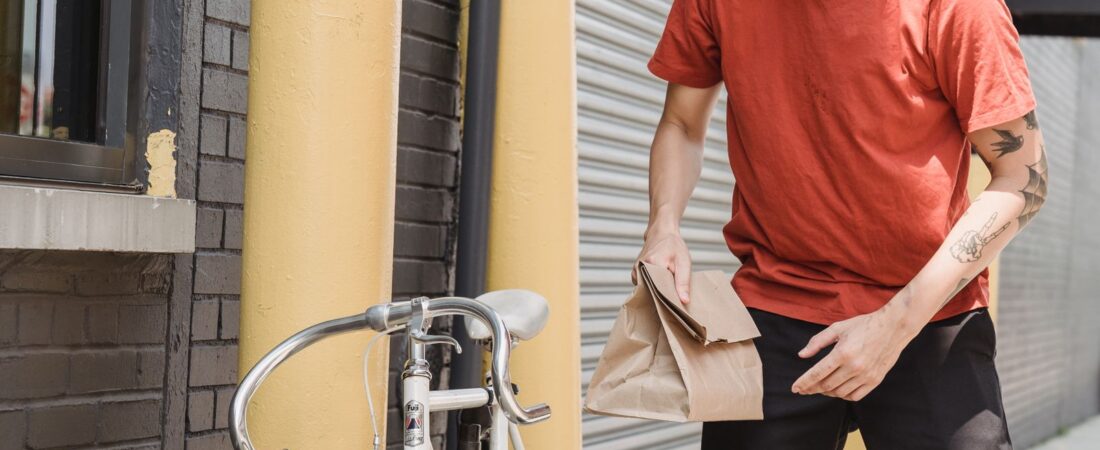

If you have been doing food delivery for more than a week, you already know that your earnings do not depend on how fast you drive alone. They depend heavily on how fast you get in and out of restaurants. And that comes down to something most drivers ignore completely: restaurant pickup etiquette.
Restaurant workers handle hundreds of delivery drivers every single shift. The drivers who get their orders pulled first, who staff members actually recognize, who never leave with a cold bag — those are not the drivers with the nicest car or the highest acceptance rate. They are the drivers who know how to handle themselves at the counter.
This is your 2026 playbook. Whether you are running DoorDash in Houston, stacking Instacart batches in Chicago, or doing Uber Eats late nights in Los Angeles, the habits in this guide will help you get in faster, get out faster, and earn more as a direct result.

Why Restaurant Pickup Etiquette Matters More Than You Think
Most drivers treat the restaurant leg of delivery as an obstacle to get through as fast as possible. Show up, grab the bag, go. But the restaurant interaction is not a formality — it is an active variable in your earning equation.
How you show up at that counter directly affects how quickly staff prioritize your order, whether you get quietly deprioritized as a problem driver, whether your food arrives at the customer in good condition, and whether high-value restaurants keep routing orders to you long term. Platforms like DoorDash and Uber Eats both have restaurant-side dashboards where staff can flag driver behavior. Repeated negative interactions reduce how often the algorithm sends you orders from that location. On the flip side, restaurants that trust you will sometimes pull and stage your bag before you even walk through the door — saving two to five minutes per pickup.
Run five orders a day and save three minutes per pickup. That is fifteen extra minutes of earning time daily. Over a full month, that recovered time represents one or two additional orders per shift, every shift. That is real money, and it costs you nothing except basic professionalism.
For a deeper breakdown of how wait times eat into your hourly rate, see our guide on how to handle restaurant wait times on DoorDash and Uber Eats in 2026.
How to Approach the Counter Like a Pro
The moment you walk in matters. Here is what separates experienced drivers from the ones restaurants quietly dread.
Walk in with calm confidence, not visible urgency. There is a big difference between composed purpose and walking in like your hair is on fire. Staff respond better to drivers who seem like they have done this before — because that driver is easier to deal with. Urgency communicates stress, and stressed drivers create friction.
Lead with platform and name, immediately. The second you have someone’s attention, say exactly this: “DoorDash pickup for [customer name].” Not “I have an order.” Not “I’m here for a pickup.” Give them the two pieces of information they need in three seconds or less. Staff are juggling six things at once. Make their job easy.
Do not crowd the counter. If another driver is already checking in, hang back two or three feet. Crowding creates anxiety for staff and slows everything down. Wait your turn, eyes up, phone down.
Make actual eye contact and say hello. It sounds almost embarrassingly simple, but the majority of drivers stare at their phone screen while waiting to be acknowledged. Look up. Make eye contact. A quick “hey, how are you doing tonight?” costs you two seconds and creates a completely different dynamic than a silent, screen-fixated presence.
Know when to wait and when to follow up. After you announce yourself, give staff at least forty-five seconds before doing anything else. They heard you. In busy kitchens in NYC, Chicago, and LA — where drivers are cycling through every three to four minutes during peak hours — hovering and repeating yourself marks you immediately as a problem. Patience is a professional skill.

What to Say (and What NOT to Say) When an Order Is Not Ready
This is where the majority of drivers create problems for themselves. The order is not ready, the in-app timer is ticking, and anxiety kicks in. How you manage this moment is exactly what determines whether that restaurant becomes a high-value regular stop or a location you dread.
What TO say when the order is not ready:
- “No rush — I can wait. Just let me know when it is up.”
- “Is there anything I can help clarify on the order while we wait?”
- “Roughly how long are we looking at? Happy to step aside if it helps.”
- “I will just be over here — grab me whenever it is ready.”
What NOT to say — ever:
- “I have been waiting ten minutes already.” Even if accurate, this creates conflict and makes staff defensive rather than helpful.
- “Can you just give me what is ready?” Never pressure staff to hand over incomplete orders.
- “This is going to affect your restaurant’s rating.” Threatening staff with platform ratings is one of the fastest ways to get flagged and deprioritized.
- Complaining to other drivers in earshot of staff. Restaurant workers hear everything, and venting loudly in the lobby signals exactly the kind of driver they want gone quickly.
In high-density markets like New York City, where a single Chipotle or Shake Shack location might process sixty delivery drivers in two hours during dinner rush, the drivers who stay calm get helped faster. Friction costs time. Calm costs nothing.
Building Relationships With Restaurant Staff for Faster Pickups
The highest-earning delivery drivers in every major US market share one trait that does not show up in their app stats: they have built genuine working relationships with the restaurants on their regular routes.
Learn names and use them. If you pick up from the same restaurant three or four times a week, learn the names of the people who run the delivery window. A “thanks, Marcus” or “appreciate it, Sofia” lands entirely differently than a silent grab-and-go.
Be behaviorally consistent. Staff do not necessarily remember the face of every driver who is fine. But they absolutely remember drivers who cause problems. Your goal is to be so consistently professional that staff mentally categorize you as one of the easy ones.
Always say thank you, and mean it. A real, eye-contact thank you before you leave. Two seconds. Do it every single time.
Never argue about order mistakes at the counter. If a bag is sealed and a customer later claims something is missing, that dispute belongs between you, the customer, and the platform — not at the restaurant counter.
Tip at independent and local spots when you have a regular pickup relationship. At an independent restaurant where you pick up three nights a week, dropping a dollar or two in the jar occasionally signals you see them as partners rather than a logistics waypoint.
For more on professional communication with customers, read our full delivery driver customer communication guide for 2026.
Venue-Specific Tips: Fast Food, Sit-Down Restaurants, Ghost Kitchens, and High-Volume Chains
Not every pickup works the same way. Here is how to handle each venue type.
Fast Food (McDonald’s, Taco Bell, Chick-fil-A)
Go directly to the designated delivery pickup area. Most major chains now have a separate delivery shelf, tablet, or window. Do not wait in the customer order line. In Houston and Dallas, many McDonald’s locations have a side entrance or a specific lane for app drivers — learn your local spots early. If there is a driver-side tablet for check-in, use it.
Sit-Down Restaurants
Approach the host stand first. Identify yourself as a delivery driver immediately so they can route you to the takeout section. Do not approach the bar, do not flag down a server, and do not seat yourself. In Chicago’s River North or LA’s West Hollywood, factor in true wait times before accepting these orders.
Ghost Kitchens
Ghost kitchens are increasingly common in Los Angeles, New York City, and Chicago. They are usually accessed through a side entrance or loading area. Follow posted instructions exactly. Some use text-based check-in. Do not walk into the kitchen itself. Wait at the designated window.
High-Volume Chains (Chipotle, Panera, Starbucks)
The single biggest mistake drivers make at Chipotle specifically: going to the counter before checking the shelf. Check the shelf first, every time. It saves you a minute and saves staff an unnecessary interruption.
Checking Orders and Handling Mistakes Without Burning Bridges
What you can and should check:
- That the number of sealed containers or bags matches the item count on the receipt
- That drinks are included and properly capped or sealed
- That the customer name on the label matches your order in the app
- That the bag is properly closed for transport
What you should not do:
- Open sealed bags or containers to inspect contents
- Rearrange items the kitchen has already packed
- Ask staff whether specific ingredients were included
If something is visibly wrong — the wrong name on the label, a drink listed on your order that is clearly absent — calmly say: “Hey, quick question — I have [customer name]’s order and it looks like the drink might not be in here. Could you double-check?” Keep it factual and brief.
How Great Pickup Etiquette Translates Directly to Higher Earnings
Drivers who are known and respected at their regular restaurant stops save three to seven minutes per pickup through faster service, pre-staged orders, fewer errors, and smoother handoffs. At an average order value of $8–$12 per delivery, that recovered time is the difference between four and five completed orders in the same two-hour window.
Orders that arrive on time and in proper condition generate better customer ratings, which keeps you in the top-tier priority zones that platforms use to route high-value orders. In competitive markets like New York City and Chicago, dropping out of the high-acceptance zone because of avoidable friction at restaurants is a real and sustained earnings hit.
For a full breakdown of the strategies that top drivers use, see our complete delivery driver tips guide for 2026.
Ready to Earn More as a Delivery Driver?
Sign up for Uber Eats today and earn a $2,575 guaranteed bonus after completing your first 200 deliveries in select US cities.
Start With One Restaurant, Then Scale It
Pick the one restaurant on your route where you pick up the most frequently and start there. Make it your goal over the next two weeks to be that location’s most professional driver. Learn the layout, learn a name or two, get your greeting down to a clean three seconds, and always say thank you before you leave.
Once that is automatic, apply it to the next spot. Then the next. Within a month, you will have built a network of restaurants where pickups are smoother and faster. The earnings difference will be measurable, and the shift quality difference will be immediate.
Restaurant pickup etiquette is not a soft skill. It is an earning strategy. Treat it like one.