
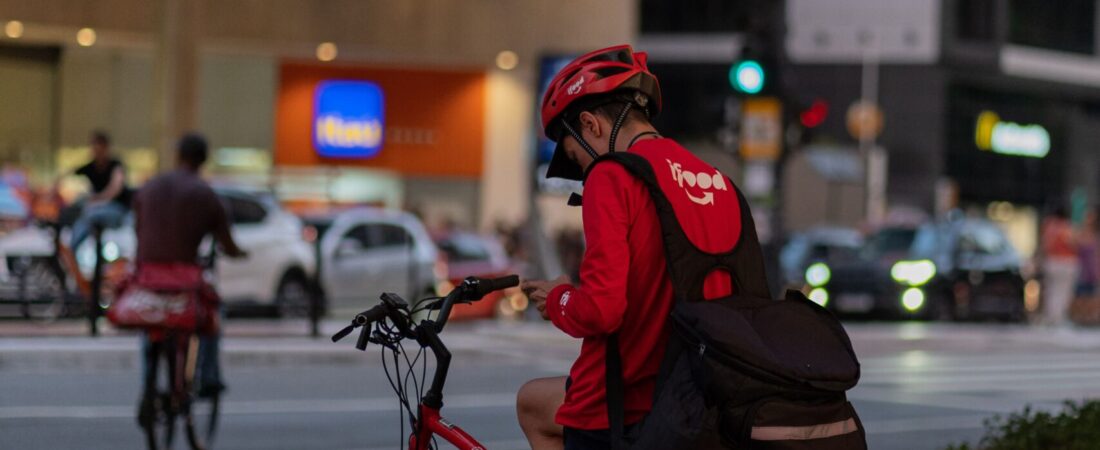

If you drive for DoorDash, Uber Eats, Spark, or Amazon Flex, you already know gas is your single biggest variable cost. With gas prices fluctuating between $3.00 and $4.50 per gallon across US cities like Houston, Dallas, Austin, Chicago, Los Angeles, and New York City, the difference between a profitable shift and a break-even one often comes down to how smartly you manage fuel consumption.
In this guide, we’ll walk through 19 proven strategies to help you save money on gas as a delivery driver. These aren’t generic tips — they’re battle-tested techniques used by full-time gig drivers who log 500-1,000 miles per week. By implementing even half of these, you can cut your fuel costs by 15-25%, putting hundreds of dollars back in your pocket every month.
Why Gas Costs Matter More in 2026 Than Ever Before
The gig economy has changed dramatically. Base pay per delivery has stayed flat or declined slightly, while competition for orders has intensified. The drivers who survive — and thrive — are the ones who optimize every aspect of their operation. Fuel is the biggest lever you can pull.
Consider this: if you drive 800 miles per week and average 25 MPG, you burn 32 gallons of gas. At $3.75 per gallon, that’s $120 per week or $480 per month. A 20% reduction in fuel costs saves you nearly $100 every month — that’s an extra $1,200 per year without taking a single additional delivery.
Strategy #1: Use Fuel Rewards Programs Religiously
Every major gas station chain has a free loyalty program. The trick is knowing which ones actually save you money and stacking them strategically.
Top Fuel Rewards Programs for Delivery Drivers
Upside: This is the single most effective app for delivery drivers. It offers cash back of 15-35 cents per gallon at thousands of stations nationwide. The catch? You need to claim the offer before pumping, pay with a linked card, and upload your receipt. For drivers filling up 2-3 times per week, that’s $15-30 in monthly cash back.
Shell Fuel Rewards: Shell’s program offers 5-10 cents off per gallon through their app. Stack it with a Shell-associated credit card for up to 25 cents off. Shell stations are everywhere in major cities — NYC, Chicago, Houston, LA — making it easy to find participating locations during your delivery zone.
Kroger Fuel Points: If you live near a Kroger, Ralphs, or Fry’s (common in Dallas, Houston, Austin, and Atlanta), every $100 in grocery shopping earns you 10 cents off per gallon at Shell stations. Some weeks they run 2x or 4x fuel points promotions. For drivers who also shop for themselves, this is a no-brainer — you’re already spending on groceries.
GetUpside (formerly Upside): We mentioned it first because it works so well. In cities like Los Angeles and Chicago, drivers report getting up to 25 cents per gallon back. Over a year of full-time driving, that’s $300-500 in free money.
Pro Tip for Multi-App Drivers
Run all three rewards apps simultaneously. Check Upside and Shell Fuel Rewards before every fill-up to see which offers the best current deal in your area. Prices vary by neighborhood and time of day, so checking takes 10 seconds and can save you $2-3 per fill-up.
Strategy #2: Master the Art of Efficient Driving
Your driving style has a massive impact on fuel economy. Aggressive driving — hard acceleration, speeding, and frequent braking — can lower your gas mileage by 15-30% at highway speeds and 10-40% in stop-and-go traffic. For delivery drivers who operate mostly in city environments, this is critical.
Fuel-Efficient Driving Tips for Delivery
Avoid idling: This is the #1 fuel waste that drivers overlook. If you’re waiting at a restaurant for 3-5 minutes, TURN OFF YOUR ENGINE. Idling consumes 0.15-0.25 gallons of gas per hour. Ten minutes of idling per shift adds up to 60+ hours per year — that’s 9-15 gallons of wasted gas annually, or about $40-60 down the drain.
Anticipate traffic lights: Instead of racing to a red light and braking hard, coast to a stop. This technique, known as “pulse and glide,” can improve fuel economy by 15-20% in city driving. In Houston, LA, and NYC traffic, this alone can save you significant fuel.
Use cruise control on highways: When you’re taking a longer delivery or deadheading back to a hot zone, engage cruise control. It maintains consistent speed and reduces fuel consumption by 7-14% on highways.
Drive 55-60 mph instead of 70+: Every 5 mph over 60 is equivalent to paying an additional $0.20-$0.30 per gallon. For drivers covering 500+ highway miles per week, this is a huge savings lever.
Strategy #3: Choose the Right Vehicle (or Optimize the One You Have)
Your car is your office, and its fuel economy is your biggest expense line. If you’re in the market for a delivery vehicle or considering an upgrade, here are the top choices based on real-world driver experiences in Houston, Dallas, Austin, NYC, Chicago, and LA.
Best Delivery Cars for Fuel Economy in 2026
Toyota Corolla Hybrid: 50+ MPG combined. Reliable, affordable, and the #1 choice among full-time delivery drivers on Reddit’s r/doordash_drivers. You’ll save $1,500+ per year in gas compared to a standard sedan.
Honda Civic (non-hybrid): 36 MPG combined. More affordable upfront than a hybrid, still excellent fuel economy. Parts are everywhere, and they easily reach 200,000+ miles with basic maintenance.
Toyota Prius: The gold standard. 55+ MPG, cavernous hatchback for delivery bags and catering orders, legendary reliability. Used Prii from 2015-2019 can be found for $12,000-$18,000 with moderate mileage.
Hyundai Elantra Hybrid: 50 MPG combined. Often overlooked, but offers excellent value and a 10-year/100,000-mile warranty that gives delivery drivers peace of mind.
Already have a car and not ready to buy? Tire pressure alone can cost you. Underinflated tires reduce gas mileage by 0.2% for every 1 PSI drop below optimal. If all four tires are 10 PSI low (common in winter months), you’re losing 8% efficiency. Check your tire pressure weekly — it takes 2 minutes and costs nothing.
Strategy #4: Use Gas Price Comparison Apps
Gas prices can vary by $0.50-$1.00 per gallon within the same city. A 5-minute route adjustment can save you $3-5 per fill-up. Here are the best apps for delivery drivers:
GasBuddy: The market leader. Shows real-time gas prices at every station near you, sorted by price. The GasBuddy Pay card offers an additional 5-15 cents off per gallon at participating stations. In Dallas and Houston, drivers report finding stations $0.30-$0.60 cheaper than the nearest competitor.
Waze: Beyond navigation, Waze shows gas prices at nearby stations along your route. Perfect for multi-app drivers who are already running Waze for navigation and police alerts.
AAA Mobile: If you’re a AAA member (and every delivery driver should be for roadside assistance alone), their app shows member-discounted gas prices at Shell and other stations.
The Strategy That Actually Works
Don’t go out of your way for gas. A 10-minute detour to save $0.30 per gallon costs you the time you could be earning. Instead, plan your fills around your delivery hot zones. When you’re in an area where you know gas is cheap, fill up even if you’re at half a tank. This is especially effective in cities like Houston where prices vary dramatically between neighborhoods.
Strategy #5: Optimize Your Delivery Schedule for Fuel Efficiency
When you drive matters almost as much as how you drive. Rush hour traffic in NYC, Chicago, and LA burns significantly more fuel than off-peak driving.
Work during non-peak traffic hours: Lunch rush (11 AM-1 PM) and dinner rush (5 PM-8 PM) are the most profitable times for deliveries, but they’re also when traffic in US cities is heaviest. The solution? Position yourself in dense but walkable delivery zones where your per-mile driving is minimized. In downtown Austin, Chicago near the Loop, or NYC’s Manhattan, you can complete 3-4 deliveries per hour while driving only 2-4 miles total.
Batch your deliveries strategically: Accept stacked orders (and multi-app stacked orders) that keep you in a tight geographic area. Every mile you drive without a delivery in your car is a mile that costs you gas with zero revenue. Drivers in Dallas and Houston report 20% lower fuel consumption after switching to a “cluster acceptance” strategy — only accepting orders that keep them within a 3-mile radius of their starting zone.
Strategy #6: Maintenance That Saves Gas
Many delivery drivers skip routine maintenance to save money, but this actually costs more in fuel than the maintenance itself.
Air filter replacement: A clogged air filter can reduce fuel economy by 10-15%. Replace it every 15,000-20,000 miles. Cost: $15-25. Annual fuel savings: $50-100.
Spark plugs: Misfiring spark plugs can reduce fuel economy by up to 30%. Most cars need plug replacement every 60,000-100,000 miles. If your car has 80,000+ miles and you can’t remember the last time plugs were changed, do it now.
Oxygen sensor: A failing O2 sensor can drop MPG by 15-20% without triggering a check engine light. If you notice your fuel economy has gradually declined over several months, have the O2 sensors checked.
Oil changes: Using the wrong oil viscosity (e.g., 10W-40 instead of 5W-30) can reduce fuel economy by 1-2%. Stick with the manufacturer-recommended oil grade.
Strategy #7: Reduce Excessive Weight in Your Vehicle
Every 100 pounds of extra weight reduces fuel economy by 1-2%. For delivery drivers, this adds up fast. Items that commonly accumulate in delivery vehicles:
- Old delivery bags and catering equipment (10-15 lbs)
- Emergency kits, jumper cables, toolboxes (20-30 lbs total — necessary, but audit quarterly)
- Personal items, gym bags, groceries (10-50 lbs)
- Floor mats, seat covers, phone mounts (5-10 lbs)
- Unused drinks, snacks, water bottles (5-10 lbs)
Weekly clean-out routine: Every Sunday, spend 5 minutes removing everything from your car that doesn’t need to be there for delivery. In LA and NYC where parking is tight and you’re carrying gear in and out multiple times per day, this becomes even more important.
Strategy #8: Use Credit Cards with Bonus Gas Rewards
Delivery drivers put massive fuel spend on their cards every month. Using the wrong card is literally leaving money on the table.
Best Credit Cards for Delivery Driver Gas in 2026:
Wells Fargo Autograph Journey: 3% cash back on gas. No annual fee. $0 foreign transaction fees (useful if you deliver near the Canadian or Mexican border, like drivers in El Paso or Detroit).
Chase Freedom Flex: 5% cash back on up to $1,500 in rotating categories. Gas stations are usually a category 2-3 quarters per year. Stack with Fuel Rewards programs for maximum savings.
Citi Custom Cash: 5% cash back on your top spending category (up to $500/month). If gas is your highest category — and for delivery drivers it usually is — that’s $25/month in cash back.
Costco Anywhere Visa by Citi: 4% cash back on gas (up to $7,000/year). For drivers who fill up at Costco (gas is usually $0.20-0.50 cheaper per gallon), this is powerful. A Costco membership ($65/year) is worth it if you use their gas station and buy your maintenance items there.
Strategy #9: Track Your MPG in Real Time
You can’t improve what you don’t measure. A simple MPG tracking habit can reveal gas-wasting problems early.
Manual tracking: Every time you fill up, reset your trip odometer and note the gallons pumped. Divide miles driven by gallons. If your MPG drops below your car’s EPA rating by more than 15%, investigate.
Automatic tracking apps: Fuelly and Drivvo are free and sync across devices. Log your fill-ups in under 30 seconds each time.
Using your delivery apps: DoorDash and Uber Eats both show your active miles and total miles in your weekly summaries. Compare your effective MPG (total miles driven / total deliveries) to your car’s real MPG. A big gap suggests you’re deadheading too much — driving empty between deliveries instead of positioning strategically.
Strategy #10: Know Your State’s Gas Price Patterns
Gas prices follow predictable weekly patterns in major US cities. Knowing these patterns can save 10-20 cents per gallon.
General pattern: Gas prices rise on Thursday morning and peak Friday through Sunday. Monday-Wednesday are typically the cheapest days to fill up. In Houston, Dallas, Austin, Chicago, and NYC, the Tuesday morning dip is consistently the lowest price point of the week.
Time of day matters: Gas stations in LA and NYC raise prices between 8 AM and 10 AM (when commuters fill up) and lower them around 2 PM-4 PM when demand drops. Fill up in the early afternoon for the best price.
City-specific patterns: In Chicago, stations near the Loop charge $0.40-0.60 more per gallon than stations in surrounding suburbs 5 miles away. In Houston, the cheapest gas is consistently found in the southwest and north sides of the city. Every delivery driver should memorize the 2-3 cheapest stations in their primary delivery zone.
Strategy #11: Consider a Fuel-Efficient Side Hustle Within Your Deliveries
While you’re driving, you can offset fuel costs. Spark drivers delivering Walmart orders who earn tips can use those tips as a gas fund. DoorDash drivers in NYC who deliver to high-traffic areas can optimize their route to minimize U-turns and left turns (which waste fuel waiting for traffic). Uber Eats drivers in LA can schedule their shifts to coincide with favorable traffic patterns on the 405 and 101 freeways.
Strategy #12: Use Electric Mode (If You Drive a Hybrid)
If you drive a Toyota Prius, Honda Insight, Hyundai Ioniq, or any plug-in hybrid, use EV mode for the first mile of your trip. This is when the engine is coldest and least efficient. In stop-and-go delivery driving in Austin, Dallas, and LA, this can improve overall MPG by 5-10% because most restaurant pickups and customer deliveries are short-distance trips.
Strategy #13: Avoid Gas Station Convenience Store Traps
This isn’t directly about fuel economy, but it directly affects your pocket. The average gas station convenience store purchase is $7.50 — coffee, snacks, energy drinks, lottery tickets. For a delivery driver filling up 2-3 times per week, that’s $15-22 per week on impulse purchases, or $780-1,140 per year.
The $1,000 gas station tax: Pack your own snacks, water, and energy drinks before your shift. A $10 trip to Walmart covers 2 weeks worth of shift drinks and snacks. The same items at a Chevron or 7-Eleven cost $30-40.
Strategy #14: Claim the IRS Mileage Deduction
While this doesn’t reduce your gas bill directly, it effectively reimburses you for fuel costs at tax time. The 2026 IRS mileage rate is 72.5 cents per mile for business use of your vehicle. For a driver doing 40,000 delivery miles per year, that’s a $29,000 deduction. At an effective tax rate of 15-20%, that saves you $4,350-5,800 in taxes.
This single deduction often covers ALL of your gas costs plus a significant portion of maintenance, depreciation, and insurance. Track every mile using apps like Stride, Gridwise, or Everlance — these are designed specifically for gig workers and integrate with DoorDash and Uber Eats summaries.
Strategy #15: Team Up with Other Drivers for Bulk Savings
Wholesale clubs like Costco and Sam’s Club offer significantly cheaper gas — often $0.20-0.50 less per gallon than nearby stations. If you have a membership, fill up there. If not, consider splitting a membership with a fellow delivery driver you trust. In cities like Houston and Dallas, Costco gas stations consistently rank among the cheapest in the city.
Strategy #16: Optimize Your A/C Usage
Running the air conditioning at full blast on a summer day in Phoenix, Austin, or LA can reduce fuel economy by 5-25%, depending on your speed and vehicle. The rule of thumb: above 55 mph, using A/C is more efficient than rolling down windows (which creates aerodynamic drag). Below 55 mph (most city delivery driving), roll down windows and save the A/C for when you’re parked or on the highway.
Summer Delivery Strategy
In cities where summer temperatures hit 95-105°F, A/C is non-negotiable for driver safety. Instead of blasting it continuously, use “pulse cooling”: run A/C at full for 3-5 minutes, then switch to fan only for 5-7 minutes. This keeps the cabin comfortable while reducing compressor runtime by 40-50%.
Strategy #17: Combine Delivery Zones to Reduce Deadhead Miles
Deadhead miles — driving with no order in your car — are pure expense. Every mile you drive without a delivery costs you approximately $0.65 (IRS rate). Minimizing deadhead miles is the fastest way to improve your net per-mile profit.
Hot zone strategy: When you complete a delivery outside your usual area, don’t immediately drive back to your preferred zone. Spend 15-20 minutes running delivery apps from wherever you are. Often, the outer-edge zones have less competition and higher base pay because fewer drivers are there, making the deadhead miles back effectively free.
Multi-app positioning: Run DoorDash, Uber Eats, Spark, and Instacart simultaneously. If you’re heading back from a delivery in one app, accept an order from another app that takes you in the direction you need to go. This reduces net deadhead miles by 30-50%.
Strategy #18: Track Your Fuel Costs Per Delivery (Not Per Mile)
Successful gig drivers track their fuel cost per delivery, not per mile. Here’s why: a $5 fuel cost on a delivery that pays $12 is acceptable (42% fuel-to-revenue ratio). But that same $5 on a $6 delivery is a disaster.
Knowing your fuel cost per delivery helps you decide which orders to accept and which to decline. In competitive markets like NYC and Chicago where base pay per order is lower, this metric is essential for profitability.
Strategy #19: Use the Right Oil
This is one of the most overlooked gas-saving strategies. Using the manufacturer-recommended oil viscosity (typically 0W-20 or 5W-30 in modern cars) improves fuel economy by 1-2% compared to heavier oils. For a 2018 Toyota Corolla or Honda Civic, 0W-20 synthetic oil is usually the right choice. Check your owner’s manual or the oil fill cap.
Synthetic oil also extends engine life — critical for delivery drivers who put 30,000-50,000 miles per year on their vehicles. A $60 synthetic oil change every 7,500 miles is cheaper than a $4,000 engine replacement.
Putting It All Together: Your Monthly Fuel Savings Plan
Implement these strategies in order of impact:
- Week 1: Sign up for Upside, GasBuddy, and Shell Fuel Rewards. Check tire pressure. ($20-50 monthly savings)
- Week 2: Optimize driving habits — no idling, anticipate stops, use cruise control. ($30-60 monthly savings)
- Week 3: Replace air filter, check spark plugs, track MPG. ($20-40 monthly savings)
- Week 4: Clean out your car, optimize delivery zones, start using a gas rewards credit card. ($40-80 monthly savings)
Total potential savings: $110-230 per month — or $1,320-2,760 per year. That’s the equivalent of earning an extra $2-$4 per hour on every shift, tax-free.
For DoorDash drivers in Houston, Dallas, and Austin, Uber Eats drivers in NYC and LA, and Spark drivers in Chicago — the strategies are the same. The execution depends on your market. Experiment with these over 30 days and track your savings. The results will speak for themselves.
Want to Earn More So Gas Costs Matter Less?
New Uber Eats drivers in select US cities can earn up to $2,575 after completing their first deliveries — more than enough to cover fuel for months.
Start Earning $2,575 with Uber Eats →
Terms apply. Offer available in select US markets. New drivers only.