
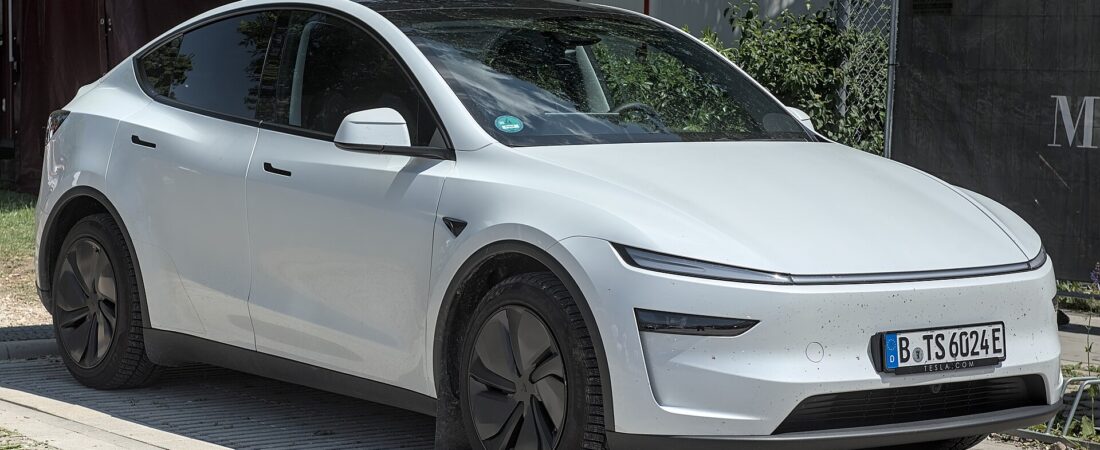

Tesla’s Full Self-Driving (Supervised) system gets a lot of attention in sunny California test videos, but if you live in Minnesota, Ontario or Quebec, the question that actually matters is: how does it hold up when the roads are white and the cameras are coated in salt spray? This guide answers that question honestly. It covers what you need to prepare your Tesla for a winter FSD season. It also explains how US drivers can use the free one-month FSD referral trial — available through https://tesla.com/get-app/referral?code=willy327274 — as a low-cost winter test before committing to a subscription.
Disclosure: This post contains a referral link. If you order a Tesla using it, the author may receive referral benefits at no extra cost to you.
Tesla Referral Offer
Get One Month of Full Self-Driving Free
Order a new Tesla through this referral link and get one month of FSD (Supervised) at no cost. Referral code: willy327274
New orders only · Terms apply · Offer availability varies by region
What FSD (Supervised) Actually Is — and Is Not
Before anything else: Tesla FSD (Supervised) is an SAE Level 2 driver-assistance system. It is not self-driving. You must keep your hands on the wheel (or remain ready to take over instantly), watch the road at all times, and intervene the moment the system makes a mistake. Tesla can remove a driver from the FSD programme entirely for repeated inattention events detected through the cabin camera. That baseline matters enormously in winter, when road conditions change fast and the cost of a one-second distraction is higher than on a dry July highway.
FSD (Supervised) uses cameras only — no radar, no lidar, no ultrasonic sensors on current models. The forward cameras sit behind the windshield at the top centre. The B-pillar cameras look forward from the side pillars. The repeater cameras look rearward from the front fenders. Every one of those lenses is exposed to the full force of a Midwest or Prairie winter. Understanding their physical location is the first step toward understanding their limits in snow.
For a detailed side-by-side of what FSD does versus standard Autopilot and Traffic-Aware Cruise Control, see our breakdown at Tesla FSD vs Autopilot vs TACC: what actually differs.
How Snow Belt and Canadian Winters Stress a Camera-Only System
Obstructed and Degraded Lenses
Snow and slush are the most direct threat. A camera lens covered in wet snow or salt spray simply cannot produce usable input for the neural network that drives FSD decisions. Tesla’s system monitors lens quality and will display a message telling you that one or more cameras are blocked or degraded. When that happens, Autopilot and FSD features become unavailable until the lens clears — either naturally as the car moves through warmer air, or because you stop and physically wipe the lens.
Camera housings are heated on Tesla vehicles, which helps prevent ice from bonding directly to the lens housing. The forward cameras behind the windshield also benefit from the cabin defrost system. But heated housings are not the same as guaranteed clean optics. In a heavy wet snowstorm on I-94 through the Twin Cities, a camera can go from clear to opaque in minutes from slush thrown by semi-trucks. Plan accordingly.
Low Sun and Glare on Snow-Covered Roads
Winter sun sits low on the horizon for most of the day across the Snow Belt and Canadian provinces. Camera sensors are sensitive to glare in ways the human eye can partially compensate for with sunglasses and squinting. A camera cannot squint. When low winter sun reflects off a snow-covered road into the forward camera array, the system can struggle to detect lane lines, obstacles, and stop signs.
NHTSA Engineering Analysis EA26002 opened on March 18, 2026 and covers roughly 3.2 million Tesla vehicles across model years 2016 through 2026. It specifically flags sun glare, fog, and heavy rain as conditions where the camera-only system may fail. That investigation is ongoing — it is not a finding of defect — but it is a reason to be more attentive, not less, when you are driving eastbound at 7 a.m. into a low February sun on fresh snow. See our summary of the NHTSA investigation and Tesla’s overall safety data at Tesla FSD safety data and regulatory status 2026.
Invisible Lane Markings
FSD does not perform reliably on unplowed roads where lane lines are buried under snow. The system is trained on painted lane markings, curb geometry, and road edges. When several inches of snow cover all of those inputs, FSD is essentially navigating blind on that dimension. It may wander toward what it perceives as an edge, or it may request a driver takeover. On a freshly plowed road where salt residue has whitened the asphalt, the contrast between the lane marking paint and the road surface drops dramatically, which also degrades detection confidence.
This is not a deficiency unique to Tesla. Any camera-based lane-keeping system faces the same physics. The difference is that some competing systems still have radar or lidar as a redundant input. FSD on current Tesla hardware does not.
Preparing Your Tesla for a Winter FSD Season
Precondition Before Every Drive
Tesla’s Defrost Car function in the Tesla app warms the cabin, activates the rear defroster, and clears the windshield before you approach the car. Because the forward cameras sit behind the windshield, a clear windshield is a direct prerequisite for clean camera input. Make preconditioning a non-negotiable habit. Set a schedule in the app for your typical departure time, or trigger it manually while you are still inside finishing your coffee.
Many Tesla trims also include a heated wiper park area that prevents wipers from freezing to the glass overnight. If yours has it, use it. Frozen wipers smear rather than clear, which recontaminates the windshield the moment you start driving.
Manually Clear the Fender and Pillar Cameras
The app can defrost the windshield but it cannot clear the B-pillar cameras or the front fender repeater cameras. After a snowstorm, or after driving through heavy slush, take thirty seconds to wipe each external camera lens with a soft cloth or gloved hand before you engage FSD. This single step prevents the majority of mid-trip camera-blocked warnings that interrupt FSD operation on winter commutes.
Wash the Underbody and Camera Areas Frequently
Road salt is aggressively corrosive. It attacks the aluminum structures, brake lines, and wiring of any vehicle. For a Tesla specifically, salt spray that builds up around camera housings and sensor areas can degrade the heated elements over time. A touchless undercarriage wash once a week during active salting seasons — typical in the Great Lakes states, New England, Ontario, Quebec, and the Prairie provinces — is worth the cost. Rinse the wheel arches and the lower rocker panels where camera cables route. EV range loss from cold weather is real (and significant — see our guide to cold-weather EV range loss for delivery drivers), but salt corrosion damage is irreversible in a way that range loss is not.
Tire Choice Matters More Than FSD Capability
A Level 2 system can steer and accelerate, but it cannot conjure traction that the tires do not provide. If you are running all-season tires in upstate New York, western Michigan, or anywhere in the Prairie provinces, understand that FSD may execute a turn the physics of your tires cannot support. Dedicated winter tires with the Three-Peak Mountain Snowflake (3PMSF) rating dramatically change the grip envelope. FSD works within whatever traction envelope the tires provide, not outside it. No software update changes that.

When to Simply Turn FSD Off
This section exists because most FSD guides skip it. There are winter conditions in which the right decision is to disengage FSD, drive manually, and use your own judgment. Those conditions include:
- Active blizzard with low visibility. When you cannot see more than two or three car lengths ahead, cameras face the same visual limits you do. But cameras cannot apply the situational judgment you have built from years of winter driving.
- Unplowed secondary roads. FSD loses lane-line input entirely on unplowed surfaces. Manual driving with slow, deliberate inputs is safer.
- Ice-only roads with no snow cover. Black ice provides no visual cue to cameras, the same as to human eyes. The difference is that an experienced winter driver reduces speed prophylactically on days when black ice is likely; FSD maintains its programmed following behavior and speed unless you intervene.
- Immediately after a camera-blocked warning clears. Give the system a few seconds of normal driving before re-engaging to confirm the lens is fully clear, not just partially clear.
FSD (Supervised) is a tool, not a substitute for winter driving skill. If you are not yet comfortable driving manually in the conditions you are facing, adding a Level 2 assist system does not solve that gap. Build your manual winter driving competence first.
The Free One-Month FSD Referral Trial: Using It as a Winter Test
Tesla launched its owner-to-owner FSD (Supervised) referral programme in the United States on October 29, 2026. The structure is straightforward: a current FSD subscriber shares their referral link, a new eligible owner redeems it in the Tesla app (version 4.62.0 or later), and the new owner receives one free month of FSD (Supervised).
Eligibility rules for the referred owner are specific. You must not have had an active FSD subscription in the prior 12 months, and you must not have redeemed a free FSD trial in the prior 12 months. The benefit expires 12 months after it is granted if unused, and there are caps of 12 referral benefits redeemed per calendar year per referrer, and 48 lifetime. These are programme-level caps, not something that affects most individual users, but worth knowing.
For Snow Belt drivers, the timing of this programme is genuinely useful. November through March is exactly when you want to evaluate FSD in the conditions you actually drive. A one-month free trial gives you that window without committing to the US$99/month subscription. Try it in December on your actual commute, in your actual climate, with your actual road conditions. That is a far more honest evaluation than a sunny test drive.
You can redeem the trial through https://tesla.com/get-app/referral?code=willy327274. The subscription, if you choose to continue after the trial, is US$99/month in the United States. Tesla stopped selling FSD as an outright purchase in the US on February 14, 2026, so subscription is currently the only path. As of Q3 2026 there were 1.74 million active FSD subscriptions globally, up 67% year over year, which suggests real adoption — but make your own judgment based on your own winter trial. For the full cost math on whether $99/month makes sense for your driving profile, see our FSD subscription break-even analysis.
For information on how the free trial month interacts with other Tesla incentives and stacking strategies, see Tesla FSD referral free month: incentive stacking guide.
Canadian Drivers: What Is and Is Not Available to You
The FSD (Supervised) referral programme described above is United States only. Tesla has announced no Canadian launch date. Canadian Tesla owners cannot redeem the US referral link for a free FSD month. Do not let any third-party site tell you otherwise — the programme terms are explicit on US-only eligibility.
Canadian owners have access to Tesla Canada’s separate vehicle Refer and Earn programme, which covers vehicle discounts rather than software trials. FSD (Supervised) is available in Canada as a subscription, priced separately in Canadian dollars — check Tesla.ca for the current rate, as pricing changes.
On the incentive side, Canada’s iZEV programme closed in January 2025 when funding ran out. Its replacement, the Electric Vehicle Availability Programme (EVAP), opened February 16, 2026 and offers C$5,000 for battery-electric vehicles and C$2,500 for plug-in hybrids, subject to a roughly C$50,000 final-transaction-value cap for imported vehicles. Provincial rebates vary significantly and change often — Quebec, BC, and Nova Scotia have historically offered stacking provincial credits, but verify current amounts directly with the province before budgeting. For a comprehensive breakdown of Tesla FSD availability and incentives by Canadian province, see our Canadian Tesla FSD provincial guide.
Winter driving conditions in Alberta, Saskatchewan, Manitoba, Ontario, and Quebec often exceed the severity of anything encountered in the US Snow Belt. Temperatures below -30°C are common on the Prairies and dramatically reduce EV range and battery performance. Plan charging stops conservatively, precondition aggressively, and treat FSD as a convenience tool rather than a cold-weather crutch.
FSD for Gig and Delivery Drivers in Winter
Gig drivers — rideshare, food delivery, package delivery — face a specific winter calculus. You drive more hours per day than a typical commuter, in more varied conditions. Tight schedules also create pressure to keep moving when stopping to wipe a camera would be the safer choice. FSD can reduce fatigue on long highway segments, but it adds a monitoring burden that does not exist when you are simply driving manually. You cannot reduce your attention because FSD is on. In marginal conditions, watching for a system error takes more active attention than highway cruising on dry roads.
For gig drivers specifically, the camera-blocked interruptions that occur during heavy winter operations — requiring you to pull over or at minimum re-engage manually — can disrupt trip flow. Weigh that against the highway fatigue-reduction benefit honestly. Our in-depth guide to FSD for rideshare and delivery drivers covers the broader tradeoffs for professional drivers across all seasons.
Incentives and Purchase Timing for Snow Belt Buyers
If you are considering buying a Tesla specifically to get FSD capability for winter driving, the federal incentive landscape has changed significantly. The IRC 30D new-vehicle EV tax credit of US$7,500 and the 25E used-vehicle credit of US$4,000 both ended for vehicles acquired after September 30, 2025. The 30C home-charger installation credit expired June 30, 2026. What remains federally is a new qualified auto-loan interest deduction of up to US$10,000 of interest per year, subject to income limits. State and utility rebates vary — some remain meaningful, others have also exhausted their funding. Check your state’s current programme before budgeting.
The practical implication: the purchase math is harder than it was in 2024 or early 2025. Run the full numbers, including the FSD subscription cost, before assuming a Tesla is the right winter vehicle investment. The free one-month trial via https://tesla.com/get-app/referral?code=willy327274 is a smart way to test the system on your roads before you commit to anything beyond the hardware you already own.
Try It Yourself
Ready to Try Full Self-Driving?
See what FSD (Supervised) actually feels like on your own commute. New Tesla orders through this referral get one free month of FSD.
New orders only · Terms apply · Offer availability varies by region
Tesla FSD (Supervised) in winter is a capable but genuinely limited system — honest about its own limits in a way that the marketing rarely is. The cameras are well-engineered and the heated housings help, but snow, salt, and low sun impose real constraints on what a camera-only system can do reliably. Prepare the car properly and understand when to disengage. Then use the free trial month to form your own judgment in your own winter conditions, rather than relying on anyone else’s sunny-weather impressions.
Driving for delivery or rideshare this winter? If you are not already on a platform, you can sign up to drive with Uber using referral code vuccxew — new drivers in select US cities may qualify for a sign-up bonus after their first deliveries. It is a practical way to compare winter driving on your own roads against what FSD promises.