

If you have run Walmart Spark deliveries at any point since 2021, there is a real chance Walmart owes you money. In February 2026, the Federal Trade Commission announced a landmark $100 million settlement with Walmart over what it officially described as deceptive pay practices inside the Spark Driver program. The FTC’s core allegation: Walmart systematically misrepresented tip amounts and quietly slashed base pay after drivers had already accepted and committed to an offer. This was not a rounding error or a glitchy algorithm. According to the FTC, it was a pattern — one that played out across millions of deliveries and years of transactions, taking real money out of driver pockets delivery by delivery. Here is everything you need to know: what Walmart actually did, whether you are owed a payout, what changed in the program going forward, and whether Spark still belongs in your app rotation in 2026.
Driver Opportunity
Want to Earn While You Read?
Join as a new driver and get up to a $2,575 guaranteed bonus after completing your first 200 deliveries in select US cities.
Start Earning Now →New drivers only · Terms apply · Available in select cities
What Walmart Was Actually Doing to Your Pay
Before the settlement makes sense, you need to understand the mechanics of how money was leaving driver accounts. The FTC identified two distinct deceptive practices, and both are easier to see once you understand how the Spark offer screen is supposed to work versus how it was allegedly working in practice.
The Tip Skimming Problem on Batch Orders
Spark drivers frequently work batched deliveries — one trip where you pick up orders from a Walmart location for multiple customers and deliver them in sequence. The offer you see before accepting shows a combined total: base pay plus all tips from every order in the batch. So you tap accept on a $17.50 offer covering three stops in Irving, Texas, and you are expecting $17.50 when the last drop is done.
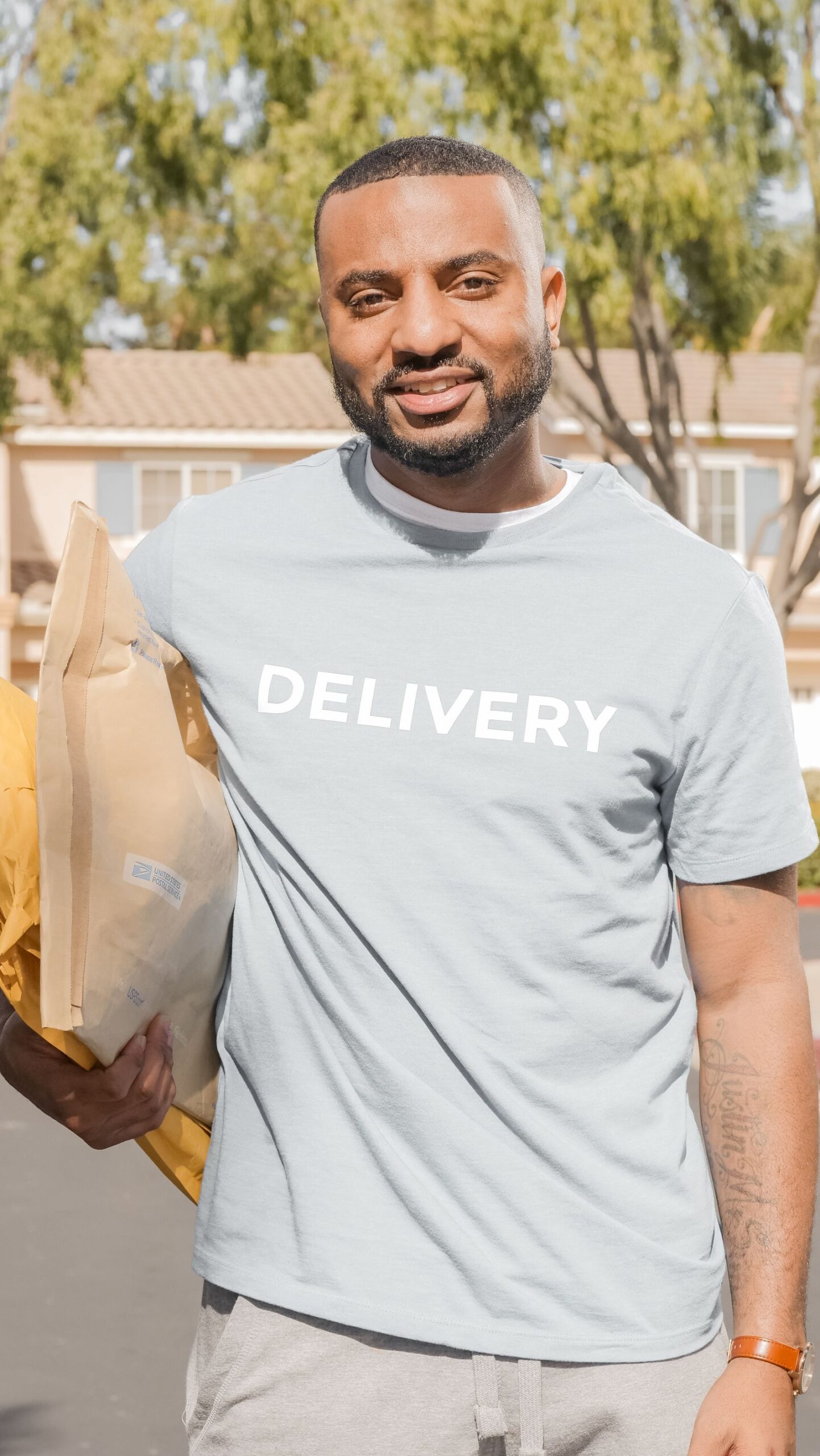
Here is what the FTC found was happening: after a driver accepted a batch offer and was already in the middle of the route — sometimes after completing the final delivery — Walmart would remove one or more orders from the batch retroactively, often citing a customer cancellation. When an order was pulled, so was its tip, with little to no disclosure that the payout had changed. The driver completes all the deliveries they were directed to make, then receives $12.75 instead of $17.50. No notification. No line item explaining what dropped or why.
If you are running 10 to 15 batches per shift across a full day in Phoenix, Memphis, or Cincinnati, that discrepancy can easily amount to $40 to $80 in missed earnings per shift. Because most drivers are not auditing every single transaction while navigating traffic, the gap accumulated invisibly over months. The FTC also found that Walmart was simultaneously telling customers that 100% of tips go to your driver — a claim that was false in a material number of batched transactions where tip amounts were being removed from driver payouts after the fact.
The Base Pay Bait-and-Switch After Acceptance
The second violation was what the FTC called post-acceptance pay adjustments. The mechanic is simple: you see an offer in the Spark app for $13.00 to deliver a Walmart grocery order 2.4 miles in Tucson. You accept it. Then when you check your earnings after completing the delivery, the payout shows $10.25. No notification. No explanation. Just a lower number.
The FTC’s legal position is straightforward: when you tap accept, you have entered an agreement. Walmart showing you $13.00 and paying $10.25 — without any material change to the job itself — is deceptive under federal consumer protection law. For drivers who were not cross-referencing every offer against every payout (which is most people running Spark, because they are busy navigating grocery parking lots in Baton Rouge or Albuquerque), these adjustments were effectively invisible. The FTC determined that the buried terms-of-service language about pay being an estimate did not constitute adequate disclosure.
Breaking Down the $100 Million: Where the Money Goes
The settlement was formally entered by a federal court on March 3, 2026 and totals $100 million. It is structured across several recipients, with the largest portion directed to drivers.
How Much Goes Directly to Drivers
Up to $79 million is earmarked for affected Spark drivers. That includes:
- Direct restitution payments to drivers identified through Walmart’s internal payment records
- A dedicated $16.2 million driver compensation fund specifically for additional payments to drivers with verified underpayments
- Adjustment credits that have already begun rolling out directly through the Spark Driver app
The remaining $21 million is split as: $11 million in civil penalties divided among the state attorneys general who co-brought the case, and $10 million to the FTC to administer restitution to customers. Some customers who were told their full tip was going to the driver — and it was not — are also eligible for refunds from that FTC portion.
What the Driver Compensation Fund Covers
The $16.2 million fund specifically covers underpayments dating back to January 1, 2021. If you drove Spark at any point between January 2021 and the settlement date in early 2026 and experienced shorted tips or reduced base pay on accepted offers, you fall within the compensation window. This matters even if you have since moved on from Spark entirely — drivers who now run DoorDash, Instacart, Amazon Flex, or no gig apps at all are still potentially eligible if they drove Spark during that window. Walmart’s internal records, not your personal log, are the source of truth for who qualifies.
Are You Owed Money? How to Check Your Eligibility
This is the question every current and former Spark driver wants answered. The process is simpler than most large settlements, but the timelines for certain payout portions are still being finalized as of late 2026.
Who Qualifies and What Time Period Is Covered
You may be owed compensation if you:
- Drove for Spark at any point between January 1, 2021, and the March 2026 settlement date
- Received a payout on any delivery that was lower than the offer you accepted
- Were part of a batch delivery where orders were removed and your total payout dropped without adequate disclosure
- Noticed recurring unexplained adjustment line items in your earnings history with no corresponding explanation
Walmart is working from its own internal transaction records to identify affected drivers. You do not need to reconstruct your delivery history from screenshots or personal logs. The burden of identifying who was shorted falls on Walmart’s data, not on you.
Automatic Credits — No Claim Form Required
Here is the single most important thing to understand about how this settlement works: you do not need to file a claim form. Unlike the class action settlements that flood your inbox with links to a claims portal, the Spark FTC settlement operates differently. Walmart has already begun issuing adjustment credits directly through the Spark Driver app, and eligible drivers are being notified via the email address on file with their Spark account.
Steps to take right now:
- Open your Spark Driver app and check your earnings history for any line items labeled adjustment, correction, or restitution
- Go into your account settings and verify that your email address is current — that is the channel Walmart and the FTC are using for outreach
- If you have not driven Spark recently, reinstall the app and log into your existing account to check your status before assuming you are not eligible
As of November 2026, the FTC’s $10 million portion of the payout — which also covers some customer restitution — does not yet have a confirmed distribution date. Walmart’s direct driver credits have been rolling out in-app since the settlement finalized. If you have not seen anything yet, check back over the coming weeks since the rollout is ongoing.
Scam Warnings Every Spark Driver Needs to Read Right Now
Large gig-worker settlements attract scammers fast, and this one is no exception. Here is what legitimate settlement communication looks like — and what it never looks like:
- The FTC will never ask you to pay a fee to receive your settlement payment. Any text, email, or call asking for $25, $50, or any amount to process or unlock your Spark payout is a scam. Hang up and report it.
- Go directly to the Spark Driver app or the official FTC website — do not click links in unsolicited texts or emails claiming to relate to the settlement.
- Watch for spoofed sender addresses with small misspellings in the domain. Anything other than @walmart.com or @ftc.gov should be treated with suspicion.
- You will never be asked to provide your bank login credentials, your full Social Security number, or a gift card number to receive a Spark settlement payment. Those are always scam signals, full stop.
What Spark Must Do Differently Under the Settlement Terms
The payout is one half of this settlement. The other half — arguably the more lasting half — is the structural changes Walmart agreed to make to how Spark Driver operates. For anyone who plans to keep running Spark in 2026 and beyond, these operational changes matter more than a one-time credit.
The No-Touch Pay Rule
The most significant change is what amounts to a pay lock at acceptance. Under the settlement terms, Walmart is prohibited from adjusting base pay, incentives, or tips after a driver has accepted an offer. The only carved-out exceptions are if the driver fails to complete the delivery, or if the customer cancels before the driver begins the pickup.
When you see $14.75 on the Spark offer screen and tap accept, that $14.75 is locked. Walmart cannot decide the order was worth $11.00 and revise it downward after you have already driven to the store, loaded the order, and headed out. This is the gig-work equivalent of a wage theft protection — and it is now enforceable by federal court order. For drivers who always wondered if Spark’s offers were reliable, the answer going forward is: yes, legally they have to be.
The Earnings Verification Program
Walmart must implement an independent earnings verification program, with a third party periodically auditing whether drivers are actually receiving what offers stated. This kind of independent pay audit does not currently exist at DoorDash, Uber Eats, Instacart, or Amazon Flex — those platforms self-report their pay accuracy. Walmart now operates under independent verification by federal court mandate. That is a meaningfully different accountability structure than any other major gig delivery platform in the US operates under right now.
The 10-Year Oversight Period
The settlement requires Walmart to maintain these practices and submit ongoing compliance reports for 10 full years — through at least 2036. This is not a probationary period with a light review at the end. It is a decade of structured federal oversight tied to specific, auditable pay practices. If Walmart reverts to any of the patterns that generated this settlement, the FTC has an already-established legal framework to pursue enforcement action without relitigating the underlying facts.
Is Walmart Spark Still Worth Driving in 2026?
Now that the legal picture is clear, let’s answer the actual driver question: given everything that happened, should Spark still be in your app stack?
Spark Pay Rates After the Settlement
Spark pays roughly $17 to $22 per hour in most US markets before expenses — the same general tier as DoorDash ($18–$22/hour) and slightly below peak Uber Eats in dense urban markets ($17–$23/hour). What Spark has going for it that food delivery apps do not is Walmart’s raw order volume. Supercenter locations generate consistent same-day delivery demand that does not fluctuate with restaurant lunch and dinner peaks, and in suburban and mid-size city markets — Columbus, OH; Raleigh, NC; Mesa, AZ; Baton Rouge, LA; Spokane, WA — Spark can sustain higher hourly delivery counts than food apps that depend on a dense restaurant corridor.
The settlement’s new pay-lock rule makes Spark’s stated pay rates more reliable than they were at any point in the program’s history. When the app shows you $14, that $14 now has federal enforcement teeth behind it. If you are comparing the per-mile economics of grocery versus food delivery — factoring in heavier cargo, longer dwell times at Walmart stores, and different tip patterns — the analysis framework in Instacart Shopper Pay 2026: Maximize What You Keep translates directly to Spark, since both involve grocery loads and structurally similar earning dynamics.
How to Stack Spark With Other Apps
The most profitable delivery drivers do not choose between platforms — they stack them strategically. Spark pairs well with DoorDash in suburban markets because Walmart Supercenter locations are frequently within two to three miles of restaurant corridors. When DoorDash slows between 2 PM and 5 PM (the standard afternoon lull in most markets), Spark’s consistent Walmart grocery volume fills the gap without requiring a zone change.
A practical setup that works in markets like Dallas, Jacksonville, and Sacramento: anchor on DoorDash during lunch peak (11 AM–1 PM) and dinner rush (5:30–9 PM), then run Spark for mid-afternoon Walmart volume. Because Spark routes tend to involve more highway miles and heavier cargo than typical restaurant runs, applying the techniques in this hypermiling guide for delivery drivers specifically to your Spark blocks can meaningfully move your net-per-mile numbers. The fuel savings compound faster on grocery routes than on short restaurant hops.
If you are earning across multiple apps and approaching the Q4 estimated tax deadline, make sure your Spark income — including any settlement restitution credits you receive, which may count as taxable income in the year received — is accounted for. The Q4 estimated tax guide for gig delivery drivers walks through how to handle the January 15, 2027 deadline across all your 1099 income streams without getting hit with an underpayment penalty.
The Bigger Picture: Gig Platforms Under Real Federal Scrutiny
The Walmart Spark settlement is not an isolated event. It is part of a measurable shift in how federal and state regulators are treating gig platform pay practices, and it carries direct implications for every driver running DoorDash, Uber Eats, or Instacart — not just Spark.
The FTC’s core legal theory — that a displayed offer is a binding pay commitment, not a ballpark estimate subject to retroactive downward revision — is exactly the argument that could be applied to other platforms. DoorDash has its own history of adjusted pay on certain order types. Uber Eats has used dynamic pricing mechanisms that affect what drivers take home after they have already accepted. The Spark settlement establishes a legal precedent and a proven enforcement template: acceptance of an offer creates a pay contract, and altering that contract unilaterally after the driver is already committed to the delivery is deceptive.
At the state level, the gig worker protection landscape is shifting in parallel. The new state laws protecting gig drivers from unfair deactivation that passed across multiple states in 2026 are running alongside these federal pay enforcement actions — the regulatory environment is tightening from multiple directions at once. If you have not read up on what deactivation protections now exist in your state, it is worth doing. Knowing your rights when it comes to both deactivation and pay disputes is increasingly part of running a sustainable delivery business, not just a nice-to-have.
The practical takeaway from the Spark settlement, regardless of which apps you run: document your own earnings. Screenshot the offer screen before you tap accept. Cross-reference what you were offered against what actually hit your earnings summary at the end of the week. The platforms know that most drivers do not track this carefully, and that information asymmetry has historically been their biggest structural advantage. Close that gap and you become a much harder target — and a better-informed driver in an industry that is finally getting some meaningful regulatory attention.
Driver Opportunity
Ready to Start?
Turn This Guide Into Real Income. Join as a new driver and get up to a $2,575 guaranteed bonus after completing your first 200 deliveries in select US cities.
Sign Up & Start Delivering →New drivers only · Terms apply · Available in select cities
If you are also watching the broader consolidation of the delivery industry and thinking about how your platform mix should evolve, the analysis of how the DoorDash-Instacart merger affects multi-app drivers is essential reading right now. The platforms are consolidating. The regulations are tightening. The drivers who understand both will be positioned to earn more and stress less.