


Your phone is your entire delivery business. Without it, you don’t get orders, you can’t navigate, you can’t text customers, and you can’t cash out. So why are so many DoorDash, Uber Eats, Walmart Spark, and Amazon Flex drivers paying $90–$120 a month for a plan that’s way more than they actually need — and then not even writing the bill off their taxes?
This guide covers the best cell phone plans for delivery drivers in 2026, how much data you actually burn through per month, how to use a hotspot setup to run multiple apps at once, and how to turn your phone bill into a legitimate tax deduction worth $600 or more every year. Whether you’re full-time or squeezing deliveries in around another job, there is a plan here that will put real money back in your pocket starting this month.
How Much Data Do Delivery Drivers Actually Use?
Here is the number that surprises most drivers: the DoorDash, Uber Eats, Instacart, and Walmart Spark apps themselves only use about 3–4 GB of data per month, even if you are driving full-time, 40 to 50 hours a week. Uber Eats officially states that typical driver app usage is unlikely to exceed 3 GB monthly. DoorDash lands in the same range. These apps are lightweight — they send you a ping, show you a map, and track your GPS location. They are not streaming video. They do not need a $100-a-month unlimited plan to function.
What Is Actually Eating Your Data Budget
The culprit is not the gig apps. It is everything running alongside them:
- Spotify, Apple Music, or podcasts all shift long — streaming audio for an 8-hour dash burns 1–2 GB extra.
- Google Maps or Waze running separately from your gig app adds maybe 100–200 MB per month.
- YouTube between orders — even 30 minutes of video burns 500 MB to 1 GB.
- Background app refresh — social media, cloud photo backup, and other apps quietly chewing data when your screen is off.
A realistic full-time driver who streams music all day and kills time on YouTube between orders needs about 8–12 GB per month. A driver who is more disciplined — downloads podcasts on home Wi-Fi, turns off background refresh — can get by with 5–6 GB. The point is: you almost certainly do not need the mega-plan you are currently paying for.
The 5 Best Cell Phone Plans for Delivery Drivers in 2026
These are the plans worth your attention in 2026, ranked by value for gig drivers:
1. Tello — Best Budget Pick (Around $14–$19/Month)
Tello runs on T-Mobile’s network — which has the strongest 5G footprint in most US cities in 2026 — and offers 25 GB of high-speed data for $14–$19 a month with unlimited talk and text. No contract, no credit check. For a driver who does not stream all day, this is the obvious choice. If you hit the 25 GB cap, speeds slow rather than cutting you off. That is more than enough for most drivers even in a heavy month. Hard to beat at this price.
Best for: Part-time drivers, urban markets with solid T-Mobile coverage, drivers who download their playlists ahead of time.
2. Boost Mobile — Best Budget Unlimited ($25/Month)
Boost runs on AT&T’s network and has been running a genuinely unlimited data offer for $25 per month in 2026. That includes unlimited hotspot, though speeds are capped at 10 Mbps for hotspot use. If you want the peace of mind of a true unlimited plan for under $30, Boost is the cleanest option at this price point. No contract.
Best for: Drivers who want to forget about data caps forever without spending more than $25.
3. US Mobile — Best Flexible Mid-Tier Plan ($25–$45/Month)
US Mobile has a unique advantage: you can pick between T-Mobile, Verizon, and AT&T networks — all under one provider — and switch if your coverage situation changes. The Unlimited Starter at $25/month includes 20 GB of hotspot data. The Unlimited Premium at $44/month includes full-speed unlimited hotspot. This flexibility matters a lot if you cover a large delivery zone where one carrier performs better in certain pockets.
Best for: Multi-app drivers who cover a wide geographic area and want the ability to choose their network.
4. DriverX Mobile — Built Specifically for Gig Workers (~$29/Month)
DriverX designed their plans specifically for Uber, DoorDash, Amazon Flex, Instacart, Walmart Spark, and Grubhub drivers. Plans start around $29/month with no contract, no credit check, and billing cycles that match how gig income actually flows — weekly, bi-weekly, or monthly. They offer 5G nationwide coverage with hotspot included. It is a niche product, but the gig-worker billing structure and no-contract flexibility make it genuinely useful if you hate getting locked into traditional carrier contracts.
Best for: Drivers who want billing cycles that sync with their weekly DoorDash or Uber cashout schedule.
5. Mint Mobile — Best All-Rounder ($30/Month)
Mint runs on T-Mobile and offers unlimited data for $30/month when you prepay for 3 months (roughly $90 upfront). That includes 35 GB of high-speed hotspot. Coverage is excellent in suburban and urban markets. The only catch is the quarterly payment structure — but if you can budget for it, this is probably the most complete package at its price point.
Best for: Drivers who want a proven unlimited plan on a major network and can handle a quarterly payment.
When to pay premium (Verizon at $75–$90/month): If you deliver in rural areas, outer suburbs, or anywhere T-Mobile and AT&T have dead zones, Verizon’s network reliability is worth the extra cost. A $14/month plan that drops GPS and loses signal during your dinner rush is costing you more in missed orders than a $90 Verizon plan that never fails. Network reliability always beats price in your specific delivery zone.
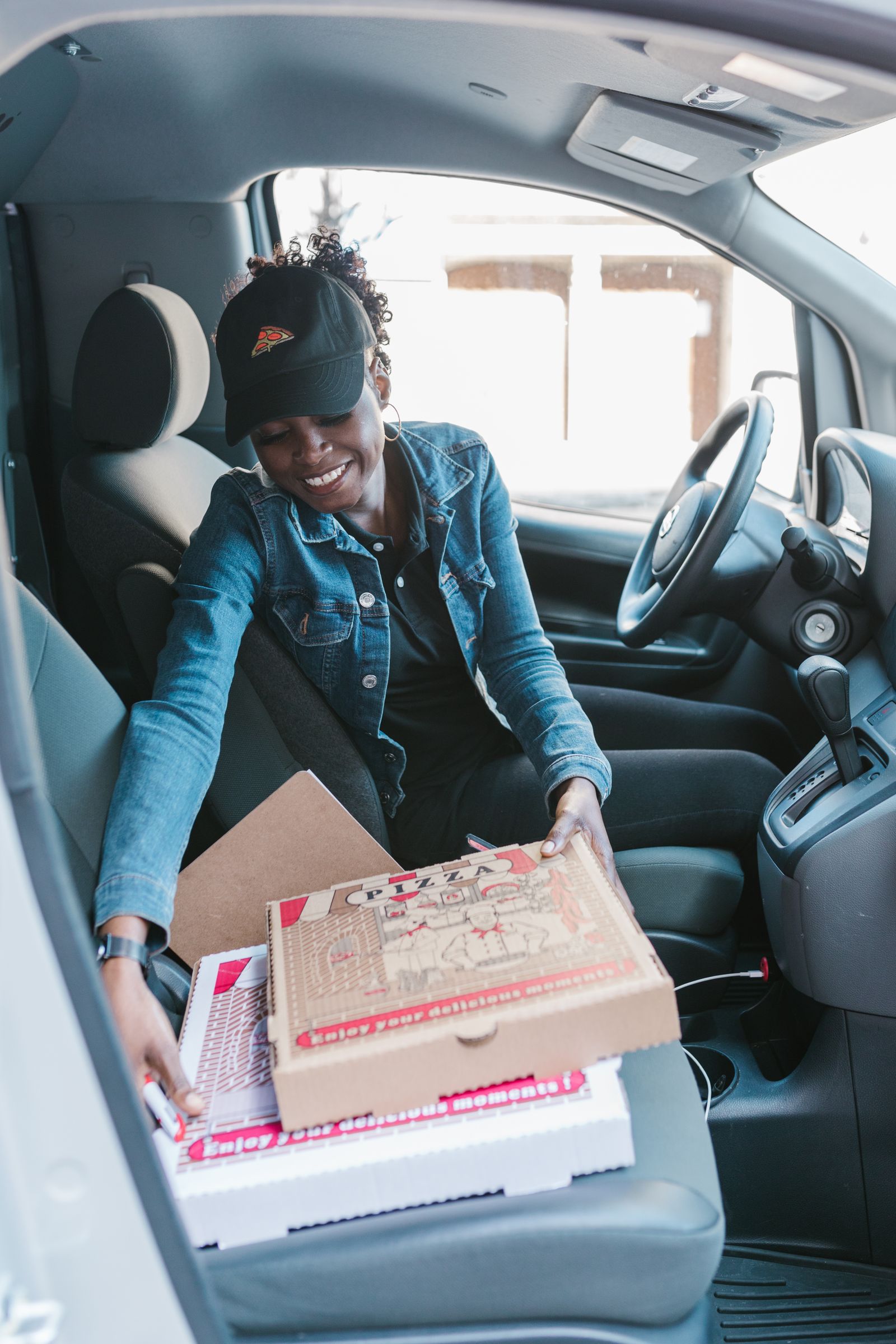
Hotspot Strategy: Run Two Devices and Stack More Orders
A growing number of serious gig drivers run a dedicated tablet mounted on their dash — tethered via hotspot to their phone — specifically so they can run two apps at once without either one slowing down. A $100 Amazon Fire tablet or a used iPad on the dash handles DoorDash navigation while your phone stays free for Uber Eats pings, customer calls, and cashout. The result is cleaner multi-app operation with less app-switching friction.
If you want to squeeze maximum earnings from multiple platforms simultaneously, a solid hotspot setup is one of the best operational upgrades you can make. You can get the full breakdown of how top drivers run this kind of setup in the complete multi-app delivery driver guide for 2026.
What to Watch for in a Hotspot Plan
Not all “unlimited hotspot” works the same way. Three things to check before you buy:
- Speed caps on hotspot data — Some plans cap mobile hotspot at 3–5 Mbps. That is fine for maps but can get choppy if you are running two driver apps simultaneously on two devices.
- Deprioritization during congestion — Even unlimited hotspot can get throttled during network peaks, which tend to happen exactly during the dinner rush when you need it most. Premium tiers on Verizon and T-Mobile protect against this.
- Hotspot included vs. add-on — The cheapest Tello tier does not include hotspot. US Mobile Premium, Mint Mobile, and Boost all include it. Read the fine print before assuming.
Write Off Your Phone Bill — The $600+ Tax Deduction Most Drivers Skip
Here is the part that is going to change how you think about your phone bill. As a 1099 gig worker, the IRS lets you deduct the business-use percentage of your monthly plan from your taxable income. Every month. All year long. This goes on Schedule C, Line 25 (Utilities) when you file your federal taxes.
Most delivery drivers either do not know this deduction exists or assume it is too complicated to claim. It is neither. Here is how it actually works.
How to Calculate Your Business Use Percentage
The IRS does not require you to log every single minute. You need a reasonable, documented estimate of the fraction of your phone time that is genuinely business use. During a dash, your phone is running navigation, gig apps, customer text threads, and earnings tracking — it is a work tool.
- Full-time drivers (35+ hours/week on gig apps): Claim 70–80% business use. This is defensible and common.
- Part-time drivers (15–25 hours/week) with heavy personal use: Claim 40–60%. Still a meaningful deduction.
Your gig app dashboards — which log your exact active hours each week — are your documentation. Screenshot or export your weekly earnings summaries and save them with your tax records. That is your proof if the IRS ever asks.
The Real Dollar Math
Say you pay $85/month and claim 70% business use:
- Annual phone bill: $85 × 12 = $1,020
- Deductible business portion (70%): $714
- Tax savings at a 22–25% effective rate: roughly $157–$179 back in your pocket
Even on the $30/month Mint Mobile plan at 70% business use, you are writing off $252 per year. It is not a fortune — but you are already paying the bill, so there is zero reason not to claim it.
What Else You Can Deduct Beyond the Monthly Plan
The monthly plan is not the only line item on the table. These accessories are also deductible as business supplies when used for delivery work:
- Dashboard phone mount — 100% business expense
- Car charger and charging cables — fully deductible
- Portable power bank — if it charges your phone during dashes, it counts
- Bluetooth earbuds — if you use them for customer calls while driving
- Screen protector and phone case — protecting your primary work device qualifies
- The phone itself — if you bought a new phone primarily for gig work, you can deduct the business-use percentage of the purchase price. A $900 iPhone at 70% business use = $630 deduction via IRS Section 179 in the year of purchase.
Keep your receipts — a photo in your camera roll is fine. This pairs directly with other gig worker tax breaks like the Qualified Tips Deduction under the One Big Beautiful Bill Act, which lets eligible drivers deduct up to $25,000 in tip income from federal taxable income through 2028. Stack these deductions and your tax bill can drop significantly.

Network Coverage: Why This Matters More Than Price
Budget cell phone plan guides often miss the most important variable for delivery drivers: coverage reliability in your actual delivery zone. A $14/month plan that drops your GPS signal and slows your app to a crawl during the dinner rush is not saving you money — it is costing you orders.
Urban and Suburban Markets
T-Mobile dominates most US cities and close-in suburbs in 2026. MVNOs that run on T-Mobile’s network — Mint Mobile, Tello, US Mobile’s T-Mobile option — give you the strongest urban coverage at the lowest cost. AT&T is competitive in most metros. Verizon is consistently excellent everywhere but costs more. In a dense city where all three carriers have strong signals, pick the cheapest plan that meets your data needs.
Outer Suburbs and Rural Markets
If you deliver in the kinds of neighborhoods where Walmart Spark grocery runs are big — outer suburbs, college towns, rural strip malls — Verizon’s coverage advantage is real. T-Mobile has expanded aggressively, but Verizon still wins on reliability in fringe areas. Spending $25 more per month for consistent coverage in a rural market can easily mean the difference between a full and a dead acceptance queue. Do not let a cheap plan bleed you in the wrong zone.
How to Verify Before You Switch
Use your carrier’s native coverage map, then cross-check with a third-party tool like Opensignal. Better yet: get a trial SIM and drive your actual delivery zone with it for a week before canceling your current plan. Most MVNOs offer 30-day return windows. Do not trust coverage maps at face value — they show theoretical reach, not real-world performance at street level in your delivery neighborhood.
5 Phone Plan Mistakes Costing Delivery Drivers Real Money Right Now
Mistake 1: Paying for Way More Data Than You Use
Pull up your phone’s data usage screen right now. Most drivers are shocked to see that their gig apps — DoorDash, Uber Eats, Instacart, Spark — barely crack 1–2 GB per month combined. If you are on a $100/month plan and not streaming all day or running heavy hotspot, you are probably wasting $50–$70 per month. That is $600–$840 per year that should be in your gas fund or your savings account.
Mistake 2: Getting Throttled Exactly When It Hurts Most
Some budget unlimited plans deprioritize your data during network congestion — which tends to peak between 5 PM and 9 PM. That is the dinner rush, which is when you are trying to accept orders as fast as possible. If your app seems sluggish on Friday nights, network throttling may be why. Test your speeds during peak hours in your specific zone, not just at 10 AM on a Tuesday.
Mistake 3: Not Writing Off the Phone Bill at All
This is the single most common missed deduction among gig drivers. If you are delivering and not claiming your phone bill on Schedule C, you are leaving hundreds of dollars on the table every year. There is no downside: you are already paying the bill, the IRS explicitly allows this deduction for self-employed workers, and the documentation requirement is just your existing gig app earnings summaries. Claim it.
Mistake 4: Paying $1.99 Per Instant Cashout on DoorDash
Not directly a phone plan issue, but the same money-hemorrhaging habit. If you are using DoorDash’s standard Fast Pay to cash out three times a week, you are paying $1.99 per transfer — roughly $311 per year in fees for access to your own earnings. Switching to the DasherDirect card eliminates that fee entirely. This is the same kind of leak-plugging that fuel cards handle for your gas bill — small recurring fees that seem minor but compound into real annual losses. See the full breakdown of fuel cards and cashback apps for delivery drivers for more examples of this type of fix.
Mistake 5: Eyeballing Your Business-Use Percentage Instead of Documenting It
Claiming 80% business use is totally reasonable for a full-time driver — but if you are ever audited, you need to support that number with something more than a guess. The good news: your gig platform dashboards already track your active hours. DoorDash shows your exact time on-dash each week. Uber Eats shows your online hours. Export or screenshot these weekly and keep them in a folder with your phone bills. Thirty seconds of record-keeping per week makes your deduction bulletproof.
Stack Another Platform on Top of What You Are Already Running
If you are not already on Uber Eats, you are leaving a significant income stream untapped. Drivers who add Uber Eats to their stack are putting up to $2,575 in combined first-month earnings in many US markets — and signing up takes about 10 minutes. Once you are approved, you can run Uber Eats alongside DoorDash, Spark, or any other platform using the same phone setup you are already optimizing.
The Bottom Line: Pick a Plan, Deduct It, and Move On
Your phone is your most important piece of work equipment — and probably your most under-optimized line expense. You do not need 50 GB of high-speed data to run DoorDash. The apps use maybe 4 GB. You do not need to pay $100/month when Tello at $14 or Boost at $25 covers most drivers cleanly. And you definitely should not be skipping the Schedule C phone deduction year after year.
Pick a plan that matches your real data usage and reliably covers your delivery zone. Write off every cent of it. Then direct the savings somewhere that compounds — whether that is building a Roth IRA as a gig driver or staying competitive in saturated delivery markets with every cost advantage you can find. Your phone bill should be working for you — not draining the income you worked to earn.