


Every November, thousands of malls across the country set up gift wrapping stations near their entrances. Nordstrom, Macy’s, JCPenney, and hundreds of boutique retailers hire seasonal staff to wrap presents all day. Meanwhile, a growing number of Americans are paying good money to have someone else wrap their holiday haul at home. And right in the middle of all this sits you — a delivery driver who already knows how to hustle, handle packages, and work flexible hours.
Gift wrapping is a $22.5 billion global services market, and a significant chunk of that revenue flows during the six weeks between Thanksgiving and Christmas. If you’ve been grinding deliveries all year, the 2026 holiday season is your window to stack an extra income stream without quitting your route. This guide breaks down every angle: mall gift wrap jobs, running your own wrapping side gig, how to handle wrapped and fragile deliveries without destroying customer gifts, and the tax write-offs that make the whole thing even more profitable.
The Gift Wrapping Economy Is Bigger Than You Think
The numbers are real. The global gift wrapping services market was valued at $22.5 billion in 2025 and is growing at a 7.2% annual clip, according to FutureDataStats. The gift wrapping products sector — paper, ribbon, boxes, bags — hit $18.7 billion in 2026 alone. And major online retailers reported a 40% spike in gift-wrap add-on purchases during the holidays, meaning shoppers are actively paying for convenience at checkout and at the door.
That demand creates two money lanes for drivers: paid wrapping work at retail locations, and a private wrapping service you run on the side. Both stack cleanly alongside your regular delivery schedule — wrapping stations typically operate on mall hours (10am–9pm), while private clients tend to book evening and weekend slots.
Mall and Retail Gift Wrapping Jobs: What They Pay and How to Get Hired
Where the Jobs Are
Department stores like Macy’s, Nordstrom, Dillard’s, and JCPenney hire seasonal gift wrappers at their in-store counters every holiday season. Malls also contract independent gift-wrapping kiosk operators who staff stations near food courts and anchor entrances. Cities where this is especially active: Houston’s Galleria, Dallas’s NorthPark Center, Chicago’s Water Tower Place, LA’s Beverly Center, NYC’s Roosevelt Field Mall, and Atlanta’s Lenox Square.
Job boards light up in October. ZipRecruiter was already listing seasonal gift wrap roles paying $14–$28/hr in mid-2026, with the average landing around $15.98/hr. Mall kiosk positions tend to start at the lower end — roughly $14.42–$15.87/hr — but high-end department stores in major metros push into the $18–$22 range if you can demonstrate a neat, fast wrapping technique during a quick skills test.
How to Land the Job Fast
Apply in September and early October. These spots fill fast because the pool of available holiday workers shrinks by November. Highlight any customer service experience on your application. If you’ve driven for DoorDash or Amazon Flex, lean into your reliability and schedule flexibility — seasonal hiring managers value that track record.
Search terms that work: “seasonal gift wrapper [your city],” “holiday gift wrap associate,” “retail gift wrap kiosk [mall name].” Check Indeed, ZipRecruiter, and each retailer’s career page directly. Most positions run November through December 24 and require no prior retail experience.
Running Your Own Gift Wrapping Side Gig
This is where earnings can really jump. Freelance gift wrappers charge anywhere from $21–$50 per hour on platforms like Thumbtack and TaskRabbit. At the high end, professional wrapping businesses in affluent metros charge minimum session fees of $180 per hour — NBC Dallas-Fort Worth reported one wrapper earning $700 for just two hours at a corporate holiday event.
As a driver, you have a built-in advantage: you’re already mobile. You go to the client’s house or office, wrap their gifts on-site, and bill by the hour or by the item. No storefront, no overhead.
What You Need to Start
Your startup kit is simple. Budget $50–$80 for initial supplies:
- Wrapping paper rolls (assorted holiday prints, 3–5 rolls)
- Scotch tape and a tape dispenser
- Ribbon spools and scissors
- Gift tags
- A portable folding table or firm lap board
List your services on TaskRabbit (fastest path to your first client), Nextdoor, and local Facebook community groups. In November, post a photo of sample wrapping with your rates. In cities like Austin, Denver, Miami, and Atlanta — where affluent neighborhoods overlap with delivery zones — private clients book fast once word gets out.
Setting Your Prices
A flat-rate structure works best when you’re starting out:
- Small gifts (under 12 inches): $5–$8 each
- Medium gifts: $10–$15 each
- Large or odd-shaped gifts: $15–$25 each
- Hourly session rate: $25–$40/hr
Charge a travel fee of $10–$15 for clients outside a 10-mile radius. Once you have a handful of five-star reviews on TaskRabbit, bump your rates 15–20%. Reviews are the real currency here.
Stacking Gift Wrapping Between Delivery Shifts
The reason this works for drivers specifically: gift wrapping bookings are predictable and schedulable. Unlike deliveries, you know exactly where you’re going and for how long before you leave the house.
Most drivers on DoorDash or Uber Eats work peak windows: 11am–2pm (lunch) and 5pm–9pm (dinner). That leaves a natural gap from 2pm–5pm on most weekdays. A two-hour gift wrapping session during that gap — in a neighborhood you’re already driving through — earns $50–$80 without touching an app.
Here’s a practical weekly income stack for the 2026 holiday season (mid-November through December 24):
- Monday–Friday mornings (10am–2pm): Mall gift wrapping station at ~$16/hr = $64/day
- Afternoons (2–4pm): Private wrapping client appointment or supply run
- Evenings (5–9pm): Delivery app runs on DoorDash, Uber Eats, or Amazon Flex
- Weekends: Full delivery days, with gift wrapping client appointments booked in advance for between-run slots
That’s three income streams running simultaneously during the highest-earning six weeks of the year. For a complete breakdown of how holiday delivery windows and platform pay rates stack up, see the Holiday Peak Season Delivery Jobs guide for 2026.
Delivering Wrapped and Fragile Gifts Without Destroying Them
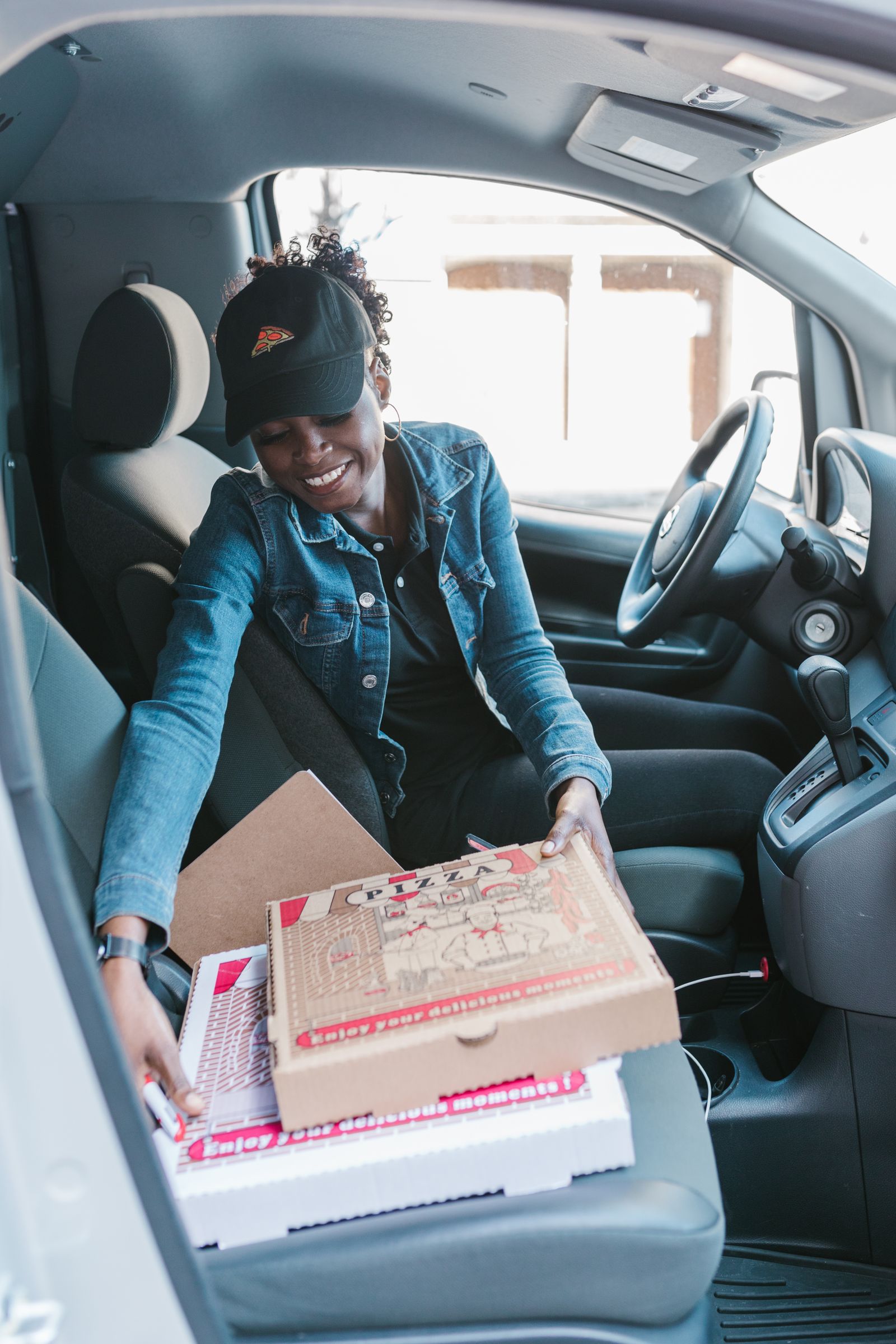
If you’re running Amazon Flex or handling restaurant orders with gift add-ons, you’re going to encounter wrapped gifts in your car. During the holiday season, more customers order pre-wrapped gift sets, gift baskets, and fragile decorative items. How you handle these directly affects your ratings and your tips — one bad photo at the door can cost you both.
Load and Transport
Use boxes, dividers, or crates in your trunk to separate fragile gifts from heavier packages. Never stack anything on top of a wrapped box with a bow — the bow is a visual signal that the item is presentation-sensitive and should sit upright. Set wrapped items bow-side up in a dedicated corner of your cargo area.
Drive smoothly. Hard braking and sharp turns are the leading cause of shift-during-transit damage. On delivery, carry wrapped items two-handed, keeping them level — don’t tuck them under one arm like a football.
Protecting the Wrapping Itself
If a wrapped item is inside an outer shipping box (common with Amazon and retail fulfillment orders), treat the outer box as fragile regardless of the label. Customers often open the outer box to find a beautifully wrapped gift inside — a crushed corner or torn paper ruins the whole experience, even if the product itself is undamaged.
Honor “FRAGILE” and “THIS SIDE UP” labels every single time. They’re not decorative. A damaged delivery photo at the door costs you a 1-star rating on a day when every rating counts. For more on protecting high-value deliveries and handling handoff documentation correctly, the Delivery Theft and Porch Piracy guide for 2026 covers exactly what to photograph and when.

The Holiday Delivery Demand Spike: What 2.3 Billion Packages Means for Your Wallet
ShipMatrix projects 2.3 billion packages will be delivered across the United States during the 2026 holiday peak season — a 5% increase over 2024, driven partly by an extra shopping day in the calendar this year. Logistics hiring is responding: driving roles are up 153% in seasonal job postings year-over-year, with warehouse and fulfillment up 49%.
If you’re active on Amazon Flex, DoorDash, or Spark Driver, expect higher base pay offers, larger tip averages, and consistent order volume from mid-November through December 24. Platform apps in major metro areas — Dallas, Chicago, NYC, Miami, Atlanta, Denver, Houston — typically surface their highest-paying batches during this exact six-week window. The demand is real and measurable.
The one mistake to avoid: spreading yourself too thin chasing every income stream at once. Stack gift wrapping into your off-peak hours, not your prime delivery windows. During Christmas Eve in particular, stay on the apps — it’s one of the single highest-earning delivery days of the entire year. The Christmas Delivery Guide for 2026 has the specific surge windows and platform strategies laid out in detail. And for a complete view of how the full holiday calendar maps from Thanksgiving through New Year’s, the Holiday Delivery Guide: Christmas, Thanksgiving, and New Year’s Eve for Drivers 2026 puts it all in one place.
Tax Write-Offs for Wrapping Supplies and Your Gift Wrapping Side Gig
The moment you take a paid wrapping client, you’re self-employed. Every supply purchase tied to that side gig is a deductible business expense on Schedule C — the same form you already use to report delivery income from DoorDash, Uber Eats, and Amazon Flex.
What you can write off:
- Wrapping paper, ribbon, tape, gift tags: 100% deductible as business supplies
- Folding table or portable workstation: Deductible as equipment (may require depreciation depending on cost)
- Mileage driving to and from client locations: Deductible at the 2026 IRS standard mileage rate
- Platform fees (TaskRabbit and Thumbtack service charges): Fully deductible
- Phone use for booking and client communication: Partially deductible based on your business-use percentage
Set aside 25–30% of every wrapping payment for self-employment tax — the IRS doesn’t distinguish between ribbon and app deliveries. If your combined income from wrapping and deliveries is significant, make a Q4 estimated tax payment by January 15, 2027 to avoid an underpayment penalty. Keep every receipt — a $60 supply run at Michaels or Dollar Tree in November is real money back in April. And track your mileage from the very first wrapping appointment onward.
Running a gift wrapping side gig is low-barrier, low-overhead, and timed perfectly to the same six weeks when your delivery demand is already peaking. For drivers who want to maximize every hour of the 2026 holiday season, it’s one of the cleanest income stacks available.
Ready to Start Delivering and Cash In?
Join thousands of drivers already earning — and get a $2,575 guaranteed bonus after completing your first 200 deliveries in select US cities.
New drivers: Sign up through our partner link and start earning today!
Sign Up for Uber Eats and Start Delivering →
Must be 18+. Background check required. Terms apply.