
Every driver knows Super Bowl Sunday. They know Halloween, Valentine’s Day, and the Christmas rush. But mention graduation season and most gig drivers shrug. That’s exactly why it’s one of the best-kept earnings secrets in delivery — and one of the most profitable stretches of the calendar year if you’re positioned right.
Between late April and mid-June 2027, tens of millions of high school and college graduates across the US will walk across stages, hand their families a reason to celebrate, and set off a chain reaction of food orders that can lift your daily earnings by 30 to 50 percent. The key is knowing where to be, when to start, and how to read the surge before the rest of the market catches on.
This is the full playbook. Most drivers are too busy delivering to piece it together — so here it is.
Why Graduation Season Is the Most Underrated Delivery Peak of the Year
Delivery apps don’t market graduation season the same way they hype Valentine’s Day or New Year’s Eve. No countdown timers, no push notifications warning you to get out early. That’s good news for drivers who know what’s coming — it means less competition on the road during a period when order volume climbs fast and tips run well above average.
Here’s the core mechanic: graduation ceremonies pull thousands of out-of-town families into markets for a single weekend. Those families eat, celebrate, and order food at a rate that rivals the most hyped holidays on the calendar. Full service restaurant sales climbed +8% during the Father’s Day and Juneteenth weekend in June 2026, according to data tracked across 12,000+ restaurants by MarginEdge — and those exact same demand conditions apply to late May graduation weekends that stack directly before it.
In the Northeast — a region dense with major universities — June 2026 restaurant revenue ran 18% above the national average. That gap exists precisely because graduation and commencement season concentrates family spending in ways most other events don’t match. These aren’t locals ordering their usual Tuesday night dinner. These are parents who flew in, are staying at a hotel, and are celebrating a milestone they’ve been building toward for four years. They tip like it.
The broader numbers back this up. The US food delivery market is projected to reach $130.28 billion in 2026, and May and June sit squarely at the seasonal peak. Delivery represented 12.65% of total restaurant sales nationwide in May 2026, according to MarginEdge transaction data. When families show up in a city for a ceremony and can’t get a restaurant reservation, they order in — and you capture that order.
Meanwhile, delivery tips industry-wide have fallen to roughly $4.16 per order, near a record low, according to the Gridwise 2026 Annual Gig Mobility Report. Graduation season is one of the genuine counter-trends to that slide. Celebrating families are not the same customer as a Tuesday night regular who selects the lowest-tip bracket out of habit. The graduation order demographic tips better — and understanding that difference changes how you approach order selection.
When and Where the Graduation Surge Actually Hits
Timing Breakdown by Week
Graduation season isn’t a single weekend — it rolls across the calendar from late April through mid-June in a predictable wave that most drivers don’t track because no app tells them to. Map the flow:
- Late April: Ivy League and selective private university ceremonies (Harvard, Yale, Duke, Georgetown). These markets are affluent, the families traveling in are on expense accounts or celebrating with serious discretionary spending, and tips are consistently strong.
- Early May: Large private and flagship state universities hold spring commencements. Mother’s Day weekend falls here in 2027 and stacks with graduation demand — covered in detail below.
- Mid-May: The single busiest stretch of the season. Regional universities and community colleges hold the bulk of US ceremonies across multiple consecutive weekends, and graduation parties stack on top of each other in suburban markets.
- Late May through Early June: High school graduation season begins. Suburban markets that were quiet during college ceremony season now get hit with backyard graduation parties, large catering orders, and last-minute beverage and supply runs from families hosting 30 to 80 guests.
- Second Weekend of June: The tail end — remaining universities and Father’s Day as the capstone event that extends the earning window another 72 hours before summer settles into its slower rhythm.
Hotspot Markets by Driver Type
Not all zip codes benefit equally. The biggest graduation surges concentrate in three distinct market types, and which one you target depends on where you’re based:
College town cores: Ann Arbor, MI; Athens, GA; State College, PA; Boulder, CO; Lawrence, KS; Madison, WI; Columbia, MO; Tuscaloosa, AL; Gainesville, FL; Tempe, AZ. These markets flip from quiet to overwhelmed in 48 hours. Position early — drivers who show up Saturday morning instead of Friday evening miss the pre-ceremony breakfast window completely.
Major metro suburbs with high school density: Long Island, NY; Naperville and Schaumburg, IL; Plano and Frisco, TX; Irvine and Riverside, CA; Marietta and Alpharetta, GA; Bellevue, WA; Scottsdale, AZ; Sugar Land, TX. High school graduation parties are almost always ordered-in or catered gatherings at a family home. These suburban delivery windows run 2 PM to 8 PM on consecutive Saturdays and Sundays in late May, with large orders and reliable tips.
Dense multi-university cities: Boston, Chicago, Philadelphia, Atlanta, Seattle, Los Angeles, Houston, New York. Multiple institutions graduating across multiple weekends creates a staggered surge that lasts four to six weeks rather than a single spike. Drivers in these markets who know the graduation calendar can stay consistently busy from late April through mid-June.
How the Major Apps Perform During Graduation Season
Each platform handles the graduation surge differently. Knowing the mechanics before the season starts means you’re not figuring out which app to prioritize on the morning of a busy Saturday when you should already be out there.
DoorDash controls roughly 56% of the US food delivery market and sees the strongest graduation volume in suburban college-town markets. Its Peak Pay bonuses and Challenges don’t always announce themselves in advance, but they trigger reliably on high-traffic ceremony mornings when demand concentrates faster than supply. The move: check the app Friday evening before a known graduation weekend. If Peak Pay zones are active on Saturday already, you’ve confirmed the surge is real. Understanding how order distribution actually works — and how your acceptance rate and on-time completion rate affect your position in the offer queue — matters here more than on an average day. The full breakdown is in our guide on how the DoorDash and Uber Eats algorithms work in 2026.
Uber Eats performs best in denser urban university neighborhoods. Its per-order pay tends to be stronger in high-density markets, and during graduation weekends the restaurant categories it services — full-service dining, Italian, steakhouses, sushi, upscale fast casual — are exactly what celebrating families want to order. Our Uber Eats 2026 earnings breakdown covers what to realistically expect per hour so you can calibrate whether to prioritize Uber Eats or DoorDash in your specific market during this season.
Spark by Walmart earns its keep during graduation season through a different order category: large grocery hauls. Families picking up party supplies, platters, drinks, and bulk items for a 30- to 60-person house party are making big Walmart orders — and Spark pays meaningfully for large-basket grocery shop-and-deliver assignments. The Walmart GoLocal and Spark Driver guide covers how to handle these batch grocery orders efficiently during high-demand windows.
Instacart and Amazon Flex round out the graduation stack. Graduation parties mean big grocery prep hauls, and last-minute Flex blocks in market areas on ceremony weekends can pay better than expected because regular block-grabbers often aren’t checking. Have both accounts in good standing before the season starts — activating a new account in mid-May isn’t the move.
Order Selection and Positioning Strategy During the Peak
When to Be Out and Where to Park
Ceremony schedules are public. Most universities post their full commencement schedule months in advance. Pull up the schedule for the schools in your market, map the ceremony times, and build your shift around the order windows they create:
- 7 AM – 9 AM: Pre-ceremony breakfast to hotels, Airbnbs, and short-term rentals. Volume is lighter than midday, but families in celebration mode tip well and the competition on the road is minimal.
- 11 AM – 1 PM: The gap between when the ceremony ends and when the family party starts. Families who chose to skip a crowded restaurant and order in create a real delivery window during this 90-minute stretch.
- 2 PM – 7 PM: The highest-volume window of the entire graduation day. House parties, backyard celebrations, graduation dinners for extended families — orders are larger, drop distances are shorter (families stay near campus or their rental), and tips are better than daily average.
- 8 PM – 12 AM: Students celebrating after the official family events wind down. Volume holds strong in college-town cores and near campus bars and restaurants well into the night.
Which Orders to Accept
With tips near record lows on an average day — $4.16 per order in Q4 2025 (Gridwise 2026) — graduation season is one of the best times of year to apply a tighter filter and only accept orders that match specific criteria. You have leverage during the surge that you don’t have on a slow Tuesday.
- Subtotal over $35 — graduation party orders regularly run $60 to $120
- Pickup from full-service or casual dining restaurants rather than fast food
- Drop distance under 3.5 miles from pickup — families stay close to campus or their rental address
- Pre-loaded tip visible (Uber Eats and Instacart show this before acceptance) — graduation tippers rarely zero out
- Pickup at restaurants that are known catering partners — these generate the largest, highest-paying orders
Handling Large Group Orders and Catering Deliveries
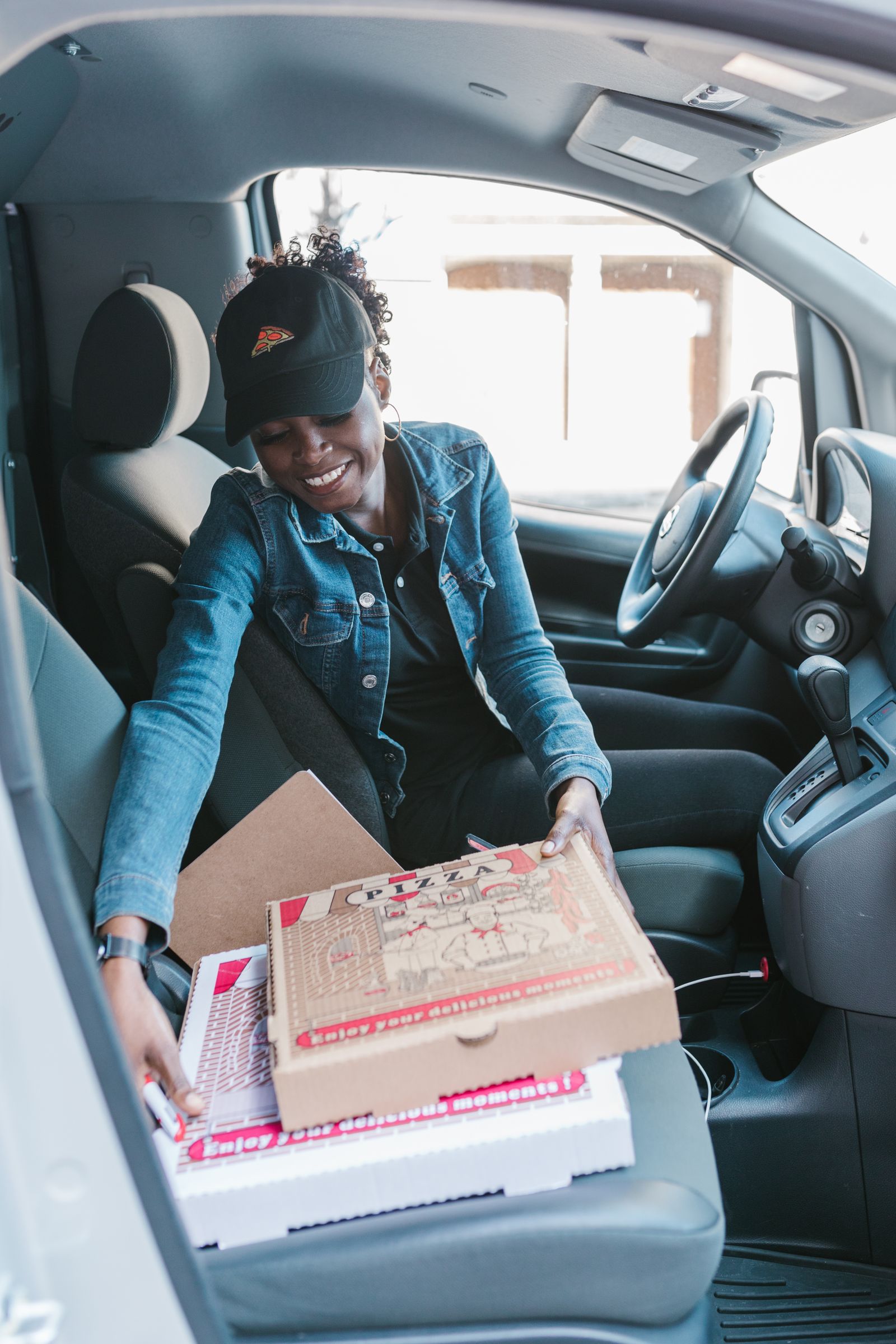
Graduation season produces more large group and catering orders than almost any other period in the delivery calendar — and these pay significantly better than single-meal orders when you handle them correctly.
On DoorDash, large party orders surface as high-base-pay offers with multiple-item counts labeled as large or catering orders. On Uber Eats they appear as multi-item restaurant orders. On Instacart and Spark they’re large-basket shop-and-deliver assignments. A few non-negotiables for running these profitably:
- XL insulated bags are mandatory. Party trays, multiple entrees, sides, and drinks for 10 to 30 people need to stay organized, intact, and at temperature. If your insulated bag is single-meal sized, graduation weekend is exactly when it fails you — on a $90 order with a family waiting at the door.
- Confirm the drop address before leaving the restaurant. Graduation parties frequently happen at Airbnbs, vacation rentals, and houses families rented for the weekend. These can route incorrectly in the app. A quick text after pickup — “Heading your way, just confirming the address is correct” — takes 10 seconds and prevents the worst outcome on a big order.
- Wait out incomplete restaurant orders. Kitchens get backed up on graduation weekends. Large orders sometimes come out in stages. The per-minute math on a $75 order almost always favors waiting it out rather than declining an incomplete pickup and chasing a smaller order that’s ready now.
- Bring a hand truck or collapsible cart for multi-bag orders. If you’re regularly running catering and grocery orders, a small collapsible cart in your trunk pays for itself on the first graduation weekend delivery.
Multi-Apping During Graduation Season
Drivers running multiple apps simultaneously earn 15 to 25 percent more per hour than single-platform drivers on average days, according to 2026 Gig Mobility data. During graduation weekends, that advantage widens — because you can select the best offer across platforms in real time rather than waiting on a single app to serve you the next assignment.
The graduation surge concentrates geographically rather than spreading citywide. That’s ideal for multi-apping: position yourself in a 2-mile radius around a university or suburban high school graduation hotspot and run three apps simultaneously. You’re not driving to every corner of the city — you’re sitting in the middle of the demand zone and accepting the best offer that comes through.
A practical graduation-season multi-app stack:
- DoorDash as your primary — largest market share, highest offer frequency, strongest suburban performance
- Uber Eats as your secondary — stronger per-order rates in dense university markets, especially for restaurant orders above $40
- Instacart or Spark as your third — captures the large grocery and party supply category that food-only apps don’t serve
The complete system for running multiple apps safely without triggering deactivation risks is covered in our multi-app delivery driver guide. For the specific earnings math on which combination performs best by market type, our multi-apping strategy guide breaks it down platform by platform with real driver data.
How Graduation Season Stacks With Mother’s Day and Father’s Day
Graduation season doesn’t run in isolation — it’s bookended by two of the highest-earning event days on the delivery calendar. Treating the whole stretch as one connected sprint rather than a series of separate one-off peaks is what separates drivers who make serious money from those who catch one good weekend and miss the rest.
Mother’s Day (May 10, 2027) lands right at the start of college graduation season. These two events combine to create what is arguably the highest-volume delivery weekend of the entire first half of the year. Full-service restaurant demand peaks, family gatherings are dense, and you’re already positioned in the right zones from graduation prep. The Mother’s Day 2027 earnings guide covers the specific timing, best neighborhoods, and order strategy for that day — bookmark it alongside this one and treat the whole weekend as a graduation-plus event.
Father’s Day (June 15, 2027) falls at the tail end of graduation season. MarginEdge June 2026 data showed Full Service restaurants climbing +8% during the Father’s Day and Juneteenth weekend — the single strongest weekly performance of that entire month. As graduation party season winds down, Father’s Day picks up the slack and gives you another strong 72-hour window before the slower summer rhythm settles in.
The strategic takeaway: block April 20 through June 21 on your calendar as your spring sprint period. Minimize time off. Keep your vehicle maintained and your app accounts in good standing going into it. The drivers who treat this as one nine-week event consistently out-earn those who show up for each peak individually and then wonder why the gaps between them felt so slow.
Vehicle and Gear Prep Before the Season Starts
Graduation season overlaps with late spring weather — rain, pollen, temperature swings, and the first real heat of the year. You’ll be putting in higher mileage than winter months on roads that are often congested with ceremony traffic and out-of-town drivers who don’t know the area. Getting your vehicle ready in March or early April — not during the first busy weekend — is how you avoid a breakdown on your best earning day of the season.
- Tires: Late spring rain makes traction matter more than it did in the dry months. Even if you rotated last fall, check tread depth and inflation pressure before the season. The delivery driver tire maintenance guide walks through exactly what to inspect before entering a high-mileage stretch.
- AC system: Graduation parties run from midday into the evening, and you’ll be idling outside party houses as afternoon temperatures climb. If your AC was marginal last August, get it serviced in March — not in May when HVAC shops are already backed up with summer demand.
- Cargo space: Clear your trunk completely before the season starts. Party platters, multiple grocery bags, large catering orders — these require real, organized space. A trunk full of gym gear or spare equipment turns a profitable large order into a logistics problem at the restaurant door.
- Phone power and mounting: Long ceremony-weekend days drain devices fast. Make sure your car charger is fast-charge rated for your device, your cable is in good shape, and your phone mount holds the device securely visible without requiring you to reach for it between orders.
Every mile you drive during graduation season — delivery miles, positioning drives, returns to your zone — is deductible at the 2026 IRS standard mileage rate. In a season where you might log 400 to 600 miles across four or five graduation weekends, that deduction adds up to real money. The complete delivery driver tax deductions guide covers how to track mileage and capture every deductible expense from a high-volume stretch like this — including gear purchases you make specifically to handle graduation season catering orders.
Ready to Start Delivering and Cash In?
Join thousands of drivers already earning — and get a $2,575 guaranteed bonus after completing your first 200 deliveries in select US cities.
New drivers: Sign up through our partner link and start earning today!
Sign Up for Uber Eats and Start Delivering →
Must be 18+. Background check required. Terms apply.