
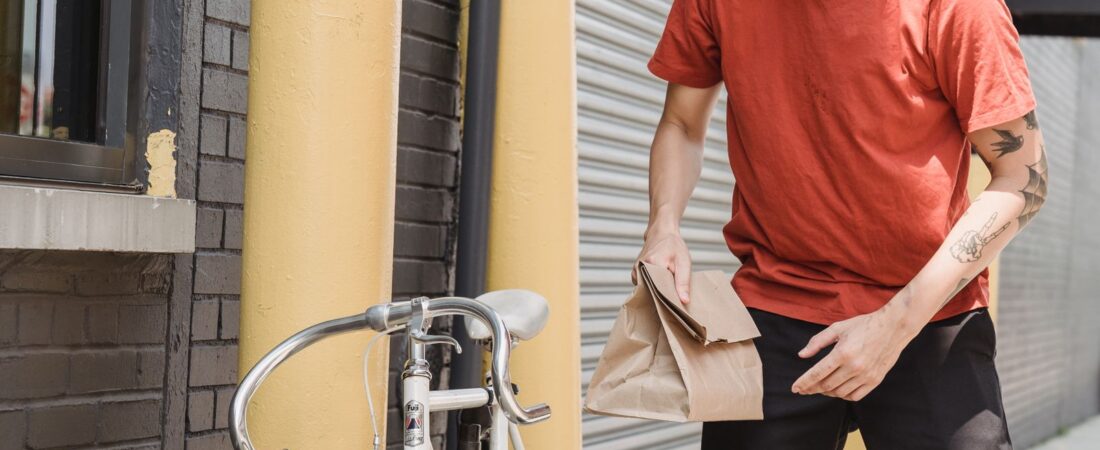

Your car is your business. Without it, you are not making $180 on a Friday night — you are sitting at home watching your earnings disappear while your vehicle is in an impound lot, a chop shop, or a field two counties over. Winter is when delivery drivers get hit hardest: short days mean more after-dark pickups, cold weather means more cars left running outside restaurants, and holiday crowds give cover to thieves who can strip a catalytic converter in under 40 seconds with a cordless saw.
This guide covers the full picture — puffer theft, relay attacks on keyless cars, catalytic converter theft, break-ins for your insulated bags, and the 20-to-45-second windows where most of it happens. We will walk through which countermeasures actually pay off and what they cost, which US cities are the hottest right now, and the honest math of what a stolen or stripped car does to your income this winter.

Why Delivery Drivers Are a Thief’s Favorite Target This Winter
Most car owners park in one or two predictable spots. Delivery drivers park in dozens of locations every shift — restaurant lots, strip mall curbs, apartment complex garages, gas stations — many of them unfamiliar, many after dark. That variety that makes multi-apping profitable also makes you harder to protect.
Three factors elevate your risk specifically in winter. First, cold-weather habit: a large share of drivers remote-start or manually start their car and walk away to grab an order, leaving an unlocked, running vehicle unattended. Second, darkness: by 5:30 p.m. in Chicago or Denver it is fully dark, which gives thieves natural cover during peak dinner-rush pickups. Third, high shift volume paired with low vigilance — after your 30th pickup of the day, situational awareness drops and routines become predictable.
Vehicle theft is the financial risk most drivers underestimate until it happens to them. It is a separate category from personal robbery and assault, which we cover in detail in our delivery driver robbery and personal safety guide. Here we are focused entirely on protecting the vehicle itself — before, during, and after every shift.
The Four Biggest Theft Threats — and How Fast They Happen
Puffer Theft: The 20-45 Second Window
A “puffer” is a running, unattended car — named because you can see the exhaust puffing in cold air. Restaurant and pharmacy pickup zones are ground zero. You run in to grab a DoorDash order and your car is gone before you reach the counter. In Houston and Dallas, puffer theft of delivery vehicles spiked sharply during winter 2025-26, with police noting that thieves specifically stake out fast-food and pizza pickup spots during the 5-9 p.m. dinner window. The rule is absolute: never leave your car running and unattended, even for 30 seconds. Use your key fob lock from inside the restaurant doorway — most fobs have a range of 30-60 feet.
Relay and Amplification Attacks on Keyless Cars
If your car has passive keyless entry and push-button start, a two-person relay team can steal it in under 30 seconds without ever touching your key fob. One thief stands near the restaurant entrance with a relay amplifier, picks up your fob’s continuous RF signal through the wall or door, and transmits it to a partner standing next to your car. The car thinks the key is present, unlocks, and starts. Law enforcement data shows relay theft reports rose 12% year-over-year through Q1 2025, and the 2026 winter season shows no slowdown. The most affected vehicles include Honda CR-Vs, Toyota RAV4s, Ford F-150s, Kia Sportages, and Hyundai Tucsons from model years 2018-2025 — exactly the vehicles that dominate gig delivery fleets across the country.
Catalytic Converter Theft: Still the #1 Stripped Part
A cordless reciprocating saw removes a catalytic converter in 30-90 seconds flat. In Minneapolis, police logged 97 converter thefts by the end of February 2026, up from 60 at the same point in 2025 — a 62% increase in a single year. The Bay Area, Los Angeles, Chicago, Houston, Memphis, and Atlanta remain national hotspots. Nationally, 40% of all catalytic converter thefts are concentrated in just 10 cities. Rhodium — a precious metal inside your converter — hit more than $11,000 per ounce in March 2026, and where precious metal prices go, theft follows with a 6-12 month lag as criminal networks catch up. Delivery vehicles are disproportionately targeted because high mileage keeps the catalytic material active and valuable far longer than on low-use personal vehicles.
Break-Ins for Food Bags and Visible Gear
Your insulated delivery bags, phone mounts, charging cables, and bag hooks on the headrests all signal “delivery driver” to any thief who glances through your window. A smashed window costs $200-400 to repair, plus lost shifts while you sort it out. The prevention is simple: nothing visible, nothing stolen. Collapsed bags go in the trunk between pickups. Phone mounts come off when you park. Charging cables go in the console. Never leave a full insulated bag on the back seat — it advertises that you have more equipment worth grabbing.
Where US Drivers Are Getting Hit Hardest in 2026-27
Based on insurance claim data, police reports, and delivery driver community reports through mid-2026, these metro areas carry the highest vehicle theft risk for gig workers right now:
- Houston and Dallas-Fort Worth, TX — puffer theft and catalytic converter theft concentrated in restaurant-dense delivery corridors
- Chicago, IL — organized keyless relay theft crews and converter rings active in near-west and southwest neighborhoods
- Atlanta, GA — break-ins and converter theft near apartment clusters that make up a large share of delivery drops
- Memphis, TN — among the highest vehicle theft rates per capita in the US, compounded by late-night delivery exposure
- Oakland and the East Bay, CA — converter theft surged in Q1 2026; Berkeley logged 9 thefts in the first week of January alone
- Albuquerque, NM — consistently top-five nationally for auto theft per capita
- Minneapolis-St. Paul, MN — converter theft up 62% year-over-year in early 2026
- Denver, CO — high converter theft plus cold-weather puffer risk during restaurant pickup windows
- San Antonio, TX — rising catalytic converter theft reports in driver forums through 2025-26
If your market appears on this list, every countermeasure below becomes a higher-ROI investment — and skipping protection becomes an increasingly expensive gamble.

Countermeasures That Actually Pay Off — and What They Cost
Not every anti-theft product makes financial sense for a gig driver running a $22/hour margin. Here is a ranked breakdown by cost, deterrence value, and realistic payback period.
Faraday Pouch for Key Fobs ($10-25)
The single highest return on investment of any anti-theft purchase available to drivers. A Faraday pouch blocks the RF signal your key fob continuously broadcasts, making relay attacks physically impossible while the fob is inside it. Buy two — one for home next to the door, one in your gig bag. Look for pouches tested to ISO 11452-4. The $15 option works just as well as a $60 branded version. Use it every time you step away from your car for more than two minutes, no exceptions.
Steering Wheel Club Lock ($25-50)
A visible Club or twin-hook lock adds 90-plus seconds to any theft attempt and deters the overwhelming majority of opportunistic thieves. It stops puffer theft cold — a thief who jumps into your running car cannot drive it away with a locked steering wheel — and it eliminates the casual smash-and-drive risk. The Club 3000 Twin Hooks runs about $45 and is the standard recommendation in driver communities. Put it on every time you park, even for a two-minute restaurant pickup. The habit is the whole point.
OBD-II Port Lock or Kill Switch ($30-150)
The OBD diagnostic port under your dashboard can be used to program a blank key fob in under two minutes. A physical OBD port lock ($30-50) prevents this entirely. A more advanced option is an OBD-II kill switch — a device that interrupts the ignition circuit until you activate a hidden button. These run $80-150 installed and are especially valuable for Honda, Hyundai, and Kia owners whose models have been historically vulnerable to fast key programming. Paired with a Faraday pouch, you have closed both keyless entry angles.
Hidden GPS Tracker and the Subscription Math
A GPS tracker will not prevent theft but dramatically improves recovery odds. The Bouncie tracker costs about $67 upfront and $8/month after that. The LandAirSea 54 runs $25-35/month on a subscription plan. Over a full year you spend $96-420 on tracking. The math works if recovery saves you even one week of rental car costs — a mid-size rental while insurance and repairs grind along runs $350-600 without rental reimbursement coverage. Hide the tracker inside a door panel, under the spare tire well, or inside bumper housing. Never use a magnetic mount under the vehicle — organized theft crews check there first.
Catalytic Converter Shield or Cage ($150-400 installed)
Products like the CatClamp or vehicle-specific converter shields physically cage the converter or wrap the pipes with hardened steel cables that require specialized tools and multiple extra minutes to defeat. For high-target vehicles — Toyota Prius, Honda Element, Ford F-250, Tacoma, Lexus RX — these are worth every dollar. Budget $150-250 for hardware plus $100-150 for shop installation. A converter replacement runs $800-2,500 depending on your vehicle. The shield pays for itself the first time a thief moves on because your car is too much work.
Motion-Sensing Dashcam in Parking Mode
A dashcam in parking mode captures footage of anyone approaching your vehicle while parked, and the visible camera acts as a deterrent on its own. Our complete dashcam guide for delivery drivers covers the top 2026 models in detail. For theft deterrence specifically, the key specs are: parking mode capability (requires hardwire kit or battery pack), 1080p minimum for plate capture, and a visible form factor. Do not hide the camera — the deterrence value comes from the thief seeing it before they act.
Wheel Locks ($30-60)
Wheel and lug-nut theft is rising alongside the used-tire and aftermarket wheel market. One locking lug nut per wheel — sold as a 4-pack for $30-60 — requires a unique key socket to remove and will stop all but the most determined theft. Worth adding if your vehicle has alloy wheels or if wheel theft is specifically active in your market.
Smart Habits at Pickups and Drop-Offs
Hardware only goes so far. The highest-leverage theft prevention is behavioral, and it costs nothing. These habits eliminate the majority of risk starting tonight:
- Never leave your car running and unattended. Turn it off, take the key, lock the door. The 90 seconds you save is not worth the car.
- Park under lights and face toward the street. Thieves prefer working in shadow with their backs to traffic. Position your car where neither is true.
- Vary your parking spot at repeat restaurants. If a thief casing a DoorDash pickup zone sees the same car in the same spot every Friday night, you become a target.
- Lock by pressing the button — do not rely on proximity auto-lock. Proximity lock confirmation can be defeated by cheap signal jammers, a growing method thieves use to leave your car unlocked without your knowledge.
- Stow your delivery bags in the trunk between pickups. A full insulated bag on the back seat advertises your profession and your equipment to anyone walking past.
For more on staying safe during the night shifts where theft risk spikes, our night shift safety guide for delivery drivers covers the full picture including personal safety, parking choices, and shift-ending routines.
What Your Gig Insurance Actually Covers — and What It Does Not
This is where a lot of drivers get a painful surprise. Standard personal auto insurance typically excludes claims that occur while you are “using the vehicle for hire.” If your car is stolen from a restaurant pickup zone during an active DoorDash or Uber Eats order, your personal policy may deny the claim entirely. Our full delivery driver insurance guide for 2026 breaks this down platform by platform, but here are the key points every driver needs to understand before winter:
- DoorDash and Uber Eats do not cover vehicle theft. Their in-app insurance only covers third-party liability and occupant injury during an active delivery — not comprehensive vehicle loss.
- You need a rideshare or delivery endorsement on your personal policy to close the commercial-use gap. This typically costs $15-40/month extra depending on your insurer and state.
- Deductible reality: Even with proper coverage, comprehensive deductibles run $500-1,000. On an $800 converter replacement, you may net zero after the deductible — which is precisely why prevention hardware delivers better ROI than leaning on insurance.
- Rental reimbursement is a separate add-on. Without it, you pay out of pocket for a rental while your car is in the shop. During a busy December that can mean $180-250/day in lost delivery income on top of the rental cost itself.
The Earnings Math of Losing Your Car for 3-10 Shifts
Let’s put real numbers on it. A delivery driver running DoorDash, Uber Eats, or Spark in a solid market earns $150-220 per shift. Losing your vehicle to theft or a converter job has a compounding cost that most drivers do not fully calculate until they are living it:
- Catalytic converter replacement: $800-2,500 in parts and labor, repair time 1-3 days, equals 2-6 lost shifts or $300-1,200 in missed earnings
- Full vehicle theft with recovery and damage: 1-3 weeks in the shop if recovered, or a total-loss process that can take 30-60 days, equaling $3,000-8,000 in lost earnings beyond whatever insurance covers
- Rental car while waiting: $45-85/day for a standard rental, or up to $120/day if you need cargo space for Spark or grocery delivery orders
- Out-of-pocket deductible: $500-1,000 regardless of what the insurance payout covers
The total exposure for a single theft event that sidelines you for one week lands between $1,500 and $4,500. Compare that to $150-200 in layered prevention hardware and the math makes the decision for you. For a complete picture of how vehicle expenses affect your real take-home pay, see our guide to delivery driver car maintenance costs.
Overnight and Apartment Complex Parking Strategy
Where you leave your car overnight matters as much as what you do during a shift. Organized theft crews work residential neighborhoods methodically, and they know which areas have active delivery driver populations by the dashcams and bag hooks they can see in windows. For overnight protection:
- Choose a well-lit, visible spot in view of a security camera — your building’s, a nearby bank’s, or a gas station’s.
- Avoid isolated end-of-lot positions, underground parking in unfamiliar areas, and dead-end streets in high-theft markets.
- In apartment complexes, use the closest well-lit space to a camera or entrance rather than a back-row spot that is out of sightlines.
- Use your Club lock and Faraday pouch overnight every night — not just during shifts. Converter theft happens predominantly between midnight and 4 a.m. while the vehicle is parked.
If a theft attempt damages your ignition or forces you into a lockout situation, our car key replacement and lockout guide for delivery drivers covers mobile locksmith options, dealership fob programming costs, and how to minimize downtime.
The stretch from October through February is simultaneously the highest-earning window of the gig year — holiday peak season is when the biggest delivery income is made — and the period when vehicle theft peaks. Spend $150-200 now on layered protection, lock in the habits, and you will be the driver clearing $1,800 this December rather than the one filing a police report and scrambling for a rental.
Ready to Start Delivering and Cash In?
Join thousands of drivers already earning — and get a $2,575 guaranteed bonus after completing your first 200 deliveries in select US cities.
New drivers: Sign up through our partner link and start earning today!
Sign Up for Uber Eats and Start Delivering →
Must be 18+. Background check required. Terms apply.