
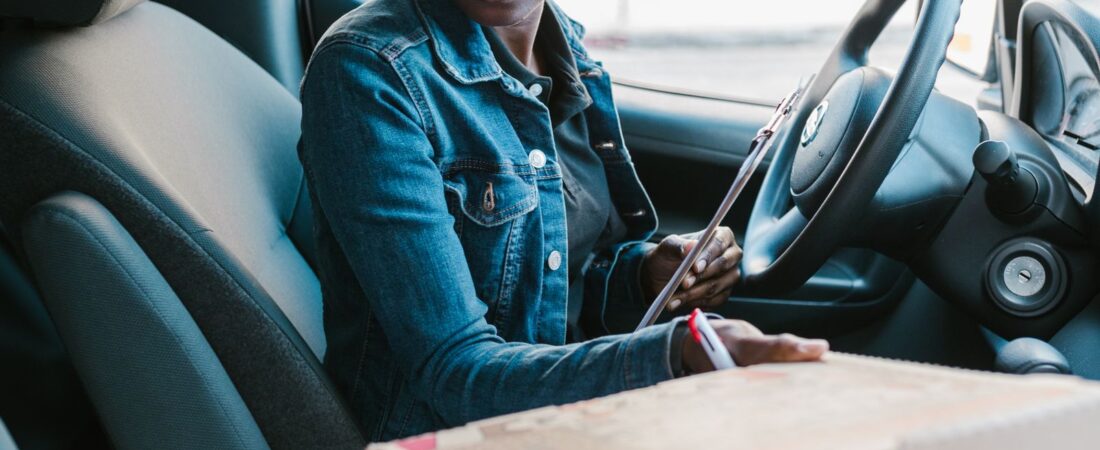

You already know the basics: load up, drive a route, drop product, move on. That is exactly what a vending machine restocking route looks like — and it is one of the cleanest side hustles a delivery driver can stack in 2026. You are already behind the wheel, you understand route logic, and you know how to work fast without shortcuts. The only thing missing is the playbook.
This guide covers the two ways to run a vending route (driving for an existing operator vs. owning your own machine fleet), how real route economics work, what 2026 AI telemetry and cashless payment tools mean for your schedule, how to find your first accounts, which SKUs print the best margins, and the insurance and tax setup you need to do it right.

Two Ways Into a Vending Route: Service Contractor vs. Machine Owner
The single biggest decision before you start is whether you want to drive for an existing vending operator or own and operate your own machine fleet. Both work. They just carry very different risk profiles, startup costs, and income ceilings.
Option 1: Contract Route Driver (Low Risk, Fast Start)
Dozens of regional and national vending operators — especially in cities like Chicago, Houston, Phoenix, Atlanta, and the greater LA basin — hire contract or part-time route drivers to service their existing machine locations. You show up with product, fill the machines, wipe down the glass, note any errors, and move to the next stop. No location agreements to negotiate, no machine repairs, no capital outlay on equipment.
- Pay range: $18–$25 per hour in most US metros, or $8–$18 per-stop flat rates depending on the operator
- Hours: Early morning runs (6 a.m.–noon) fit cleanly between gig delivery shifts without cannibalizing your lunch or dinner peak windows
- Vehicle: Many operators supply a product van or reimburse your mileage; some require your own cargo vehicle — a cargo van or large SUV is ideal
- Where to find openings: Indeed, ZipRecruiter, local Craigslist gigs sections, and Facebook groups like “Vending Route Drivers USA” all post regularly in 2026
The tradeoff is real: your income ceiling is fixed at the operator’s rate. You are building someone else’s business. But for a driver who wants $300–$600 per week in predictable supplemental income with zero capital risk, this is the fastest path to your first vending paycheck.
Option 2: Own Your Machine Fleet (Higher Upside, Real Investment)
Buying and running your own machines is where the real upside lives — and it is more accessible than most guides let on. You already have the vehicle, you already think in route-efficiency terms, and a starter fleet of 5–10 machines can be managed solo in 15–20 hours per week. That is a side gig, not a second full-time job.
- Used combo snack and drink machine (2022–2024 model, refurbished): $1,500–$3,500
- New smart machine with cashless reader and built-in telemetry: $3,500–$7,000
- Micro-market open-shelving kiosk setup for a single location: $5,000–$15,000
- Location commission paid to the property owner: 10–25% of gross sales
- Monthly gross revenue per quality location: $500–$2,000
- Net after product cost, commission, and software fees: $200–$800 per machine monthly
A tight 8-machine route in solid office-building locations can generate $1,600–$6,400 net per month once it is fully operational. That is a meaningful income layer sitting on top of your DoorDash, Spark, or Instacart earnings — and unlike app-based gig work, it is not subject to algorithm changes or per-order rate cuts.
The 2026 Cashless and AI Telemetry Revolution
If your mental image of vending is still coin slots and mechanical spirals, the industry has moved dramatically. In 2026, over 77% of all vending transactions are contactless — tap-to-pay, Google Pay, Apple Pay, credit and debit cards. A machine without a cashless reader is essentially invisible to a large portion of the buying public, particularly in office parks, gym lobbies, and apartment common areas where cash-carrying has become rare.
Telemetry Platforms: Your Remote Route Manager
Modern machines run on cellular telemetry platforms like Cantaloupe (formerly USA Technologies), Parlevel, and VendSoft. A SIM card plus payment gateway module runs $15–$25 per machine per month, but the ROI is immediate. From your phone you can see exactly what has sold in each slot, what is running critically low, whether a machine is showing a jam or a door error, and what yesterday’s revenue was — all before you leave your driveway.
For a route driver, this means dynamic restocking instead of fixed-schedule restocking. Instead of driving to every machine every Tuesday whether it needs service or not, you check the dashboard Monday night and only drive to the stops that actually require product. Operators using AI-driven route optimization in 2026 are reporting up to 30% fewer restocking trips and up to 40% higher productivity per driver hour. That translates directly to lower fuel costs and more hours freed up for your gig delivery shifts.
AI Demand Forecasting in Practice
The leading telemetry platforms now layer machine learning over historical sales data. If Celsius energy drinks consistently spike at a specific gym location every Monday and Thursday morning, the system flags that location for a Tuesday restock automatically — before you would have noticed the sellout manually. For a solo operator running 6–12 machines, this capability used to require either a full-time employee watching spreadsheets or constant manual spot-checks. In 2026, a $20 per month software subscription handles it.
Route Density Math: Making the Numbers Work
Route efficiency is where gig delivery drivers have a built-in advantage over people approaching vending cold. You think in dead miles, stop density, and time-per-drop. Apply that exact lens to a vending route and you will structure it far better than most new operators. For a deeper look at managing your schedule across multiple income streams, the delivery driver time management and scheduling guide is worth reading alongside this one.
The 6-Stop Starter Route
A well-designed starter route in a tight geography — a 5-mile radius in a suburban office corridor, or a cluster of apartment complexes in a single zip code — runs 6–10 stops in 3–5 hours. Here is the basic math:
- Travel between stops in suburban settings: 8–15 minutes average
- Service time per stop (fill, wipe down, log report): 20–40 minutes
- Total time for a 6-stop route: roughly 3–4 hours including drive time
- Restocking frequency with telemetry: 2–3 times per week for busy locations, once per week for slower ones
That schedule stacks cleanly on top of a DoorDash dinner shift or an Amazon Flex morning block. The key discipline is avoiding dead miles between stops — the same waste that kills gig driver profitability. Plan your route geographically, not by order of client sign-up. For a refresher on minimizing wasted miles, the dead mileage guide for delivery drivers applies directly to vending routes.
High-Margin SKUs in 2026
Not all product slots are equal. The highest-margin items in 2026’s vending landscape:
- Energy drinks (Red Bull, Monster, Celsius): Buy for $1.50–$2.00, retail at $3.50–$4.50 — strong margin and fast turn
- Protein bars (RXBAR, Kind, Clif, Built): Buy $0.90–$1.30, retail $2.50–$3.50 — gym and office locations especially
- Premium chips and popcorn (Lay’s kettle, SkinnyPop): Buy $0.35–$0.55, retail $1.75–$2.25
- Cold brew and bottled coffee: Buy $1.00–$1.50, retail $3.00–$4.00
- OTC pharmacy items (Advil, Tylenol, antacids, gum): Among the highest per-unit margins in the entire machine
Spend your first 30–60 days dialing in your planogram — the product-slot layout — for each specific location. A gym’s top sellers look completely different from a 9-to-5 office building. Telemetry data shows you exactly what moves within weeks, removing guesswork from restocking decisions.

Finding and Landing Your First Accounts
Location is everything in vending. A mediocre machine in a great location beats a great machine in a mediocre location every single time. Delivery drivers already have a structural advantage here: you drive past prime vending real estate on every shift.
Best Location Types in 2026
- Class-B office buildings with 50–300 employees: Big enough to justify a machine, small enough that national operators often overlook them
- Apartment complexes with 100+ units and a fitness room or lobby: Captive audience, consistent traffic, low price sensitivity
- Auto dealerships and service centers: Customers with long wait times and nowhere else to buy food or drinks
- Medical and dental offices: Staff break rooms are chronically underserved; waiting room traffic adds volume
- Gyms and fitness studios: Natural home for premium protein and energy SKUs at premium prices
- Small manufacturing and warehouse facilities (25–150 workers): The original bread-and-butter of the vending industry — predictable traffic, shift-based demand, low competition from chains
The Pitch That Works
The core pitch for a new account is disarmingly simple: “I place a machine at your location at no cost to you, handle all restocking and maintenance, and pay you a commission on every sale.” From a small office manager’s perspective, that is a free employee perk with zero work on their end. You are not selling — you are offering something for nothing from their vantage point.
In-person cold outreach consistently outperforms email for this pitch. Dress professionally, bring a one-page flyer with a machine photo and your top SKUs listed, and ask for five minutes. Conversion rates on in-person pitches to small office and warehouse managers run 15–30% in most markets. Budget 20 cold visits to land your first 3–5 accounts. If you would rather start as a contract driver to learn the business before committing capital, search “vending route driver” on Indeed filtered to your metro — Dallas, Denver, Charlotte, and Tampa all have consistent openings in 2026.
Vehicle, Insurance, and Tax Setup
What Vehicle You Need
For a contract driving position, the operator will tell you what vehicle qualifies — typically a cargo van, full-size SUV, or pickup with a covered bed. If you already run a Ford Transit, Ram ProMaster, or Mercedes Sprinter for gig work, you are already set. For your own small fleet, any vehicle that can carry 4–6 cases of product with a lockable cargo area works for a starter route. Add adjustable cargo shelving (Ranger Design or Adrian Steel systems run $200–$600 installed) to keep product organized and damage-free during transport. The 2026 cargo van delivery guide covers vehicle optimization in depth.
Insurance: The Step Most New Operators Skip
If you are using a personal vehicle for a commercial vending operation, your personal auto policy almost certainly does not cover commercial route activity — the same coverage gap that affects food delivery drivers. You need either a commercial auto policy or a commercial activity rider added to your existing policy. General liability insurance ($500–$1,200 per year for a small fleet) covers property damage at your machine locations and slip-and-fall incidents. Product liability for the food items you stock is typically embedded in a standard GL policy. Get the full picture at the 2026 delivery driver insurance guide before you sign your first location agreement.
Tax Treatment: Route Expenses Add Up Fast
As an independent vending operator or contract route driver using your own vehicle, every mile driven between your home and your first stop, between stops, and back home is a deductible business mile. At the 2026 IRS standard mileage rate of $0.76 per mile, a route covering 80 miles per service day three times a week adds up to over $9,000 in mileage deductions annually — see the full 2026 mileage rate deduction breakdown for specifics. Beyond mileage, deductible expenses for machine owners include product cost (cost of goods sold), machine depreciation under Section 179, telemetry software subscriptions, location commissions, and repair parts. Run the operation as a Schedule C business from day one. The 2026 gig driver tax deductions guide covers every applicable write-off category.
Realistic First-Year Earnings and Timeline
Here is an honest first-year projection for a solo operator starting with 6 owned machines placed in decent locations:
- Months 1–2: Source machines, negotiate location agreements, set up telemetry accounts, stock initial product. Revenue minimal while locations ramp up.
- Months 3–6: Route stabilizes. Average $300–$500 net per machine per month as you optimize your planogram and drop underperforming SKUs. Six machines: $1,800–$3,000 net monthly.
- Months 7–12: Reinvest profits into 2–4 additional machines. Route reaches 8–10 machines. Monthly net: $2,500–$6,000 depending on location quality.
As a contract route driver, your earnings are immediate: $18–$25 per hour from day one. Working 15–25 hours per week adds $270–$625 per week — roughly $14,000–$32,000 annually as a part-time supplemental income, with zero capital at risk.
The vending route side gig rewards the same instincts that make a good delivery driver: route efficiency, reliability, speed without sloppiness, and the hustle to find better locations. It is more scalable and more passive than most other van-based side gigs covered on this site. Compare it against alternatives like the off-the-beaten-path courier runs guide or the mystery shopping and retail merchandising playbook — vending stands out because once your route is set and your machines are stocked correctly, a significant portion of the income becomes semi-passive. Your delivery driver skills got you in the door. A well-run route keeps paying you long after the hard work of setup is done.
Ready to Start Delivering and Cash In?
Join thousands of drivers already earning — and get a $2,575 guaranteed bonus after completing your first 200 deliveries in select US cities.
New drivers: Sign up through our partner link and start earning today!
Sign Up for Uber Eats and Start Delivering →
Must be 18+. Background check required. Terms apply.