
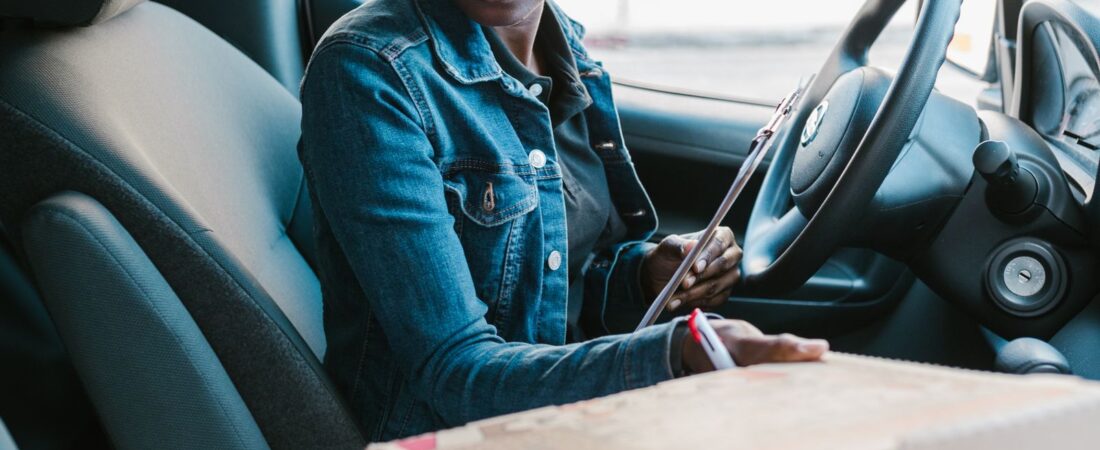

Most gig drivers scrolling for work at 5am are staring at the same DoorDash map everyone else is watching — low offers, dead miles, no idea what the next hour will pay. Meal kit route work runs on a completely different track. You load a pre-packed route before sunrise, drive 90-140 miles through suburbs and apartment complexes, scan 60-110 boxes at the door, and you are done by early afternoon. The pay is per stop, not per hour, and the discipline required is cold-chain, not hot-bag.
Driver Opportunity
Want to Earn While You Read?
Join as a new driver and get up to a $2,575 guaranteed bonus after completing your first 200 deliveries in select US cities.
Start Earning Now →New drivers only · Terms apply · Available in select cities
Why This Route Work Never Shows Up in Your Delivery App
Meal kit logistics is handled by a layer of regional contractors and third-party route partners that sit between the meal-kit brands — companies like HelloFresh, Factor, Home Chef, and Blue Apron — and the subscriber’s front door. These route partners recruit drivers through their own hiring pipelines, local job boards, and referrals. They do not post routes on DoorDash, Uber Eats, or Instacart. If you are only looking inside a gig app, you will never see this work.
The model is closer to a direct store delivery route than restaurant delivery. You are given a manifest, a stack of pre-labeled boxes, and a delivery window. You execute the route. The logistics partner pays you per completed stop or as a flat route rate depending on the contract structure.
That distinction matters. When you show up for a 90-stop route and get paid $216 for finishing it, you are not waiting on surge pricing or hoping for a big tip. The math is known before you leave the fulfillment center parking lot.
What the Pay Actually Looks Like in 2026
Route pay for independent contractor drivers is running roughly $2.00 to $2.90 per delivered stop in most US metros right now. Rural routes and routes with heavy apartment density tend to sit at the top of that band because the stop count is high but the geography is compressed or the logistics are messier. Urban routes with parking challenges and long building walks can eat into your effective hourly rate even if the stop rate looks good on paper.
Per-Stop Math on a Real Route Day
Take a standard 85-stop route at $2.40 per stop. That is $204 gross before you subtract fuel. If your route runs 110 miles and your car gets 28 miles per gallon at $3.50 a gallon, you are spending roughly $14 on gas. Net is around $190 for a shift that starts at 5:30am and ends around 1:00pm. That works out to about $27 per hour net for a 7-hour day including your load time at the facility.
Some route partners structure the pay as a flat route rate instead of per-stop. Those contracts typically run $150 to $300 per completed route. A $220 flat rate on an 80-stop route is $2.75 per stop — solid. A $160 flat rate on a 90-stop route that runs 130 miles is not a great deal. Always ask for the stop count and the approximate mileage before you agree to a flat route.
W-2 vs. 1099 Route Work
If a regional meal-kit logistics hub is hiring drivers directly as employees rather than contractors, the pay structure shifts to hourly. W-2 courier jobs at those hubs are running $17 to $22 per hour in 2026 plus a mileage reimbursement. You lose the flexibility of contractor work but you gain predictable hours, no self-employment tax on the full gross, and employer mileage coverage. For a driver who wants consistency over hustle, the W-2 path is worth pursuing through local job boards and the careers pages of the major meal-kit brands.
If you are working 1099, understand that your gross route pay is your gross taxable income as a self-employed person. The IRS mileage rate for 2026 is 76 cents per mile, and on a 110-mile route day that is an $83.60 deduction before you even look at phone, insurance, or equipment. Track every mile from the moment you leave your driveway to the moment you return. Also note that the 1099-K reporting threshold changed in 2026 — if your route income hits the new threshold through a payment processor, expect a form.
The Cold Chain Is the Job — Everything Else Is Secondary
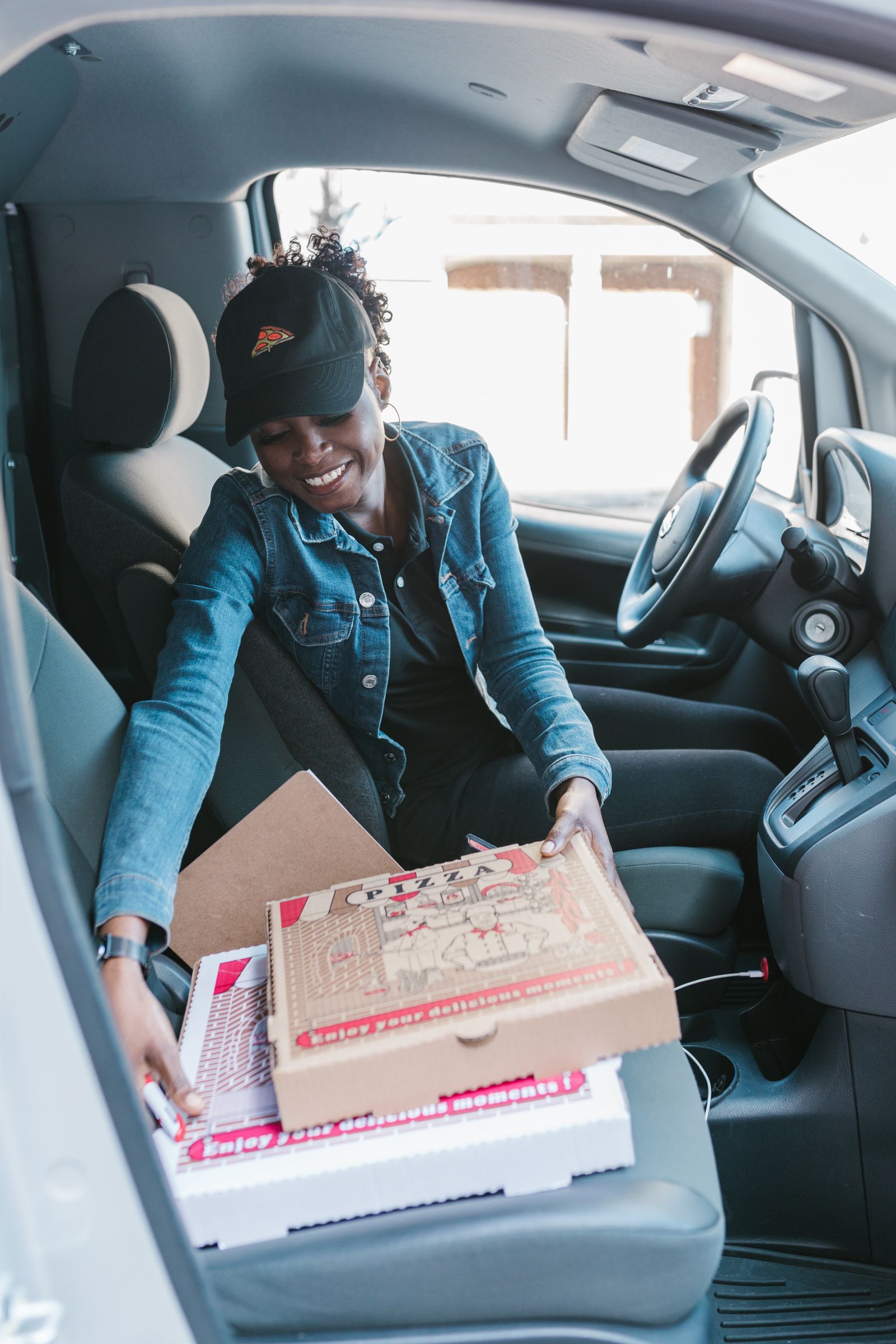
Here is the thing that gets drivers dropped from route lists within their first two weeks: they treat meal kit delivery like restaurant delivery. They throw boxes in the back seat with no insulation, skip the scan at the door because “it’s faster,” and do not think twice about a box sitting on a sunny porch for an hour. That approach will end your route contract.
Meal kit boxes are shipped with gel packs or dry ice keeping proteins in the 34-40°F range. Understanding how dry ice and gel packs work inside a transit box is not optional knowledge — it is the baseline for doing this job correctly. Once a box is loaded onto your car and driving, you are the cold chain. If the box arrives at a customer’s door with compromised internal temperature because it sat in a 90-degree trunk for 45 minutes, that is a customer credit issued by the brand and a deduction that comes back to the route partner, and then to you.
What You Actually Need in Your Car
A sedan can handle this work. Most routes are loaded with 6 to 10 insulated totes that fill a trunk and back seat. The boxes themselves run 7 to 15 pounds each. You are not hauling refrigerated freight — you are extending a cold environment that was already established at the fulfillment center. Your job is to keep the environment stable during transit and handoff.
You need quality insulated bags or totes that can hold temperature for 3 to 5 hours, because your last stop of the day will be 3 to 5 hours after you loaded. The best insulated bags for delivery drivers in 2026 have changed — the materials and foam ratings matter more than the brand name. Do not buy cheap cooler bags at a gas station and call it done. On a 90-degree summer morning, a bad bag will blow your cold chain before you hit stop 40.
Beyond insulation, you need a phone mount that lets you scan barcodes and take door photos without fumbling. You need a portable battery to keep your phone alive through a 7-hour shift. And you need a clean car. Route partners do vehicle inspections. A dirty trunk or a car with obvious mechanical issues will get you flagged before you complete your first route.
Scan Discipline and Delivery Windows: Where Money Gets Lost
The deduction structure on meal kit routes is the part nobody talks about when they pitch the work. Every missed stop, missing scan, and damaged box can take $1 to $3 off your route pay. On an 85-stop day where you miss 4 scans and get flagged for one damaged box, you could lose $10 to $15 off a $204 gross. That is not catastrophic, but it compounds fast if you get sloppy and develop a pattern.
Each stop has a 2-hour delivery window. You scan the barcode at the door, or if the customer is not home you leave the box in a designated spot and take a photo as proof of delivery. That photo matters. If a customer claims they never received a box and you have no door photo, the claim goes against you. Take the photo every single time, even at stops where you have delivered to the same address 15 times.
The food safety implications of delivery timing are real and documented. A box sitting on an exposed porch in summer heat for 45 minutes is not a minor inconvenience — it can push internal protein temps above the 40°F threshold. Read up on food safety temperature standards for delivery drivers before you start, because understanding the why behind the rules makes it easier to follow them consistently.
Managing Apartment Stops Without Blowing Your Time
Apartment stops are where routes slow down. You park, navigate the building directory, find the right floor, locate the unit, and walk back. On a route with 20 apartment stops scattered across 6 complexes, that time adds up quickly. The drivers who do well on apartment-heavy routes learn the buildings fast — they know which entrances have working fob readers, which buildings let you prop a door, and which units have mailroom drop-offs that work for large boxes.
If your route manifest shows heavy apartment volume, budget an extra 45 minutes into your time estimate and sequence those stops strategically rather than just following the default GPS order. Route optimization on apartment clusters is one of the few places you can genuinely improve your effective hourly rate without taking more stops.
When This Work Pays Best: Peak Volume Weeks
Meal kit subscriptions follow predictable surge patterns. Thanksgiving week, the two holiday weeks in December, and the first two weeks of January consistently hit the highest delivery volumes of the year. New Year reset subscriptions flood the system in early January — people starting diets, people trying meal planning — and fulfillment centers run extended routes with extra stops added to manifests.
If you have a route contract established before those windows, you are in a strong position. Route partners prioritize drivers with clean delivery records when they need to extend routes or add stops during peak. A driver who ran 85-stop routes cleanly through October is the first call when the logistics partner needs someone to handle 110-stop routes in December.
The same peak logic applies to route availability for new drivers. If you want to break into meal kit route work, approach regional logistics partners in October or November. They are actively onboarding backup drivers before the holiday surge, and that is your window to get your first route and prove you can execute.
Fuel, Wear, and the Real Cost of 140 Miles a Day
A route day runs 90 to 140 miles. That is stop-and-go mileage, not highway cruising. Stop-and-go driving is harder on brakes, tires, and transmission than the same mile count on the freeway. If you are running meal kit routes 3 to 4 days a week, your maintenance schedule needs to reflect the actual driving pattern, not just the odometer number.
Fuel cost on a 120-mile route day runs roughly $16 to $30 depending on your vehicle and local gas prices. That is a real expense line against your per-stop gross. A delivery driver car maintenance schedule built for 2026 will show you brake intervals, tire rotation frequency, and fluid check cadences that actually match heavy stop-and-go use. Ignoring maintenance on a route car is how a $2,000 brake job surprises you in month four.
One more thing on the cost side: drivers who also run restaurant delivery during dinner hours after finishing a morning meal kit route are stacking two very different work patterns into one vehicle. That is a legitimate income strategy, but the combined mileage and stop-and-go wear requires honest tracking of vehicle costs so you do not overestimate what the combined schedule actually nets.
How Meal Kit Routes Compare to Other Contractor Delivery Work
| Work Type | Pay Structure | Typical Gross / Day | Shift Window | Cold Chain Required |
|---|---|---|---|---|
| Meal Kit Route (1099) | $2.00-$2.90 per stop | $150-$260 | 4:30am-2:00pm | Yes — 34-40°F proteins |
| Restaurant Delivery App | Per order + tips | $80-$160 | Lunch/dinner peaks | No (hot food, short window) |
| DSD Route (bread/snack) | Per stop or salary | $160-$240 | Early morning | No |
| W-2 Meal Kit Courier | $17-$22/hr + mileage | $130-$180 | Early morning | Yes |
How to Actually Get on a Route List
You are not applying to HelloFresh or Factor directly. You are looking for the regional logistics contractors and last-mile route partners who hold the delivery contracts for those brands in your metro. Search job boards for terms like “meal kit route driver,” “refrigerated last mile contractor,” and “food subscription delivery contractor” in your city. Some route partners post on standard job sites; others recruit through local courier networks and Facebook groups for gig drivers in your area.
When you contact a route partner, lead with your vehicle type and year, your clean driving record, and your availability for early morning starts. They want to know you can show up at 5:00am consistently and that your car will not break down on stop 70. A reliable 2018 or newer sedan with a clean trunk is more attractive to a route partner than a flashy newer car with obvious neglect.
- Clean, reliable vehicle — 2018 or newer preferred, trunk inspection required
- Smartphone with barcode scanning capability and a functioning camera
- 6 to 10 quality insulated totes that hold temperature for 4-5 hours
- Availability from roughly 4:30-6:00am start through early afternoon, 3 to 5 days per week
- Willingness to do vehicle check-in and route manifest review before departure
- Clean MVR (motor vehicle record) — most partners pull this before onboarding
- Basic understanding of cold chain handling and food safety temperature standards
Background checks are standard. Most route partners also require proof of commercial auto insurance or a rider on your personal policy that covers delivery work. Check your policy before you show up for onboarding — standard personal auto policies exclude delivery work, and operating without proper coverage while under a route contract is a liability problem you do not want.
Your First Route: What to Expect
Your first route will take longer than your second. The manifest is unfamiliar, the building access patterns are unknown, and your tote loading organization is not yet dialed in. Plan for a full 8 hours on your first day even if the route is 75 stops. Do not panic if you are running slow at stop 30 — you will find a rhythm. The things to get right on day one are scan discipline and cold chain. Everything else improves with repetition.
If you have questions about a stop — gated community with no code on the manifest, a damaged box you are unsure about, an address that does not match — call the route partner dispatch line rather than improvising. Documentation of edge cases protects you from deductions later. A two-minute call beats a $3 deduction and a note in your driver file.
Driver Opportunity
Ready to Start?
Turn This Guide Into Real Income. Join as a new driver and get up to a $2,575 guaranteed bonus after completing your first 200 deliveries in select US cities.
Sign Up & Start Delivering →New drivers only · Terms apply · Available in select cities
Meal kit route work is not passive income and it is not a side hustle you run between coffee runs. It is a structured, physical, early-morning job with real operational requirements. But for a driver who is organized, reliable, and willing to work a 34-degree cold chain correctly, it is one of the most predictable gross-per-day structures in the gig delivery world right now — and you are usually done before noon. Look up regional route contractors in your metro this week, get your vehicle and insulation gear in order, and put your name in before the holiday volume window opens.