


Most people who want to deliver for Amazon think there’s only one option: Amazon Flex. Grab a block, use your own car, work your own schedule. But there’s a second path — one that pays a steady hourly wage, puts you in a company van, and comes with actual W-2 employee benefits. That’s the Amazon DSP program, and in 2026 it’s one of the most overlooked earning opportunities in the delivery industry.
DSP stands for Delivery Service Partner. Instead of contracting directly with Amazon as a 1099 gig worker, you get hired as an employee by one of Amazon’s thousands of independently owned delivery businesses. You show up, get in a branded blue van, and run packages — no block hunting, no fuel bills, no chasing surge pricing. Just consistent hourly pay with a schedule you can build a budget around.
This guide breaks down exactly how Amazon DSP works in 2026, what drivers actually earn after all costs, how it stacks up against Flex, and how to get hired fast even with zero delivery experience.
What Is the Amazon DSP Program?
Amazon’s DSP program is a franchise-style model where Amazon recruits and funds small business owners — Delivery Service Partners — to run last-mile delivery operations. Each DSP typically operates 20–40 Amazon-branded vans and employs 40–100 drivers. More than 3,500 DSPs now operate across the United States, covering nearly every major metro and a growing number of suburban markets.
As a driver, you work for the DSP — not for Amazon directly — but you use Amazon’s vans, Amazon’s delivery app (called Rabbit), and Amazon’s delivery stations as your starting hub each shift. Amazon sets the operational standards; your DSP handles your hiring, scheduling, payroll, and benefits.
This structure matters because quality varies dramatically from one DSP to the next. The best operators offer competitive wages, genuine benefits, and reasonable workloads. The worst run on thin margins, push daily stop counts to their limits, and churn through drivers every few months. Knowing how to identify and vet a good DSP before accepting an offer is half the battle — more on that below.

Amazon DSP Driver Pay in 2026: What You Actually Take Home
According to Indeed’s April 2026 wage data, the average hourly pay for Amazon DSP drivers nationwide is $19.80 per hour. Most job listings in 2026 sit in the $18–$22 range, with high-demand urban markets like Seattle, Los Angeles, Chicago, and Denver pushing the upper end toward $22–$23 per hour for experienced drivers.
Unlike Amazon Flex — where “$25 per hour” looks great until you subtract fuel, oil changes, tire wear, and depreciation — DSP pay is what you actually keep. Your DSP covers fuel through a company fleet card. They maintain the van. You’re on the clock from the moment you arrive at the delivery station. Zero dollars of vehicle operating cost comes out of your pocket.
Sign-On Bonuses
Many DSPs sweeten new-hire offers with sign-on bonuses, especially during peak staffing windows. In 2026, bonus amounts range from $250 to $1,000 or more depending on the DSP, the market, and how aggressively they need to fill routes. These bonuses typically vest after 30–90 days of employment — read the full terms before accepting to understand exactly when and how the money pays out, and whether any clawback provisions apply if you leave early.
Benefits That Change the Real Math
Because you’re a W-2 employee, most DSPs offer a benefits package that includes health insurance, dental, vision, a 401(k), and paid time off. That package changes the real value of your total compensation significantly. A DSP driver earning $19.80 per hour with employer-sponsored health insurance is taking home meaningfully more in real-world value than a Flex driver grossing $22 per hour on 1099 who funds their own health coverage and handles their own retirement savings out of pocket.
If you’re currently grinding multiple gig apps to piece together income and benefits, DSP’s all-in compensation package deserves serious comparison. See how multi-app delivery strategies stack up in 2026 when you factor in the full picture.
Amazon DSP vs Amazon Flex: The Real Side-by-Side Comparison
Most Amazon driver comparisons list headline pay rates without running the actual numbers. Here’s the math that actually matters for your take-home income.
Pay After Real Costs
Amazon Flex advertises $18–$25 per hour. That’s gross revenue — before vehicle operating costs. A realistic Flex block: you drive 60 miles, earn $72, but spend $12–$15 on fuel and another $10+ on wear-and-tear (60 miles at the IRS standard mileage rate represents roughly $40 in deductible vehicle costs). Your effective take-home lands closer to $12–$18 per hour on most blocks — and that’s before self-employment tax adds another 14–15% hit on your net earnings. The complete tax deductions guide for delivery drivers covers exactly how to minimize that 1099 tax burden if you stay on gig apps.
A DSP driver earning $19.80 per hour keeps $19.80. Amazon’s van, Amazon’s gas, Amazon’s maintenance bill. The math is simple, and it strongly favors DSP once you do it honestly.
Flexibility: Where Flex Genuinely Wins
Flex lets you work whenever you want — morning block, evening block, or skip Tuesday entirely. DSP is a real job with a real schedule. Expect four or five shifts per week, approximately 10 hours each. You call in sick the same way you would at any employer. If your life requires maximum schedule flexibility — kids, a second job, school — DSP may not bend easily enough to fit. Don’t take the job hoping it will; go in knowing what you’re signing up for.
Vehicle: A Major Financial Difference
Amazon Flex requires your own vehicle — a mid-size or larger four-door sedan, SUV, van, or truck with a covered truck bed. You pay for insurance, registration, maintenance, and every gallon of gas. DSP provides a branded van and covers all operating costs. You show up with your driver’s license and your work boots.
Taxes: The Hidden Gap Most Drivers Miss
DSP drivers are W-2 employees. Federal, state, and FICA taxes are withheld automatically every pay period. No quarterly estimated tax payments. No self-employment tax calculations. No mileage log burden. Amazon Flex drivers are 1099 contractors who owe self-employment tax — approximately 15.3% on top of income tax — and must carefully track every mile driven to offset it. That tax treatment gap alone can add up to thousands of dollars per year in extra burden for Flex and other gig app drivers.
DSP vs. Amazon Flex at a Glance — 2026
- Hourly Pay: DSP $18–$22/hr ($19.80 avg) vs. Flex $18–$25/hr gross only
- After-Expense Take-Home: DSP keeps full hourly rate vs. Flex nets $12–$18/hr effective
- Vehicle: DSP provides Amazon van vs. Flex requires your own car
- Fuel: DSP fleet card, you pay nothing vs. Flex you pay every fill-up
- Benefits: DSP health, dental, 401k, PTO vs. Flex none
- Tax Status: DSP W-2, taxes withheld vs. Flex 1099, self-employed
- Schedule: DSP fixed 4–5 day shifts vs. Flex pick your own blocks
- Sign-On Bonus: DSP $250–$1,000+ (varies) vs. Flex none typically
What a Typical Amazon DSP Driver Day Looks Like
Understanding the actual grind matters before you accept an offer. Here’s a realistic breakdown of a standard DSP shift in 2026.
Morning arrival (9:00–9:30am): You check in at the delivery station, receive your route assignment in the Rabbit app, and load your van. Standard daily loads run 150–200 packages. Peak season — November and December — pushes those numbers higher, sometimes significantly above 200 stops per day.
On the road: Rabbit navigates you stop by stop, prompting you to scan packages, photograph deliveries, and confirm each drop with GPS. Most residential stops take under two minutes on a clean suburban route. Apartments with call boxes, gated communities, and commercial deliveries eat more time and require more problem-solving. You are constantly in motion — in and out of the van at every address, all day.
The cameras: DSP vans are equipped with AI-powered dashcams — many DSPs use Netradyne’s Driveri system — that monitor your speed, following distance, phone use, seatbelt compliance, and hard braking events in real time. Scores feed back to your DSP daily and directly affect your standing and access to preferred shifts. This monitoring is the biggest cultural adjustment for drivers coming from gig apps. It’s not optional and it’s not subtle. Keep your speed in check, stay off your phone, and drive like someone is watching — because they are, with data. Even in a monitored fleet, understanding why a personal dashcam still matters for delivery drivers can protect you when Amazon’s system flags an incident incorrectly.
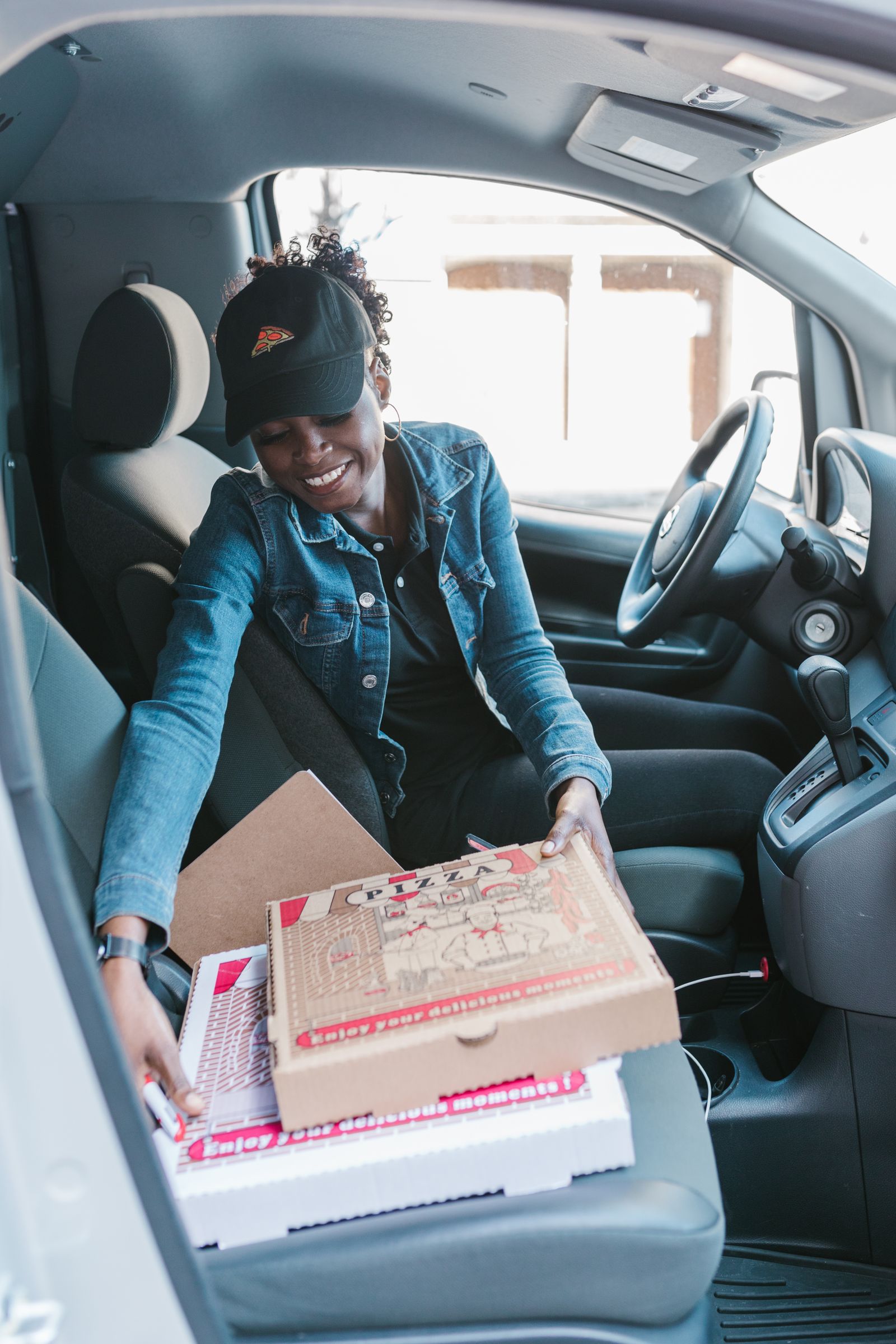
End of shift (7:00–8:00pm): Return to the station, unload any failed or reattempted deliveries, return your van keys, and clock out. A full DSP shift is physically demanding — you step in and out of the van 150+ times, handle packages up to 50 pounds, and stay on your feet for most of a 10-hour day. Comfortable work shoes and staying hydrated aren’t optional extras. They’re the difference between lasting and quitting by week three.
How to Get Hired as an Amazon DSP Driver in 2026
The hiring process is simpler than most people expect — no CDL, no delivery experience required. Here’s exactly how it works and how to position yourself for a fast offer.
Basic Requirements
- Valid US driver’s license in good standing
- Clean driving record (most DSPs review the past 3–5 years; a minor ticket usually won’t disqualify you)
- Pass a standard background check
- Physical ability to lift packages up to 50 lbs and handle repetitive motion throughout a long shift
- 18 years or older in most states (some markets require 21+)
Where to Find DSP Openings
DSPs post jobs on Indeed, ZipRecruiter, LinkedIn, and Glassdoor — search “Amazon DSP driver” along with your city or ZIP code. Some DSPs also operate their own hiring websites. Amazon maintains a DSP locator tool you can use to identify delivery partners operating in your area if you want to contact them directly.
Expect an online application, then a background check and motor vehicle record (MVR) pull. Some DSPs skip the in-person interview entirely and move straight to orientation. Others do a quick phone screen or a brief in-person meeting before putting you on a training route your first week.
Best Time to Apply: October Through December
If you want to get hired fast, apply between October and December. DSPs aggressively staff up for peak season and have the lowest hiring bar of the year — they need drivers in vans and they need them quickly. Many seasonal hires convert to permanent positions for drivers who perform and show up consistently. Surviving December as a new DSP driver is a genuine marker of reliability, and a full-time offer in January is a well-worn path for seasonal-to-permanent conversions. For context on just how intense this volume gets, the Amazon Prime Big Deal Days surge in fall 2026 pushed some DSPs to begin hiring rounds earlier than in prior years to get ahead of the staffing crunch.
How to Evaluate a DSP Before You Accept
Not all DSPs run good operations. Before accepting an offer, ask these questions directly to the hiring manager:
- What is the starting hourly rate, and how often are wage reviews?
- What benefits are included, and when do they start?
- What is the typical daily stop and package count?
- Is there a guaranteed minimum hours commitment?
- What does turnover look like on your current team?
Then search the specific DSP company name on Glassdoor and Indeed — not just “Amazon DSP” generically. A poorly managed DSP running 210 daily stops with bad dispatching will burn you out fast regardless of what the hourly rate says on the offer letter.
Amazon DSP Pros and Cons: The Honest Take for 2026
Reasons Drivers Choose DSP
- Predictable income: Hourly W-2 pay means you know what’s coming each week. No surge-and-slump cycles, no algorithm anxiety.
- Zero vehicle costs: Gas, maintenance, insurance on the van — all on the DSP. Your personal car stays parked.
- Real benefits package: Health insurance, 401(k) matching, and PTO make total compensation significantly stronger than the headline wage alone suggests.
- No competition for work: Flex drivers in competitive markets fight for blocks that disappear in seconds. DSP drivers just show up and get assigned a route.
- Physical activity: If you hate sitting at a desk, 150 stops per day keeps you constantly moving.
Reasons Some Drivers Stick With Gig Apps
- Schedule flexibility is non-negotiable: If your life requires working around a second job, kids, or school, a fixed DSP schedule doesn’t bend the way gig apps do.
- Multi-apping earning potential: Experienced drivers who run multiple gig apps simultaneously in strong markets can exceed DSP wages while keeping complete control of their schedule.
- AI camera monitoring: Constant dashcam surveillance is a genuine culture shock for drivers accustomed to working independently. Some drivers never get comfortable with it.
- DSP quality variance: A bad DSP makes the job miserable in ways that a bad week on gig apps doesn’t match. With gig apps, you just log off. With a bad DSP, you’re stuck until you find something else.
How to Maximize Your Amazon DSP Earnings in 2026
Once you’re hired, the levers for earning more are different from gig app optimization. You’re not chasing surge windows or optimizing your acceptance rate. Here’s where DSP drivers actually move the needle.
Target Sign-On Bonuses Strategically
If you’re deciding between two local DSPs, the sign-on bonus is a real differentiator. A $1,000 bonus vesting after 90 days at 30+ hours per week is a meaningful effective raise on your hourly rate for that period. Compare the bonus amounts, vesting schedules, and any clawback language side by side before you commit. Some DSPs in high-demand markets also run referral bonuses — worth asking about during your interview.
Volunteer for Overtime and Peak Coverage
When your DSP needs coverage — sick calls, surge volume, or the brutal week before Christmas — volunteer early. Overtime at time-and-a-half on a $20/hour base works out to $30 per hour. A handful of extra overtime shifts during peak week pays significantly better than chasing any gig app surge rate. Keep your safety score and delivery score clean throughout the year so you’re on the preferred list when those extra shifts open up.
Understand Your W-2 Tax Advantage
Switching from 1099 gig work to W-2 DSP employment changes your tax picture substantially. You lose the personal vehicle mileage deduction — because you’re not driving your own car — but you also eliminate the self-employment tax. That tax runs roughly 15.3% on net 1099 self-employment income. On a $30,000 annual gig income, that’s approximately $4,590 in self-employment taxes you no longer owe as a W-2 employee. Your DSP also covers 50% of your Social Security and Medicare contributions — real money that every Amazon Flex, DoorDash, and Instacart driver pays entirely out of pocket under 1099 status.
Road conditions are part of the DSP job too — your physical safety matters across those 150+ daily stops. Knowing how to handle road hazards and potholes as a delivery driver protects both you and your daily performance scores, which directly affect your standing with your DSP.
Is Amazon DSP the Right Move for You in 2026?
Here’s the honest framework for making this decision without overthinking it.
Choose DSP if: You want steady, predictable W-2 income. You don’t want to deal with vehicle operating costs or mileage tracking. You value health insurance, a 401(k), and paid time off. You’re okay with a fixed schedule and don’t mind physical, active work. You’re burned out from the income volatility and algorithm dependence that comes with gig app work.
Stick with gig apps if: Schedule flexibility is your highest priority and can’t be compromised. You’re already skilled at running multiple apps and consistently netting $25+ per effective hour after all costs. You have family obligations or a second job that doesn’t fit a structured five-day schedule. AI dashcam surveillance feels genuinely incompatible with how you want to work.
For a lot of drivers, the real answer isn’t either/or — it’s try both. Do a season at a DSP. See how the income stability and benefits feel against your best multi-app months. The data from your own lived experience will tell you far more than any comparison chart. Many drivers end up alternating: DSP for the stable income during slower seasons, gig apps during holiday surges when per-trip pay spikes.
What’s clear in 2026 is that Amazon DSP has quietly become one of the most financially efficient ways to earn a driving income — especially for drivers who honestly factor in vehicle costs, self-employment tax, and benefits when making the comparison. The Flex headline number almost always looks better at first glance. The DSP take-home almost always wins on the real spreadsheet.
Ready to Start Delivering and Cash In?
Join thousands of drivers already earning — and get a $2,575 guaranteed bonus after completing your first 200 deliveries in select US cities.
New drivers: Sign up through our partner link and start earning today!
Sign Up for Uber Eats and Start Delivering →
Must be 18+. Background check required. Terms apply.