


You spend eight, ten, sometimes twelve hours a day in that car. Between orders, you sit in restaurant parking lots, crawl through rush-hour traffic, and log dead miles that pay nothing. In 2026, delivery driver quarterly earnings are climbing back toward pandemic-era highs — Gridwise’s 2026 Gig Mobility Report shows average quarterly earnings approaching roughly $1,600 for the first time since 2021. But here’s the secret nobody puts in the signup email: what you listen to while you drive can make you money.
Your audio setup isn’t a mood decision. It’s a financial decision. The drivers who treat their windshield like a classroom — learning taxes, multi-apping strategy, and route math during their downtime — are the same drivers who post screenshots of $200 nights. And the drivers who let the same five songs loop for four hours? They’re the ones counting the minutes until their shift ends. This guide covers the best podcasts, audiobooks, and music for delivery drivers in 2026, plus the earbud laws you need to know and the hands-free setup that won’t kill your phone battery. Let’s build your shift soundtrack.
Why Your Audio Setup Is a Money Decision
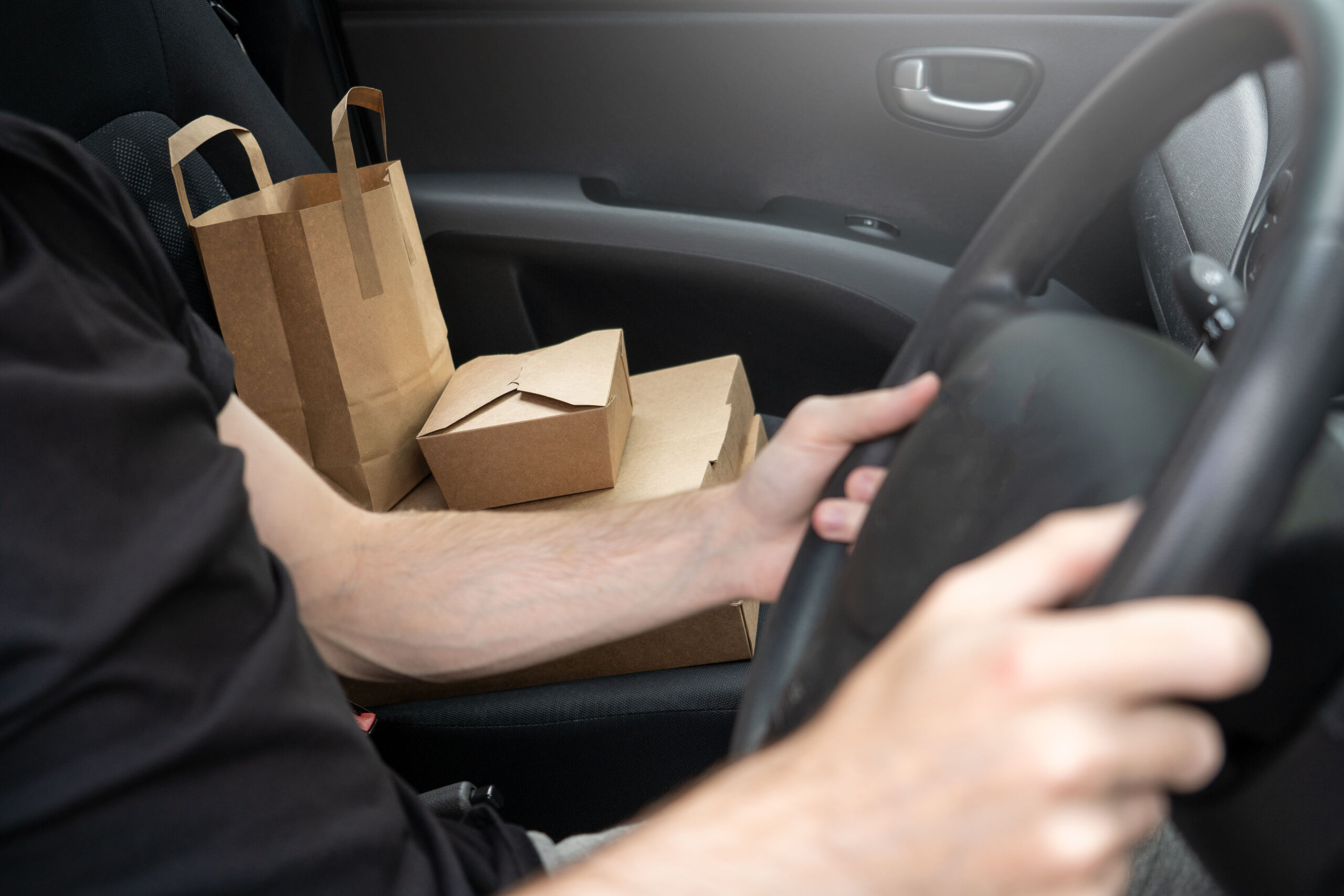
Let’s do the math. The 2026 IRS mileage rate is 76 cents per mile (up from 70¢ in the first half of the year), which means a full-time driver logging 25,000 miles a year is carrying a serious deduction. Every hour you spend in the car — waiting at Chipotle, creeping through a gated community, cruising between zones — is an hour you could be learning something that puts more of that money back in your pocket.
Think about it: most delivery drivers spend 20–30% of their shift on dead miles and wait time. That’s two to three hours a day of pure listening time. Use it right and you’re effectively getting paid to study. The numbers on audio content are staggering: according to Edison Research’s Infinite Dial 2026, 58% of Americans aged 12+ — about 167 million people — now listen to podcasts monthly, and 45% (roughly 130 million) listen weekly. Nearly half of all podcast listening happens in the car. You are part of the biggest mobile classroom in history — the question is whether you’re in the front row or asleep in the back.
And if you’re wondering whether the hours are even worth it in 2026, check our breakdown of how much delivery drivers actually earn in 2026 before you plan your listening schedule.
The Best Podcasts for Delivery Drivers in 2026
Podcasts are the perfect delivery-driver medium: no screen, no hands, just your ears and a host who keeps you company through the 9 p.m. lull. Here’s what belongs in your rotation in 2026:
- Gig-economy shows: The Rideshare Guy Podcast (Harry Campbell) breaks down driver pay data, app changes, and platform news every week. The Gridwise podcast and similar driver-focused shows publish real earnings reports from drivers in your exact market. This is your industry intel.
- Money shows: The Ramsey Show, ChooseFI, and My First Million are the usual suspects for a reason. When you’re pulling in $1,600 a quarter in inconsistent chunks, you need a system for the money, not just the hustle. These shows hand you that system while you wait for a pickup.
- Brain-off content: Armchair Expert, Stuff You Should Know, or a true-crime show (My Favorite Murder, Crime Junkie) will carry you through the 11 p.m. dead zone without draining your focus for the next ping.
- Sports and comedy: Your team’s daily show or a comedy podcast keeps morale up on the worst weather days. Morale is a driver’s most underrated asset.
Pro move: stack your day like a shift plan. One educational episode per shift (money or gig news), then flip to entertainment once your brain starts to fog. Pair your podcast queue with the right delivery driver apps and tools and you’ve got a cockpit, not just a car.
Audiobooks That Pay for Themselves
Here’s the thing about delivery driving: you have more time to “read” than almost anyone you know. Eight hours in the car at 1.2× speed is roughly a book every two days. That’s 100+ books a year — more than most college professors manage. And the audiobook industry knows it: audio publishing has posted year-over-year revenue growth for more than a decade, and it’s now a multi-billion-dollar business in the US alone.
The best part? It doesn’t have to cost you a dime. Libby (the library app) gives you free audiobooks with nothing but a library card — and most US libraries let you sign up online in five minutes. If you’re buying, Audible’s credits work out to about $12–15 a book, and they run regular sales where business classics drop to $5 or less.
What should a driver listen to? Start with the money canon: I Will Teach You to Be Rich (perfect for irregular gig income), The Millionaire Next Door (a reality check on where delivery money should go), and Rich Dad Poor Dad if you’ve somehow never read it. Then add driver memoirs and long-form journalism for the fun stretch. By spring you’ll be the most well-read person in the parking lot — and your tax deductions will show it.
Music That Keeps You Moving
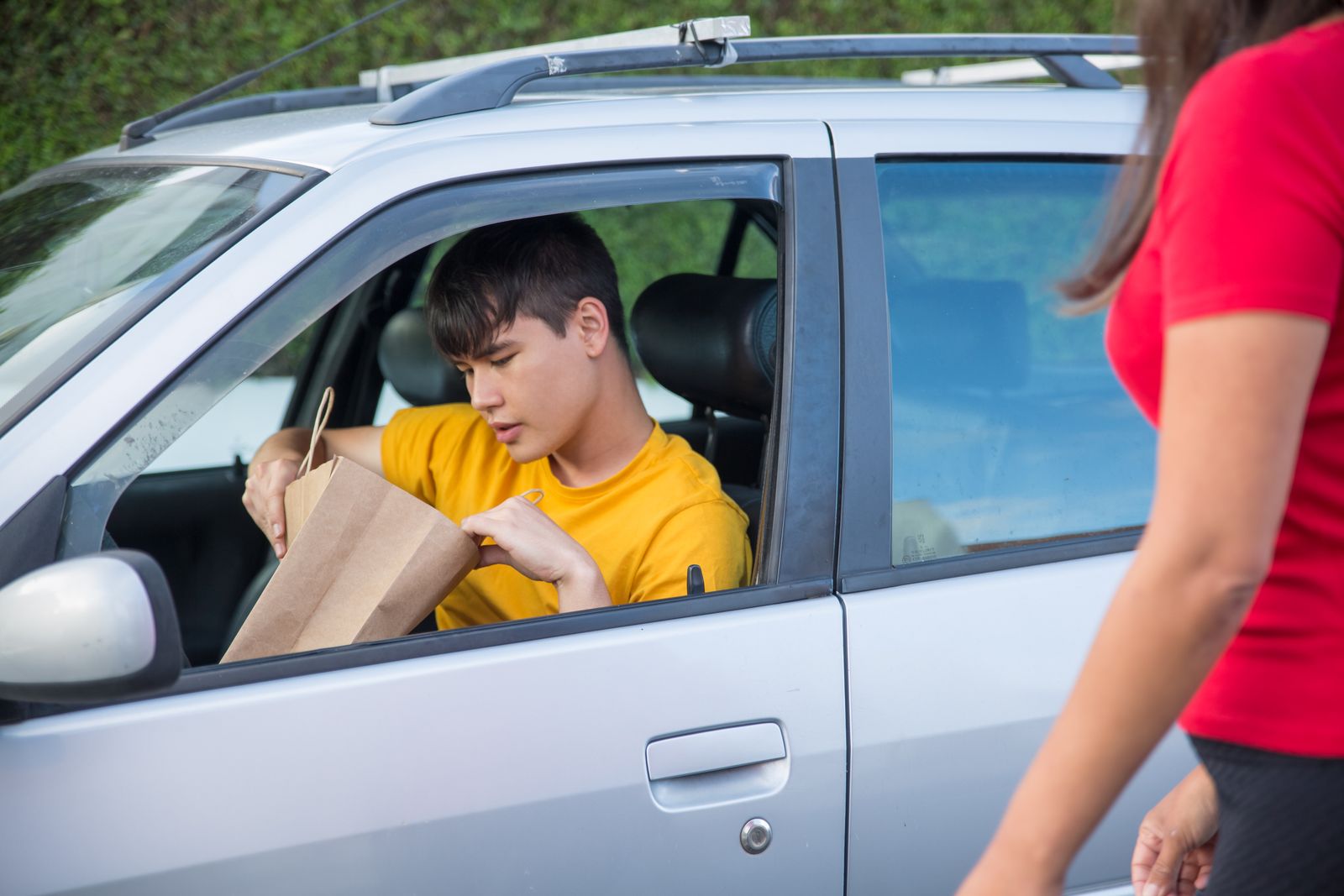
Podcasts and audiobooks feed the brain, but sometimes you need fuel for the tank. Music is your shift’s energy management system. Build three playlists instead of one:
- The Pre-Rush Hype List: high-tempo tracks (120–140 BPM) to fire you up before the dinner rush. Think workout energy, not funeral energy.
- The Midday Chill List: lo-fi, indie, or classic rock for the 2–4 p.m. stretch when offers are slow and you’re prone to doom-scrolling in a parking lot.
- The Late-Night Focus List: instrumental or ambient music. Anything with vocals can pull your attention away from the road and the app when you’re already running on fumes.
Research on long-haul drivers has consistently found that upbeat, familiar music improves alertness and mood on monotonous stretches — but variety matters. The same loop for hours will actually lull you into a daze. If you notice yourself missing pings or drifting mentally, that’s your cue to switch from music to a podcast with a host who keeps talking. Whatever you stream, remember that every mile of dead-heading costs you at the 76¢/mile rate — read up on how to cut dead mileage and use your listening time to plan a smarter zone strategy.
Earbuds, Headphones & the Law in 2026
Here’s where a lot of drivers get themselves in trouble. Earbud laws are a patchwork, and 2026 hasn’t made them any simpler. The bottom line: about a dozen states ban headphones or earbuds in both ears while driving — including California, Florida, Maryland, Massachusetts, New York, Ohio, Pennsylvania, Rhode Island, Virginia, and Washington. Get caught with both buds in and you can be cited for a moving violation, which on a delivery driver’s record is worse than a parking ticket.
The specifics matter:
- California (Vehicle Code 27400) bans headsets covering both ears; a single earbud is generally treated as acceptable, but officers have discretion.
- Florida bans headphones while driving outright, with an exception for single-ear headsets used for communication. Distracted driving was tied to more than 150,000 crashes in the state in 2023 — don’t be one of them.
- Massachusetts allows earbuds but its RMV manual explicitly warns that headsets can restrict your awareness of surroundings — a polite way of saying an officer can still cite you for distracted driving if you look impaired.
- New England states (Maine, New Hampshire, Vermont, Connecticut) generally allow both ears, but any of them can pull you over if a cop decides your listening is interfering with safe driving.
Here’s the rule that keeps you out of trouble everywhere: one earbud max, volume low, or use the car’s speakers. You need to hear sirens, horns, the customer’s gate code call, and the ding of a new offer. If you can’t hear the world around you, you can’t deliver safely — and safety failures get drivers deactivated fast. Pair your listening habits with the full delivery driver safety playbook so the only thing you lose on a shift is dead time, not your account.
The Hands-Free Setup That Won’t Drain Your Phone
Your phone is your office, your map, and your radio — which means it’s also your biggest battery risk. Streaming audio plus GPS plus Bluetooth can kill a phone in four hours flat, right when the dinner rush hits. Fix it before it happens:
- CarPlay or Android Auto: plug in and let your car’s screen handle podcasts, music, and maps. Voice control (Siri or Google Assistant) means you never touch the phone while rolling.
- A proper phone mount: a dashboard or vent mount keeps your phone in your peripheral vision so audio controls are one tap away. We tested the best options in our phone mounts for delivery drivers guide — a $20 mount pays for itself the first time you don’t fumble a $30 order.
- A 12V fast charger, always: buy two — one for the car, one as a spare. A dead phone mid-shift is a zero-dollar hour.
- Download before you drive: podcasts and music stream at roughly 60–100 MB per hour. Pull your playlists and episodes down on home Wi-Fi and you’ll save data and battery — plus audio keeps working in dead zones.
- Keep the volume sane: not just for your ears (hearing damage is permanent), but because you need to hear the world. If you can’t hear a siren over your playlist, the playlist is too loud.
Build a Shift Soundtrack That Fights Burnout
Nobody talks about how lonely delivery driving gets. Eight hours of one-person conversations with restaurant hosts and GPS lady — it wears on you. Audio is your cheapest therapy. Drivers who listen to podcasts with regular hosts report feeling less isolated on long shifts, and comedy content measurably improves mood during the grinding stretches of the week.
But here’s the counterintuitive tip: sometimes the best audio is silence. If you find yourself running on four hours of sleep and the podcast is just noise, pull over and take the break your body is asking for. The gig economy punishes burnout with bad decisions and worse ratings. Your ears, your eyes, and your brain all need actual rest — read our guide on taking sick days and real time off before you run yourself into a deactivation-worthy mistake.
Final Word: Make Every Mile Sound Like Money
Your playlist in 2026 should do three jobs: teach you something, keep you alert, and keep you sane. One educational episode a day at 76¢ a mile is the cheapest business school in America. Build your queue tonight — library card for Libby, one good money podcast, one fun show, and three playlists for the three phases of your shift. Your future self, sitting in a parking lot with $1,600 in quarterly earnings and a head full of useful knowledge, will thank you.
And when you’re ready to put that knowledge to work on a new platform, there’s never been a better time to stack an extra app onto your rotation. New drivers in select cities can earn up to $2,575 after completing their first deliveries with Uber Eats. That’s real money for the same hours you’re already driving — and you’ve got plenty of podcast time to figure out what to do with it.
Get Paid More with Uber Eats
New drivers in select cities can earn up to $2,575 after completing their first deliveries.
Start Earning $2,575 with Uber Eats →
Must be 21+. Background check required. Terms apply.