
Soccer just changed the delivery game in America — and if you were on the road during any FIFA World Cup 2026 match day, you already know it. Food delivery platforms recorded online orders jumping 37% year-over-year during the tournament’s group stage and Round of 32 (June 11–July 4, 2026), and apps hit their single busiest minute ever leading up to the Argentina vs. Spain knockout match. That was not a coincidence. That was a pattern worth understanding — and repeating.
The World Cup ended July 19. But soccer’s moment in the United States has not cooled — it is accelerating. Major League Soccer’s 2026 playoffs run from November 18 through December 18, stacking six playoff rounds across 30 consecutive days on evenings when millions of American soccer fans are ordering food from their couches. For delivery drivers in the right markets — Los Angeles, Atlanta, Seattle, New York, Dallas, Houston, Miami — soccer match nights are some of the most predictable surge opportunities on the calendar. And most drivers are not targeting them yet.
This guide covers what World Cup 2026 data taught us about match-day delivery, how to work the full MLS playoff schedule, what people are ordering, and what costly mistakes to avoid. Put this in your playbook now before November 18.
Why Soccer Match Nights Are Different from Every Other Sport
Here is the dynamic most drivers miss: soccer fans are far more likely to watch from home than fans of any other major US sport. NFL fans fill stadiums and sports bars in massive numbers. NBA fans often head out for the big game. But soccer — especially international soccer — has a deeply residential watch culture in the United States. Immigrant communities and multi-generational families gather at home. Kids are involved. Watch parties happen in living rooms and backyards, not at restaurants.
That means the food orders come to residential addresses, not commercial zones near stadiums. When 30 to 40 million Americans are watching a major match on a Saturday afternoon, the food and drinks they consume are being delivered to houses and apartment complexes across every major market — not concentrated in a bar district you have to fight through traffic to reach.
During World Cup 2026, Uber Eats led match-day online conversation with 246 separate media mentions linking the platform specifically to late-night ordering and shifting food habits around tournament fixtures. Fast food orders spiked 43% during Saudi Arabia’s match against Spain, according to Visa transaction data — dispersed across neighborhoods in host cities, not concentrated near stadiums. That is the delivery driver’s advantage: the demand is everywhere residential, not locked inside a venue.
Understanding soccer’s home-watch culture is the most important mental shift you can make before working your first match night. Forget the stadium. Work the neighborhood.
What World Cup 2026 Data Actually Tells Delivery Drivers
The Order Volume Numbers
The World Cup 2026 produced the best real-world data set US delivery drivers have ever had on soccer-driven ordering behavior. Across the group stage and Round of 32 — covering 23 days of matches from June 11 through July 4 — online orders across food delivery, fast food, and grocery platforms increased 37% year-over-year. As the tournament moved into knockout rounds, the numbers climbed further. Food delivery orders surged 39.2% during the World Cup Final on July 19, with chicken orders — driven entirely by wings and sharing platters — growing 138.6% compared to the same period the prior year.
Pizza was the match-night king. During England’s run through the tournament, pizza orders climbed 63% above normal during the opening match and hit 79% above normal by the semifinal. That is a consistent, predictable trend you can take to the bank during MLS playoffs. Pizza platforms are worth knowing and working on soccer nights.
The Stadium Trap
One of the clearest lessons from World Cup 2026: the money was not near the stadiums. Street closures, security perimeter expansions, and road restrictions around the 11 US host venues — MetLife in East Rutherford, SoFi Stadium in LA, AT&T Stadium in Dallas, Hard Rock Miami, Mercedes-Benz Stadium in Atlanta, NRG in Houston, Lincoln Financial in Philadelphia, Lumen Field in Seattle, Gillette in New England, Arrowhead in Kansas City, and Levi’s Stadium in the Bay Area — turned those zones into delivery nightmares. Rerouting, restricted access, and congestion that extended well beyond game hours destroyed per-hour efficiency for drivers who parked their dots in stadium-adjacent zones.
The real volume came from residential neighborhoods 3 to 8 miles from the venue, where watch parties were happening in homes and apartment buildings. Drivers who ignored stadium zip codes entirely and worked surrounding residential areas earned significantly more. Lock this lesson in before MLS playoffs begin.
The Halftime Spike Is Real
Multiple drivers who worked World Cup match days reported a distinctive halftime surge — a concentrated 10-to-15-minute window where a wave of new orders hits the app simultaneously. Fans who were locked into the first half suddenly decide they need another drink, more food, or something they forgot to order. Soccer halftime is exactly 15 minutes. Try to finish your last pre-halftime delivery before the 43-minute mark so you are free and positioned when the wave hits. This one window can add 1 to 2 extra deliveries to your shift on a big match night.
The MLS 2026 Playoffs: Your Scheduled Surge Calendar
You do not have to wait for the next World Cup. The MLS 2026 playoff schedule gives you a full month of match nights from mid-November through December, all published in advance on a calendar you can build your shifts around right now. MLS viewership hit record levels in 2026 on the back of World Cup excitement and continued international star power in US markets, making this the biggest MLS playoff season in league history.
Mark these dates in your calendar now:
- Decision Day (Regular Season Finale): November 7, 2026
- Wild Card Round: November 18 (midweek)
- Round One Best-of-3: November 20 – December 2
- Conference Semifinals: December 5–6
- Conference Finals: December 11–12
- MLS Cup Final: December 18 (Friday)
That MLS Cup on December 18 is a Friday. Three demand drivers stack simultaneously: soccer playoff final, Friday night ordering behavior, and holiday season delivery volume. If there is one night between now and year-end where you absolutely want to be on the road, December 18 is it.
The Round One Best-of-3 series running November 20 through December 2 includes midweek matches alongside weekend games. Do not skip Tuesday and Wednesday night games in this window. Playoff soccer on a weeknight generates demand you will not see from an ordinary Tuesday shift — and driver competition drops significantly on weeknights.
Layer these match nights against your regular schedule using the best delivery times guide to see exactly how match kickoffs slot into the peak-earning windows you are already targeting.
Which US Markets See the Biggest Soccer Night Surges
Your location matters. If you are in one of the following markets, soccer match nights should be a regular shift target throughout the MLS playoff run:
Top-Tier Markets (MLS team plus World Cup host city legacy):
- Los Angeles (LA Galaxy, LAFC — World Cup host)
- New York / New Jersey (NYC FC, Red Bulls — World Cup Final host)
- Atlanta (Atlanta United — World Cup host)
- Seattle (Sounders — World Cup host)
- Dallas / Fort Worth (FC Dallas — World Cup host)
- Houston (Houston Dynamo — World Cup host)
- Philadelphia (Union — World Cup host)
- Boston / New England (Revolution — World Cup host)
- Miami (Inter Miami — World Cup host city, strong fanbase)
Strong Secondary Markets:
- Kansas City (Sporting KC — World Cup host)
- San Jose / San Francisco Bay Area (Earthquakes — World Cup host)
- Portland (Timbers — one of the most passionate fanbases in MLS)
- Columbus (Crew — consistent playoff contender)
- Nashville, Charlotte, St. Louis, Austin, Cincinnati, Orlando
Even markets without an MLS team saw elevated soccer viewership in 2026 thanks to the World Cup. Phoenix, Denver, Indianapolis, and Minneapolis all recorded strong tournament engagement. Any major metro with a significant Latino community, European immigrant population, or large college-age fanbase will see elevated match-night delivery demand during MLS playoffs. Check your local soccer bar scene — wherever fans are gathering, the watch-party delivery orders will follow.
How to Work a Soccer Match Night Like a Pro
The Three Phases of Every Match Night
Soccer matches follow a predictable structure. Your shift strategy should match the rhythm of the game.
Phase 1 — Pre-Game (90 minutes to kickoff): Get on the road 90 minutes before a major match. Fans are gathering, watch parties are starting, and snack and drink orders are flowing. This is also when grocery and convenience orders spike — people running to Instacart or Spark for chips, drinks, and party supplies. Accept these runs early. They pay well and position you in the right residential zones before the kickoff wave hits.
Phase 2 — Halftime Surge (minute 43 through the break): The highest-density spike window in soccer’s entire delivery calendar. As soon as the halftime whistle blows, a wave of simultaneous new orders hits the app. Fans who got locked into the first half suddenly want more food or another round of drinks. This window is 15 minutes long. Try to finish your last first-half delivery before minute 43 so you are positioned and free when the spike arrives. Being mid-delivery at halftime is one of the most expensive timing mistakes you can make on a match night.
Phase 3 — Post-Game (final whistle plus 45 minutes): Big matches — especially home-team wins — generate a real post-game order wave. Fans who finished eating during the match reorder, celebration orders come in, and late-night food demand picks up. Alcohol delivery spikes in this window through Uber Eats and DoorDash. Plan to stay on the road at least 45 minutes past the final whistle for Conference Semis, Conference Finals, and the MLS Cup.
Zone Strategy: Where to Position Your Dot
Stay out of stadium zones on match nights. Traffic, road closures, and parking restrictions turn those blocks into time-sink delivery zones. Instead, set your position in high-density residential areas 3 to 8 miles from the venue — dense apartment complexes, single-family neighborhoods near watch-party-friendly sports bars, and residential zones within range of the highest-volume pizza and wing restaurants in your market.
Watch your app’s heat map and check for peak pay and surge activations in residential zones starting 30 minutes before kickoff. Platforms regularly activate bonuses in these windows because demand spikes outpace available drivers, and drivers who are already positioned in the right zone capture the bonus without chasing it.
For match nights, running multiple apps simultaneously gives you the widest coverage. DoorDash and Uber Eats together handle the food delivery volume; add Instacart or Spark for the pre-game grocery runs that food apps miss. On a big playoff night you should never be sitting idle between phases — the demand is there across platforms.
What People Are Ordering on Soccer Nights
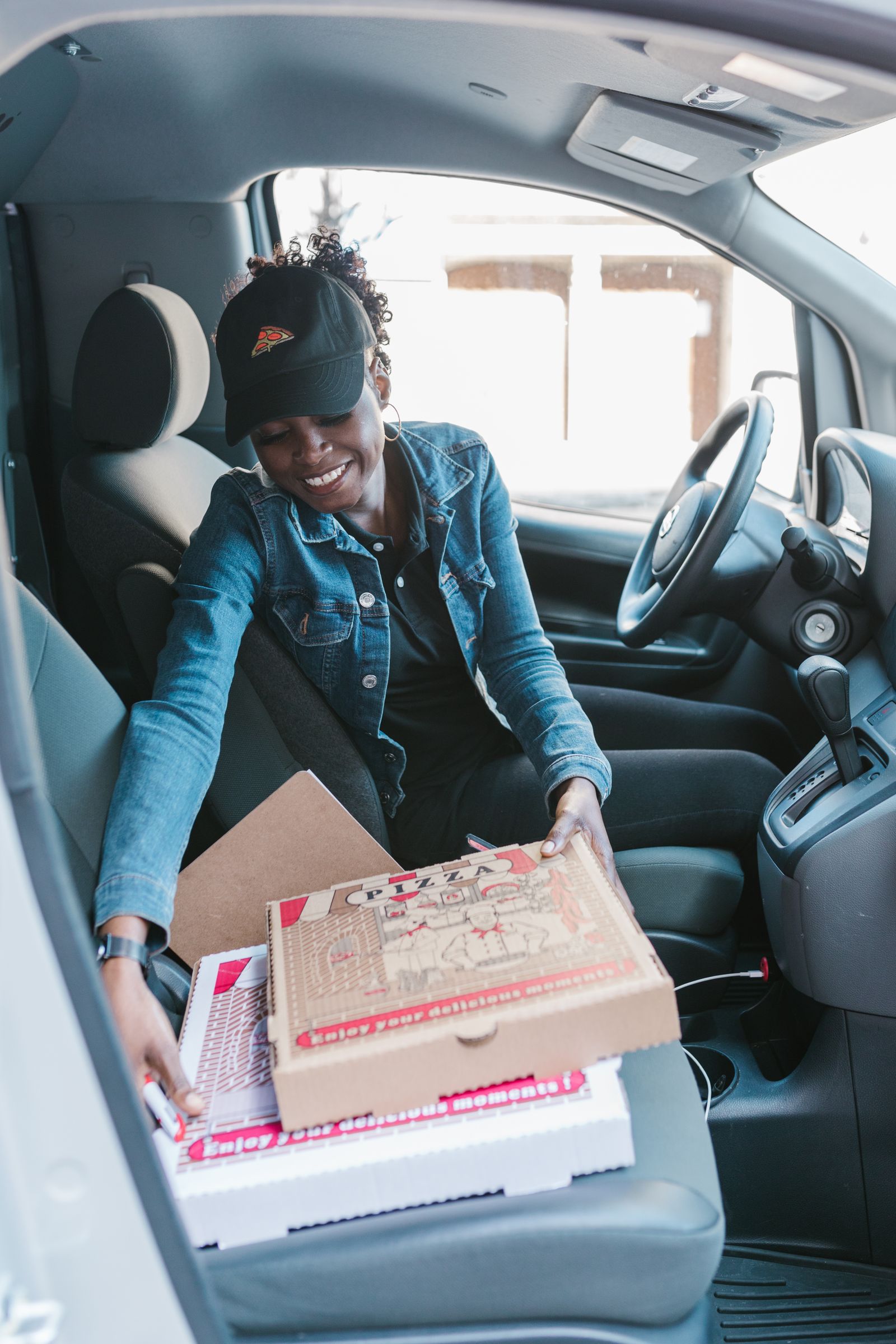
Knowing what fans are ordering helps you work the right zones and platforms at the right time. Here is what drives soccer match night delivery volume:
- Pizza: The undisputed number one match-night food. Up 79% above baseline during major World Cup moments. Pizza orders are often large, run heavy, and tip reasonably. Chain pizza pick-ups move quickly. If your market has a dense pizza zone, position near it on match nights — you will not wait for orders to come to you.
- Wings and sharing platters: Buffalo wings, nachos, loaded fries, sliders — finger food built for group watching. These orders tend to come from chains like Wingstop and Buffalo Wild Wings that have efficient pick-up systems. Wings orders often include large quantities and tip well from group orders.
- Beer and alcohol: Alcohol delivery via Uber Eats and DoorDash spikes on match nights, especially post-game. Know your platform’s ID verification process cold so you are not fumbling at the door. Smooth alcohol deliveries tend to generate better ratings and tips. See our tips guide for how to handle these interactions for maximum earnings.
- Grocery and convenience runs: Pre-game snack runs via Instacart and Spark are the most underrated soccer night opportunity. A watch party host buying chips, drinks, ice, and dips for ten people is a solid single-stop payout that most food delivery drivers are not even competing for. These orders peak 60 to 90 minutes before kickoff.
- Late-night food: MLS playoff games frequently end in the 10 to 11 PM range. The post-final-whistle order wave is a real additional earning window, especially on Fridays and Saturdays when restaurants are still at full capacity and late-night demand on DoorDash and Uber Eats is naturally elevated anyway.
Mistakes That Cost Drivers Money on Soccer Match Nights
Drivers who have not worked a major soccer night before make the same predictable errors. Avoid these:
- Sitting in stadium zones: Traffic, closures, and access restrictions turn stadium-adjacent blocks into time traps. Residential neighborhoods 3 to 8 miles out are consistently where the order volume actually is.
- Missing the halftime window: If you are mid-delivery at the 45-minute mark, you miss the biggest concentrated spike of the night. Time your deliveries to finish before halftime or accept that you are waiting for Phase 3. This is worth tracking deliberately, especially during Conference Finals and the MLS Cup.
- Running only one app: Match nights support multi-apping. Sticking to a single platform on a high-volume soccer night leaves real money on the table. Read our weekend delivery strategy guide for a framework on layering apps without getting overwhelmed by simultaneous orders.
- Writing off midweek playoff games: MLS Round One includes Tuesday and Wednesday matches. Weeknight playoff soccer generates surprising demand, and far fewer drivers show up to compete for it. Your effective per-hour rate on a quiet Tuesday playoff night can beat a crowded Saturday by a meaningful margin.
- Not checking kickoff times in advance: A noon kickoff means a noon delivery surge. An 8 PM start is completely different operationally. Pull the MLS playoff schedule now, map the kickoff times for your market, and set your shift start around actual game times — not vague assumptions about what time soccer games happen.
- Ignoring grocery apps for pre-game runs: Instacart and Spark get less attention on event nights, but watch-party grocery orders are real, consistent, and relatively competition-light. Activate both platforms before November 18 if you have not already.
Set Up for MLS Playoff Season Before November 18
You have almost three months to prepare. Here is a practical checklist to run through before the Wild Card round kicks off:
- Activate Instacart Shopper and Spark Driver if either is still pending — grocery platforms capture pre-game snack runs that food delivery apps miss entirely.
- Confirm your insulated bags are in solid shape. Pizza, wings, and large grocery orders for watch parties need proper heat retention. Replace bags that have lost their seal.
- Get your car fully serviced before November. Brakes, tires, and an oil check before winter driving and playoff season overlap is a necessity — check the maintenance schedule guide for timing recommendations built around delivery driver mileage.
- Set recurring calendar reminders for every MLS playoff match date starting November 18. Include Decision Day on November 7 — it generates its own burst of fan engagement and ordering as the regular season wraps up.
- Block the MLS Cup on December 18 as a priority shift. That Friday night stacks soccer, end-of-week ordering, and peak holiday season into one night.
The drivers who earn the most during any predictable event cycle are the ones who plan before the cycle starts. Soccer match nights are not random — they are published on a public schedule you can build your entire November and December shift calendar around right now.
For a broader look at how much top drivers are actually clearing on surge nights across DoorDash, Uber Eats, Spark, and Instacart, check the real 2026 driver earnings breakdown. The numbers around major match nights and sporting events will likely change how you think about which shifts are worth your time.
Ready to Start Delivering and Cash In?
Join thousands of drivers already earning — and get a $2,575 guaranteed bonus after completing your first 200 deliveries in select US cities.
New drivers: Sign up through our partner link and start earning today!
Sign Up for Uber Eats and Start Delivering →
Must be 18+. Background check required. Terms apply.