
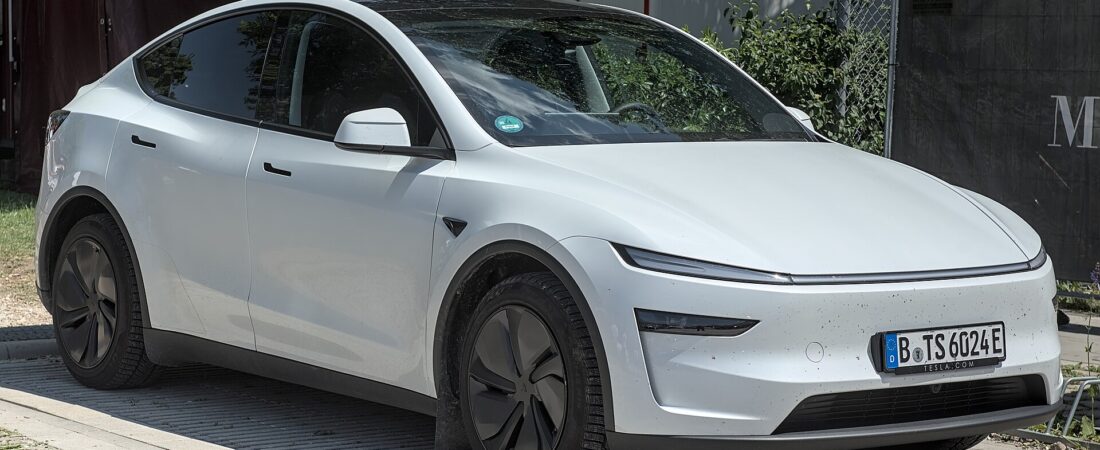

Tesla’s Full Self-Driving (Supervised) system reached a meaningful level of maturity in 2026, and the subscription model — currently $99 per month in the US — has made it accessible without a large upfront commitment. Tesla stopped selling FSD as a one-time purchase in February 2026; the subscription is now the only path in for new buyers. That lower barrier to entry has brought a new wave of drivers trying the system for the first time, often through a free trial month available via Tesla’s referral program.
What many of those first-time users encounter is a system that feels remarkable in some situations and surprisingly hands-on in others. The gap between expectation and reality tends to come from marketing language that leans toward capability and forum enthusiasm that leans toward the best-case scenario. This guide takes a different approach: a task-by-task capability map of FSD (Supervised) in 2026, written for US and Canadian buyers deciding whether the system is worth activating — especially if you have a free trial month on the table.
One foundational point before the map: FSD (Supervised) is a Level 2 advanced driver assistance system. It requires an attentive human driver with hands ready to take control at all times. It is not autonomous driving. The word “Supervised” in the name reflects a legal and operational reality, not modesty. Every scenario in this guide assumes a fully attentive driver ready to intervene.
Disclosure: This post contains a referral link. If you order a Tesla using it, the author may receive referral benefits at no extra cost to you.
Tesla Referral Offer
Get One Month of Full Self-Driving Free
Order a new Tesla through this referral link and get one month of FSD (Supervised) at no cost. Referral code: willy327274
Claim Free FSD Month →New orders only · Terms apply · Offer availability varies by region
Driver Opportunity
Want to Earn While You Read?
Join as a new driver and get up to a $2,575 guaranteed bonus after completing your first 200 deliveries in select US cities.
Start Earning Now →New drivers only · Terms apply · Available in select cities
How to Read This Capability Map
Each scenario is rated across three tiers:
- Handles well: The system manages this task confidently with minimal intervention needed under normal conditions.
- Handles with supervision: The system engages and often completes the task, but intervention rates are higher and driver alertness is critical.
- Not reliably handled: The system may disengage, make questionable decisions, or requires near-constant driver readiness to be safe.
Ratings reflect typical 2026 FSD (Supervised) behavior in the US. Performance varies by vehicle hardware revision, local map data quality, and software version. Canadian drivers will find most highway and urban ratings applicable; provincial road geometry and signage standards introduce some variability, discussed where relevant.
Where FSD (Supervised) Performs Well
Open Highways and Long Interstate Segments
Rating: Handles well. Highway driving is FSD’s strongest performance category and has been for several software generations. On US interstates and Canadian 400-series or Trans-Canada segments in clear conditions, the system maintains lane position smoothly, adjusts speed for traffic flow, and handles gradual curves with a naturalness that earlier versions lacked. Speed limit transitions are detected and respected in most cases, though the driver should monitor areas where signage is inconsistent — a brief overshoot at an unmarked speed-change zone remains an occasional occurrence.
Following distance management has also improved. The system reads slowing traffic ahead with more nuance than a basic adaptive cruise setup and initiates deceleration earlier, which reduces the number of moments that feel like a last-minute brake event. For longer interstate runs in clear weather, FSD (Supervised) reduces the cognitive load of lane management meaningfully without asking the driver to mentally check out.
Lane Changes and Highway Interchanges
Rating: Handles well. Driver-initiated lane changes — a tap of the turn stalk — work reliably in highway conditions. FSD (Supervised) scans mirrors and blind-spot zones, waits for a safe gap, and merges smoothly. Auto lane change, where the system itself initiates passes around slower vehicles, also performs well on open highways, though drivers should monitor vehicles entering from on-ramps during auto lane change maneuvers.
Multi-lane highway interchanges — the braided splits where two or three routes diverge — have become a genuine strength in recent software. The system follows navigation routing through complex splits, executes multi-lane exits cleanly, and handles the brief ambiguity of a highway fork better than it did in earlier iterations. This was a task that produced disengagements regularly in older software versions; in 2026 it is a confident category and one of the more impressive demonstrations of how far the system has come.

The Middle Ground: Supervision-Heavy Scenarios
Unprotected Left Turns
Rating: Handles with supervision. Turning left across oncoming traffic without a dedicated green arrow is one of urban driving’s genuinely demanding tasks, and FSD (Supervised) reflects that difficulty. At many standard suburban intersections the system inches into the intersection, reads the oncoming gap, and completes the turn acceptably. At others — partial sight-line obstructions, unusual median geometry, or high-speed arterials — the system may hesitate longer than expected, choose a gap that feels tighter than necessary, or take a turn trajectory that clips closer to oncoming lanes than a confident human driver would select.
Unprotected lefts are a scenario where your readiness to take control makes a real difference to both safety and traffic flow. The system will complete many of them, but the variance across intersection types is significant enough that treating every unprotected left as an active supervision moment is the right operating habit.
Roundabouts
Rating: Single-lane handles with supervision; multi-lane not reliably handled. Single-lane roundabouts in suburban US and Canadian developments have improved noticeably through 2025 and 2026 software updates. Entry, navigation, and exit work for most standard configurations. Multi-lane roundabouts introduce lane choice ambiguity that the system handles inconsistently — it may hug the outer lane conservatively regardless of the intended exit, or hesitate at entry when adequate gaps exist. If your regular route includes a multi-lane roundabout, treat it as a consistent intervention point and do not expect the system to manage it hands-free.
Construction Zones
Rating: Handles with supervision (active work zones: not reliably handled). Construction zones are the highest-supervision road scenario in most US and Canadian urban areas. Lane markings are temporary, contradictory, and sometimes absent entirely. Lanes narrow unpredictably, geometry deviates from map data, and workers or equipment near the lane edge create hazards that require judgment the system does not consistently apply.
FSD (Supervised) attempts construction zone navigation and often completes lower-complexity passages without disengagement. Speed reductions through posted work zone limits are generally respected. But active construction with cones in irregular patterns, lanes that exist on the asphalt but not in navigation data, or flagger direction requires the driver to treat themselves as the primary operator with FSD as a secondary input — not the other way around.
Urban Driving: City Streets and Complex Intersections
City driving in 2026 represents the category where FSD (Supervised) has shown the most visible improvement — and where the difference between its best and worst days remains widest. Protected intersections — signalized intersections with standard markings and four-way stops — are handled well in most US and Canadian urban environments. The system stops correctly, waits its turn at four-way stops, and proceeds on green signals reliably under typical conditions.
The challenge lies in atypical geometry: T-intersections with unusual setback, intersections where a bike lane creates ambiguous lane edges, or city blocks where double-parked delivery trucks push traffic into an unmarked merge zone. These situations don’t typically produce dangerous failures, but they generate hesitation, cautious line-holding, and moments where the driver’s judgment is a clear improvement over the system’s decision. Urban driving in dense US and Canadian cities — Chicago’s grid, downtown Calgary, San Francisco’s hills — brings enough of these atypical moments that intervention rates are meaningfully higher than on open highways.
Pedestrian and cyclist detection has improved meaningfully. The system yields proactively at crosswalks when pedestrians approach, and cyclists riding in designated bike lanes are given appropriate space in most scenarios. This is an area where 2026 FSD (Supervised) is genuinely better than the 2024 version — but “better” does not mean “reliable enough to stop monitoring.”
Special Environments: Parking Lots, Drive-Thrus, and Toll Booths
Parking Lots and Autopark
Rating: Handles with supervision. FSD (Supervised) can navigate parking lot lanes and Tesla’s Autopark feature can identify and execute parallel and perpendicular parking in well-marked lots. The challenge is older lots with faded markings, tight angles, low-height obstacles, or shopping cart clusters near spaces. Low-speed parking lot environments involve frequent micro-decisions — a pedestrian cutting diagonally, a reversing vehicle across the row — that the system handles conservatively and sometimes requires driver intervention to resolve cleanly. Autopark is a useful convenience; it is not a reason to divert attention from the surroundings.
Drive-Thrus and Toll Booths
Rating: Partial — drive-thrus need active driver involvement at transaction points. Drive-thru queuing — stop-and-go movement in a narrow marked lane — is handled adequately in most standard configurations. The challenge is at interaction points: payment windows, speaker posts, and irregular surfaces at the transaction area require the driver to manage the exchange. FSD is a useful queue assistant in this scenario, not a manager of the full drive-thru sequence.
Electronic toll collection — EZ-Pass in the US, Highway 407 ETR in Ontario — works cleanly since the vehicle modulates speed for open-road tolling lanes without needing a full stop. Cash or ticket lanes requiring a complete stop at a booth need driver control for the transaction itself. If your commute includes a mix of toll types, plan to take over at cash-and-ticket lanes as a matter of routine.
Weather and Visibility Conditions
Heavy Rain, Snow, and Adverse Weather
Moderate rain: handles with supervision. Heavy rain, snow, and ice: not reliably handled. Moderate rain does not dramatically degrade FSD performance — camera clarity and sensor fusion have improved to the point where light-to-moderate precipitation is managed reasonably on familiar road types. Heavy downpours that saturate camera range and wash out lane detection are a different category. In heavy rain, intervention rates increase significantly and the driver should maintain heightened readiness throughout.
For Canadian buyers, this is a particularly important consideration. Heavy snowfall, ice, and snow-obscured lane markings are scenarios where FSD (Supervised) capability degrades substantially. The system may disengage or proceed with lane detection based on incomplete information when snow covers road markings. Light snow on a plowed and marked highway is manageable; a late-winter Ontario snowstorm on a secondary highway is not an appropriate FSD (Supervised) operating environment. For a detailed look at winter-specific performance across Canadian snow belt conditions, the FSD Supervised winter and snow belt guide covers this in depth.
Night Driving
Rating: Handles well in lit areas; handles with supervision in unlit conditions. Night driving in well-lit urban areas and on illuminated highway segments is a confident category. The cameras and processing handle typical nighttime urban environments well. The challenge compounds when night intersects with other adverse factors — unlit rural roads, light fog, or rain at night. In these compound conditions, intervention rates increase and the driver should treat the system with a meaningfully higher level of active monitoring. Highway night driving in clear conditions on lit segments remains a confident-tier scenario and one of the more comfortable extended FSD use cases.

Edge Cases That Demand Consistent Driver Attention
Emergency vehicles: FSD (Supervised) detects emergency vehicle lights and sirens and responds by slowing and moving toward the right shoulder. The specific maneuver required — whether to pull fully to the shoulder, hold position in a tunnel or narrow lane, or navigate around a vehicle already pulled over — varies by situation, and the system’s response may not always match the ideal. Emergency vehicle encounters warrant immediate driver attention and takeover readiness regardless of what the system is currently doing.
School zones: School zone signs and flashing beacons are recognized in most cases, and speed reductions are applied appropriately. The surrounding conditions — unpredictable pedestrian movement, school buses with extended stop signs, double-parked parent pickup lines — are where the system needs active driver support. School zones combine time pressure, irregular geometry, and high pedestrian density in ways that make them a consistently high-supervision environment regardless of FSD (Supervised) capability improvements.
Handoff moments: When FSD (Supervised) cannot continue, it issues visual and auditory alerts requesting that the driver take over. These disengagements include a warning lead time, but that lead time assumes a fully attentive driver. The safety rationale for FSD (Supervised) is entirely built on driver attentiveness during disengagement moments — a driver who has mentally checked out during a stretch of confident highway driving and receives a disengagement alert approaching a construction zone has the worst of both worlds. Disengagement readiness is not a background concern; it is the primary job of the person behind the wheel when FSD (Supervised) is active.
What Still Needs You: The Driver Responsibility Checklist
Regardless of which tasks FSD (Supervised) handles well, a core set of responsibilities remain with the driver in every situation:
- Verifying that the speed setting matches the road and current conditions, not just posted limits
- Monitoring lane choices through merges and interchanges, especially where merge zones are ambiguous
- Taking control at unprotected left turns when oncoming traffic gap selection feels marginal
- Managing all construction zone passages where temporary geometry diverges from navigation data
- Overriding immediately on any disengagement alert with zero delay
- Monitoring pedestrian, cyclist, and emergency vehicle situations with readiness to intervene
- Verifying that FSD is operating on accurate speed limit data, particularly after entering new speed zones
- Remaining alert in adverse weather even when the system has not yet disengaged
If you are activating FSD (Supervised) for the first time — especially through a free trial month — the most useful approach is to treat the first several days as a calibration period on routes you already know well. Run your familiar commute under FSD and observe honestly where it excels and where it hesitates. That observation window, applied with genuine attentiveness, is worth more than any capability guide written by someone who has not driven your roads.
Making the Most of a Free Referral Month
Tesla’s October 2026 referral program update made FSD (Supervised) the centerpiece of the referral experience. If you use a referral link when placing a new Tesla order — such as this referral link (code willy327274) — your order may include a free month of FSD (Supervised) on the new vehicle. Existing Tesla owners can also gift a one-month FSD (Supervised) trial to a friend via their referral link; when that friend subscribes, the existing owner earns a free month back (or $99 in Tesla Credits if they already purchased FSD outright). The referral program caps FSD gifting at 12 referrals per calendar year. As of launch, the gifting feature is US-only; availability outside the US is subject to Tesla’s regional terms.
A free month is an ideal window to run FSD (Supervised) through the specific scenarios that matter most to your daily routes. For a structured framework to make that evaluation genuinely useful, the 30-day FSD trial evaluation plan offers a day-by-day approach built around the kinds of route progression described in this capability map. When the trial ends, the FSD billing and cancellation guide explains how to manage the subscription cleanly if you decide not to continue. The subscription is $99 per month in the US; Canadian buyers should check Tesla’s Canadian configurator for current CAD pricing.
The Verdict: An Honest Job Description for FSD (Supervised) in 2026
FSD (Supervised) in 2026 is a genuinely capable system within a well-defined set of operating conditions. Its job description looks like this: confident and smooth on open US and Canadian highways, reliable through managed lane changes and standard interchanges, adequate at protected urban intersections in clear weather, and improving steadily at unprotected left turns and single-lane roundabouts. That is a meaningful portion of daily driving for a large segment of US and Canadian drivers, and the system executes those tasks with a level of fluency that feels meaningfully different from earlier software generations.
Its job description does not include: reliably navigating active construction zones, performing consistently at multi-lane roundabouts, managing compound adverse conditions such as night combined with heavy rain, or handling emergency vehicle encounters without driver attention. These are not rare edge cases — they are regular features of real-world driving in both countries, and they represent the boundary where the “Supervised” in FSD (Supervised) is not a formality. It is a description of how the system is designed to function and who bears responsibility for safety.
For US and Canada buyers deciding whether to try the system, the referral trial month provides a low-risk evaluation window. Use it on your best-case routes first — the highways and standard urban stretches where FSD performs well — and work toward your most challenging scenarios as you develop a calibrated sense of where the system needs you. That approach turns a free month into a genuinely informative test rather than a highlight reel.
Try It Yourself
Ready to Try Full Self-Driving?
See what FSD (Supervised) actually feels like on your own commute. New Tesla orders through this referral get one free month of FSD.
Claim Your Free Month →New orders only · Terms apply · Offer availability varies by region
Driver Opportunity
Ready to Start?
Turn This Guide Into Real Income — join as a new driver and get up to a $2,575 guaranteed bonus after completing your first 200 deliveries in select US cities.
Sign Up & Start Delivering →New drivers only · Terms apply · Available in select cities
To activate a free month on a new Tesla order, place your order through the referral link (code willy327274). Canadian buyers looking for more region-specific FSD information can refer to the FSD Supervised Canada 2026 guide for provincial considerations beyond what this capability map covers.
Featured photo: Tesla Model Y (2025) MYLE Festival 2025 DSC 9565.jpg by Alexander Migl (CC BY-SA 4.0) via Wikimedia Commons