
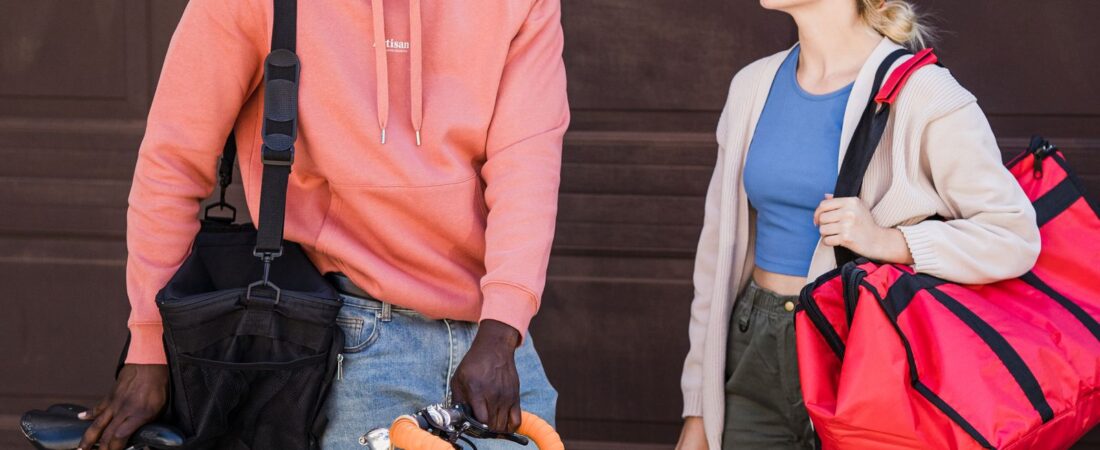

You are between pickups, app glowing green, cruising toward the next restaurant. A driver blows a red light and you T-bone them. Two people are injured, one vehicle totaled, yours out of commission. Damages come to $380,000. Your personal auto policy caps at $100,000. You figure your umbrella policy picks up the rest — until the adjuster explains that you were on a delivery run, and your personal umbrella contains a business-use exclusion. That leaves you personally on the hook for $280,000.
This scenario plays out more often than the industry likes to admit. If you deliver for DoorDash, Uber Eats, Instacart, Spark, or Amazon Flex, umbrella insurance is one of the most misunderstood topics in the entire gig economy. Here is exactly what it does for you, where it completely falls apart, and how to build the coverage stack that actually protects you in 2026.
The Liability Exposure Growing Faster Than Your Pay
In 2024, U.S. courts issued 135 nuclear verdicts — judgments of $10 million or more — totaling $31.3 billion. That figure was up 116% from the year before. While most of those targeted trucking companies and large corporations, the trend is reshaping what liability means for anyone behind the wheel for commercial purposes. Plaintiffs’ attorneys increasingly treat gig-platform drivers as commercial defendants and pursue them accordingly.
You do not need a nuclear verdict to be financially ruined. A serious accident with two injured occupants in any major US city can generate $300,000 to $500,000 in medical bills, lost wages, pain and suffering damages, and legal fees before a jury ever deliberates. When spinal cord injuries are involved, average settlements routinely exceed $1.1 million. Your state-minimum liability coverage — $25,000 in most states — disappears in the first ambulance ride. Even a $100,000 or $300,000 auto policy can leave you personally facing a massive civil judgment.
Delivery drivers face compounded exposure because of sheer mileage. A full-time driver working 40 hours per week logs 25,000 to 35,000 miles per year — well above the US average of around 14,000. More miles means more accidents, more insurance claims, and more opportunities for something catastrophic to happen. Getting a complete picture of your delivery driver insurance coverage and costs is the essential first step, but it is only the starting point.
What Umbrella Insurance Actually Is
Umbrella insurance is a liability backstop. It does not stand alone — it stacks on top of your existing auto or homeowner’s policy and activates only after your primary policy’s limits are exhausted.
Here is how it works in practice: your auto policy carries $300,000 in liability. An accident you caused results in $480,000 in total damages. Your auto policy pays $300,000. Your umbrella then steps in and covers the remaining $180,000. Without the umbrella, that gap comes directly out of your savings, home equity, or future wages through court-ordered garnishment.
Umbrella policies typically come in $1 million increments. Most individuals buy $1 million to $2 million in coverage. The cost for personal umbrella insurance is surprisingly low: according to NerdWallet’s 2026 analysis, a $1 million personal umbrella policy runs approximately $200 to $380 per year — less than a dollar a day. At that price, it is one of the most cost-efficient forms of asset protection available to any individual.
But for delivery drivers, the standard personal umbrella policy has one critical flaw that can render it completely useless at the worst possible moment.
The Business-Use Exclusion: The Trap Drivers Fall Into
Every personal umbrella policy sold in the United States contains a business-use or commercial-use exclusion. The exact language varies by carrier, but the intent is the same: incidents that occur while you are performing paid commercial work are not covered by your personal umbrella.
Delivering food or packages for pay is commercial work. Full stop. If you cause an accident while logged into any delivery platform — whether you are actively dropping off an order or just driving toward the next pickup — your personal umbrella will not respond to a third-party liability claim from that incident.
This is not buried in fine print. It is standard policy language across virtually every major carrier. Most insurance agents do not bring it up unprompted because most of their customers are not delivery drivers. The result is that a significant number of gig workers pay for umbrella coverage they believe protects them during their highest-risk hours — and it does not.
This does not make umbrella insurance useless for gig workers. It means umbrella insurance is relevant only for your non-working life. To cover your gig work liability, you need something entirely different — and that is where most drivers carry a gap they do not know exists.
What Each Platform Actually Covers in 2026
Before you can fill your coverage gaps intelligently, you need to know exactly what the platforms provide — and what they do not.
DoorDash
DoorDash provides $1 million in third-party auto liability during active deliveries, defined as the window from when you accept an order to when you hand it to the customer. Before you accept an order, and after you complete one, you are entirely on your own. There is no platform coverage between deliveries.
Uber Eats
Uber Eats provides $1 million in auto liability coverage during active deliveries as well. The important catch is a $2,500 deductible on any collision coverage, which comes out of your pocket before Uber’s policy pays anything. Drivers who have not budgeted for this deductible get caught off guard when a claim comes in. The same between-delivery coverage gap applies — nothing from Uber Eats when you are driving to the restaurant to pick up.
Amazon Flex
Amazon Flex offers the most robust platform coverage: $1 million in commercial auto liability while you are actively on a delivery block, with no deductible requirement in most states. The major exception is New York — Amazon provides zero coverage for NY-based Flex drivers, making New York one of the highest-risk operating environments in the country for an underinsured driver.
Instacart and Spark
Instacart provides zero auto liability coverage. The contractor agreement is explicit: you are entirely responsible for your own insurance while shopping and delivering. If you injure someone or damage property while working for Instacart, your personal insurance is your only coverage. Spark (Walmart) is similarly limited — the platform does not extend meaningful third-party auto liability to drivers. Treat Spark and Instacart identically when building your insurance stack: assume you are unprotected and plan accordingly.
The Three Coverage Periods — and Why Period 2 Gets Drivers Sued
Insurance professionals describe delivery driver exposure across three distinct coverage periods. Understanding the boundary between them is the single most important thing a driver can learn about their insurance situation:
- Period 1: App is off. Your personal auto policy applies normally. No commercial activity, no exclusions triggered. This is standard personal coverage territory.
- Period 2: App is on, but no active delivery accepted. You are logged in and available, driving toward a restaurant, or repositioning for better order volume. No platform covers this period. If your personal auto policy contains a business-use exclusion — which most standard policies do — you could have zero active liability coverage here.
- Period 3: Active delivery in progress, from order acceptance to dropoff. DoorDash, Uber Eats, and Amazon Flex provide $1 million in liability coverage during this window. Instacart and Spark provide nothing even here.
Period 2 is the danger zone most drivers do not think about. You are driving commercially but no platform coverage applies and your personal policy may exclude commercial use. Insurance companies are not passive about this — they pull app logs, GPS records, and phone data during claims investigations. If you were logged in at the time of an accident, they know it, and they will use that information to deny a claim. Knowing exactly what to do after an accident as a delivery driver can make a significant difference in how a claim resolves — but having the right coverage in place is the far better outcome.
The Two-Layer Strategy That Actually Works
Protecting yourself as a delivery driver requires two separate layers of coverage addressing two distinct risk areas. Most drivers have neither.
Layer 1: Close the Gig Work Coverage Gap
The solution for Period 2 exposure is a rideshare or delivery endorsement added to your personal auto policy. Major US carriers including State Farm, USAA, Progressive, Allstate, and GEICO all offer this endorsement. Cost typically runs $6 to $30 per month, and it fills the critical gap when you are logged into an app but not yet on an active delivery. For most drivers, this is the single highest-value insurance dollar they can spend.
When evaluating your auto insurance options as a delivery driver, ask specifically about the rideshare or delivery endorsement, which coverage periods it activates, and whether it satisfies the underlying policy requirements for an umbrella policy with the same carrier. Not all endorsements are built the same — some only cover Period 2 while others extend into Period 3 as well.
High-volume drivers or those with significant assets may want to skip the endorsement entirely and move to a full commercial auto policy. Commercial auto costs more — typically $100 to $200 or more per month depending on vehicle, location, and coverage limits — but it provides the broadest possible protection and is the cleanest solution for drivers treating delivery as a primary income source.
Layer 2: Add the Personal Umbrella
Once your gig work is protected through an endorsement or commercial policy, a personal umbrella fills in everything else in your life: accidents in your personal vehicle on your days off, incidents at your home or property, and personal liability lawsuits unrelated to delivery work. Given that you drive far more miles than the average American, your off-hours exposure is higher too. A personal umbrella at $200 to $380 per year is exceptional value for the asset protection it provides.
One important 2026 market change: nearly all major carriers now require a minimum of $500,000 in underlying auto liability before they will write a personal umbrella policy, up from the $250,000 standard that was common before 2025. Most carriers also require that you hold your primary auto policy with them — standalone umbrella policies from a separate insurer have become increasingly difficult to find in most markets. You may need to increase your auto liability limits when setting this up, and that added premium should be factored into your total cost calculation.
The Real Cost in 2026 — and the Tax Angle
Running the numbers on a complete dual-layer stack for a typical full-time delivery driver:
- Rideshare or delivery endorsement: $72 to $360 per year ($6 to $30 per month)
- Personal umbrella policy at $1 million: $200 to $380 per year
- Combined minimum cost for solid coverage: approximately $272 to $740 per year
That works out to less than $1.45 to $2.03 per day for a dramatically stronger liability profile. Compare that to the cost of a single serious lawsuit — settlements involving significant bodily injury regularly exceed $300,000, and incidents involving permanent disability or spinal cord damage regularly exceed $1 million. The math is not close.
On the tax side: your rideshare endorsement premium is a deductible business expense on Schedule C, since it directly enables your gig income. If you carry a commercial auto or commercial umbrella policy tied to your gig work, those premiums are deductible as well. A personal umbrella, because it covers your non-business life, is generally not deductible as a business expense — but it protects assets that took years of earned income to build, which is reason enough. Track all insurance premiums alongside your mileage and phone bill in your gig expense app so nothing slips through at tax time.
The 2026 umbrella insurance market itself has tightened. Nuclear verdicts are pushing carriers to increase personal umbrella rates 10 to 20 percent across many markets, and some are reducing the maximum coverage lines they will write. If you have been considering adding an umbrella policy, waiting is costing you on price and availability both.
Questions to Ask Your Insurer Before You Buy
Do not rely on a verbal summary from a general agent. Ask these questions directly and get the answers in writing or in a follow-up email before you commit to any policy:
- Does this umbrella policy contain a business-use or commercial-use exclusion?
- If I add your rideshare or delivery endorsement to my auto policy, does that satisfy the underlying coverage requirements for an umbrella with your company?
- What are the minimum auto liability limits required before you will write an umbrella policy for me?
- Will you write a personal umbrella if I hold my primary auto policy with a different carrier?
- Does your rideshare or delivery endorsement cover Period 2 only, Period 3 only, or both?
- Is there a deductible on the umbrella policy itself, and at what dollar amount does it activate?
If an agent gets vague on any of these, ask for the policy language or speak with a specialist in commercial or gig-economy coverage. The answers you get here determine whether the coverage you are buying actually closes your gaps or leaves them wide open.
Build Your Full Gig Worker Insurance Stack
Umbrella insurance and a delivery endorsement are two pieces of a larger financial picture. Here is what a complete protection stack looks like for a serious full-time or high-volume delivery driver in 2026:
- Personal auto policy with rideshare or delivery endorsement — fills the Period 2 gap and prevents your personal insurer from denying claims tied to commercial activity
- Personal umbrella policy ($1 million to $2 million) — protects personal-life assets from excess liability claims unrelated to your gig work
- Cargo or goods-in-transit coverage — protects you when customer items are damaged, stolen, or lost from your vehicle during a delivery; some platforms require it contractually
- Health insurance — none of the platforms provide health coverage; an ACA marketplace plan, an HSA-compatible high-deductible plan, or a short-term policy keeps a personal injury from becoming a financial catastrophe
- Disability insurance — if you cannot drive due to injury or illness, your income stops immediately. This is the most overlooked coverage gap in gig worker financial planning. Even a six-week injury can eliminate months of carefully built earnings
- Term life insurance — if anyone depends on your delivery income, term life is the foundational piece of responsible financial planning and is far more affordable than most drivers expect
Each layer of this stack protects a different part of your financial life. Auto coverage and the umbrella protect your assets from liability claims. Cargo coverage protects your ratings and your responsibility for the goods in your care. Health and disability coverage protect your ability to keep earning after something goes wrong. Term life covers the people who depend on you if something permanent happens.
The 2026 Gridwise Gig Mobility Report found that delivery driver hours are increasing while per-hour pay growth has slowed — drivers are working harder for every dollar they bring home. Protecting those earnings, and the assets they have built, with the right insurance stack is not optional financial planning for a serious gig worker. It is the other half of the job. Build the stack right, review it once a year, and drive knowing the worst-case scenario is something you can actually survive.
Ready to Start Delivering and Cash In?
Join thousands of drivers already earning — and get a $2,575 guaranteed bonus after completing your first 200 deliveries in select US cities.
New drivers: Sign up through our partner link and start earning today!
Sign Up for Uber Eats and Start Delivering →
Must be 18+. Background check required. Terms apply.