


Every November, the airport kitchens that load food onto airliners go from busy to frantic, and they hire drivers who already know how to work a route. If you can keep a DoorDash order intact across town, you can keep a sealed catering cart intact across an apron. Here is what the job actually is, what it pays in 2026, and how to get badged before the holiday flight surge hits.
Driver Opportunity
Want to Earn While You Read?
Join as a new driver and get up to a $2,575 guaranteed bonus after completing your first 200 deliveries in select US cities.
Start Earning Now →New drivers only · Terms apply · Available in select cities
Why Airline Catering Is the Steady Money Move This Holiday Season
If you have been running DoorDash or Spark long enough to know what a slow Tuesday afternoon looks like, you already understand the problem with gig delivery: the floor is unpredictable. You can have a great Saturday and a dead Wednesday, and the average of those two days is what actually pays your bills. Airline catering delivery does not work that way. The floor is set in advance by a provisioning sheet, a boarding time, and a tail number that has to depart on schedule whether you feel like showing up or not.
That is the core difference. When you pull a catering truck onto the ramp and back it up to a galley door, there is a gate agent waiting, a cabin crew doing their preflight checks, and a departure clock that does not negotiate. The kitchen has already built the carts. Your job is to get them there sealed, counted, and on time. That kind of hard accountability is what makes the pay predictable, and it is why the holiday window — Thanksgiving week through roughly January 2 — is worth paying attention to right now.
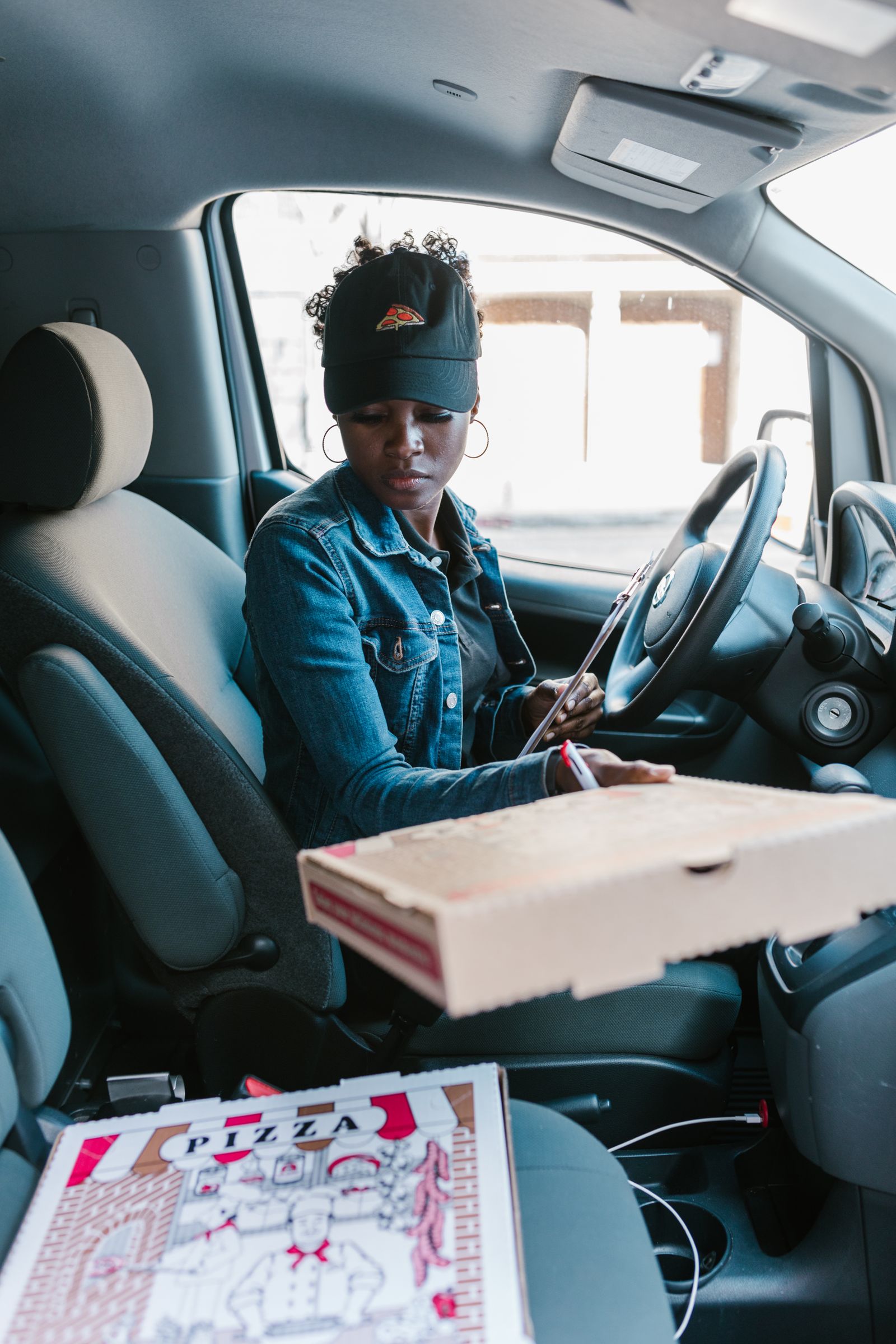
Flight volume spikes hard in that window. Airlines add extra sections, kitchens run double shifts, and the big flight-kitchen contractors that staff hub airports start pulling in anyone with a clean record and a pulse who can handle a 40-pound cart. If you have a year of seat time and a driving record you are not embarrassed by, you can realistically be badged and running your first solo truck in two to three weeks. That is a tight timeline, but it is realistic at a lot of hubs right now.
We put this piece together for drivers who already understand the delivery world and want to know whether airline catering is worth chasing before the surge hits. The honest answer is yes — with a few real caveats about how this job differs from anything you have done on an app.
What the Job Actually Looks Like: The Route from Kitchen to Stand
Airline catering delivery is not mysterious once you understand the sequence. Every flight that serves food, snacks, or beverages gets a provisioning sheet — a document that tells the flight kitchen exactly how many first-class meals, economy snacks, beverage carts, ice drawers, and sealed liquor kits go on that specific aircraft. Your job as a catering driver is to take what the kitchen builds and get it to the aircraft at the right gate, at the right time, sealed and counted correctly.
Loading Out of the Flight Kitchen
Your shift usually starts inside the flight kitchen or the attached bonded warehouse. You pull your assignment for the day — which flights you are servicing, what time each one needs to be at the stand, and what each provisioning sheet calls for. You verify cart counts before you load. This is not a formality. If the sheet says four beverage carts and you roll three onto the truck, you will find out at the aircraft door with no time to fix it. Cart count accuracy is one of the things supervisors watch closely, especially on new hires.

Once the carts are loaded and verified, you seal them. Sealed means a tamper-evident seal on any cart that carries alcohol, medications, or controlled service items. That seal number gets logged. Breaking a seal on a cart before you hand it off to the cabin crew is a serious violation — it triggers a full recount, it can ground the catering for a flight, and it is the kind of thing that gets people separated from their badge fast.
Driving the Ramp: What City Driving Does Not Prepare You For
The ramp is not a street. There are speed limits — typically 15 mph or lower depending on the area — and right of way belongs to the aircraft, always, no exceptions. You do not use your phone on the apron. You do not cut corners around wing tips. You follow the painted lines and yield markings, and you are aware at all times that a ground strike on an aircraft is not a fender bender — it grounds the plane, triggers a full incident report, and ends your time at that airport permanently.
Drivers who come from app delivery sometimes struggle with this adjustment. App work trains you to move fast and optimize for speed. Ramp work trains you to move deliberately and optimize for accuracy. Those are different instincts, and the first few weeks are where new hires either make the mental switch or wash out. The good news is that if you have driven a box truck or a large cargo van for any route work, the spatial awareness transfers well. If you have only driven a sedan for restaurant pickup, give yourself a day or two to get comfortable with the truck dimensions before your first solo run.
For more on staying sharp during early morning ramp shifts and pre-dawn report times, the guidance in our piece on night shift safety for delivery drivers applies directly to those 4 a.m. catering starts.
At the Stand: Coordinating with Crew and Swapping Carts
When you pull up to the stand, you are coordinating with the gate agent and the cabin crew simultaneously. The crew is loading passengers’ overhead bags, doing safety checks, and counting their own service items. You are swapping out dirty carts from the inbound flight for clean loaded carts, returning empties and any unbroken sealed liquor kits to the truck for return to the bonded store. The swap has to happen in a window that is usually 20 to 45 minutes depending on the turn time the airline scheduled.
On-time arrival at the stand is the metric that matters most. Show up five minutes late with a full truck and a perfect cart count, and you have still failed the most important part of the job. The kitchens know this, and supervisors track stand arrival times by driver. If you are consistently early, you get better shift bids over time. If you are consistently cutting it close, you get the hard conversations early.
Pay, Schedule, and What the W-2 Side of This Actually Looks Like
This is where airline catering differs most sharply from gig delivery, and where drivers make mistakes by assuming the two worlds work the same way. Airline catering at hub airports is almost always W-2 employment through the flight-kitchen contractor or the airline’s ground service subsidiary. You are not a 1099 worker. You have a scheduled shift, a posted start time, and a supervisor. Understanding what that means for your taxes and your income planning is worth reading up on — our 1099 vs. W-2 delivery driver tax guide breaks down exactly what changes when you make that shift.
Base pay at most hub airports in 2026 runs $18 to $20 an hour for new catering drivers. Lead drivers and certified provisioning drivers with a couple of years in typically run $22 to $26 depending on the hub. Larger hubs with higher cost of living tend to be on the upper end. During the holiday surge window, most contractors offer shift differentials for overnight and early-morning starts, and overtime kicks in after eight hours in a single day at many operations. Running a full holiday week with a couple of overtime shifts can push your weekly gross meaningfully above what the base rate suggests.
| Driver Type | Typical 2026 Hourly Range | Holiday OT Potential |
|---|---|---|
| New hire, first season | $18 – $20/hr | Time and a half after 8 hrs/day |
| Second-year driver | $20 – $22/hr | Shift differential plus OT available |
| Lead / CPD driver | $22 – $26/hr | Priority shift bids, more OT hours |
Schedules are posted and bid by seniority. As a new hire, you get the shifts nobody else wanted — which in the holiday peak is not actually a problem, because the leftover shifts are often the high-overtime early-morning runs that senior drivers passed on in favor of shorter days. It evens out in your favor during the surge. In January and February, when flight volume drops and the extra-section flying goes away, new hires feel the schedule thinning out first. That is the honest reality of seniority-based bidding, and it is why a lot of seasonal catering drivers keep one gig app active through the winter lull as a fill-in income layer.
Getting Hired: The Process and Where People Get Stuck
The hiring requirements for airline catering are more involved than a gig app onboarding, but they are not out of reach for most experienced delivery drivers. The list looks long on paper, and it is — but each item is straightforward if you have been driving professionally for at least a year.
- Valid driver’s license with one to three years of verifiable history on your record
- Clean motor vehicle record — most contractors run a full MVR check and are looking for no major violations in the past three to five years
- Ten-year background check for the airport SIDA badge (Security Identification Display Area) — this is federal, not the contractor’s call
- Pre-employment drug screen, with ongoing random testing common after hire
- Physical ability to lift, push, and stack carts in the 30 to 50 pound range repeatedly across a shift
- DOT medical card at some operations, particularly if you will be driving vehicles over 10,001 pounds gross vehicle weight
The piece that slows people down most is the SIDA badge. The background investigation goes through the TSA and the airport authority, and at busy hub airports the processing queue can stretch four to six weeks during peak hiring windows. Apply early. Some contractors will let you train in the kitchen and do non-ramp tasks while your badge clears, but you cannot drive a truck onto the apron until that badge is in your hand. Factor that timeline into when you apply — if you want to be running solo routes by Thanksgiving week, you need to have your application in before the end of October.
Drivers who have done any kind of route work — DSD bread routes, beverage delivery, produce runs — tend to adapt quickly to the documentation and verification side of catering. If that world is new to you, our overview of DSD route driver jobs in 2026 gives you a solid picture of what route-accountability culture looks like before you walk into a catering interview.
Food Safety and Temperature Control: The Part That Trips Up New Drivers
Airline catering is regulated food handling. The flight kitchen operates under FAA oversight and food safety standards that are more rigorous than a restaurant or a dark kitchen. Perishable items — particularly first-class hot meals and dairy-based products — have temperature windows that are logged at multiple points in the chain. If a cart arrives at the aircraft with perishables outside the acceptable range, the cabin crew can refuse the cart, and that refusal goes into a quality record that gets traced back through the chain to find where the break happened.
In practice, this means you pay attention to how long a loaded cart has been sitting before you move it, whether your truck’s refrigeration unit is functioning on temperature-sensitive loads, and whether carts are getting stacked in ways that block airflow around chilled items. None of this is complicated, but it requires a different level of attention than most gig delivery asks of you. For a solid grounding in what food safety temperature requirements actually mean for drivers handling perishables, our food safety temperature guide for delivery drivers is a useful read before your first day.
The operations side of airline catering has a lot in common with other regulated airport work. Drivers who move into ramp services or ground handling sometimes start here and cross-train into related roles — in-flight supply warehouse, commissary loading, cabin cleaning crews, and lavatory and water service all draw from the same hiring pool and share the same badge and background requirements. If catering turns out to be a good fit, those adjacent roles are worth keeping in mind as a path to more hours or a different schedule configuration.
The Holiday Peak Window: Why November and December Are the Entry Point
The Thanksgiving-to-New-Year surge is the biggest hiring window in airline catering for a simple reason: flight volume spikes, extra sections get added to popular routes, and the kitchens need to provision significantly more aircraft per day than their base staffing can handle. That creates real urgency on the contractor side to bring in trained, badged drivers quickly, and it means that new hires who might wait months for an opening in a slower period can get hired and onboarded in weeks during October and November.
Holiday weeks also carry shift differentials and overtime availability that are not typical the rest of the year. If you come in as a new hire at $18 an hour and run 40 hours in a holiday week with a few overtime shifts on top, your effective weekly gross climbs. That math does not work every week of the year, but during the peak it stacks up. The comparison to gig delivery is straightforward: there is no surge pricing and there are no tips, so your ceiling is lower than an exceptional DoorDash Saturday. But your floor is much higher, and a consistent 30 to 40 hours across the peak weeks beats a volatile gig income for most drivers who are trying to plan around holiday expenses.
January and February are the slow stretch. New hires get reduced hours when the extra-section flying stops, seniority rules the shift bids, and overtime dries up. This is not a secret in the industry — it is just how the seasonal shape works. Drivers who understand this going in plan accordingly, keeping a gig app active or picking up adjacent airport work during the lull while waiting for spring travel to fill schedules back out. For a broader look at how to structure your income across peak and slow periods, our holiday peak season delivery playbook covers the planning side in detail.
It is also worth knowing that airline catering is not the only airport-adjacent delivery work that hires aggressively in this window. Aircraft parts couriers — the AOG runs that get critical parts to grounded aircraft quickly — operate on a similar urgency model. If you are curious about that lane, our piece on aircraft parts AOG courier runs in 2026 covers how those gigs work and what they pay.
Mistakes That Get Drivers Dropped and How to Avoid Them
The fastest way to lose an airline catering job is to treat it like gig work. That sounds obvious, but drivers who come from the app world have specific habits that create problems in this environment, and it is worth being direct about what they are.
Showing Up Late to the Stand
Late on a gig app means the customer waits and you might get a bad rating. Late to an aircraft stand means a boarding delay, a gate agent who has your name, and a supervisor conversation before your next shift. Repeated late arrivals mean you do not get another shift. The boarding clock is not flexible. Build more buffer than you think you need into your stand transit times for the first few weeks until you know the ramp routes and traffic patterns at your airport.
Breaking Cart Seals
Do not break a seal to check the contents, adjust a cart, or for any reason that is not explicitly authorized in your training. A broken seal on a liquor kit triggers a full reconciliation. The reasoning behind seal protocols goes back to federal bonded-store requirements on alcohol and the FAA’s chain-of-custody requirements for controlled service items. It is not bureaucratic friction — it is a regulatory requirement, and treating it casually will end your time in the kitchen fast.
Driving the Ramp Like a City Street
Speed limits on the apron exist because an aircraft ground strike costs airlines hundreds of thousands of dollars and grounds the plane. Right-of-way rules exist because a catering truck does not win a collision with a pushback tug or a fuel truck. The rules are enforced by ramp control, by cameras, and by the people watching from the gate. Phone use on the apron is a termination offense at most operations, not a warning. Leave the phone in the truck cab, follow the speed limits, and yield to everything that is bigger than you and everything with a wing.
The good habits that make you effective in airline catering are the same ones that build a strong record in any regulated delivery role — attention to documentation, accountability on timing, and respect for the physical environment you are working in. Those same qualities transfer well to other structured delivery work. If you have done corporate catering delivery or similar route-based food service, our piece on corporate office holiday party catering delivery in 2026 gives you a useful parallel for how professional food delivery accountability works in a non-airport context.
Is This the Right Move for You Before Thanksgiving?
Not every gig driver is set up for airline catering right now. If your driving record has recent violations, your background has complications, or you cannot pass a DOT physical, the hiring gates will stop you. Be honest with yourself about those before you spend time applying. If you are clean on all of those fronts, have been driving delivery or route work for at least a year, and you are comfortable with early morning starts and physical cart work, the window between now and mid-November is genuinely the best hiring environment this job sees all year.
The money is not glamorous compared to a great gig week, but it is reliable in a way that gig delivery structurally cannot be. Thirty to forty hours at $18 to $20 an hour, with overtime available during the peak weeks, is a solid income floor for the holiday stretch. For drivers who are tired of the unpredictability and want to know what their check will look like before Friday, that floor is the whole point. And if you want to understand how warehouse-based food distribution compares for drivers thinking about moving into more structured delivery roles, our guide to warehouse and grocery delivery in 2026 covers the trade-offs.
Driver Opportunity
Ready to Start?
Turn This Guide Into Real Income. Join as a new driver and get up to a $2,575 guaranteed bonus after completing your first 200 deliveries in select US cities.
Sign Up & Start Delivering →New drivers only · Terms apply · Available in select cities
If airline catering sounds like your move, start your application now, get your MVR pulled so there are no surprises, and ask the contractor directly about the SIDA badge timeline at your specific airport. The drivers who show up badged and trained before Thanksgiving week are the ones who get first access to the overtime shifts. That timing advantage is entirely within your control.