


You already know the food delivery hustle. But there is a category of gig work that most drivers overlook — and it pays more per trip, tips heavier, and does not require memorizing restaurant layouts or waiting on a hostess to find an order. Hardware and home improvement store delivery is quietly one of the most lucrative niches in gig delivery right now, and the fall 2026 DIY season is about to make it even busier.
Home Depot, Lowe’s, Ace Hardware, and Menards are routing a growing share of their same-day inventory through gig-delivery networks in 2026. The global DIY retail product market hit $875.4 billion in value this year, and a significant slice of last-mile fulfillment is now handled by independent drivers — people with a truck, cargo van, SUV, or large sedan who can bridge the gap that big-box retailer fleets cannot cover on their own. This guide breaks down exactly how to get into hardware delivery, which platforms pay the most, and how to protect your vehicle and earnings on every haul.
The Platforms Running Hardware Store Delivery in 2026
Not every gig app handles hardware store runs, but several major ones do — each with a different pay structure and vehicle requirement.
Roadie (A UPS Company) is the biggest player for home improvement delivery. Roadie is an official delivery partner of Home Depot, and when customers order lumber, patio furniture, a riding lawn mower, or boxes of ceramic tile for same-day delivery, Roadie drivers fill that gap. The platform covers up to 97% of U.S. households and pays $10–$50 per delivery for standard items, with big-and-bulky hauls paying significantly more. As of August 2026, the average Roadie driver earns $21–$28 per hour across all delivery types — and big-item runs pull that average up substantially. For drivers with cargo vans or box trucks, Roadie also offers RoadieXD™ gigs in select markets, the highest-paying tier on the platform.
DoorDash and Spark (Walmart+) both carry hardware store orders through their retail delivery programs. Spark routes Walmart hardware and outdoor orders — garden tools, pressure washers, drill sets — through the same driver network you already use for groceries. These are generally smaller and lighter than Roadie XD gigs but show up in the same app you are already running. UE Connect, Uber Eats’ B2B and retail arm, handles some Ace Hardware and local hardware retailer orders in select cities.
How Roadie Works Compared to DoorDash Retail Orders
On Roadie, you browse available gigs in the driver app — similar to how Amazon Flex shows available blocks — and claim them before other drivers do. The app factors your vehicle size, location, and driver rating into which gigs appear first. On DoorDash and Spark, hardware orders flow through the same queue as restaurant and grocery deliveries. The key difference: Roadie shows you item weight, dimensions, and the full pickup-to-dropoff route before you commit. That transparency makes it far easier to filter out gigs your vehicle cannot handle before you waste a trip.
What You Will Actually Be Hauling — and Why It Pays More
Hardware store deliveries are not light bulbs and zip ties. The gig apps route these orders specifically because the items are too big, too heavy, or too awkward for standard parcel carriers. That difficulty is your advantage as a driver.
Common hardware store delivery items in 2026:
- Lumber and plywood sheets — 4×8 panels, 2×4 bundles, pressure-treated decking
- Bags of concrete, mortar, or mulch — 40 to 80 lbs each
- Paint cans and 5-gallon paint buckets
- Power tools and tool sets: drills, circular saws, air compressors
- Appliances: ranges, dishwashers, water heaters, mini-fridges
- Garden center items: bagged soil, sod rolls, patio furniture, propane grills
- Flooring: boxes of ceramic tile, hardwood, luxury vinyl plank
- Fixtures: ceiling fans, bathroom vanities, toilets, undermount sinks
The reason these pay more is straightforward: they require cargo space, physical effort, and sometimes coordination that a restaurant bag drop does not. Customers ordering a $400 bathroom vanity or a $600 appliance tip significantly better than average food delivery customers — they know they are asking you to do real work. According to the 2026 retail delivery profit guide, the big-and-bulky category consistently outperforms standard small-parcel delivery for net hourly earnings, even after accounting for extra loading time at the store.
Vehicle Requirements: What You Need to Qualify
You do not need a commercial truck to start running hardware delivery gigs. Here is the real breakdown by vehicle type and what each class unlocks on Roadie and the retail platforms.
Sedan or Hatchback — Qualifies for Roadie’s small-item tier and DoorDash or Spark retail orders. You will handle tools, small appliances, paint cans, and boxed fixtures. Avoid bags of concrete and full-size sheet lumber — those items will damage your interior and can overload your suspension over time.
SUV or Crossover — The sweet spot for most hardware gig drivers. With rear seats folded, most SUVs handle a 4×4 sheet of plywood, stacked tile boxes, or a compact appliance without issue. You open up roughly 70% of Roadie’s available Home Depot and Lowe’s gig inventory with this vehicle class. If you have an SUV and have only been running food delivery, you are leaving hardware gig money on the table every week.
Full-Size Truck or Cargo Van — This is where the money concentrates. Roadie XD requires a cargo van or box truck and commands the highest payouts on the platform. You can handle full-size appliances, riding mowers, large pallets, and lumber bundles that no other vehicle class can touch. If you plan to run hardware delivery as a significant income stream, a truck or cargo van unlocks the top-paying tier. Before committing your vehicle to heavy loads, review our delivery driver car maintenance schedule — heavy cargo accelerates wear on shocks, tires, and brakes significantly faster than food delivery miles do, and budgeting for that extra wear from day one matters.
Loading, Securing, and Protecting Your Vehicle
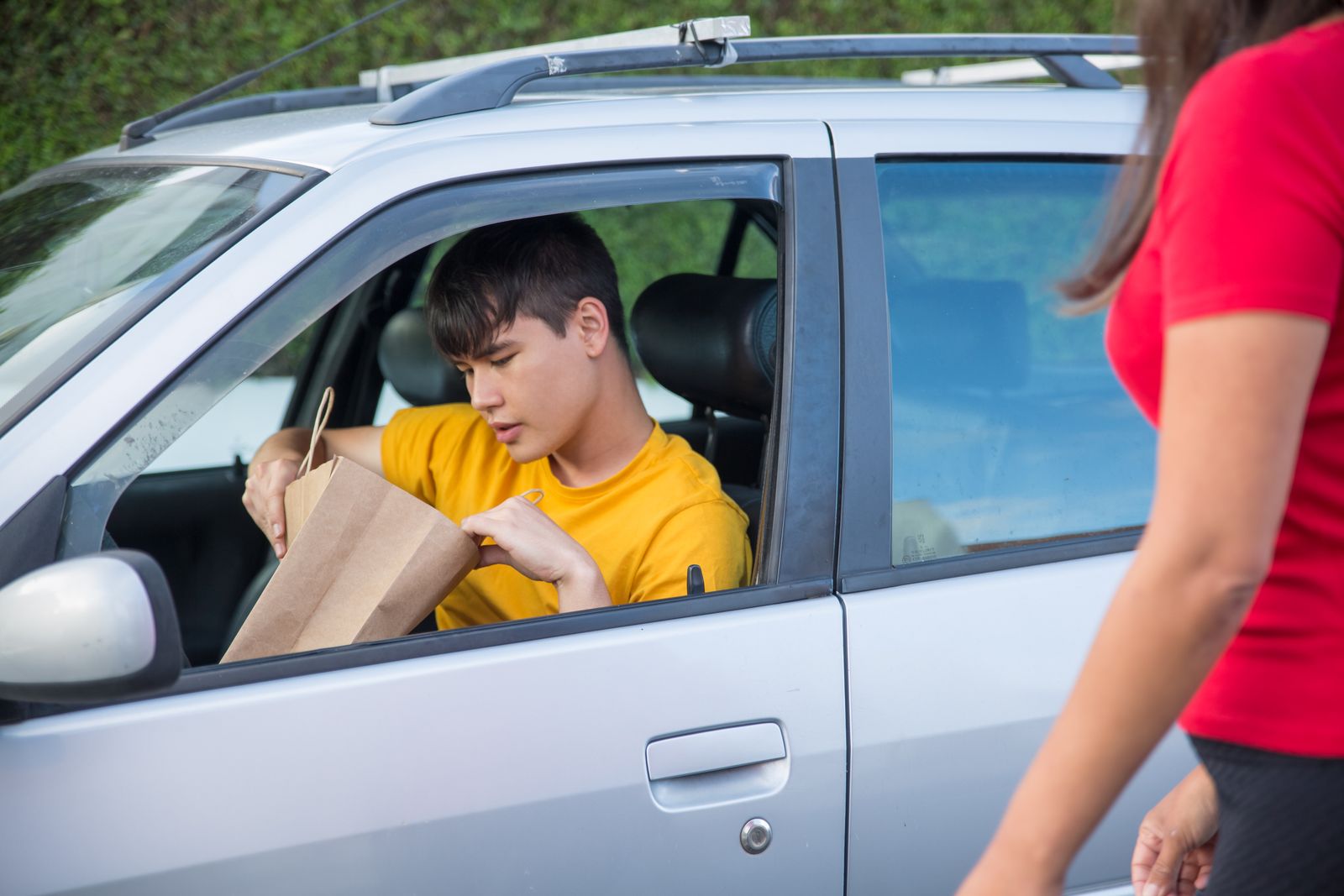
This is where most new hardware delivery drivers make expensive mistakes. A restaurant bag sliding around in your back seat is annoying. A 50-pound bag of concrete sliding into your cargo area wall is a repair bill you did not plan for. The fixes are cheap — the mistakes are not.
Essential cargo protection gear for hardware runs:
- Cargo mat or moving blanket — Lay one down before every pickup. These run $15–$25 at any hardware store, are fully deductible as business supplies, and prevent most interior damage. This is the single best investment a hardware delivery driver can make.
- Ratchet straps or cargo tie-downs — Use them for anything over 20 lbs. Neither Roadie nor DoorDash contractually requires you to secure cargo, but your suspension and interior panels do.
- Paint can protocol — Double-bag every paint can in a heavy-duty trash bag before loading. Paint spills inside a vehicle are nearly impossible to fully remediate and can total your cargo area carpet in a single trip.
- Lumber edge protection — Place a folded towel or foam pad on your liftgate sill before sliding boards in. Planks dragged across bare metal scratch both the board and your vehicle’s finish.
- Appliance tilt rule — Never tilt a refrigerator or freezer more than 45 degrees. Compressor oil shifts into cooling lines when units are laid flat, which can permanently damage the appliance and expose you to liability for the item.
On damage liability: Roadie’s terms hold drivers responsible for items while in their possession. Standard personal auto insurance typically excludes cargo damage claims entirely — a gap that surprises most drivers coming over from food delivery. A commercial cargo rider or delivery endorsement typically adds $15–$30 per month to your existing premium and is worth every dollar if you are running weekly hardware hauls. Read the full delivery driver insurance guide for 2026 before your first heavy haul and make sure you know exactly where your coverage stops.
How to Maximize Earnings on Hardware Delivery Runs
Hardware delivery pays more per trip, but only if you filter intelligently. A 12-mile delivery of a $500 grill that pays $45 is excellent. A 28-mile round trip for a $16 paint-can run that includes a 20-minute load-in is a money loser. Here is how to consistently end up on the right side of that math.
Filter gigs by payout-to-mile ratio. Roadie displays distance and pay upfront before you commit. Look for gigs paying at least $1.50 per mile for smaller loads, or $2.00 or more per mile for big-and-bulky items. Anything under $1 per mile only makes sense if the dropoff is directly on your way home.
Work the fall DIY window hard. September through early November is peak home improvement season — homeowners finishing decks, weatherproofing siding, painting interiors before the cold hits, and remodeling before holiday hosting season begins. Roadie’s Home Depot delivery volume spikes sharply during this window. Saturday mornings from 8 a.m. to noon are consistently the highest-volume hardware delivery window on the platform. Block out that time slot and you will have more gigs available than you can take.
Layer hardware runs with multi-apping. Roadie gigs often have 30- to 60-minute pickup windows — enough time to run a food delivery between accepting the gig and arriving at the store. See our complete multi-app guide for exactly how to time overlapping gigs without missing either pickup. Track every mile you drive — including dead miles repositioning between hardware pickups — because those miles are fully deductible and add up fast on suburban hauls. Our dead mileage guide for delivery drivers covers the tracking habits you need to make sure you are not leaving tax money behind on every run.
Understand tip culture on hardware runs. Hardware delivery tips consistently run $10–$25 on large-item deliveries, compared to the $3–$6 average most food delivery drivers see. Customers know they are asking you to haul real weight, and they compensate accordingly — especially when you handle their item carefully, communicate your ETA through the app, and leave the delivery area clean. Those three habits convert directly into 5-star ratings, which affect gig priority on Roadie’s matching algorithm.
Pickup Etiquette at Home Depot and Lowe’s
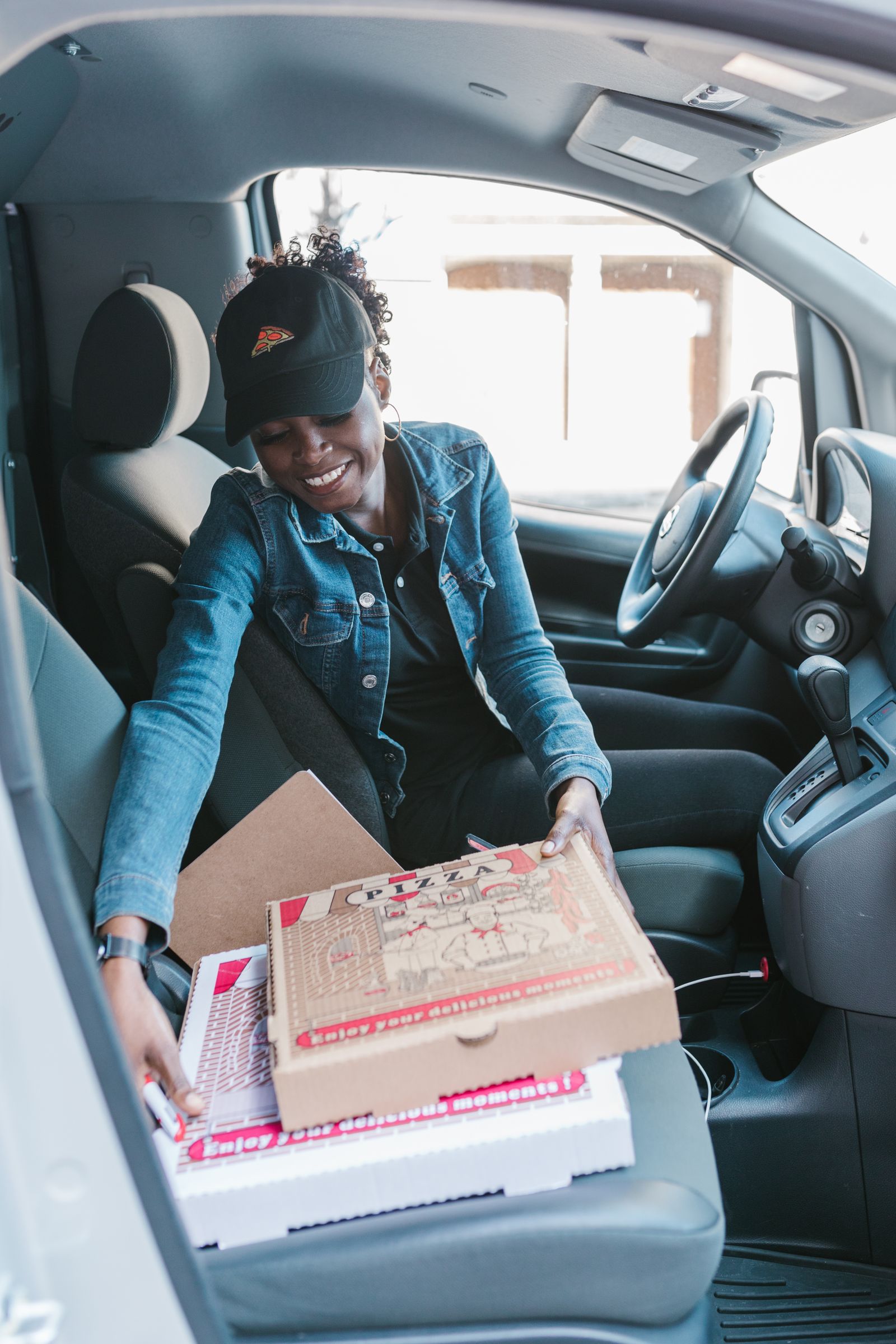
Most gig drivers underestimate how much time they lose at the hardware store pickup counter. Unlike a restaurant where you grab a sealed bag off a shelf, hardware pickups regularly involve locating orders in a warehouse staging area, waiting for associates to pull floor stock, loading oversized items with store forklifts, and verifying item counts on multi-piece orders. That time eats directly into your effective hourly rate if you are not prepared going in.
Tips to get in and out fast:
- Go to the pro/contractor desk first — not the main customer service counter. Lines are shorter and associates are trained to handle contractor-style pickups faster.
- Pull up your order number in the app before you walk in. Have it visible when you reach the desk — do not make the associate wait while you scroll.
- For XL items flagged as requiring a forklift, call the store using the number in the Roadie app before you leave your current location. Give them your ETA so the item is staged when you arrive.
- Wear closed-toe shoes. Many Home Depot and Lowe’s staging areas require it — drivers in open sandals have been turned away at the pickup dock, wasting the entire trip.
- Bring your cargo mat and straps into the store when loading large items. Associates appreciate drivers who come prepared to load cleanly and move quickly.
Tax Deductions Hardware Delivery Drivers Commonly Miss
Heavy-load gig work changes your deduction picture in ways that pure food delivery does not, and most drivers leave money on the table because they do not track the right expenses from the start.
Mileage — The 2026 IRS mileage rate is 76 cents per mile. Track every mile from the moment you accept a Roadie gig to the moment you complete the dropoff. Dead miles repositioning between gigs count too. On hardware runs that involve longer suburban or exurban routes, these miles add up significantly faster than on dense urban food delivery routes.
Cargo supplies and equipment — Moving blankets, cargo mats, ratchet straps, appliance dollies, and tie-down anchors are all deductible as ordinary and necessary business supplies. Keep every receipt. Most drivers miss these entirely because they do not think of cargo straps as business equipment. They are, and the IRS agrees.
Commercial cargo insurance rider — The monthly premium for your cargo endorsement is deductible as a business expense, not a personal insurance cost. Log it separately from your regular auto insurance premium at tax time.
Vehicle depreciation — If you use a truck or cargo van primarily for delivery gigs, you may qualify for accelerated depreciation under Section 179. The tax savings on a commercial vehicle can be significant in year one. Talk to a tax professional who works with gig workers before your first filing season with hardware delivery income on the books.
Is Hardware Delivery Worth Adding to Your Stack in 2026?
If you have a truck, SUV, or cargo van already taking a beating on standard food delivery miles, yes — hardware runs are worth adding to your rotation. They pay more per trip, tip higher, and do not carry the food-safe handling anxieties. The honest tradeoff is physical effort and load management: you are moving real weight, not handing a bag to someone at a door.
The fall 2026 window — September through November — is exactly the right moment to start. DIY project season is in full stride, Roadie’s Home Depot delivery volume spikes in Q3 and Q4 as homeowners race to finish outdoor projects before cold weather hits, and the platform has more gig inventory than it can fill with its current driver base in most markets. If you have been looking for a higher-paying niche that does not require a full platform switch or a new account setup, hardware delivery is the most accessible upgrade available to a gig driver with the right vehicle right now.
Start with Roadie. Download the driver app, complete the standard background check — the same process as every other platform — and set your vehicle class accurately. Your class determines which gigs you see, so do not undersell your SUV as a sedan. Take a few smaller gigs to build your rating and learn the platform rhythm, then move up to big-and-bulky. That is where the hourly rate consistently beats food delivery, and where tips turn a solid run into a great one.
Ready to Start Delivering and Stack More Earnings?
Join thousands of drivers already earning more per haul — and get a $2,575 guaranteed bonus after completing your first 200 deliveries in select US cities.
New drivers: Sign up through our partner link and start earning today!
Sign Up for Uber Eats and Start Delivering →
Must be 18+. Background check required. Terms apply.