


Small Business Saturday is the one Saturday a year when the whole country is told to shop local — and in 2026 that means tens of thousands of independent shops, bakeries, florists and neighborhood restaurants all pushing same-day delivery in the same short window. For drivers it is a strange, dense little shift: the stops sit close together, the tips run better than a normal weekend, and the parking is a nightmare. Here is how to work it like a route instead of a scramble.
Driver Opportunity
Want to Earn While You Read?
Join as a new driver and get up to a $2,575 guaranteed bonus after completing your first 200 deliveries in select US cities.
Start Earning Now →New drivers only · Terms apply · Available in select cities
What Makes Small Business Saturday Different From Any Other Weekend
Small Business Saturday 2026 lands on November 28 — the Saturday after Thanksgiving, sandwiched between Black Friday shopping chaos and Cyber Monday screen time. It was created in 2010 by a major card network and has been co-sponsored by the U.S. Small Business Administration since 2011, which means it carries real institutional weight. Local chambers push it, downtown business associations put up signage, and independent shops run one-day-only promotions that pull in foot traffic they rarely see outside of December.
For us as delivery drivers, that shift in consumer behavior is an opportunity — but only if we treat the day differently than a regular Saturday. The 2025 edition generated an estimated $18 billion in consumer-reported spending at small businesses. In-store participation rose about 2.6% from 2024 to 2025. That money flows through boutiques, bakeries, florists, local restaurants, and gift shops. A meaningful slice of it moves via same-day delivery, and that is exactly where we come in.
The mistake most drivers make is logging on at 10 a.m. with no prep, accepting the first offer that pops up, and then spending two hours circling a congested downtown block for $6 base pay. That is a fuel and time hole. The drivers who bank solid money on this day show up with a plan, a clean car, the right gear, and at least a passing knowledge of which neighborhoods will be dense with work.
If you want the broader framework for capitalizing on the entire holiday stretch, the holiday peak season delivery playbook for 2026 lays out the full arc from Thanksgiving week through New Year’s. But Small Business Saturday has its own rhythm, and that is what we are going to break down here.
The Demand Curve: When the Work Actually Shows Up
Shop hours on Small Business Saturday typically run 10 a.m. to 4 p.m. for most independent retailers. That compresses delivery demand into a short, dense window rather than spreading it across a full day. If you know the shape of that curve, you can position yourself to catch the peaks instead of sitting idle in a parking lot waiting for the app to chirp.
Late-Morning Bakery and Brunch Rush (10 a.m. to 1 p.m.)
Local bakeries, coffee shops, and brunch spots fire up early on this day. Shoppers heading downtown want something to eat before they browse. Corporate gift orders placed earlier in the week often have a morning delivery window, and catering runs for office holiday parties that happen to fall on the Saturday are common. This is prime time for insulated-bag work — pastries, soup, hot beverages, and brunch platters that need to arrive warm and intact.
If you work bakery and pastry runs regularly, you already know the basics. For drivers newer to it, the holiday cookie and bakery delivery guide covers how to handle fragile baked goods without destroying them en route — which matters a lot when a boutique is sending a tiered cake to a VIP customer and you are the one responsible for it arriving right.
Early-Afternoon Gift and Boutique Rush (12 p.m. to 3 p.m.)
This is the heart of the day. Independent boutiques, gift shops, toy stores, and home goods stores are running promotions, and some of their customers want items delivered rather than carrying bags around downtown. Florists are dispatching same-day arrangements. Bookstores are fulfilling online orders placed that morning. Specialty food shops are sending gift baskets.
App base pay on retail and shop-and-deliver offers in 2026 generally lands between $2 and $10 per offer before tips and peak pay. Multi-stop local retail runs can clear $8 to $25 per stop depending on distance, item size, and wait time. The math gets interesting fast if you string together a tight cluster of stops in a walkable downtown area rather than taking a single long-distance run to a suburb.
Late-Afternoon Restaurant and Catering Tail (3 p.m. to 6 p.m.)
As shops start closing around 4 p.m., the demand shifts to restaurants and catering. Shoppers who spent the afternoon browsing are now hungry. Families ordering dinner early because it is still a holiday weekend. Small catering jobs for Saturday evening events. Peak pay windows on the day typically run 11 a.m. to 1 p.m. and again from 3 to 6 p.m., so this tail end of the day carries a legitimate earnings kicker if you stay online for it.
Large catering and multi-item restaurant orders have their own handling requirements, and if you have not read up on those yet, the catering and large order delivery guide is worth fifteen minutes of your time before the holiday season hits.
Positioning: Where to Be and Why It Matters
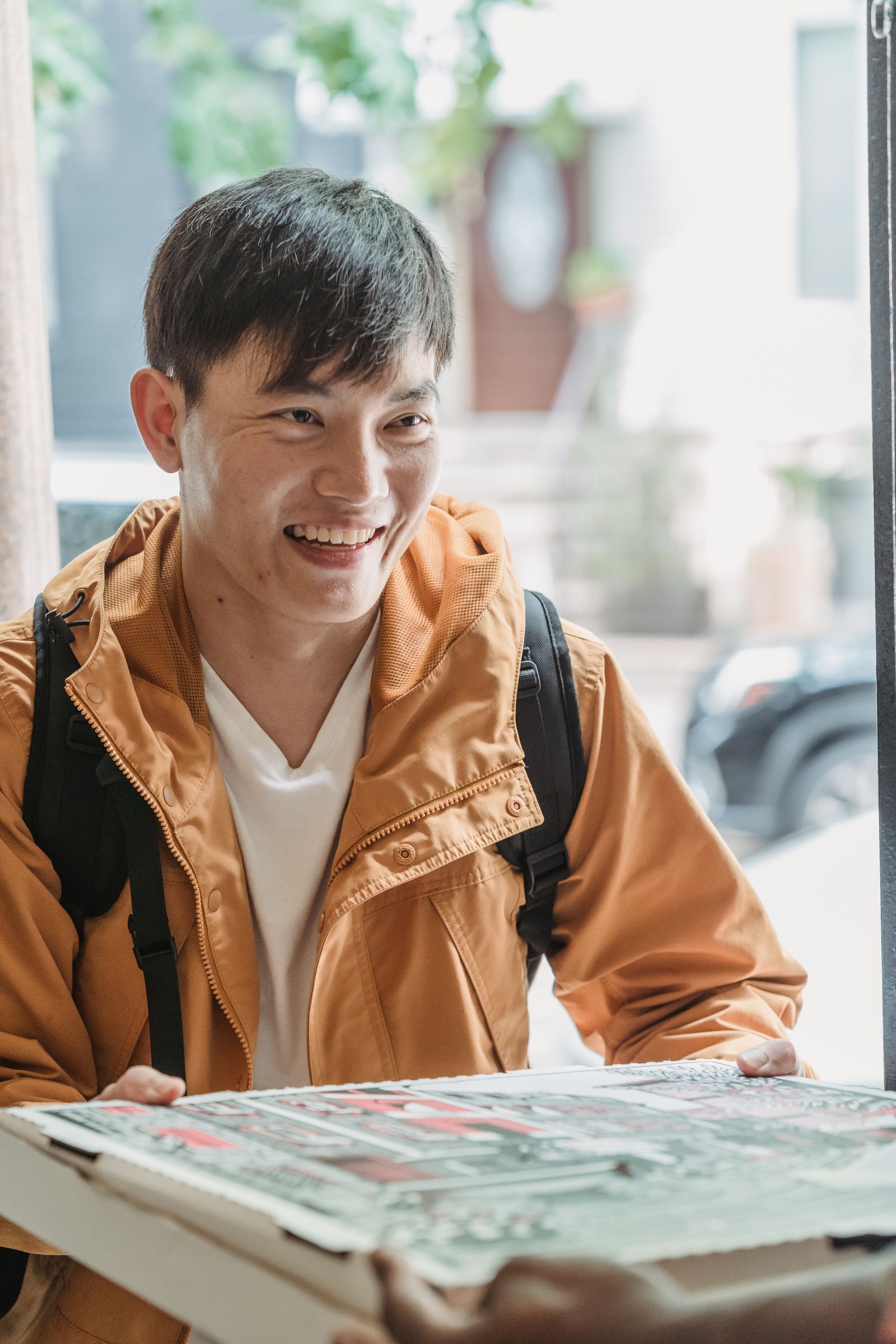
On a normal Saturday, positioning strategy is relatively forgiving. You can sit near a cluster of chain restaurants and catch steady food orders. Small Business Saturday is different because the density of work is concentrated in specific neighborhoods — downtown cores, arts districts, walkable main streets, historic shopping areas — and the drivers who are already in those zones when the peak pay windows open will catch the cream of the offers.
The week before November 28, spend twenty minutes mapping your city’s participating business districts. Most local chambers of commerce publish a map of Small Business Saturday participants. That map is a delivery demand heat map for you. Print it or screenshot it. Note which blocks have multiple shops within walking distance of each other, because multi-stop runs in those areas are worth considerably more per hour than driving across town for a single drop-off.
For context on how day-of-week and time-of-day positioning decisions play out across the rest of the year, the breakdown on the best times to deliver on DoorDash, Uber Eats, Spark, and Amazon Flex gives you a framework that applies well beyond this one day.
The Parking Problem and How to Not Let It Eat Your Earnings
Parking is the real bottleneck on Small Business Saturday, and it is the thing that turns a good day bad for drivers who do not plan around it. Downtown areas that normally have reasonable meter availability are crowded. Loading zones fill up with delivery trucks. Fifteen-minute curbside spots get taken by shoppers who stay for forty-five minutes. Enforcement is active because the city knows it is a high-traffic shopping day.
Know Your Loading Zone Situation Before You Arrive
Before you accept a downtown retail offer, know where you are parking. Most commercial blocks have at least one loading zone, but they are often blocked by the time you arrive. Identify secondary options: the alley behind the block, the paid garage one street over, the side-street meter that cuts off at 15 minutes. The time you spend looking this up on a Wednesday night is time you are not spending driving in circles on Saturday morning burning gas and getting frustrated.
Parking tickets on a heavy delivery day can wipe out an hour of earnings in a single citation. The full breakdown on how to avoid parking tickets and fines as a delivery driver covers the legal options — loading zone use, hazard light rules, double-parking windows — in detail. Read it before downtown season kicks in.
Batch and Walk When It Makes Sense
On dense downtown blocks, the move is sometimes to park once and walk two or three stops rather than moving the car between each one. If you are dropping off at a boutique on the north end of Main Street and you have another offer queued for a shop two blocks south, parking in the middle and walking both directions is faster than moving the car twice and dealing with reentry into traffic. Your hand truck earns its keep on those runs.
The Direct-Arrangement Opportunity Most Drivers Overlook
Here is something that most drivers running apps exclusively never think about: small merchants often dispatch same-day orders through direct arrangements with local drivers rather than through third-party apps. Those arrangements usually pay a flat per-run or per-stop rate, and the driver keeps the entire delivery fee — no app commission, no base pay floor to worry about, just a negotiated rate for reliable service.
The shop owner who used you once and got a professional, on-time delivery with a photo confirmation and a polite handoff is a shop owner who might text you directly next November 28 and offer you five runs at a flat rate. That is not hypothetical — it is how a lot of high-earning local couriers build their client base over multiple holiday seasons.
Florists are a particularly good starting point for direct relationships because their same-day delivery needs are consistent and their orders are fragile enough that they genuinely value a driver who handles goods carefully. If you want to understand how that niche operates, the flower delivery gig driver guide walks through the mechanics of working with florists, from pickup protocols to handling live arrangements in a car.
A simple printed or digital business card with your name, phone number, and a one-line note about same-day availability goes a long way. Leave one at the shops you service well. It costs almost nothing and it plants a seed for future direct work.
Gear That Pays for Itself on This Day Specifically
Small Business Saturday is not a burger-and-fries day. It is a fragile-goods day. Boutiques are sending glassware and ceramics. Florists are sending live arrangements. Bakeries are sending stacked cakes and decorated cookies. Local restaurants are sending multi-item catering platters. If your car is just a car with no protective gear, you are one pothole away from a damage claim and a rating hit.
The gear list that consistently pays for itself on retail-heavy days looks like this:
- Two insulated bags — one for hot items, one for cold — sized to handle larger retail orders, not just single entrees
- A folding hand truck for multi-bag catering runs and oversized items
- A thermal blanket for stabilizing items in the trunk during cold November weather
- An extra phone battery or car charger to keep navigation and the app running through a long shift
- A printed or digital business card to leave with shop owners for future direct arrangements
Fragile goods and oversized items are the two categories that generate the most damage claims on retail runs. Glassware, florals, baked goods, and ceramics need padding and flat surfaces. Furniture, art, and large plants need tie-downs or blankets to stay stable in transit. If an item looks like it could shift, it will shift — assume that and prep accordingly. For a deeper dive on bag selection specifically, the complete guide to delivery driver insulated bags covers what actually works for retail and catering orders versus what just looks good in a product photo.
What the Platform Actually Measures on Retail Runs
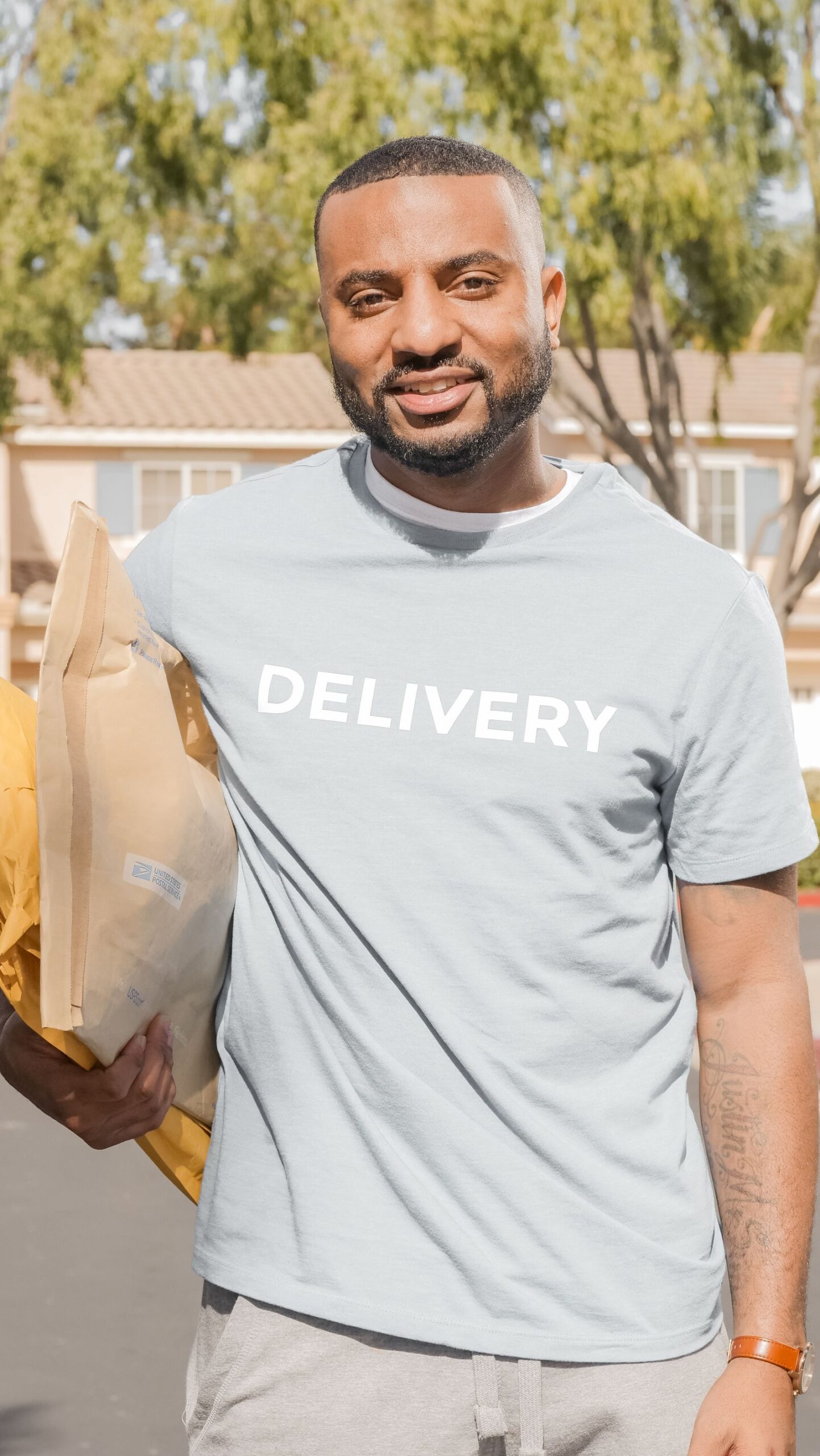
On-time delivery, photo proof of drop-off, receipt or signature capture, and item condition are the four things that get measured on retail and shop-and-deliver runs. These are not suggestions — they are the metrics that determine your standing on the platform and, more practically, whether the merchant has any basis for a damage or theft claim against you.
Photo proof is your primary protection. Take a clear photo of every drop-off that shows the items at the door with the address visible if possible. If you are delivering to a boutique or residence with a door number, get it in the frame. That photo is evidence that the item arrived undamaged and at the right location. Do not skip it because you are in a hurry on a busy day — that is exactly when the shortcuts come back to bite you.
Signature capture for high-value retail items adds another layer of protection. Some platforms require it; others leave it optional. When the item is clearly expensive — jewelry, art, premium spirits, a large floral arrangement — request the signature regardless of whether the platform mandates it. The few seconds it takes is cheap insurance.
Your tips will reflect how you treat the handoff, too. If you want the tactical breakdown on what actually moves the needle on driver tips, the guide on how to get more tips as a delivery driver covers both the communication side and the handling side of that equation.
Comparing Small Business Saturday to the Days Around It
It helps to understand where Small Business Saturday fits relative to the other high-traffic days in the same week, because the day has a distinct character that affects which strategies apply.
| Day | Primary Demand | Order Type | Key Challenge |
|---|---|---|---|
| Black Friday (Nov 27) | Big-box retail, online orders, fast food | High volume, long distances | Traffic, mall parking, spread-out demand |
| Small Business Saturday (Nov 28) | Independent shops, florists, bakeries, local restaurants | Fragile retail, catering, multi-stop boutique | Downtown parking, short shop hours, fragile goods |
| Sunday (Nov 29) | Restaurant brunch, leftover holiday grocery | Food-heavy, moderate volume | Normal weekend competition, no special demand spike |
| Cyber Monday (Dec 1) | Online retail, package delivery | Package runs, high volume | Package volume overload, warehouse congestion |
The comparison makes clear that Small Business Saturday is the most specialized of the four days. It rewards drivers with downtown positioning, fragile-goods handling skills, and shop-relationship capital more than it rewards raw volume or speed. Black Friday and Cyber Monday are volume games. Small Business Saturday is a precision game.
For a full rundown on working Black Friday itself — the day before — the Black Friday and Cyber Monday delivery driver guide for 2026 is the companion piece to this one. Working both days back to back with a clear strategy for each is one of the highest-earning two-day windows in the gig economy calendar.
Restaurant Pickups on a Crowded Downtown Saturday
Local restaurants get busier on Small Business Saturday than on a regular weekend, partly because shoppers eating downtown between store visits and partly because evening catering orders pick up as the day closes. The restaurant pickup dynamic on a congested shopping day is worth thinking through in advance.
Kitchens run slower when they are busy, which means your quoted pickup time is often optimistic. Build in buffer when you are deciding whether to accept a restaurant offer on this day. If the pickup ETA is 12 minutes and parking is a five-minute process, you are already running close. Add kitchen delay and you are now late to a customer who has been tracking the order.
The etiquette of working busy restaurant pickups — how to communicate with kitchen staff, how to handle a wait without damaging the relationship, when to escalate versus when to wait — is laid out in the guide on restaurant pickup etiquette for delivery drivers. On a day when independent restaurants are already stretched, a driver who handles the pickup professionally is one they will see again.
Holiday Pop-Up Markets and Craft Fairs: The Adjacent Opportunity
Small Business Saturday often coincides with or triggers a cluster of holiday pop-up markets and craft fairs in the same neighborhoods. These are temporary events — one day or one weekend — where small makers and vendors sell handmade goods, food products, and artisan items. They are not always on the delivery apps, but they represent a real same-day delivery demand from vendors who sell out and need to fulfill orders, or from customers who discover a product on-site and want it sent as a gift.
If your city has a significant pop-up market scene, knowing where those events are on November 28 gives you another positioning target and another potential direct-arrangement client base. The full breakdown on working holiday pop-up markets and craft fairs as a delivery driver covers how to approach those events, what to expect logistically, and how the pay structures tend to work.
The Weekend Strategy That Ties It All Together
Small Business Saturday does not exist in isolation. It is the centerpiece of a three-day weekend that includes the tail end of Black Friday on Friday night, the Saturday itself, and a recovery Sunday. Drivers who plan all three days as a unit — positioning and gear choices carrying across all three, energy managed across a full weekend rather than blown out on Friday night — tend to outperform drivers who treat each day as independent.
The broader framework for optimizing Saturday and Sunday earnings consistently, not just during the holidays, is in the guide on weekend delivery strategy for DoorDash, Uber Eats, and Spark drivers. The principles there — zone density, time-block selection, order-type filtering — apply on November 28 with the specific Small Business Saturday layer added on top.
The average Small Business Saturday shopper spends roughly $100 to $110 on the day, and holiday shoppers overall are projected to spend about $900 per person across the full season on gifts, food, and decorations. That consumer spending does not stay in stores — a meaningful share of it moves via delivery, and the drivers who are positioned correctly, equipped properly, and working the right neighborhoods during the right windows will capture a disproportionate share of the tip income and per-stop earnings that day generates.
Driver Opportunity
Ready to Start?
Turn This Guide Into Real Income. Join as a new driver and get up to a $2,575 guaranteed bonus after completing your first 200 deliveries in select US cities.
Sign Up & Start Delivering →New drivers only · Terms apply · Available in select cities
Show up on November 28 with a downtown map, a parking plan, two insulated bags, a hand truck, and a business card in your pocket. Work the 11 a.m. to 1 p.m. window hard, take a short break, and come back for the 3 to 6 p.m. tail. Filter aggressively for multi-stop offers in dense areas over single long-distance runs. Leave business cards at every shop you service well. That is the playbook. The rest is execution.